

How 120 See-Through Solar Panels Replace Diesel Generators And Keep Sheep Warm
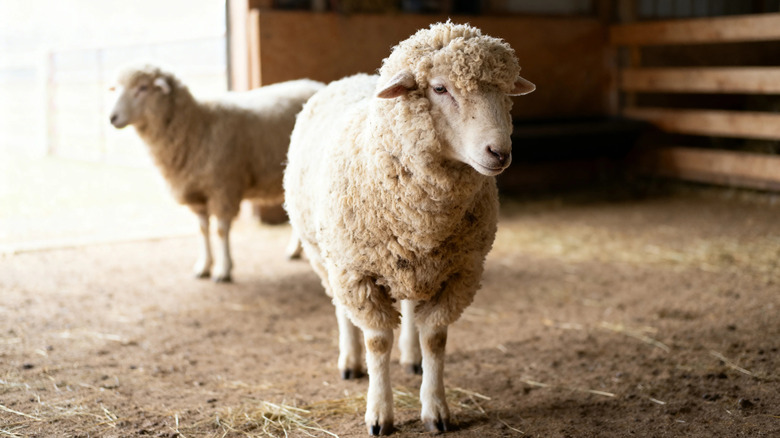
With diesel prices hovering around record highs, many are feeling the pressure of rising energy costs. Even sheep farmers in rural Australia are affected, though help may be at hand. As part of a trial to explore whether semi-transparent solar panels can reduce farm operating costs, researchers from Charles Sturt University (CSU) are testing the use of 120 panels over a sheep feedlot at the university's AgriPark west of Sydney. The trial is investigating whether the panels can improve agricultural productivity and benefit animal welfare.
The solar panels used in the project include gaps between the photovoltaic cells, allowing light to pass through. The setup could help to keep sheep comfortable during winter, as they can benefit from the warmth of the sun even while sheltering in the shade beneath the panels. And it's not just livestock that might benefit from solar shade, with overhead panels in an Arizona project enabling farmworkers to enjoy more comfortable conditions. CSU's innovative solar installation is also intended to reduce the feedlot's reliance on diesel generators, which supply electricity to run automatic sheep feeders. By instead obtaining the power from sunlight, the solar panels could reduce diesel consumption and potentially lower the farm's energy costs and emissions.
The researchers' feedlot installation is still in its early stages, with monitoring set to begin toward the end of 2026 and initial results expected in late 2027. The economics could prove challenging, though, as semi-transparent solar panels cost around twice as much as conventional ones. While savings on diesel could help offset the higher upfront cost, researchers still need to establish how much fuel it saves. Sheep have actually been enjoying the benefits of solar farms for a while, though, with some even making a few bucks for their farmers.
Semi-transparent solar panels for crops
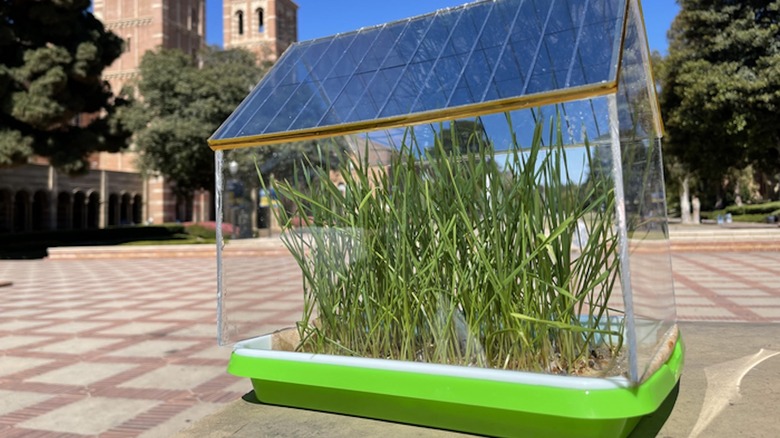
The idea of using semi-transparent solar panels isn't actually new. Researchers around the world have been experimenting with the technology for years, including a project by a team at the University of California, Los Angeles (UCLA), which investigated the idea of turning greenhouse roofs into electricity generators that still let in enough light for the plants to properly grow.
Working on the project from 2020 until 2023, the UCLA researchers developed semi-transparent organic photovoltaic cells, a type of solar technology that uses organic, carbon-based materials able to absorb selected wavelengths of sunlight while also allowing some visible light to pass through. The team built the cells into the roofs of model greenhouses and then tested their ability to generate electricity alongside the cultivation of three crops, namely wheat, mung beans, and broccoli.
The researchers were able to achieve solar-cell efficiency of 13.5%, while allowing an average of 21.5% of visible light to pass into the greenhouse. The UCLA team also developed a protective layer for the solar cells containing an antioxidant called L-glutathione that helped prevent the cells from degrading under prolonged exposure to sunlight. Notably, over an eight-day period, the plants grown beneath the semi-transparent solar roofs showed survival rates and growth comparable to, or better than, those in conventional glass-roof greenhouses. Their findings suggest that greenhouse roofs with solar panels can support crop production in the usual way, but also by generating electricity that could be used to power greenhouse operations like lighting, ventilation, irrigation systems, and so on, possibly reducing a farmer's reliance on electricity from the grid. But further work is needed to confirm the technology's long-term durability and commercial viability.