

The '60s Zombie Movie That Changed Horror Forever Is Streaming For Free
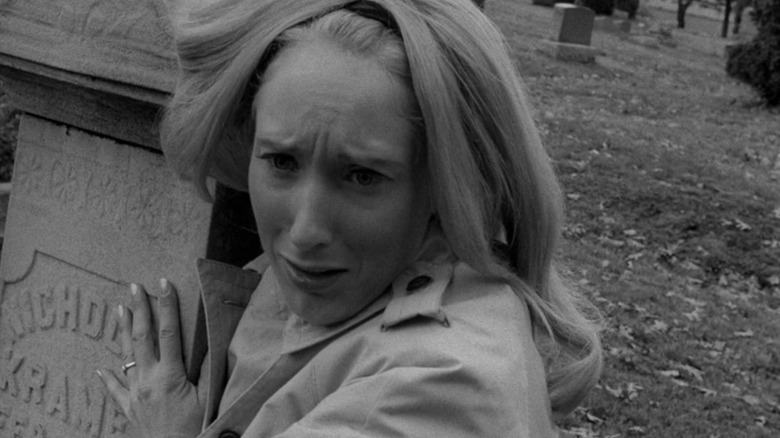
Think of every flesh-eating member of the undead you've ever come across. The ones often seen having their heads turned into canoes by Rick Grimes (Andrew Lincoln) in "The Walking Dead," or even the upgraded, adrenaline-fueled fiends from Danny Boyle's "28 Days Later." Even the ones blocking the way to the Winchester in the classic British horror-comedy "Shaun of the Dead" are etched into our fresh, ever-so-fleshy brains and unlikely to disappear. The truth is, though, those meat munchers wouldn't be anywhere if they weren't influenced by George A. Romero and his daring (for its time), incredibly dark take on the undead in "Night of the Living Dead," now streaming on JustWatch TV.
Released in 1968, Romero's run-in with mindless corpses provided a brand-new, horrifying take on the zombie genre that other films had already played around in. Entries like "White Zombie," starring Bela Lugosi, or even the Vincent Price-starring "The Last Man on Earth," which, of all the "I Am Legend" adaptations, gets far less attention than the other two, had taken on their fair share of zombie hordes, but Romero took the monster and stripped it of a formula that, by this point, was getting slightly stale. Up until now, zombies had links to voodoo and folklore, with the victims either being hypnotized into mindless versions of themselves, or creatures that had links to other well-known beasties. Romero, instead, brought the zombie from the grave and introduced drastic changes that have festered within the horror subgenre ever since.
George A. Romero rewrote zombie law in Night of the Living Dead
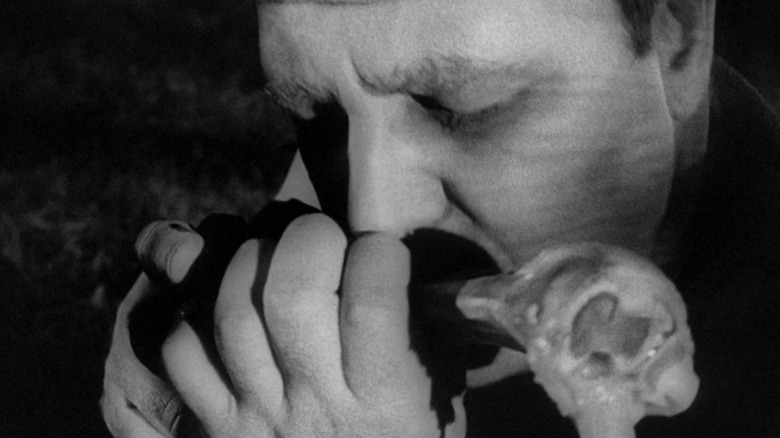
You know the story by now. During a visit to the cemetery with her brother, Barbara (Judith O'Dea) is attacked by what she believes is a mumbling, grumbling mob of people who look a little under the weather. Finding refuge in a nearby farmhouse crammed with other survivors, including Duane Jones' Ben, this squad of strangers tries to hold out the night while unnaturally active corpses overrun the rest of the world with no regard for personal space.
This simple, incredibly effective storyline would be reanimated for decades to come, but in Romero's initial run-in with the monsters, he wrote a brand-new page on a creature that had already haunted theaters for some time. First, Romero dropped the binding of his ghouls to local legend or voodoo. Instead, he turned them into a walking, gawking virus. One bite from these folks and you'd be feeling under the weather and sharing the same kind of dietary requirements in no time. Even those who died from causes other than a nibble from a neighbor were up and about causing chaos.
Romero's new methods turned a monster into one that could become many, all marching to the same unstoppable beat as they tore through people and made them one of their own, in an unsettlingly realistic way. Science, not gothic magic, was killing our heroes, and Romero showed it all through a realistic lens and a modern-day hero who would change not just horror, but cinema as a whole, forever.
Night of the Living Dead houses a groundbreaking hero in a very real horror
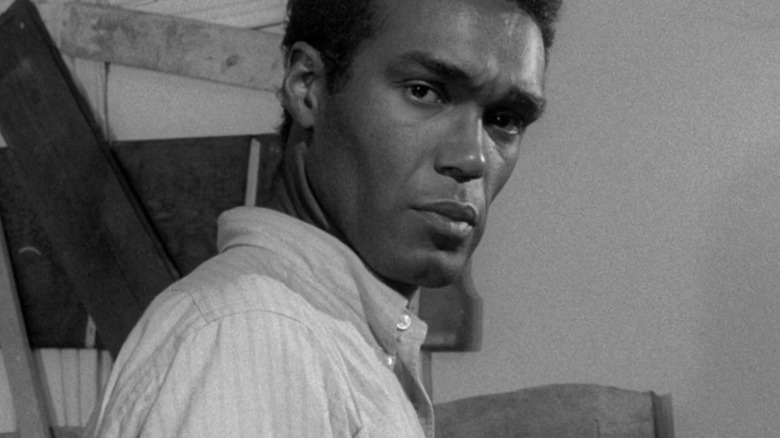
Even now, it's clear that there's more to "Night of the Living Dead" than the titular monsters that makes it terrifying. Shot on a shoestring budget, like so many great horror films, Romero uses a raw, realistic lens that makes this zombie invasion feel believable. The camera work throughout makes the film feel like we've found footage of a nightmare, even before that sub-genre became a thing. More importantly, casting African American actor Duane Jones as the film's lead struck a chord that still rings out today. It's well documented that the director never considered the impact of casting a Black lead and instead simply cast Jones after a strong audition.
Speaking to The Wrap about the casting choice in 2010, Romero assured that "Duane Jones was the best actor we met to play Ben," and that his ethnicity had no bearing on the character from then on. "If there was a film with a black actor in it, it usually had a racial theme, like 'The Defiant Ones.' Consciously, I resisted writing new dialogue 'cause he happens to be black. We just shot the script. Perhaps 'Night of the Living Dead' is the first film to have a black man playing the lead role regardless of, rather than because of, his race." Nevertheless, with that and the transformation of a monster that had, by this point, been lifeless, the horror master created a new genre of zombie outbreak movies, leaving bite marks still visible today.