

The 5 Biggest Problems Tesla Cybertrucks Faced In History
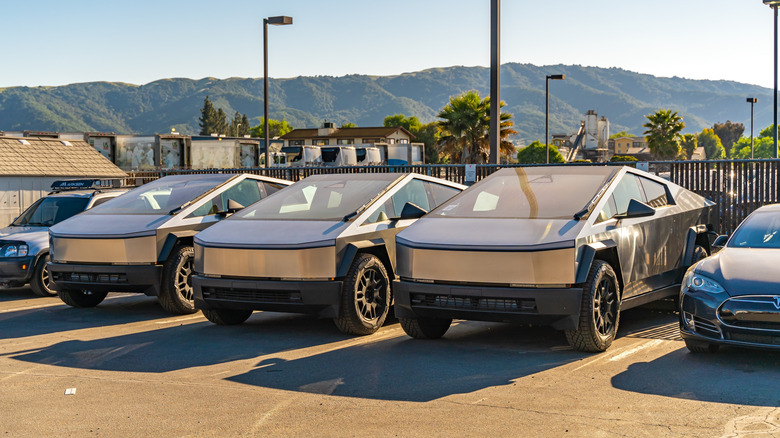
Tesla's polygonal-shaped Cybertruck has never had any problem getting people's attention. Ever since the company debuted the truck, people have been talking about it in some way, shape, or fashion — whether that's in awe of the design or as a way of making fun of how ridiculous it can look. Beyond just the looks, though, the Cybertruck has had more than its fair share of big problems, including some that have reportedly played a part in the deaths of occupants within the vehicles.
If you've ever seen a Cybertruck in the wild and asked yourself, "Are Cybertrucks actually reliable vehicles?" Well, the answer might not be as clear-cut as you think. And now that Tesla is discontinuing it to move production focus to creating its own lineup of Tesla-branded driverless cabs, it's a perfect time to take a look at some of the biggest problems that have plagued the Cybertruck over the past few years, including doors being hard to open and the accelerator pedal getting stuck. Some of them just might make you happy that you avoided buying into the hype.
The doors are hard to open without power

One of the big features of Tesla's vehicle design is the button-based door handles. Unlike traditional vehicles, which use a lever-like system, the Cybertruck and other Tesla vehicles rely on a push-button electronic system to open their doors. However, this has led to massive issues with the company's vehicles, including a situation from 2024 that led to a lawsuit over a deadly Cybertruck crash out in California (via LA Times).
Because the Cybertruck door handles typically run off electricity, it has manual releases built in. However, these aren't exactly easy to find. In the front, they're located near the window switches, while the back door releases are hidden under the rubber mats in the door pocket. So, if you don't know where they are, then you might have trouble getting out of the vehicle if it loses power completely.
The public criticized Tesla for how difficult the manual releases are to find, and because the doors require at least low-voltage power to operate the handles from the outside, you can't even open them if the power has been cut in an accident. Because of this problem, the NHTSA (link will download a PDF to your device) has even agreed to start looking at putting a rule in place that requires vehicles to have a more "robust and obvious door egress system." Unfortunately, these kinds of policies can take years to actually go into effect.
The accelerator pedal on some trucks had a chance to get stuck
If you had a Bingo card for problems Cybertrucks experienced, this one might not be on it: In 2024, Tesla had to recall more than 3,800 Cybertrucks because there was a chance that the accelerator pedals could come loose and then get stuck in the trim, leaving the pedal depressed. The good news is this issue didn't affect all Cybertrucks, and that's because it was actually caused by an unexpected culprit.
See, for some reason, some workers at a factory responsible for building Cybertrucks started using soap to help get the pad onto the accelerator pedal. This was a change that Tesla itself never signed off on, and the soap could allow the pad to slide off, especially if the driver pressed down really hard. Thankfully, drivers affected by the issue were still able to stop, as the system's brake still cuts power to the motor even if the accelerator is pressed down. There also haven't been any reported crashes or injuries, but the possibility here was massive.
Some exterior panels could come off while driving
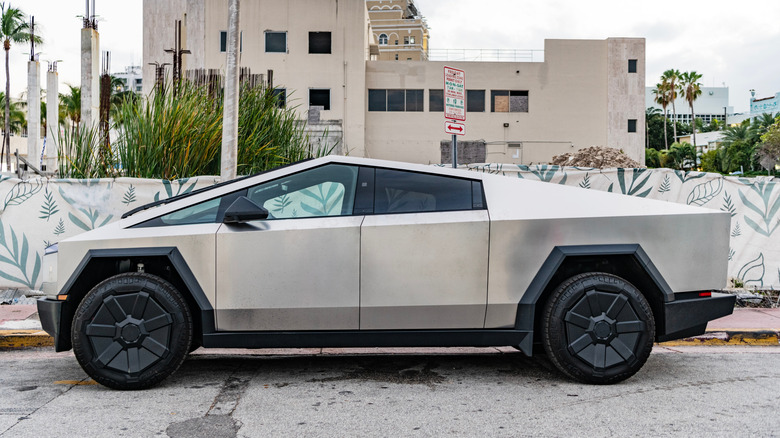
The stainless-steel exterior is one of the first things you notice about the Cybertruck, so it's kind of ironic that one of the biggest recalls it has experienced over the years had to do with pieces of that steel, called the cant rail, falling off. Back in March 2025, Tesla put out a recall for 46,000 Cybertrucks because of this issue. That was basically every Cybertruck the company had made up to that point.
The problem in question happened because Tesla had only used structural adhesive to hold the steel panel along the top of the truck in place. Over time, the weather could make that adhesive brittle and weak, allowing the panel to come disconnected from the truck. This meant that there was a possibility of the wind grabbing the panel and ripping it off, putting not only the driver of the Cybertruck at risk, but also the other drivers around them.
Some trucks would lose power without warning
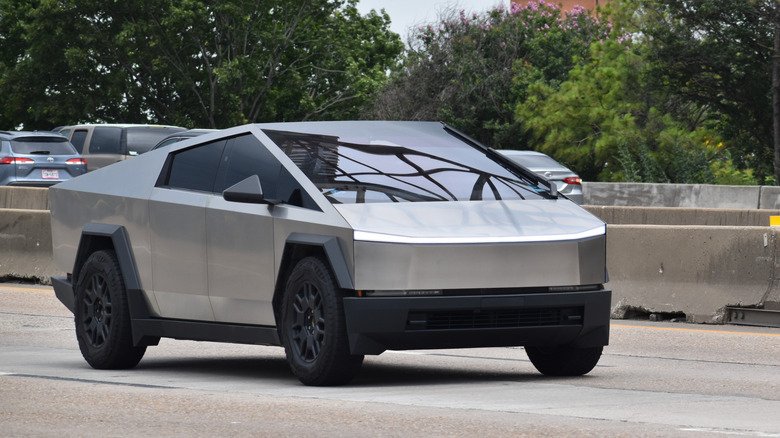
This next problem only affected a small number of Cybertrucks, but it is also one of the scarier ones because of how much Cybertrucks rely on electricity to power their features. In November 2024, Tesla recalled 2,431 Cybertrucks after discovering that some of the drive inverters used in the vehicles were failing more often than they should have been. This caused the inverter to stop sending power to the motor, which in turn stopped the vehicle from being able to accelerate.
The worst part, though, is that there was no warning beforehand that the inverter was going out. Drivers would only get an alert that the truck had lost power after it had already happened. Because they couldn't accelerate anymore, they would have limited time to respond and pull to the side of the road before it stopped in the middle of traffic.
Luckily, Tesla was able to trace the problem back to one specific transistor that was causing issues in some of the inverters. Unfortunately, the fix wasn't quick, as Tesla had to completely replace the drive inverter in the affected vehicles. Thankfully, if you purchased your Cybertruck after July 2024, you shouldn't have to worry about this, as Tesla stopped putting the affected parts into vehicles around that time. There also doesn't appear to have been any reported crashes or accidents connected to the issue, but it certainly had potential.
Cracked brake rotors on trucks with steel wheels
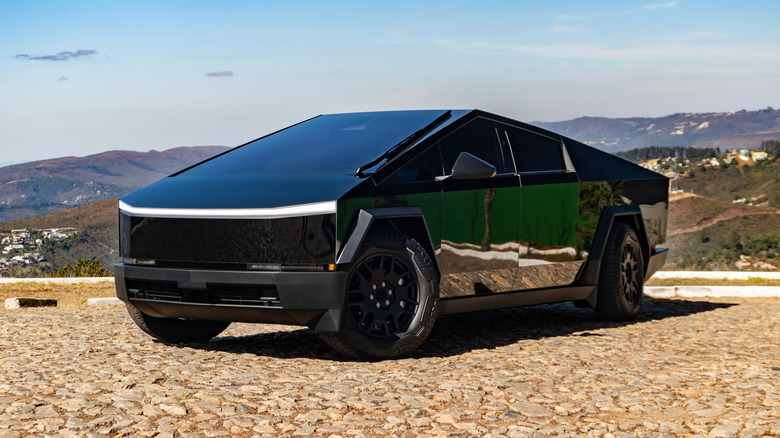
One of the more recent issues on this list is also one of the smallest, but it could still be a big issue if Cybertruck drivers aren't aware of it. Tesla issued a recall for over 170 Cybertrucks in April 2026 that had been fitted with 18-inch steel wheels after it was discovered that the brake rotors on these wheels were prone to cracking. If a crack then kept spreading, it would eventually cause the wheel stud to break away completely, making the vehicle hard to control.
What's especially concerning about this one, though, is that Tesla reportedly knew about it before the steel-wheel Cybertrucks even went on sale. The company supposedly saw some of its rotors crack during pre-production testing, and had planned to introduce a stronger rotor design, but didn't do so due to a "change management error," according to the NHSTA. Thankfully, this wasn't a widespread issue, and Tesla only reported finding the cracked rotors in one truck so far. But it is certainly concerning that the problem was known about and not addressed before Cybertrucks were delivered to their new owners.