

The Wireless Earbud Battery Problem That Still Isn't Solved

Wireless earbuds have become a societal norm around most of the world. The technology has also gotten so good in recent years that it can be hard to even tell the difference between wireless and wired audio. But for all the ingenuity that wire-free buds have brought to the table, there's still one design area that hasn't seen much advancement: battery degradation. Wireless earbuds are powered by tiny lithium-ion cells, which is in itself a hindrance; the smaller the battery, the less energy capacity it has to work with.
Manufacturers already have the interesting challenge of shoving as much tech as possible into a ridiculously small chassis. This doesn't leave much room for sizable batteries, and just because the cells are smaller doesn't mean they deplete any differently than larger-sized batteries; it's the same chemical process, from one lithium-ion to the next. Earbud batteries are also designed to naturally wear as you use them, so it's not unusual if AirPods you've owned for five years aren't delivering their out-of-the-box battery life.
The bigger issue is that audio manufacturers aren't typically in the business of giving consumers a way to replace earbud batteries once fully depleted. And while companies like Apple will let you send your buds in for a battery replacement, you could end up paying more than if you'd just bought a brand-new pair.
Replacing earbud batteries: a novel idea with a lot of loose ends
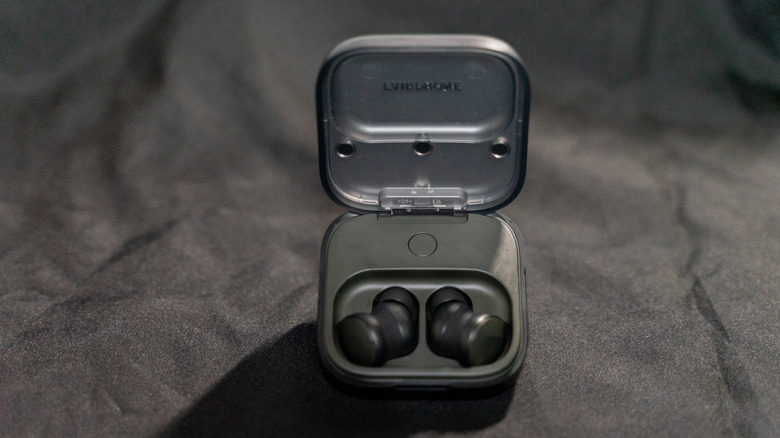
We can't say that there isn't a single manufacturer that lets you service your own batteries, and that's because of Fairphone. This is a brand that allows users to replace both the earbud batteries and the one built into the charging case. Fairphone's Fairbuds 2 have seven user-replaceable parts, and the company claims you'll be able to "take [the earbuds] apart in seconds." Unfortunately, you'll need to provide your own tools to open things up.
While the Fairbuds are a cool idea on paper, "user-replaceable batteries" isn't enough of a perk to combat "odd" sound quality and poor mic performance; not to mention that $160 is a lot to ask for wireless buds if you're not Apple. That said, we don't blame audio brands for not going further with modular DIY repair and replacement for in-ears.
We mentioned that engineers are already cramming a ton of tech into the buds and case. Imagine giving an unskilled but "brave" tinkerer the ability to disassemble a pair of earbuds. When they're finished, those buds may never sound the same; they may even stop working. There's also dust and water resistance to worry about, as well as microphones, sensors, and all the other bite-sized parts that could potentially wind up missing or damaged during a repair.
User-replaceable batteries aren't going mainstream, so what other ways can you optimize?

Instead of coming up with ways to let earbud owners deconstruct their own buds, audio manufacturers should be focused on optimizing battery life. Phones, tablets, and laptops often feature low-power modes you can switch to when you're running out of juice; we want the same for wireless earbuds. Until that day comes, it's up to consumers to squeeze as much life out of our in-ears as we can. Luckily, some wireless buds have a few energy-saving capabilities you'll be able to utilize.
Features like automatic ear detection and auto-off timers can be battery godsends; the former prevents your buds from playing audio the moment you take them out of your ears, while the latter powers them down after audio hasn't been played for a certain period of time. Many earbuds are supported by a companion app, too, which often includes audio presets and/or a custom EQ. Bass-heavy presets tend to eat up more battery; the same goes for spatial audio and other processing tools that affect the way you hear a song or podcast.
Wireless earbuds won't be going anywhere. They've been on the market for more than a decade now, and some of the best products deliver a remarkable experience. Just don't count on Apple, Sony, and Bose providing a small screwdriver and Lego-sized replacement parts in the box anytime soon.