

Amazon Lost 40 Leo Satellites During This Failed Rocket Launch
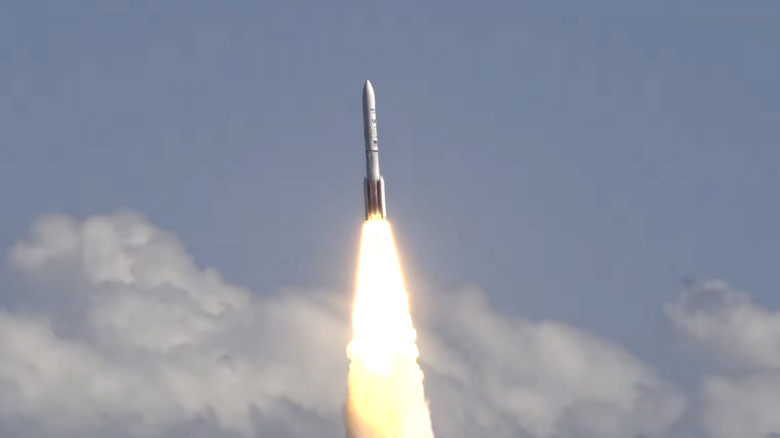
Amazon lost 40 of its Leo internet satellites in a failed launch using a United Launch Alliance (ULA) Vulcan rocket on Sunday, November 15. It was the first unsuccessful launch in 16 missions for Amazon's Leo satellite program (formerly Project Kuiper) since its first deployment in October 2023. It was also the first failed mission for the Vulcan rocket since its maiden flight in January 2024, and the first complete mission failure for ULA since the company started in 2006.
The Vulcan's launch from Cape Canaveral, Florida, appeared to go smoothly, but 10 minutes later, a propulsion issue prevented the rocket from reaching the required speed and altitude to put the payload of 40 satellites into orbit. The loss is a blow for Amazon, especially as it was the largest batch of Leo satellites that it's launched to date. As of November 2026, Amazon has 391 satellites in its Leo constellation, which, when completed, should number about 3,200. Leo is competing with SpaceX's Starlink program and foreign satellite internet companies to provide broadband internet from space to homes and businesses, especially those located in remote areas where conventional broadband connections are unavailable or unreliable.
The Vulcan rocket could be grounded for some time while ULA looks into what caused the failure. Fortunately for Amazon, it has contracts with other launch providers, including Arianespace and SpaceX, which have already performed other Leo satellite deployments. It's also planning to use Blue Origin's New Glenn rocket, but that's yet to return to flight after it exploded on the launchpad in May 2026. One of Amazon's aims, though, is to catch up with Starlink, which already has more than 11,000 orbiting satellites supporting an internet service with more than 13 million paying customers globally. With that in mind, every launch counts for Amazon as it tries to build out its constellation and close the gap.
What went wrong with ULA's new Vulcan rocket?

Considering Vulcan's relatively short operational history, its first failed flight is a significant setback for ULA, as well as for Amazon's deployment timetable. Developed to replace ULA's aging Atlas V rocket, Vulcan first left the launchpad nearly two years ago, but its early flights have not been entirely trouble-free.
On its second flight in October 2024, one of the vehicle's solid rocket boosters suffered a nozzle failure that caused a partial loss of thrust. A similar problem occurred during its fourth flight in February 2026. On both occasions, Vulcan managed to overcome the loss of booster performance and deliver its payload into the intended orbit. Still, the second incident prompted a lengthy investigation that prevented the rocket from flying for nine months while ULA and booster manufacturer Northrop Grumman redesigned the nozzle.
The November 2026 launch was supposed to demonstrate that the rocket was in perfect working order and ready to once again roar off the pad, but the mission didn't go to plan. ULA's preliminary findings into the failure suggest that while the solid boosters performed as expected, there was an apparent issue with the supply of fuel to the rocket's two BE-4 first-stage engines, which resulted in insufficient thrust to deliver the payload to orbit. The precise cause remains under investigation, but the incident highlights the challenges of establishing reliability when introducing a new launch vehicle. Vulcan has so far flown just five times, so its latest failure raises new questions about how quickly it can become a dependable workhorse for commercial and government launches. Amazon will, no doubt, be watching developments carefully.
Building a huge satellite constellation isn't easy
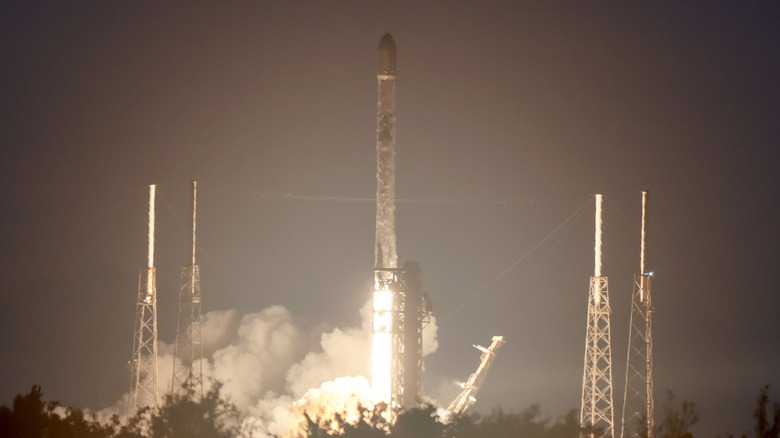
Building a satellite constellation is a complicated business, and even the most experienced operators can suffer setbacks from time to time. Take SpaceX and its Starlink venture, which started deploying satellites in 2019 and is much further down the track than Leo in terms of development.
A mission by the Elon Musk-led company to deploy 20 Starlink satellites in July 2024 appeared to be proceeding as expected, but following an issue with the rocket's second-stage engine, none of the satellites were able to reach orbit. SpaceX used onboard propulsion to try to raise the altitude of each satellite and place them in a more stable orbit, but atmospheric drag proved too strong, and the satellites burned up during re-entry. At least one piece of debris, however, survived the high-speed descent and reached the ground.
While the two failures are very different — Leo's mission involved a loss of thrust during the rocket's first-stage flight so the satellites were never deployed, while Starlink's was the result of a second-stage engine failure that left its satellites at too low an orbit — it's clear that getting thousands of satellites into orbit is a huge undertaking, with the occasional failure an inevitable part of the process. It's also worth remembering that putting satellites into orbit is only part of the challenge. Like SpaceX and Starlink, Amazon will also need to maintain its growing constellation, replacing satellites that fail or reach the end of their operational lives. This will be vital to ensuring that the service can deliver reliable broadband to customers, the first of whom started signing up for a trial service toward the end of 2025.