

5 Workout Headphones To Buy Instead Of AirPods
We may receive a commission on purchases made from links.
Apple's AirPods lineup probably offers the best headphone experience you can have if you own an iPhone and multiple other Apple devices. They immediately connect with all your gadgets, they seamlessly transition between one another, and they sound good too. Put simply, they just work. Apple's lineup starts with the $129 AirPods 5 and goes all the way to the premium and pricey AirPods Max 2 at $549.
As popular as AirPods are, they're not for everybody. Some people find them uncomfortable or don't like the design, while others can't afford Apple's pricing. The good news is that they each have many options.
Unlike the best workout headphones for those who don't want Galaxy Buds, it gets more interesting when we talk about Apple, because the company's customers often want that "Apple experience." If you want to stay in Apple's ecosystem, the lineup from its Beats subsidiary offers sporty options and much of the same software features. Or you can go for products from other companies entirely, including loop-over earbuds like JLab's Go Sport+, which are ultra-affordable too.
With that in mind, below is a list of sporty headphones BGR collected that were recently made and, in most cases, that we have had experience with. With the ones we haven't tested, we relied on options praised by other reviewers and real-life customers. There are great options for different kinds of people, and we'll highlight why choosing them over AirPods can make sense.
Powerbeats Fit
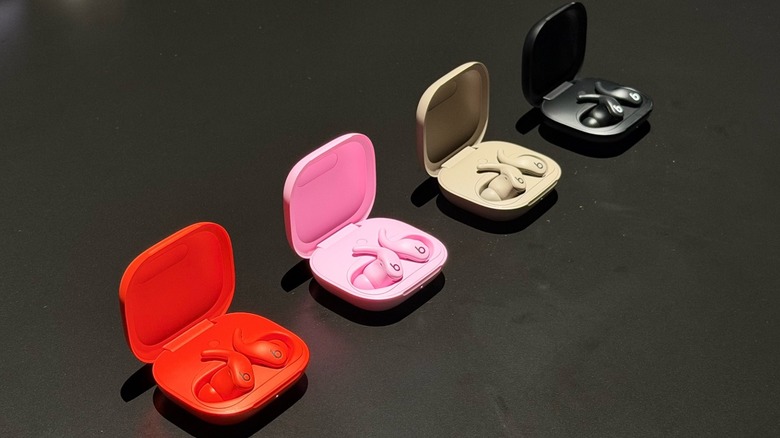
Released in late 2025, Powerbeats Fit is a rebranded Beats Fit Pro, making them part of the Powerbeats family while addressing some of the complaints some users had with the earlier generation. First of all, Powerbeats Fit earbuds are aimed at athletes and people who like to be active; they feature secure-fit wingtips that tuck into your upper ear to lock into place. To make them more comfortable, which allowed me to run a half-marathon with them without an issue, the company said it made the wingtip 20% more flexible than the previous generation while also offering more ear tips in the box, ranging from XS to L.
During my tests, Powerbeats Fit earbuds were great for running and strength training. They were also comfortable enough, even for a long flight. Soundwise, they are similar to the first-generation AirPods Pro but with a more prominent bass, which is great for working out. They also feature Apple's H1 chip and a proprietary layered-diaphragm driver and a dual-chamber housing to make songs, especially Spatial Audio ones, shine.
Compared to Apple's AirPods, these $200 Powerbeats Fit earbuds are a great choice for anyone who doesn't like AirPods design. It still has many of the benefits, including to seven hours of continuous music playback and up to 30 hours with the charging case, as well as IPX4 sweat and water resistance, while offering bold color choices as well.
Sony WF-1000XM6
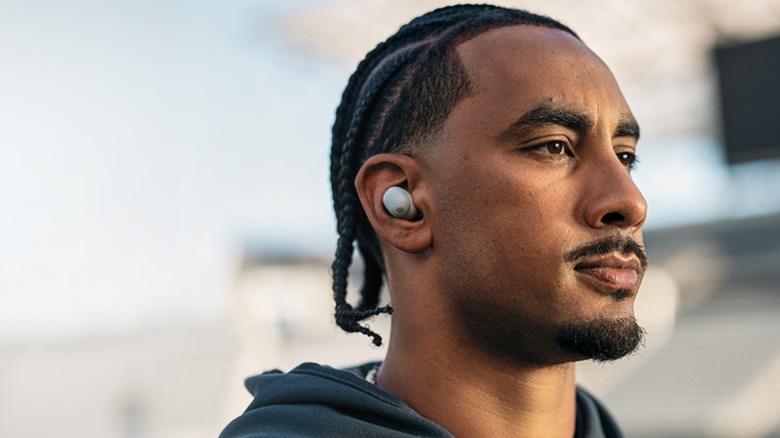
Sony's WF-1000XM6 is another great sporty competitor to Apple's AirPods. The $330 earbuds are well-reviewed by critics and fans for its class-leading noise cancellation, customizable sound, and comfort over long-term wear. By using the QN3e processor and eight microphones (four in each earbud), it cuts background noise by 25% compared to the previous model. The 8.4mm drivers support LDAC Hi-Res Audio and a 10-band equalizer in the Sony Sound Connect app, which is something AirPods don't have. If you're running outdoors and get a call, its bone conduction sensors and AI noise reduction can keep your voice clear even in noisy situations.
These earbuds are particularly good for the gym because they have a redesigned ergonomic shape and four foam tip options. They also have a vent structure that lowers internal body noise so the earbuds don't bother you during a run. Sony's WF-1000XM6 also features IPX4 rating, which is great for sweat and light splashes during most intense workouts.
These earbuds can be a great choice over AirPods Pro, because Sony prioritizes audio customization and cross-platform versatility, meaning it pairs great with both the iPhone and Android devices. The different design and foam tips help too, particularly if the current design of AirPods Pro hurt your ear. Overall, Sony's WF-1000MX6 are a strong alternative choice.
Powerbeats Pro 2
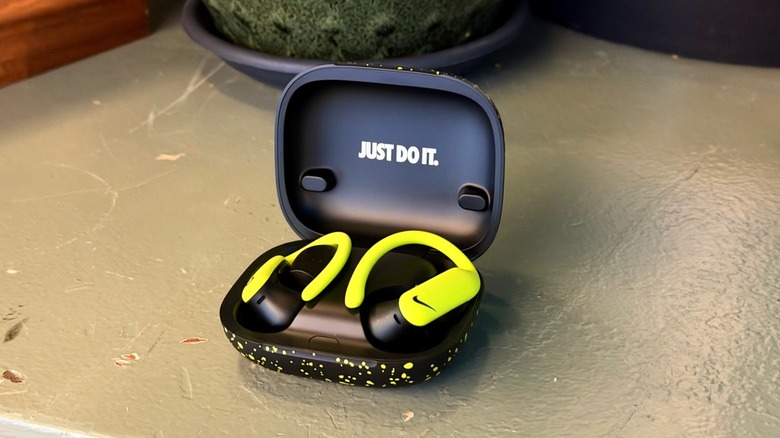
Released in early 2025, the $250 Powerbeats Pro 2 were Apple's first earbuds with heart rate monitoring. While the technology eventually expanded to AirPods Pro 3 too, the flagship earbuds for workouts were revamped from their originals to add extra comfort, more health data, and richer sound. Choosing the Powerbeats Pro 2 over AirPods is all about the design. They have a nickel titanium alloy earhook that is 50% smaller than the predecessor, which brings increased comfort and stability while training with these earbuds. For example, I'd had to constantly spin the left earbud of the original Powerbeats Pro because it would get loose during my runs, which didn't happen with the new ones.
With the same H2 audio processor as AirPods Pro 2 and AirPods Pro 3, the sound on these earbuds can be as good. One catch is that every Beats product has a slightly more prominent bass. Still, nothing compares to the unbalanced (but popular) sound of their first products in early 2010s, as everything sounds more fine-tuned, but with a bass kick that is great for workouts.
Thanks to the heart-rate sensor of these earbuds, which start by itself when you begin a workout from your Apple Watch or iPhone, you get two new heart rate channels, in addition to the Apple Watch sensor, ensuring you always have a reliable heart rate reading of your workout. More than that, you can also use the Powerbeats Pro 2 as an Apple Watch replacement, if you think the smartwatch annoys you during yoga, a strength training session, and so on. These earbuds last for up to 10 hours on a single charge, and up to 45 hours in total. For Black Friday, Powerbeats Pro 2 cost $180 on Amazon.
JLab Go Sport+
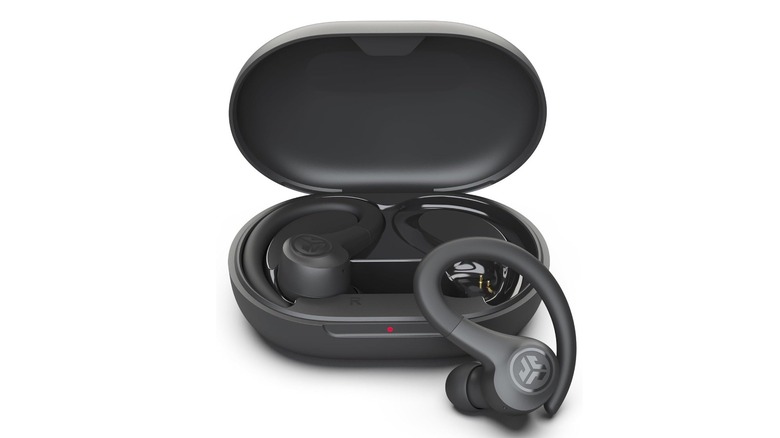
Switching away from premium-priced products, JLab's Go Sport+ earbuds are a great option for those looking for impressive battery life, app-based sound customization, and, most importantly, a remarkable value. JLab's Go Sport+ costs $17 on Amazon, down from an MSRP of $32, and they're one of the best budget earbuds for those who don't care about fancy features and the most premium audio. These instead are great, reliable headphones for everyday commuting and working out. Each earbud offers 9 hours of continuous playback, and its charging case can expand that up to 35 hours. Through the JLab app, users can customize touch controls, transparency mode, and toggle between three built-in EQ presents, in addition to the creation of your own sound profile.
These earbuds bet on ergonomic over-ear sport hooks, like the Powerbeats Pro 2, to ensure they won't come off even if you run, jump, or hop with them. One of the highlights of this product is the IP55 rating, meaning that it resists both sweat and dust than more everyday earbuds. JLab also offers three sizes of gel ear tips, which can help you find a comfortable seal, as these earbuds don't offer ANC support.
Compared to Apple's AirPods, the JLab GO Sport+ prioritizes a secure workout stability and affordability over the premium ecosystem. They're significantly cheaper than any other headphones on this list, and the best thing about this product is that it has been consistently reviewed and highlighted by customers as the go-to budget option.
Beats 360 headphones
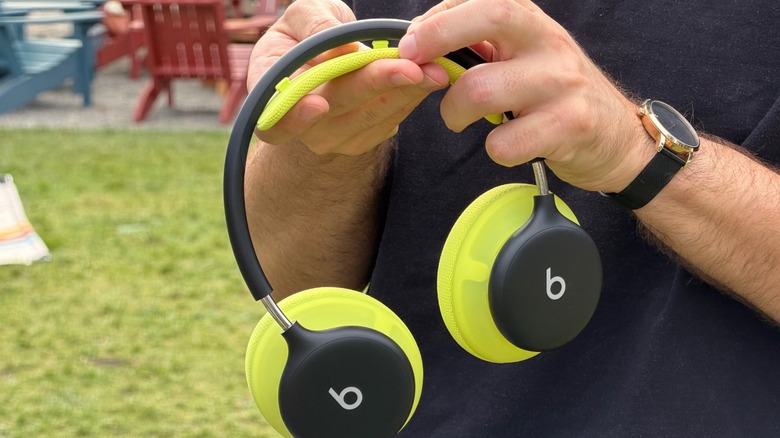
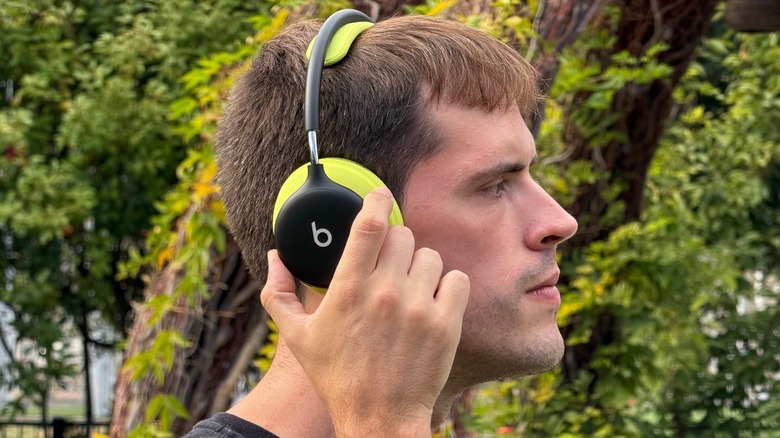
Last but not least, BGR includes Beats 360 headphones as another option against AirPods. While over-ear headphones are popular in gyms, the reason why we're choosing another Beats product instead of other great headphones we reviewed this year like Marshall's Milton A.N.C or Sonos' latest Ace Ultra headphones is that the Beats 360 over-ear headphones are made for when you get sweaty, sporting an IPX4 rating for limited splashing. Most importantly, while AirPods Max 2 can be used at the gym — I would never, but still — they are a $549 product that will get its headband and cushions completely disgusting after a few sessions. Beats, by comparison, retail for $350 on the company's website.
Beats is in some ways Apple's second bite at the AirPods Max market, offering headphones that are both made to be customized and that have different cushion materials for when you want to take the extra mile at the gym or if you just want to chill at home listening to your favorite tunes. Beats 360 headphones are also lighter than AirPods Max 2, and while they lack some of the fancy features from Apple's H2 chip like conversation awareness, they continue to instantly pair with Apple devices, feature built-in Spatial Audio, and have up to 32 hours of battery life with ANC on, which is more than enough for a week of commuting to the gym and working out with your headphones. With Beats 360 are getting as low as $249 at Amazon, which is less than half of what AirPods Max 2 cost, while offering the true experience for gym rats. You can find our full review here.
Methodology
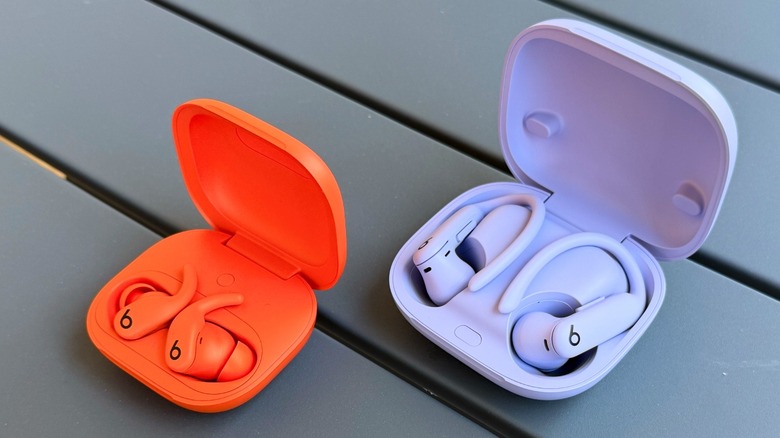
BGR selected these five headphones as workout alternatives to the AirPods lineup because they were designed for active people, have a sound as good or better than AirPods, or because they just go straight to the point by offering great sound at a ridiculously low price point. Unlike other lists, BGR decided to include three Beats products because Apple has been touting Beats as its best sports offerings for the past few years — even though the company will continue to say that AirPods are its leading products in the category.
Still, there's options beyond Apple too, and Sony and JLab have also made their names in the earbuds department, for both high-end and low-end customers. That said, whatever your choice might be, BGR wanted to show different alternatives for workout headphones, including different shapes, technologies, and some kick on the bass to get you going through a HIIT session, a steep indoor run, or a crossfit practice. Still, you're more than welcome to continue to use AirPods Max at the gym, but should you?