

How Much Would It Cost To Buy An Oppo Phone In 2016 Vs. 2026?
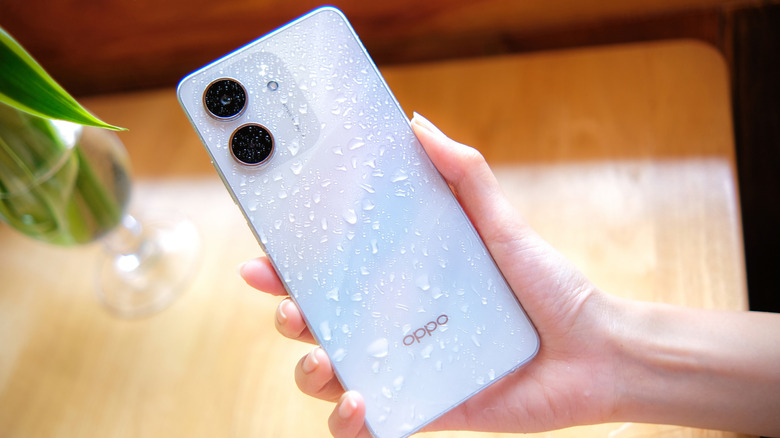
In 2016, the Oppo F1 released with a price of $249. Adjusting for inflation, today that cost would be about $350, which is quite a nice deal. If you wanted the Oppo F1 Plus edition, it cost quite a bit more at $430, or about $610 in today's money. Founded in 2004, Oppo is a technology brand based out of Shenzhen in China that was launched by Duan Yongping.
In 2026, you have many more Oppo phone options to choose from other than the F1 and F1 Plus, and the prices of these models vary based on their specs. For what's still a pretty affordable price, you can get the Oppo Reno 15 F for $349, about 18% lower than the price of the F1 Plus a decade ago. Though if we adjust for inflation in reverse, a Reno 15 F would theoretically cost you $248 back in 2016. Today, the Oppo A16 costs more at $409 (about $287 in 2016 dollars), and the Reno 16 F even more at $625 (roughly $439 in 2016 dollars).
The biggest price shock, though, considering the reasonable cost of the Oppo F1, is the Oppo Find X10 Pro Max at a staggering $2,499. Even the new Apple iPhone 18 Pro Max is $1,789, seemingly cheap by comparison. If you were to buy the Oppo Find X10 Pro Max in 2016, you likely would have spent $1,777.
What has changed for Oppo in a decade
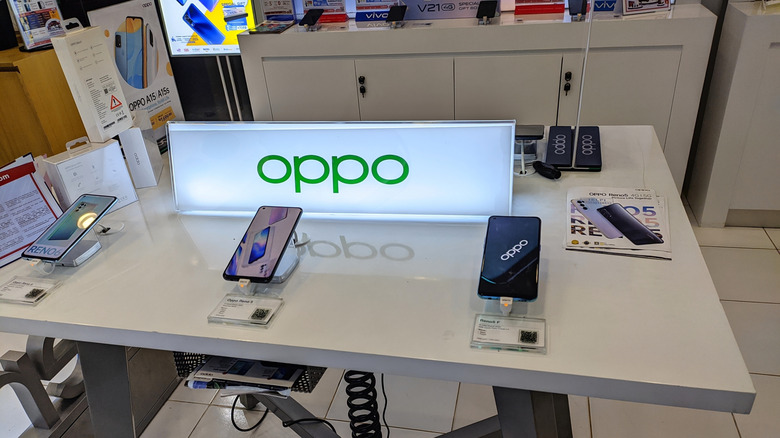
Let's compare the Oppo F1 to the Oppo Reno 15 F to get a fuller picture — after all, smartphones have come a long way in a decade, and you now generally get more than you did in 2016. The F1 had 3 GB of RAM and 16 GB of storage. Its screen resolution was 720 by 1,280 and its rear camera had a resolution of 13 MP. Today, the Reno 15 F has 8 GB of RAM and 256 GB of storage. Its screen resolution is 1,080 by 2,372 and its rear camera has a 50 MP sensor. That's quite the change, and that increased storage, screen clarity, and camera power come at a cost. Still, the Reno 15 F is a very affordable phone, so how much has the much more expensive Find X10 Pro Max improved its performance compared to Oppo's humble F1 beginnings?
If you buy the Oppo Find X10 Pro Max, you get 12 GB of RAM and a massive 512 GB of storage. Its screen boasts a 2,772-by-1,272 resolution with the ability to display over 1 billion colors. Its three rear cameras are each backed by 200 MP sensors. It's clear why you pay so much more money for it today, and the premium price would have been evident had it been sold in 2016 — after all, our review of the Find X10 Pro Max found it to be quite a good phone.
For Oppo's phones themselves, the product list has greatly expanded across the decade. Taking a look at the products on Oppo's website shows multiple phone series, including the Find N, Find X, Reno, and A, each with their own lineup of models.
What has contributed to the price changes?
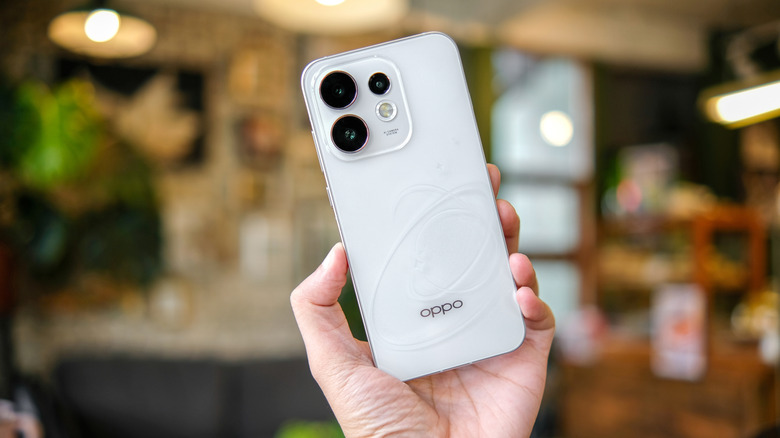
The increase in power, the expanded storage, the stronger camera, and the improved clarity of the screen all amount to paying more for a phone. As evidenced by comparing the Reno 15 F with the Find X10 Pro Max, those costs really start to add up the more power and capabilities you put into a device.
Another reason that you see more expensive Oppo phones on sale in 2026 is due to the RAM crisis. AI data centers have created a high industrial demand for RAM, which has led to a shortage in inventory for consumer electronics. This crisis is having a big impact on the phone market, including in prices. The Oppo F1 only needed 3 GB of RAM before this crisis, given the capabilities of its operating system and apps at the time. Now, the Reno 15 F needs 8 GB and the Find X10 Pro Max needs 12 GB in a highly competitive and limited market. Optimistically, this situation might end in 2027, though there is a belief that it will last until 2030. When it's over, perhaps phone prices will come down, but we wouldn't bet on it.
When the Oppo F1 released in 2016, its budget-friendly price was praised. Though Oppo still offers some lower-priced phones, ones like the Find X10 Pro Max do tend to elicit price complaints from consumers.