

The Reason Why Gaming Laptops Are So Unreliable

Gaming laptops can be a viable alternative for people who want a high-end performance device, but still value portability. These machines also come equipped with modern GPUs and latest-generation multicore processors, usually in small chassis that offers some convenience for anyone who is always on the move. However, under the RGB lighting, it is easy to see why many gaming laptops are unreliable because they prioritize portability over stability.
That reliability problem is not only a perception among people who own these laptops; it is also an engineering consequence. To compress the specs needed to give users access to AAA games or programs that demand more from a device, manufacturers often sacrifice some longevity in favor of design. That results in a shorter lifecycle than expected for the level of investment required to buy a gaming laptop.
Although some manufacturers suggest this durability issue has improved in recent years, that may not be consistently true. So, if you are considering buying a gaming laptop or replacing a desktop with a device that offers more portability, it is important to understand what risks can come with that choice.
Why gaming laptops tend to be less reliable
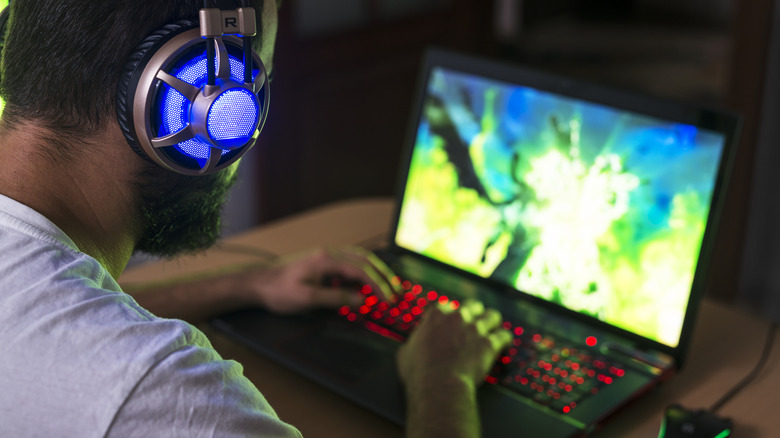
One reason gaming laptops can be unreliable is the high temperature they can reach. The heat generated by powerful components in such a tight frame is often excessive. When pushed to the limit by modern games, internal heat can eventually damage the hardware. While manufacturers try to offer cooling solutions, the limited space makes heat management a constant struggle.
The compact design of high-end laptops also creates structural issues. Unlike desktops, many laptops have the processor and graphics card are permanently attached to the motherboard. This makes the machine less resistant to heat and much harder to fix. On a desktop, you can relatively easily replace one broken part. On a gaming laptop, a small failure typically means you have to replace the entire motherboard, which is very expensive.
To keep these systems working, users must perform regular maintenance on their computer, though this isn't always explained well. You need to clean out dust and reapply thermal paste frequently. It is also important to use the laptop in a spot with good airflow to keep temperatures down to ensure a long-term longevity.
Budget matters when choosing a gaming laptop

This does not mean every gaming laptop fails early, but budget plays a major role in laptops and how well a system holds up. Some models cut corners on parts like smaller fans and less robust chassis designs to deliver stronger specs on processor and GPU. Those trade-offs raise the odds of temperature-related issues, especially during longer gaming sessions or when running demanding editing software.
Beyond portability, which remains a major advantage over desktops, gaming laptops often cost more while offering fewer customization options. Desktop builds allow wide part selection inside the case, but fewer manufacturers provide that same level of choice in portable systems. Many buyers end up limited to preset configurations, which can make it harder to match specific needs and helps fuel the reputation that gaming laptops feel more failure-prone than desktops.
This is also important to consider when it's time for an upgrade. In a desktop, a $300 component swap can extend the life of your system for several years, while gaming laptop users are often much more limited. So, if a gaming laptop is struggling with hardware demands, typically the only solution is to buy an entirely new device.