

Ranking 8 Major Handheld Gaming Consoles From Worst To Best
We may receive a commission on purchases made from links.
In years past, when it came to playing games on the go, one of the most accessible ways to enjoy them was by gaming on a smartphone. However, in recent years, handheld consoles and devices have been more common in the market as they have surged in popularity. With increasing popularity, companies have designed them to be more powerful with suitable hardware that can run notable games usually reserved for modern consoles and desktops.
There are several different ones you might want to pick up from multiple companies, and narrowing down which ones are the best can be tricky. We've gone through some of the most popular choices and ranked them based on various factors, which can be found at the end of the list. All of these handheld devices can be played away from a large television screen, but some also feature docking stations for you to play them like a traditional console if you want to relax on a couch. These are the rankings of eight major handheld gaming consoles from worst to best.
8. Zotac Zone
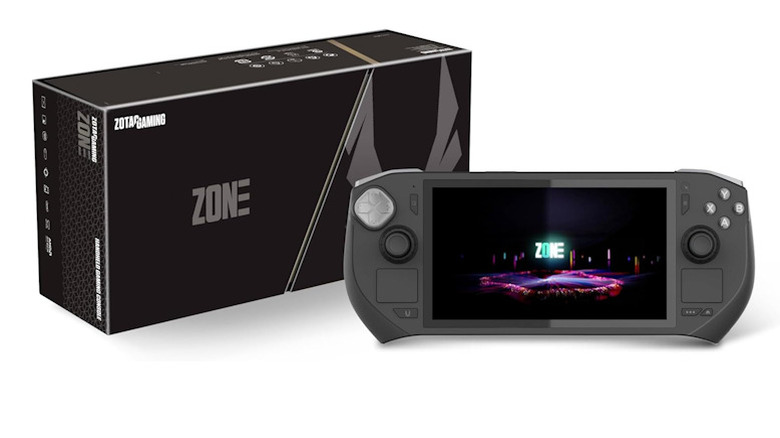
When it comes to major handheld hardware, the Zotac Zone is a decent option, but it doesn't quite keep up with the competition. It has an AMD Ryzen 7 8440U, an AMD Radeon 780M graphics card, 16 GB of memory, 512 GB of native storage, and cost $799 at launch. The hardware is respectable, especially for a device that can run Xbox Game Pass, making it a solid option for anyone who wants to play those games away from their home. However, the software for the Zotac Zone brings it down considerably and hurts it a fair amount when compared to other handheld gaming devices that are far more optimized.
The software is essentially a less clean version of Windows, and isn't as put-together as Steam's Big Picture mode. Going through the initial menus makes the startup a frustrating experience. On top of it, the Zotac Zone comes with a 48.5 Watt-hour (Wh) battery, where it'll last you almost an hour and a half on the lower power settings, and less than an hour on higher settings. You'll need to have it constantly plugged in or be close to an outlet to reliably use it, which defeats the purpose of a handheld portable device.
7. PlayStation Portal
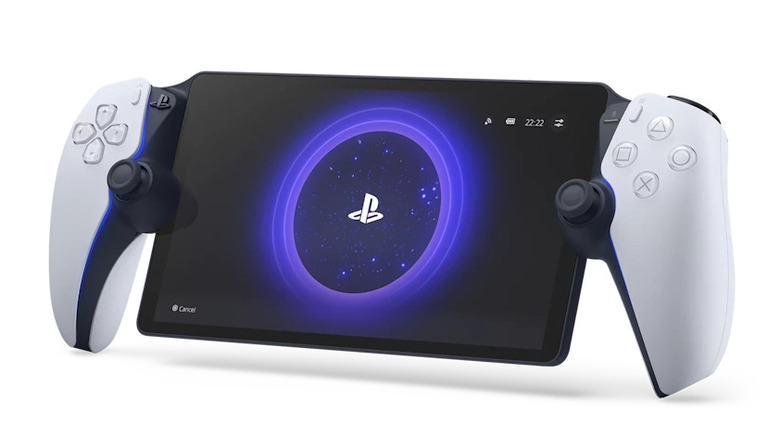
The PlayStation Portal is another worthwhile handheld device, but it's marketed to those who want to play their PlayStation games away from their television using a device with an eight-inch LCD touchscreen and 1920 x 1080 resolution. You can stream PlayStation games from your console to the handheld while connected to your home network, or watch other forms of media. Additionally, if you only have a PlayStation Plus Premium subscription, you can stream games through the cloud rather than relying on a PlayStation 5. Still, the problem with the Portal is portability, and not being able to rely on it when outside your home.
You can only use the PlayStation Portal if it has an internet connection, and it's recommended to use a home Wi-Fi. While you can use a broadband internet network that uses at least 5Mbps, you'll want something that has at least 15Mbps for the best experience. This requirement may keep you locked down to a household Wi-Fi, and you shouldn't expect to use it on a plane or on the bus while you're traveling. It also doesn't come with a Bluetooth connection, which is a significant missing feature. When it does work, the PlayStation Portal performance is great, but you can only play games supported by the PlayStation 4 or 5.
6. OneXFly F1 Pro
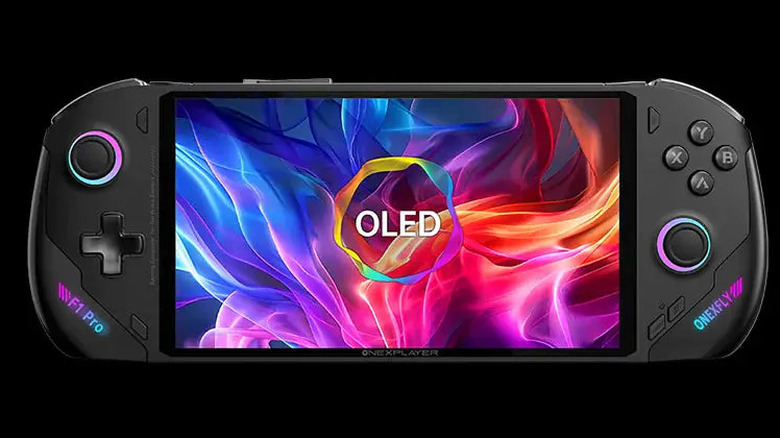
Another respectable handheld gaming device that made our list is the OneXFly F1 Pro. It comes with an AMD Ryzen AI 9 HX 370, a Radeon 890M graphics card, 32 GB of memory, and 1 TB of storage. The F1 Pro's case feels solid and comfortable in your hands, while providing a subtle RGB lighting to the sides, without going overboard. When you settle in to play, you can expect a stable frame rate from graphics-heavy games, such as Black Myth Wukong and Cyberpunk 2077, easily topping other competitors. You'll be able to enjoy a smooth gaming experience with games reaching 50 to 60 FPS at 1080p resolution. However, this amount of power and crisp gameplay does come without drawbacks as most games drain the device a percent a minute. The performance will be gorgeous, but you'll want to keep close to an outlet.
Although the hardware is great, and it feels amazing to play, the price of the F1 Pro is incredibly high. You can get it for $1,339, or possibly on sale if you're patient. Even on sale, compared to other handheld gaming devices on this list, it's one of the more expensive options, and costs about the same as purchasing a medium-range desktop. It's a solid option for anyone with the extra cash, but even if you do have that kind of money, other handhelds are nearly identical to the F1 Pro, where you won't have to spend as much.
5. MSI Claw 8 AI+
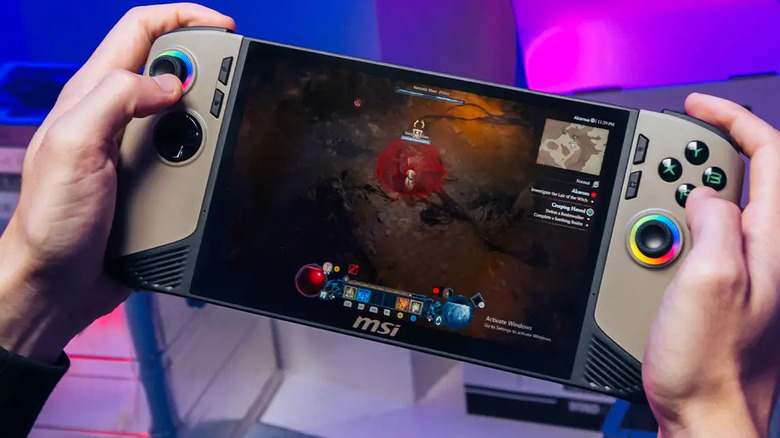
If you're searching for a robust handheld that has plenty of power with incredible battery life, the MSI Claw 8 AI+ might be the gaming console you're looking for. Inside it, you can find an Intel Core Ultra 7 258V, Intel Arc Graphics 140V, 32 GB of memory, and an eight-inch touchscreen. The hardware is great, capable of holding a steady 55 to 60 FPS at a good quality level for multiple games, but it falls behind some other choices. For casual players looking for a handheld gaming device, the MSI Claw 8's performance may not justify the $1,099 price tag. What is nice is that it has a stronger battery than other devices, as it has an 80WHr battery, allowing you to avoid being attached to an outlet to use it.
You do need to consider the overall weight and size of the MSI Claw 8. It's a heavy handheld at 1.75 pounds, and is almost a foot from side to side, and 5 inches from top to bottom. It does make holding it a challenging experience compared to other handhelds. Plus, you'll want to plan out where to keep it in your bag when you bring it with you, so that it doesn't run the risk of breaking in transit. Despite not being optimized for travel, the great overall hardware makes up for it.
4. ASUS ROG Xbox Ally X
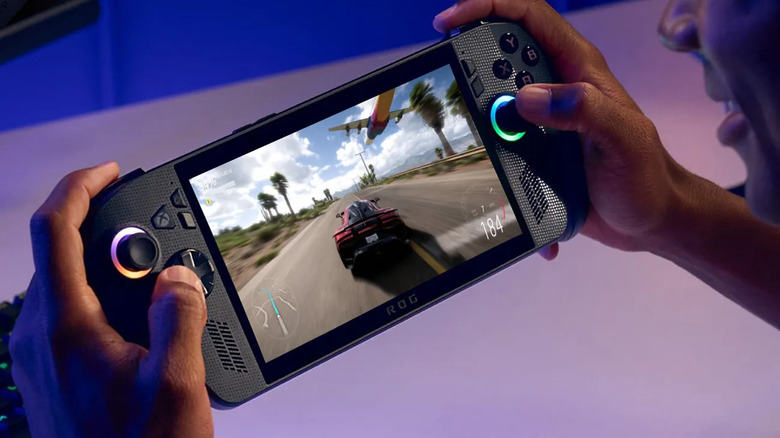
Republic of Gamers (ROG) breaking into the market with the ASUS ROG Xbox Ally X handheld is huge, and this impressive device is capable of playing a wide variety of games with good graphics for a portable device. It comes with an AMD Ryzen AI Z2 Extreme Processor, an AMD Radeon graphics card with RDNA 3.5, 32 GB of memory, a seven-inch LCD display with a 1920x1080 resolution and 120 Hz refresh rate, and an 80 WHr battery. Needless to say, the Xbox Ally is one of the better handhelds on the market, easily earning the top spot when it comes to FPS for graphic-heavy games and superb battery storage. Although it can run a little hot, it does have great ergonomics that make holding it a comfortable experience.
Although the hardware is one of the best aspects about it, which we spoke about in our Xbox Ally X review, and playing games was impressive with minimal hitches, the handheld is not cheap. You can expect to pay $999, making it one of the more expensive handhelds on the market. With the power onboard to deliver great graphics, you have access to Xbox Game Pass, along with other online storefronts, such as Steam, GOG, and the Epic Games Store. You can treat it like an actual mobile PC and not feel too limited. For those who can afford the Xbox Ally X, it's a great choice, and the versatility is hard to beat.
3. Nintendo Switch 2
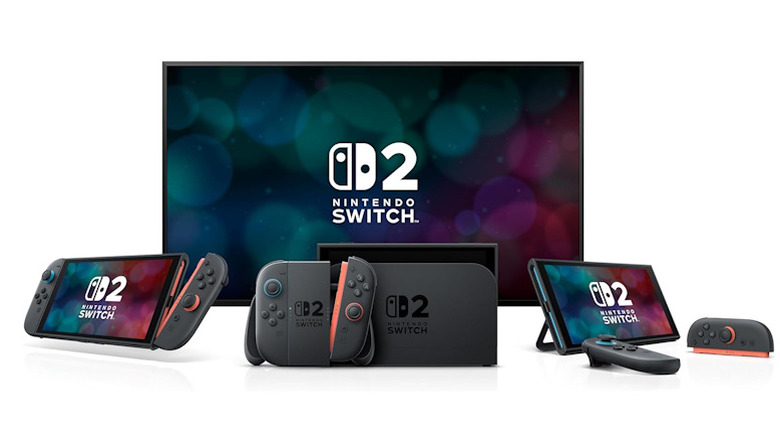
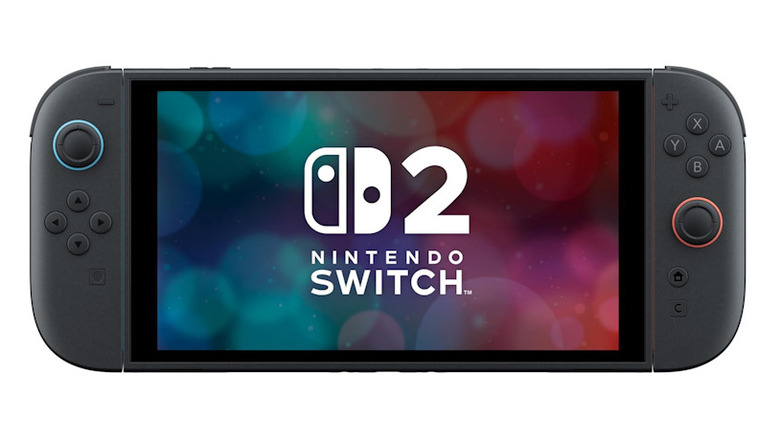
The Nintendo Switch 2 is also a worthwhile handheld gaming device, and it is one of the better choices at an affordable price of $449. It's especially true if you already own a Nintendo Switch, as switching to the new console is simple, and it runs everything the original Switch could.
It has a 7.9-inch LCD screen that supports a 1920x1080 resolution with HDR10 support in handheld mode, and can reach up to a 4k resolution while it's docked. It also comes with a kickstand, a built-in microphone, Bluetooth, and magnetic JoyCons. It's a day-and-night difference from the standard Nintendo Switch, with incredible optimization for older games on that platform, as well as newer ones, such as Cyberpunk 2077, and has multiple settings you can adjust to further improve your experience.
A downside to the Nintendo Switch 2 for many is that you're limited to what's on the Nintendo Store. If a game is not there, you won't be able to find a reasonable way to get onto this platform. Unlike other handhelds that are made for desktop gaming, there's not as much customization or fiddling you can do with the Nintendo Switch 2. Although Nintendo partners with others in the industry, especially with Indie Developers and Microsoft, not everything is on this console. Even so, the games that are there run exceptionally well, and it holds a special place in the hearts of many.
2. Lenovo Legion GO S SteamOS
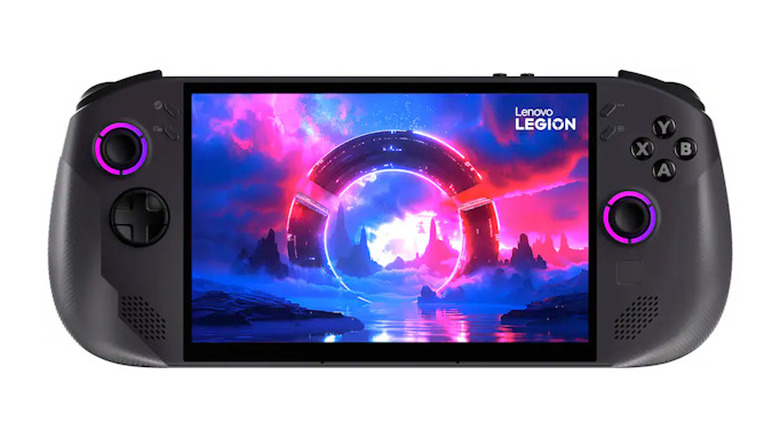
The Lenovo Legion Go S with the Steam operating system makes it a versatile and powerful choice, where you can easily play your favorite Steam games, as it's one of the few direct handheld alternatives to a Steam Deck. Rather than relying on the Windows operating system like other Legion GO handhelds, the Steam version makes it easier to run the Steam library and multiple games from it. However, the Legion GO S is not perfect. The Steam OS doesn't always play nice with the hardware, but the operating system makes playing these games easy.
When jumping into a game, the impressive hardware runs most games smoothly. It comes with an AMD Ryzen Z2 Go processor, an AMD Radeon Graphics, 32 GB of memory, and an eight-inch IPS screen. It might not be the best, most cutting-edge choice for a top-tier gaming device, but the optimization of the software allows it to compete with other models that have better specs, like the MSI Claw 8.
There are downsides to the Legion GO S. For one, the trackpad doesn't work with several Steam-based games, which is disappointing as multiple games rely on the trackpad, especially those that require a mouse. Depending on what games you plan to play, this can ruin the entire experience, and the internal fans are pretty loud. Still, the superb hardware and ergonomics of the handheld make up for it, plus you can get it for an affordable price of $749.
1. Steam Deck OLED
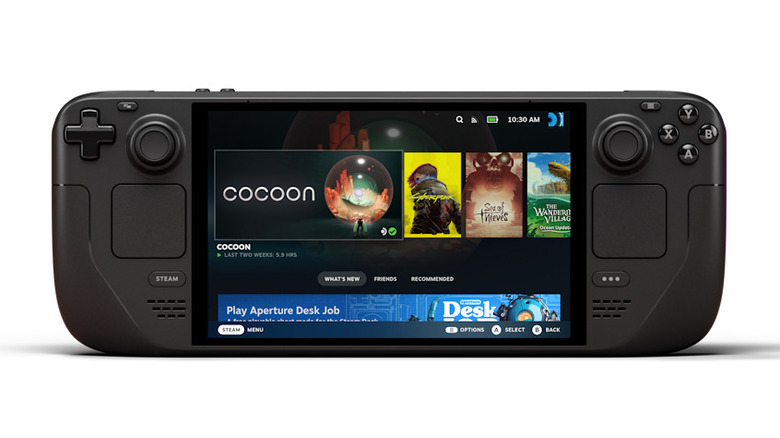
Easily one of the best and most competitive handheld gaming devices on the market is the Steam Deck OLED. It's an improvement on everything you already appreciate from Valve's standard Steam Deck, and comes with an AMD APU processor, AMD Radeon Graphics card, a 7.4-inch OLED screen with a 1280 x 800 resolution, and 1 TB of storage. Other handhelds do surpass the OLED in terms of hardware capable of handling better games, but it has a lot going for it.
It has an impressive battery that can last several hours, a smooth and intuitive interface that uses the Steam Big Picture mode, and a high degree of software customization available to users. For those who are savvy enough, it's possible to get Xbox Game Pass games working on it, and there are other essential apps you can add to it to expand its capabilities. Even if you don't want to install additional apps, the Steam library is vast and impressive, with multiple Steam Deck-approved games.
You can get the 1TB OLED version for $649, or get the 512GB storage version for $549. Regardless of your choice, the device is relatively affordable while still being capable of running a variety of games. You might find a few games that cause it to slow down here and there, or are not entirely optimized, but those are few and far between. The Steam Deck OLED is one of the best handhelds on the market, ideal for travel and for anyone who wants to dive into their favorite game at a moment's notice.
Methodology
When selecting these gaming handhelds for our list, we chose from a range of mid-range and high-end handhelds. We focused on ones that had smooth performance, great hardware, and portability to play games on the go, away from a dedicated screen. The hardware inside, its features, and range of supported games were the most significant factors when adding an item to this list, alongside how easy it was to use on the go and the longevity of the battery before it needed a charge.
The price was also a significant factor, as affordability makes these handhelds more accessible, as long as the price does not sacrifice the quality of the hardware. For example, the Steam Deck OLED was one of the cheaper options that seamlessly worked with multiple games on the Steam library, while the Legion Go S was slightly more expensive with better hardware, but it had a few issues with Steam OS.