

15 Electric SUVs To Look Out For In 2026 (And Beyond)
Until relatively recently, electric cars were a gimmick at best. They were slow, cheaply built, lacked power, and couldn't cover long distances. Most importantly, the electric formula didn't work for SUVs, simply because people rely on them not only for city driving but also for off-road conditions and towing. Fortunately, as governments around the globe have pushed for increased EV adoption, brands have evolved as well. Today, EVs can cover hundreds of miles, can be cheaper to maintain than gas cars, and the instant torque and power available at your disposal can be really addictive.
If you've been holding off on your electric SUV purchase, 2026 could be the year for you. That's because even legacy brands such as Honda, Toyota, and Land Rover are ready to embrace the electric revolution by launching new EV lineups. To help you make this decision, we've gathered the 15 electric SUVs to look out for in 2026 and beyond.
Acura RSX
The original RSX is one of the most iconic cars from the Japanese automaker. It sold in the U.S. from 2001 to 2006 and captured the hearts of car enthusiasts with a four-cylinder that produced 210 horsepower at 7,800 rpm and was married to a six-speed manual gearbox. The result was a car that was nimble, sporty, and handled better than many more expensive cars of the era. Not to mention, the original RSX was a beauty to behold.
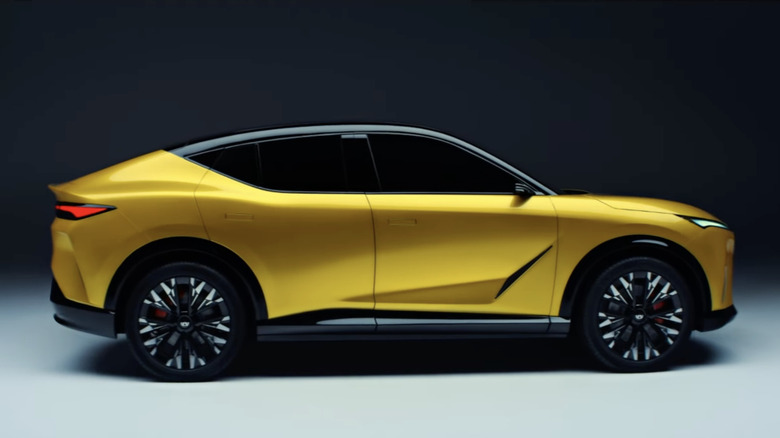
Acura is now resurrecting the RSX name for a new electric SUV that, unlike its first EV, the ZDX, is built on Honda's entirely new "0 Series" EV platform. Design is a big departure from the original RSX, since the new one is a sports SUV coupe with four doors featuring a sweeping roofline and ducktail-style rear spoiler.
While the performance, range, and 0-60 times are still under wraps, Car and Driver suspects the new RSX will house Honda's ASIMO operating system, which should bring major upgrades to the infotainment system, including over-the-air updates, an adjustable car feel based on user input, and a host of new safety features. Acura's new plant in Ohio will reportedly manufacture the car, and, as per recent reports, prices could start around $50,000.
BMW iX3
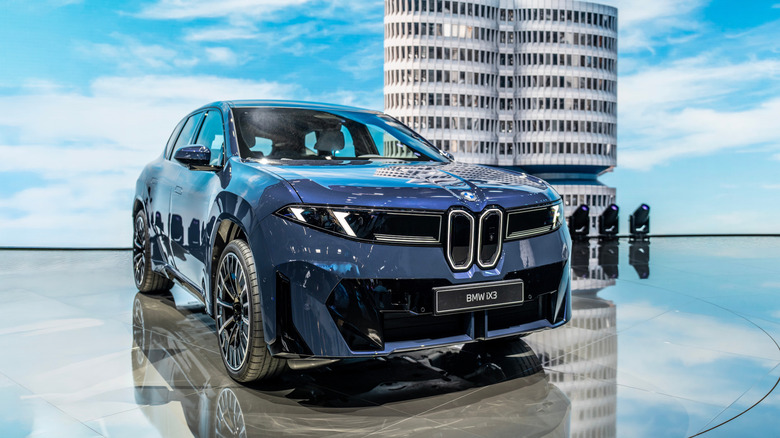
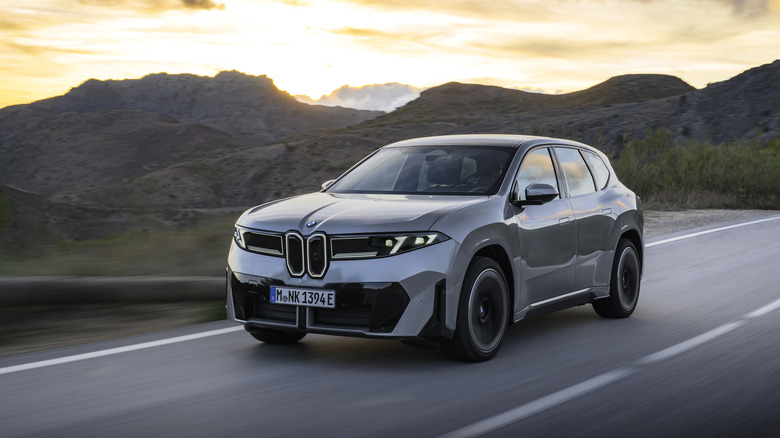
BMW's design language has been a subject of controversy in recent years, considering many enthusiasts were complaining about the massive "beaver-toothed" grille on multiple models. Well, BMW has apparently listened to the criticism and scaled down on the grille size with the new iX3, but this has created another problem. Since the carmaker has decided to make the iX3's grille thin, it now resembles the teeth of a rabbit instead. One Reddit user said, "We heard you don't like the giant grilles, so we've made this one hilariously small."
Regardless of what you might think of the design, BMWs are still the cars they've always been, and the iX3, which is a part of the Neue Klasse platform, should be no different. In the United States, the iX3 will ship with dual electric motors that combine to make 463 hp, launching the vehicle from a standstill to 60 mph in an estimated 4.2 seconds. The battery is a 109-kWh unit, which BMW says should provide 400 miles of range.
Charging has received a massive upgrade as the iX3 can recharge at up to 400 kW, which translates to 230 miles of range in just 10 minutes. Beyond that, BMW has redesigned the interiors, complete with a curiously shaped 17.9-inch infotainment system that also handles climate control settings, and a 43.0-inch gauge display that looks pretty futuristic. Prices for the new iX3 will likely start at $60,000, with sales beginning in summer 2026.
Chevy Bolt
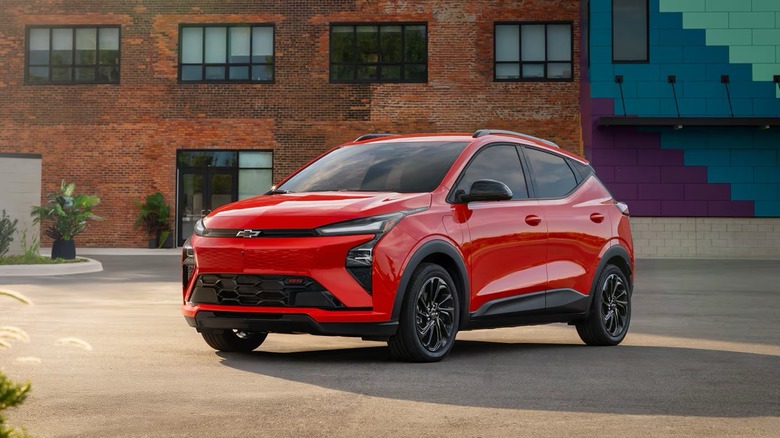
If you're in the market for a family-size electric vehicle that doesn't break the bank, the Chevy Bolt is returningfor the 2027 model year. This new EV will cost under $30,000. The fresh Bolt retains the same shape but features redesigned front and rear ends that look pretty and blends in with other modern EVs. Inside, there's a new 11.3-inch touchscreen that will control all the performance metrics, but physical climate controls are still present. Since GM has phased out Apple CarPlay and Android Auto, you can't mirror your phone and will have to rely on the built-in Google apps instead.
Under the hood, the new Bolt will feature a 210-hp motor that, when coupled with the 65-kWh lithium-iron-phosphate (LFP) battery, should provide roughly 262 miles of range. Charging is reportedly 2.5 times faster, allowing you to charge your car from 10% to 80% in just 26 minutes with DC public fast charging. The new Bolt can also use Tesla's fast charging network without adapters. Sales should start in early 2026.
Toyota C-HR
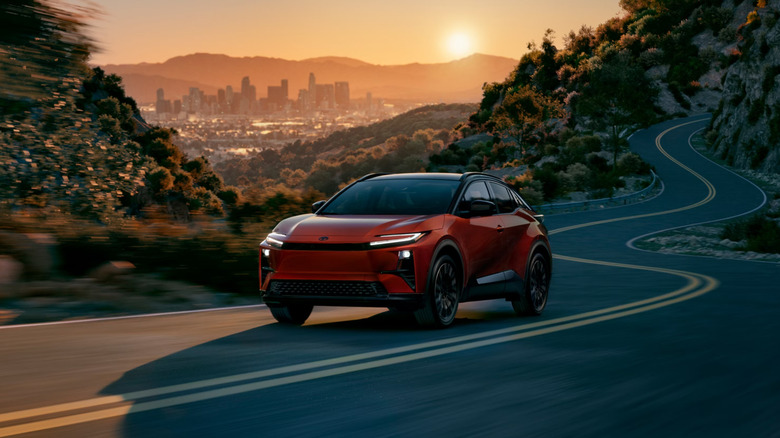
Expected to start at $35,000, Toyota's C-HR is another electric SUV that covers all the basics without costing an arm and a leg. After a four-year break, Toyota has refreshed the C-HR with a new design, featuring front headlamps reminiscent of the Camry. This time, the car's powered by dual electric motors that move all four wheels and produce 338 horsepower. Toyota estimates a 0-60 mph time of 5.0 seconds. Under the chassis sits a 74.7 kWh battery pack, which should deliver a range of 290 miles. Thanks to the inclusion of the NACS port, the C-HR can charge from 10 to 80% in about 30 minutes at Level Three charging stations.
Inside the cabin is a refreshed interior with a 14-inch infotainment touchscreen that supports both Wireless Apple CarPlay and Android Auto. Unlike its German counterparts, Toyota has kept physical buttons and knobs for the volume and climate controls.
Ferrari Elettrica
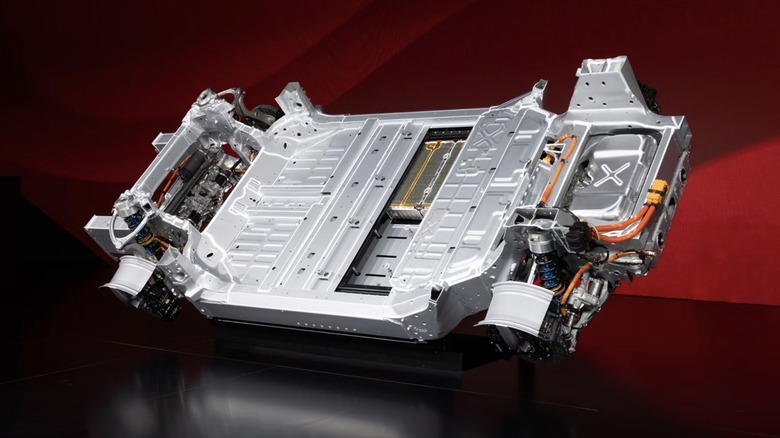
Ferrari has shied away from fully electric cars for quite some time, with the carmaker famously telling Top Gear presenter James May, "We are not interested in electric cars," a decade ago. Well, the tables have turned, as Ferrari is now gearing up for its first full EV launch in 2026. Although the Elettrica's design is still under wraps, photos from closed testing reveal that the car will feature four doors and a crossover-like design similar to the Purosangue, according to Car and Driver. Ferrari has confirmed the EV will have a 116.5-inch wheelbase and weigh roughly 5,100 pounds.
The Elettrica will reportedly house four permanent-magnet synchronous motors, with the front axle capable of producing up to 282 horsepower and the rear axle reaching a maximum of 831 horsepower. All this power can take the car from a standstill to 60 mph in just 2.4 seconds and a top speed of 193 mph. Buyers will be able to change the performance bias to rear-wheel drive. Beyond that, Ferrari's EV will run on batteries developed by the carmaker and will combine for a 122 kWh gross battery pack. This should be enough for 330 miles on the generous European scale. Charging is confirmed at 350 kW.
Genesis GV60 Magma
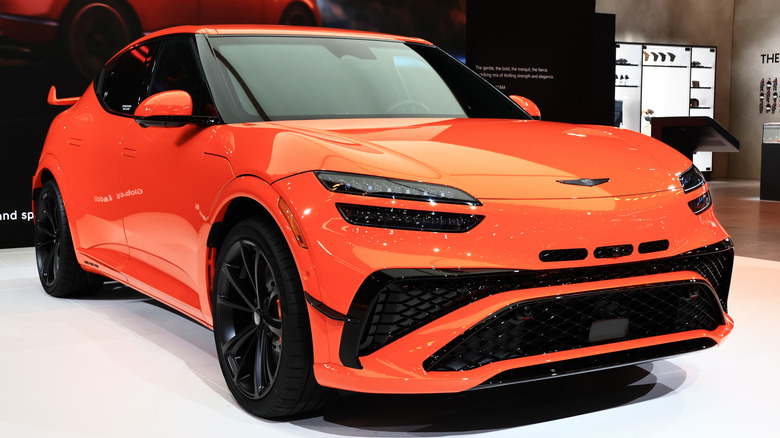
Like Lexus is to Toyota, Genesis is Hyundai's luxury spin-off brand, specializing in upmarket cars. To take on the likes of the BMW M series and Mercedes-AMG, Genesis recently introduced the performance-focused Magma sub-brand, whose first model will be the GV60 Magma, launching in 2026. The car will be built on the regular Genesis GV60, meaning it shares the same platform as the Kia EV6 and the Ioniq 5 N, but will deliver performance numbers that are much higher. For context, the GV60 Magma will feature two electric motors that drive all four wheels and combine to produce up to 640 hp and up to 583 lb-ft of torque. Genesis has estimated the 0-60 mph time at 3.4 seconds.
The car will feature Pirelli tires developed specifically for the Magma. The vehicle design also includes multiple driving modes: Control, Boost, Sprint, GT, and MY. Users can customize performance metrics, and there's even a Drift mode (which is not designed for the street.) An 84 kW lithium-ion battery pack will power everything, and while Genesis has not released estimated range figures, the GV60 Magma will support fast charging capable of taking the car from 10% to 80% in just 18 minutes.
Genesis GV90
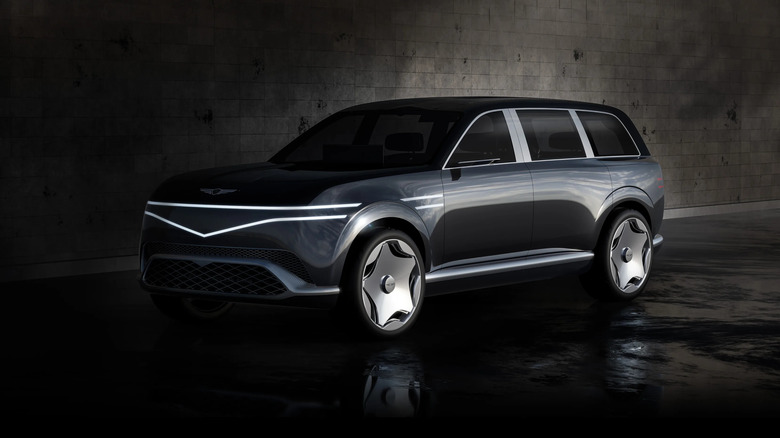
Hyundai's Genesis brand is best known for its luxury cars, so if you're in the market for an electric SUV that doesn't compromise on comfort, then the GV90 could be worth the wait. Car and Driver calls this the "new crown jewel" of the Genesis line, lauding its futuristic design, complete with two or possibly even three rows of seating. Experts speculate that it could share the same drivetrain as the GV70 EV, which produces roughly 500 hp, drives all four wheels, and gets from 0-60 mph in under 4 seconds. The GV90 will probably feature the same 99.8 kWh battery as the Kia EV9, giving it roughly 300 miles of range.
Genesis reportedly previewed the car as the Neolun concept in 2024, and according to Car and Driver, its cabin featured wood flooring, a large center infotainment display, and a front swivel seat. Given the GV90's lavishness, prices could start at $100,000, with premium trims potentially reaching $120,000 at launch in 2026.
Mercedes-Benz GLC EV
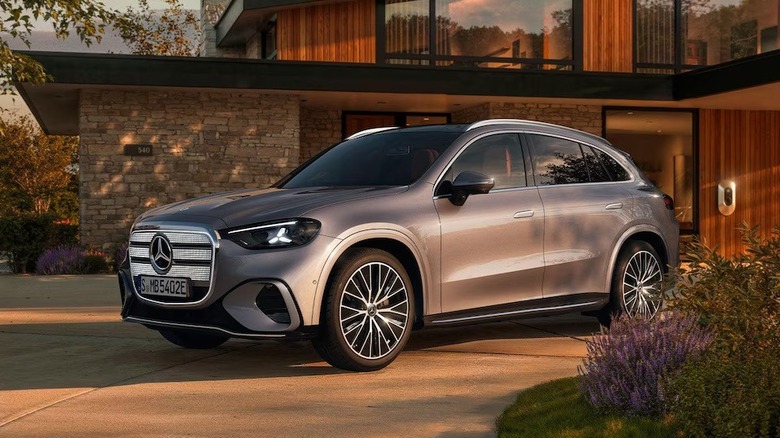
The design of Mercedes' EV lineup has been a bit polarizing. Perhaps to address the issue, Mercedes is gearing up with an all-new GLC EV that ditches the old egg-shaped design for a more conventional look. The front houses a massive grille reminiscent of the brand's gas cars, while the swooping taillights with the Mercedes star are brand-new for this generation.
Mercedes will offer the new GLC EV in two variants. The base GLC300+ will feature a single motor producing 369 horsepower to the rear wheels only. The four-wheel-drive GLC400 4Matic produces 483 horsepower. Mercedes estimates the 0-60 mph time for the base version is 5.9 seconds, while the faster model can do the same in 4.4 seconds.
Underneath the chassis of both variants sits a 94-kWh battery pack that Car and Driver expects to deliver approximately 400 miles of range. Since these numbers are preliminary, it's advisable to wait for real-world tests. Charging speeds are set at 330 kilowatts, meaning a compatible charger can add 188 miles of range in 10 minutes. Buyers of the GLC EV will have the option to install the 39.1-inch Hyperscreen, which spans nearly the entire width of the dashboard and displays all metrics. Both GLC EV models should launch in late 2026 with a price tag between $60,000 and $72,000.
Porsche Cayenne Electric
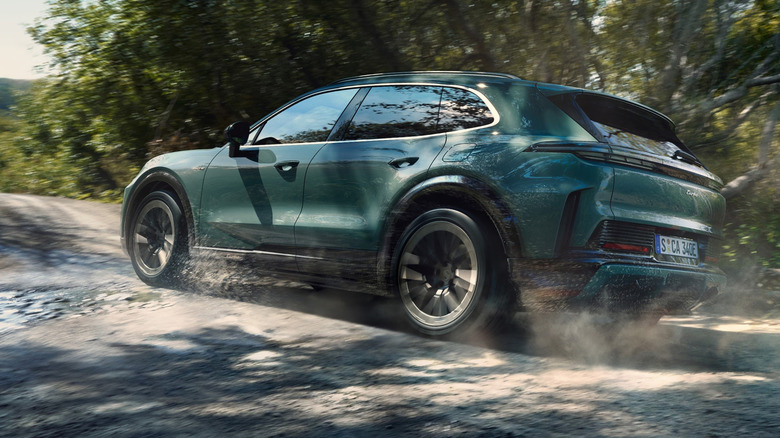
Despite Porsche's delay of future electric products in favor of internal combustion engines and hybrid offerings, the Cayenne electric is still happening. The German carmaker announced the car in November, and it has generated quite a buzz. That's because the Cayenne will come in two variants: the regular Cayenne and the Cayenne Turbo. The regular has two electric motors that drive all four wheels and produce a respectable 435 horsepower. The Turbo, however, is a beast, making an eye-watering 1,139 horsepower and 1,106 pound-feet of torque from its dual electric motors, making it the most powerful Porsche ever built. According to the carmaker, the Turbo's Active Aerodynamics system adapts to the drive in real time with "movable cooling air flaps in the nose, an adaptive roof spoiler and...active aeroblades at the rear."
With its 108-kWh battery that's based on the 800-volt architecture, the Cayenne EV estimates a range of 373 miles. Charging should be much less of a headache, as the car will feature a NACS charging port and 400 kW of fast charging, enabling a 16-minute recharge from 10% to 80%. However, the Cayenne's party piece will be wireless charging that works like your smartphone. The price of the regular Cayenne Electric starts at $111,350, while the far more performance-focused Turbo variant costs $165,350.
Rivian R2
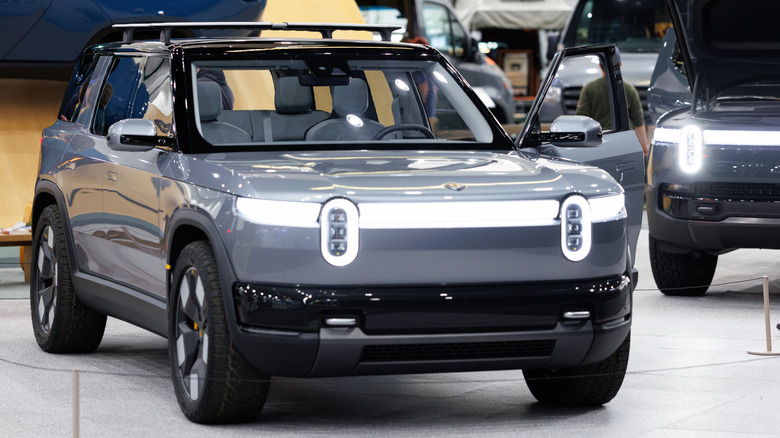
Like Tesla, Rivian is a new-age electric carmaker that doesn't tie itself to any legacy. The brand's recent EVs, like the R1S, have been a success with experts raving about the overall engineering and ludicrous performance from a startup. Now, to cater more towards the mid-range buyers, Rivian announced the second-gen R2, which could start at around $45,000. The car will offer several power options, including single-, dual-, and tri-motor variants. Rivian says the top-spec version should launch from 0-60 mph in less than 3 seconds. Users will also have the choice between two battery packs, a standard and a long-range one, providing roughly 300 miles of range.
The interior is dominated by Rivian's signature 15.6-inch infotainment display which controls everything, including the drive modes, navigation, and performance metrics. If you're looking for Apple CarPlay, you'll have to look elsewhere because Rivian's CEO says that app is never coming to their cars. The R2 will hit the roads in early 2026.
Alfa Romeo Stelvio EV
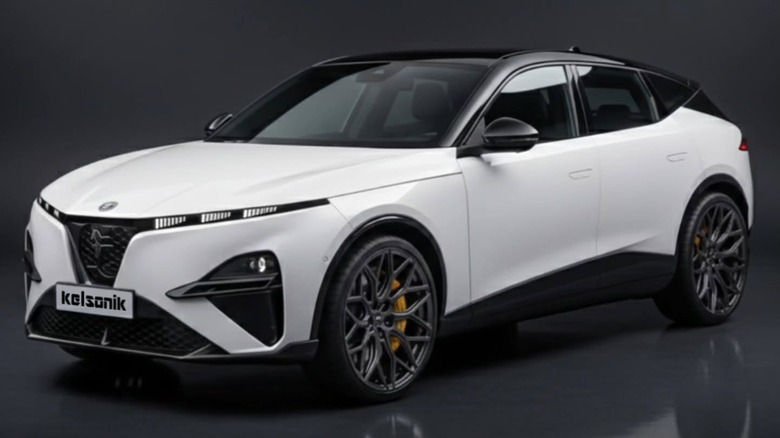
Italian luxury carmaker Alfa Romeo is known for making some of the world's best engines, but it's also hesitated to electrify its lineup. The carmaker is finally gearing up to launch the second generation of its popular SUV, the Stelvio, in electric and hybrid form. Not much is known about the EV version yet, but Car and Driver reports that the Stelvio will use the STLA Large Platform, which undergirds the new Dodge Charger and the Jeep Wagoneer S EV.
The design, while not confirmed, will likely remain consistent with the original Stelvio, just with a modern touch. Alfa has reportedly confirmed that production for North America will start in 2026 for the 2027 model year. Car and driver predicts that the hybrid powertrain version could begin at around $55,000; the EV variant would likely be priced higher at around $70,000.
BMW iX5
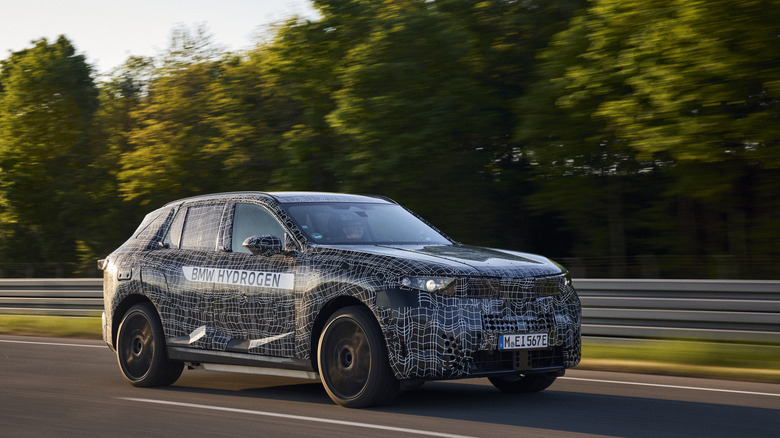
If you loved the iX3's design but want a bigger car, then the upcoming iX5 could be for you. Interestingly, the iX5 will reportedly not run on the Neue Klasse platform, on which the iX3 is based, but will use the flexible CLAR platform, allowing the Bavarian carmaker to offer both gas- and electric-powered variants. The design is certainly Neue Klasse, with renders suggesting similarly thin kidney grilles. BMW has reportedly done away with physical door handles and replaced them with tiny winglets positioned at the beltline.
While performance figures are still under wraps, the iX5 will feature higher-density next-gen battery cells, which should unlock more range. The electric iX5 will reportedly go on sale in the United States in 2027 at a price point that remains to be seen. For those still not on board with the electric future, Car and Driver says BMW and Toyota are collaborating on a hydrogen-fuel cell vehicle that could debut in 2028, but that's a story for another day.
Honda 0 SUV
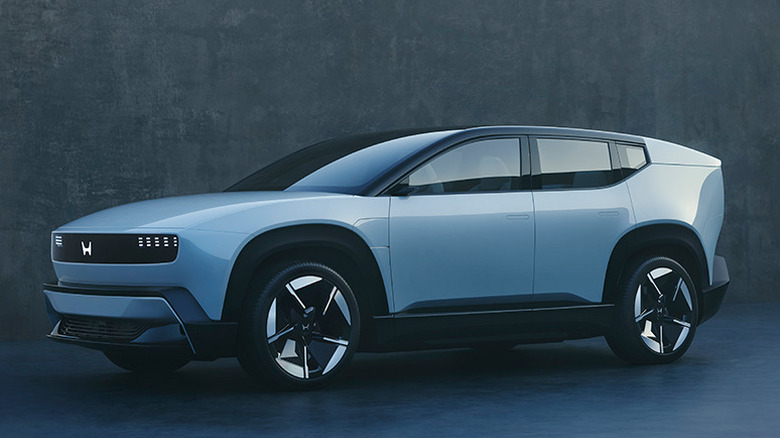
Honda has been relatively relaxed in the EV market, with not many options from which to choose, but this is about to change with the 0-Series EV platform, which will be a monumental shift in the carmaker's EV efforts. The lineup will reportedly debut the 0 SUV in the first half of 2026.
Unfortunately, details such as power and torque aren't yet available to the public, but Car and Driver reports that the SUV will feature new battery technology that should deliver a range of about 300 miles and will be available in both rear- and all-wheel-drive options. The design is a major departure from anything Honda's cooked up before, with its '0' nomenclature referring to building its EVs with a clean-slate ethos. Go back to the starting point and redefine mobility from 0," Honda says. With a swooping top and sharp angles at the front and rear, it certainly doesn't look like what Honda has done before. Beyond that, the SUV will reportedly house the brand-new ASIMO operating system and Level 3 autonomous driving.
Jeep Recon
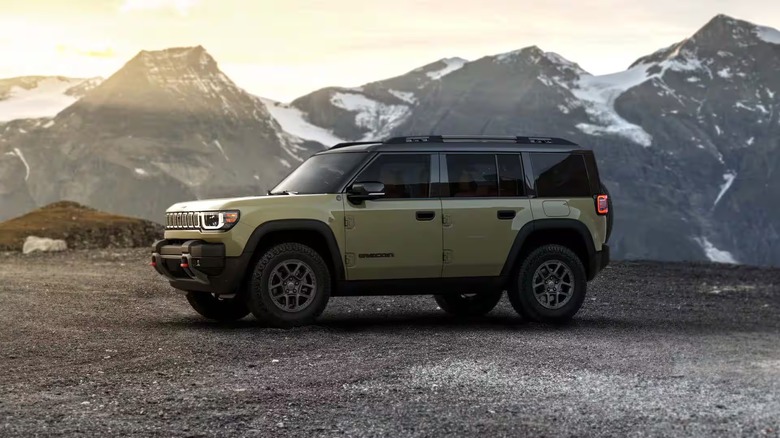
If you've been waiting for an electric Jeep Wrangler, there's still a long way to go, since it won't arrive until sometimein 2028. However, there's a solution, and that's the Jeep Recon EV. Its design is retro-inspired by the Wrangler, features four removable doors, and an automatically folding roof for outdoor adventures. Power is handled by two electric motors, which deliver a respectable 650 horsepower and launch the car from 0-60 mph in just 3.6 seconds. Since the Recon is an off-road vehicle, Jeep has given it 9.1 inches of ground clearance, fitted an electric locking differential, and multiple traction modes for snow, mud, and rock.
Underneath the chassis sits a 100.5 kWh battery pack that Jeep says should be good for 230 miles of driving. However, future trims with higher battery capacity may unlock 250 miles of range. The Recon can reportedly charge from 5% to 80% in just 16 minutes with a fast DC charger. It goes on sale in early 2026, starting at $65,000.
Land Rover Range Rover EV
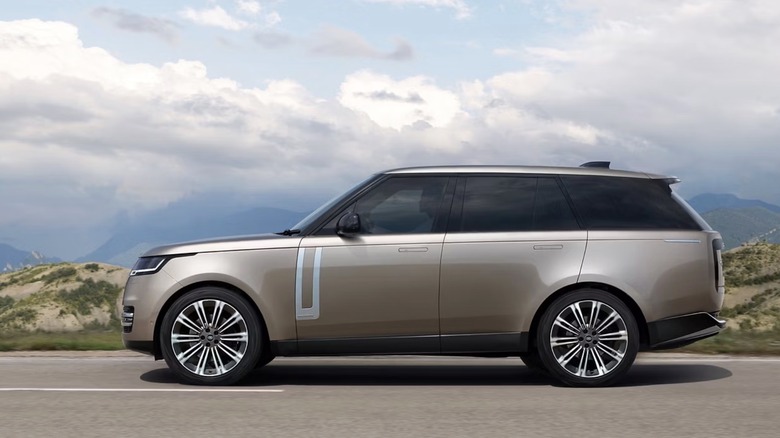
Land Rover is a brand that works on its legacy. After all, they've been making cars for decades, and despite the reliability concerns, people still absolutely love them. Renowned automotive journalist Jeremy Clarkson summed it up perfectly, saying, "You could launch a car that does a million miles an hour, costs eight pence and runs on water, and people would still buy a Range Rover." Today, as the world is shifting towards EVs, the carmaker is gearing up for its first Range Rover EV.
Not much is known about the vehicle except the fact that it hopes to match the performance of the V-8-powered Rover (over 500 horsepower), but if you haven't been a fan of all the futuristic EV designs, you're in luck. The Range Rover EV will reportedly look similar to its internal combustion engine counterpart and feature multiple motors. According to Car and Driver, the car was seen at testing in the Arctic Circle, where Land Rover confirmed the inclusion of a new slip management system that will drastically increase grip on snow.