

The TV Panel That Thrives Even In Bright Rooms
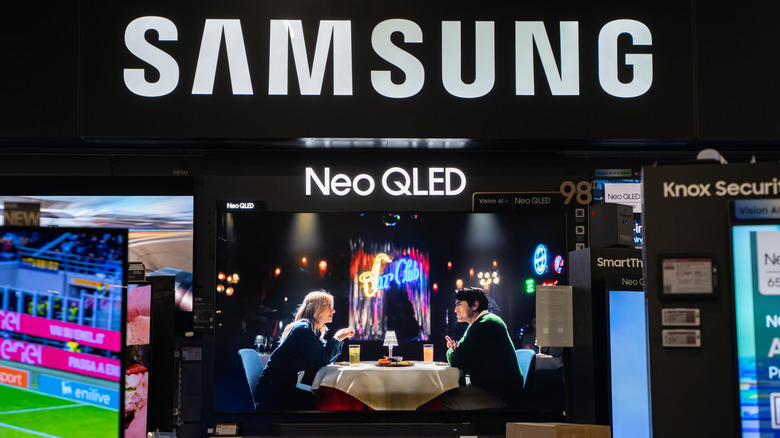
Watching TV in a dark room is the best way to take in the latest cinema or season of your favorite show. In a viewing space with reduced ambient light, colors, contrast, and black levels are able to take center-stage, resulting in the kind of immersive picture quality and accuracy most often associated with an actual movie theater. Unfortunately, the sun and our living room windows are ambient light variables we'll always have to work around, especially if you do a majority of your TV watching during the day.
Investing in the wrong display technology is one of the most common mistakes people make when buying a new TV, and bright viewing spaces call for a TV that can get just as bright, if not brighter. That's why anyone shopping for a new TV for a sun- or light-drenched room should be looking at LED-LCD sets. Unlike OLED TVs, which rely on self-emissive pixels to generate a picture, LED-LCDs use LED backlighting to overcome the glare and washed-out colors that an abundance of ambient light can introduce.
All LED-LCD TVs use an LCD panel, a type of display that filters light through a series of liquid crystals and colorized pixels. The combination of physical backlighting and anti-glare technology on many LCDs results in a vibrant picture with chart-topping nit numbers (a unit of measurement for display brightness).
LED-LCD, meet QLED and Mini-LED
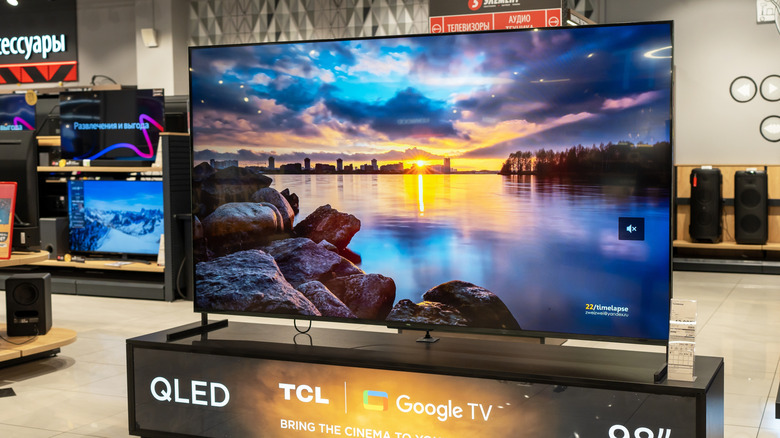
There are LED-LCD TVs that employ picture tech like quantum dots to deliver a wider color gamut, especially when watching HDR content. Known as QLED TVs (which stands for "quantum dot-light emitting diode"), some of the most reliable TV brands — including Samsung, Sony, Hisense, and TCL — are often associated with some of the brightest and most colorful LED-LCD TVs on the market. Many of these TVs are classed as QLEDs. Some LCD sets also use Mini LED lighting, which are much smaller than traditional LEDs and, in most cases, are able to deliver higher peak brightness levels.
TV technology is always evolving, and the newest LED-LCD advent looks to be Micro RGB displays. Designed to deliver exceptional brightness levels and sharp colors, CES 2026 saw the unveiling of LG's take on Micro RGB technology. Samsung showcased a 115-inch Micro RGB TV last year, which cost a whopping $30,000, so there's a good chance we'll start seeing Micro RGB sets from other smart TV makers through 2026.
A great LED-LCD or QLED TV brings to the table is engineered to look stunning in even the brightest viewing spaces, and many models look just as nice in darker spaces, too. However, that doesn't mean a fantastic OLED TV can't hold its own in a bright room. In fact, some of the best OLED TVs do a surprisingly good job at emulating the luminous powers of backlight-driven QLEDs and traditional LED-LCDs.