

Are OLED TVs Actually Reliable? Here's What Users Say
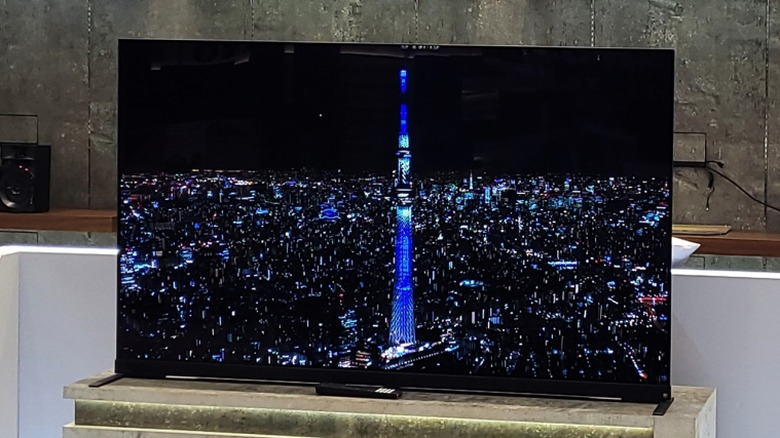
Organic Light-Emitting Diode TVs, more commonly known as OLED TVs, are the premier options on the market for TVs with the best visuals. These TVs can show darker blacks than are usually possible by letting each pixel be emitted from its own separated diode, something that's not possible in other standard LED displays. They're still the most sought-after visual display options more than a decade after the first OLEDs hit the market. However, there's now a greater debate on whether OLEDs are really worth it due to their tendency to run into issues earlier than other technologies.
Whether OLED TVs are reliable or not depends on your needs. If, to you, a reliable TV is one that offers the best image quality with rich, vibrant colors and ink-like blacks — and you don't particularly care about the risk of having to switch to a different one in a few years — then OLED TVs are more reliable than any other kind.
If, however, you want a TV that can last you a long time without running into issues, and you don't mind a slightly worse (albeit still perfectly watchable) quality of images being shown, an LCD will last you much longer on average. Either way, what you wouldn't want to do is buy a used OLED TV, in case the previous user hasn't been too careful with it.
What issues do OLED TVs face?
The main problem that users experience in regard to OLEDs is with specific LEDs being strained beyond normal from showing static elements on screen. This can cause burn-in to appear on your TV, resulting in dead and worn-out pixels that leave permanent marks of the static image on the TV screen. This isn't as big a problem as it once was, with major manufacturers doing a lot of things to prevent OLED burn-in symptoms, but the issue persists even in the latest, most expensive OLED displays, including QD-OLEDs.
This isn't exactly a design flaw, so much as it's a nature of the technology. Using isolated diodes will always mean that certain pixels wear out sooner than others, which is what causes burn-in. The reason OLED displays haven't been as big a problem on phone displays is because you rarely keep your phone on at all times. This contrasts greatly with TVs, which in some cases, are left running the entire day.
Another distinction is how often most users change devices: While most don't mind switching to a newer phone every few years, TVs have the expectation of running for a decade, something that's significantly harder for an OLED to achieve compared to other TV display types like LCD or LED screens.
How to make your OLED TV last longer
How long your OLED TV lasts depends on a number of factors, which means there are plenty of things you can do to make the most out of their high price points. First and foremost, you should be more mindful of viewing content with static images. As a general rule, you should avoid playing news channels or watching sports for longer periods of time, if you can. Similarly, playing games with repeating UI elements, such as a map, can escalate OLED decay if your daily gaming sessions last more than eight hours each day.
In such cases, you can keep the TV turned off longer after you're done — at least long enough for individual LEDs in the screen to go through their compensation cycles. You can also opt to lower the brightness of the TV and use a screensaver when on standby. That being said, even if you do all of this, there's still a chance that your OLED gives in to burn-in.
Some users report their displays showing visible decay in just 2-4 years — oftentimes with a total use as low as 11,000 hours, per one Reddit comment — despite following all recommendations about keeping your OLED healthy. This is backed up by other tests as well, including RTINGs' 100 TV accelerated longevity test, which show that OLEDs can start showing a loss in image quality as soon as two years in. For most OLED buyers, your TV's warranty is a good idea of how long it can function before it starts showing a downgrade in video quality.