

5 Of The Cheapest Electric Vehicles You Can Buy On A Budget
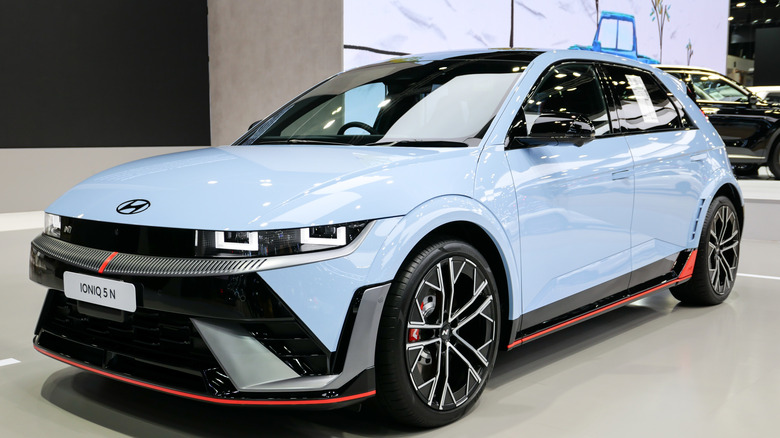
It's no secret that buying a car is a costly undertaking. Even worse, prices have been steadily going up, and in September 2025, the average price of a new car surpassed $50,000 for the first time, according to Kelley Blue Book (KBB). That means you should be prepared to pay more if you want to ditch your gas car for an electric vehicle (EV), since EVs typically have higher sticker prices. According to KBB, the average EV costs $58,124.
That's a substantial amount to pay when you consider that the costs don't end there — you also have to pay for insurance, taxes, and registration, to name a few. However, the biggest advantage of buying electric vehicles over gas cars is the cheaper cost of repairs. If you live in one of the 12 states that plan to ban gas-powered vehicles or need to replace your current aging model, don't let the higher average cost discourage you.
You might be surprised to learn that some brand-new EVs are cheaper than you'd imagine, perfect for someone on a tight budget. Of course, the cheapest EVs might not have the bells and whistles of high-end models, but they offer enough to meet your daily commute needs. All the EVs on this list are quite affordable, with a base MSRP of less than $50,000. We have the full methodology on how we picked these EVs at the end of the article if you need more details.
2026 Nissan Leaf
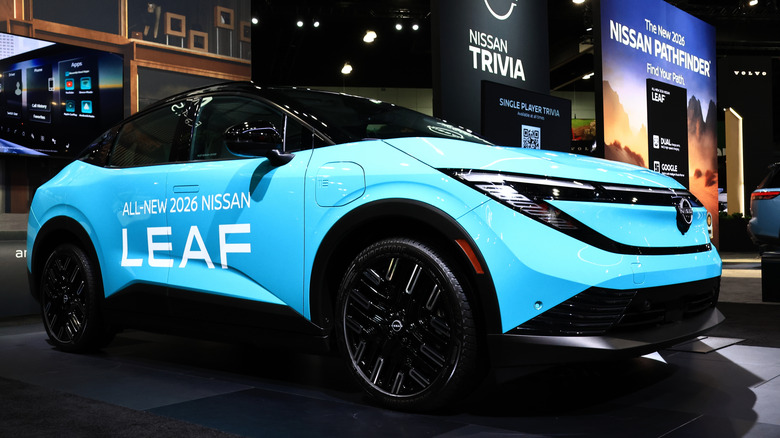
The Nissan Leaf was one of the first mainstream EVs to hit the market, and since its first model went on sale, it has maintained its pocket-friendly price. The 2026 model of the Nissan Leaf is the third generation of the car and is one of the cheapest electric vehicles you can buy. Nissan has made a couple of changes to its new model, and the biggest of all is the redesign, which has upgraded the Leaf from a small hatchback to the small SUV category.
It also has a redesigned interior, and the company has included two charging ports, one of which is compatible with Tesla chargers for quicker juicing of the 52 kWh or 75 kWh battery. All trim levels with a + get the bigger battery pack. The EPA estimated range on the S+ trim is 303 miles, while the mid-tier SV+ and highest Platinum+ trims are rated 288 and 259 miles, respectively. As of this writing, Nissan hasn't released the EPA-estimated range for its entry-level S trim. Regardless of the trim you choose to buy, the Leaf's range is more than enough for a daily driver.
The 2026 Nissan Leaf uses a front-wheel drivetrain and comes with a couple of driver assistance features to make your life easier and safer behind the wheel, including adaptive cruise control, blind-spot warning intervention, a 360-degree view camera system, and automatic emergency braking. The MSRP for the 2026 Nissan Leaf starts at $29,990 for the S+ trim and tops out at $38,990 for the high-end Platinum+ version. The company is yet to reveal the price of the S trim, set to arrive in the future. Multiple users think the third-gen Leaf is worth buying, and some who have it speak highly of the EV.
2025 Hyundai Kona Electric
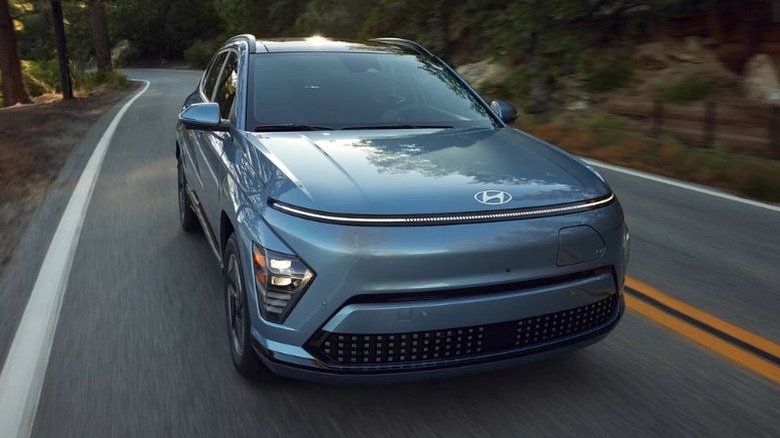
Although Hyundai already has a refresh for 2026, the company has yet to release the price of the new model. That said, the 2025 model is still a great option if you need a small SUV on a tight budget, as it's the brand's cheapest electric-powered model. Given that it's a 2025 model, the price is even better. You can buy the EV starting at an MSRP of $32,975, instead of $34,470 at launch for the base SE trim. There are three other trims to pick from (SEL, N Line, and Limited), with the highest Limited trim starting at $41,150.
The Kona Electric has an EPA-estimated range between 200 and 261 miles. The base SE trim is powered by a 48.6 kWh battery, while the rest of the trims use a larger 64.8 kWh unit for more range. The Kona comes with a 133 hp or 201 horsepower single-motor electric powertrain with 188 lb-ft of torque. Unfortunately, there's no AWD option as all the trims send power to the front wheels. Thankfully, the Kona drives well with quick acceleration when needed and offers a comfortable cabin.
The 2025 Kona Electric has a modern, stylish interior that comes with two 12.3-inch displays, one dedicated to instruments and the other to the infotainment system. That infotainment system supports Apple CarPlay and Android Auto as standard. A handful of driver-assistance features are available, including automatic emergency braking, lane keeping assistance, self-parking, adaptive cruise control, and blind-spot monitoring. Those who've bought the 2025 model love it.
2026 Toyota bZ
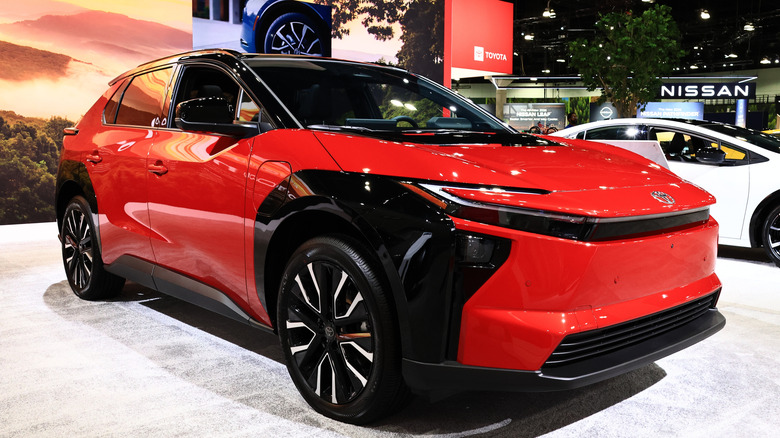
The 2026 Toyota bZ succeeds the 2025 bZ4X (yes, the company renamed the new model). With its MSRP starting at $34,900 for the base XLE trim and $43,300 for the top-of-the-line Limited trim, it's an affordable car, ideal for budget EV shoppers. Like the predecessor, it comes in two drivetrain options (all-wheel drive and front-wheel drive), but Toyota has made a couple of improvements to make the bZ more attractive to buyers. First, the company has switched to a North American Charging Standard (NACS) port so you can charge the battery using Tesla's Supercharger network for convenience.
Although the XLE model with front-wheel drive gets a battery capacity downgrade to 57.7 kWh from the previous 63.4 kWh, the company has actually increased the capacity to 74.7 kWh in other trims. According to Toyota, the bZ can get you up to 314 miles per charge, but that depends on the drivetrain, as the company offers the car in two trims and a variety of drivetrain options. Performance figures also vary depending on the option you pick, but if you're chasing performance, the all-wheel drive options are the best as they come with a dual-motor setup and are now capable of delivering 338 horsepower.
Car & Driver says the Toyota bZ now feels "a lot quicker and more eager than before," all thanks to the higher power figures from the AWD versions. In the bZ's interior, you get a 14-inch touch-screen display, which can also be operated with physical controls. Some of the features available include CarPlay and Android Auto.
2026 Chevrolet Equinox EV
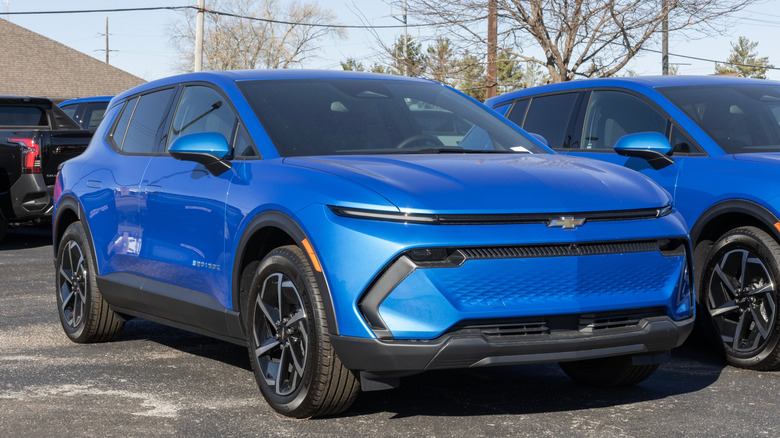
The Equinox is Chevrolet's cheapest EV, although the upcoming 2027 Bolt EV will unseat it soon thanks to its starting price of $28,595. Overall, the Equinox is one of the cheapest EVs you can buy. It comes in three trims (LT 1, LT 2, and RS), and you can pick between a front-wheel or all-wheel drive powertrain depending on your preference. These trims influence the power figures, miles per charge, and whether you get some features or not. The price ranges between $34,995 and $44,095, and that's before you factor in other extra charges like destination fees, taxes, and whatnot.
Chevrolet uses an identical battery pack on all models, and the range varies depending on the trim and drivetrain option. All FWD options have an EPA-estimated range of 319 miles, while the AWD drivetrain can deliver slightly less, up to 307 miles. In its real-world range test, Edmunds got 356 miles on an FWD model, which is more than enough for city driving on a daily basis (and even some road trips) despite the reliability of EVs being in question. On the inside, the Equinox is roomy and features a large 17.7-inch infotainment screen.
The infotainment system comes with a bunch of apps and has a built-in navigation system, but you don't get Apple CarPlay or Android Auto, which is a bummer. However, the Equinox EV comes with a handful of features that you'll appreciate behind the wheel, such as one-pedal driving, automatic emergency braking, and lane keeping assistance that are available in all models. If you need some additional niceties not available as standard, such as heated seats and a 360-degree camera, you can add those at an extra cost. Multiple users speak positively of the Equinox, although some note it's too big.
2026 Hyundai Ioniq 5
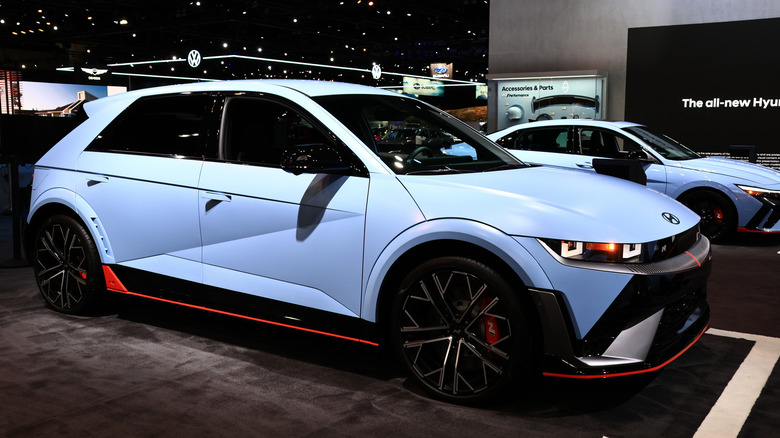
The Ioniq 5 is another crossover that you can buy on a budget, and Edmunds describes it as "a new benchmark for value in its segment." It's available in five trims, and the MSRP ranges between $35,000 and $46,275. While most modern cars use a FWD drivetrain, Hyundai's Ioniq 5 uses RWD. Thankfully, you don't have to stick with that because the Ioniq 5 is available in both RWD and AWD — it just depends on your needs. All models have a Tesla Supercharger-compatible NACS port, which allows you to use the company's expansive charging network to juice up the battery when needed.
Depending on the trim and option you pick, the EPA-estimated range per charge for the Ioniq 5 is between 245 and 318 miles. If you want the longest 318 miles EPA-estimated range, you can get it with the single-motor RWD drivetrain of the SE, SEL, and Limited trims. Horsepower varies based on the trim, ranging between 168 and 320 hp, with all AWD options offering the maximum. Like the 2026 Hyundai Kona Electric, you get two 12.3-inch displays on the inside, one for instruments and another for the infotainment system with Android Auto and CarPlay.
Although the Ioniq 5 is fun to drive and has more compartments to store small items like your wallet, it offers less cargo space. Driver-assistance features are plentiful, such as adaptive cruise control, lane-keeping assist, blind-spot monitoring, and more. Some think it's a great car, while others highlight Hyundai's Integrated Charging Control Unit (ICCU) issues as a major turnoff.
How we picked these cars

We did extensive online research across manufacturer websites and automotive sites, like Car and Driver, to find the cheapest available EVs from well-known names like Hyundai and Toyota. Since car companies typically have several trims available (and some offer additional options for extra cash), we based our selection on the MSRP of the base model without factoring in any extra charges that you might incur if you decide to buy the EV.
For vehicle specifications, we relied on manufacturer websites as well as automotive sites to find the most accurate and up-to-date details about each EV. We've arranged the cars based on the MSRP of the entry-level trim, from lowest to highest.