

The 10 Best Robot Vacuum Cleaner Brands According To Consumer Reports
We may receive a commission on purchases made from links.
Robot vacuums were first conceptualized in sci-fi literature in the 1950s as a futuristic gadget, but have since become an increasingly common fixture in American households. Global shipments rose by 18.7% in the first three quarters of 2025 alone, according to the International Data Corporation. The recent skyrocketing popularity can be attributed to the vacuum prices' steady decline over time as the technology has matured and become cheaper to manufacture.
Of course, they are also very handy. Many of today's robot vacuums have powerful suction to tackle stubborn pet hair, advanced mapping systems to avoid missed spots, and are able to navigate tight corners to ensure a floor is sparkling clean. But buyer beware, choosing the wrong appliance can actually increase the time one spends on household chores, whether by forcing owners to follow it around with a broom or deal with frequent breakdowns.
Therefore, it is very important to choose the correct brand from the jump. Here, BGR takes a closer look at the top brands of robot vacuums, as recommended by the expert reviewers at Consumer Reports. We also looked into each brand's top-rated product, and more information on our methodology for selecting these brands can be found at the end of the article.
iRobot
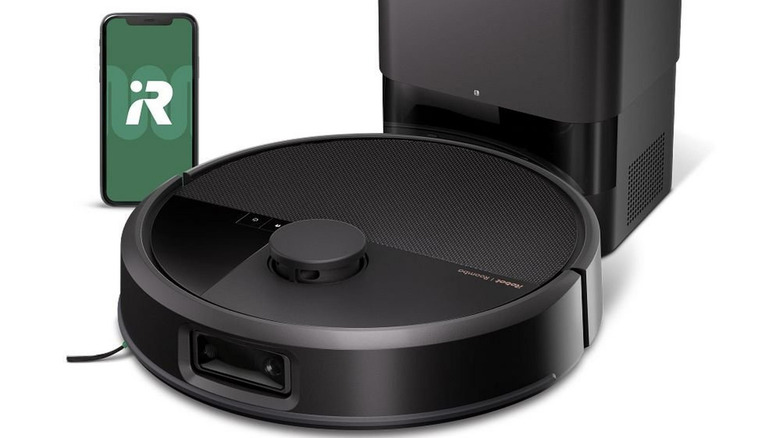
While you may not recognize the name at first, iRobot is responsible for the "Roomba" robot vacuums. It made the news when it filed for bankruptcy at the end of 2025, but this is said to be due to competition from China and import cost increases stemming from new U.S. tariffs, rather than the quality of its products.
Indeed, the Roomba Max 705 is highly rated by Consumer Reports as it comes with dual rubber brushes that reduce hair tangles and dirt-detection technology that identifies especially dirty spots and directs it to pass over them multiple times. It uses LiDAR (Light Detection and Ranging) technology to create a 3D map of the user's home for navigation, preventing it from toppling down the stairs, and artificial intelligence (AI) to navigate around small objects like cables, shoes, and pet toys.
One of the coolest features is its AutoEmpty dock, which the Roomba travels over to once it is full to empty its tank. This means it can be left to its own devices for up to 75 days. It connects to the Roomba Home app too, so that it can be controlled remotely to set a cleaning schedule if its owner is out. Even with so many close competitors on the market, the Roomba continues to prove it is worth its fame.
Dyson
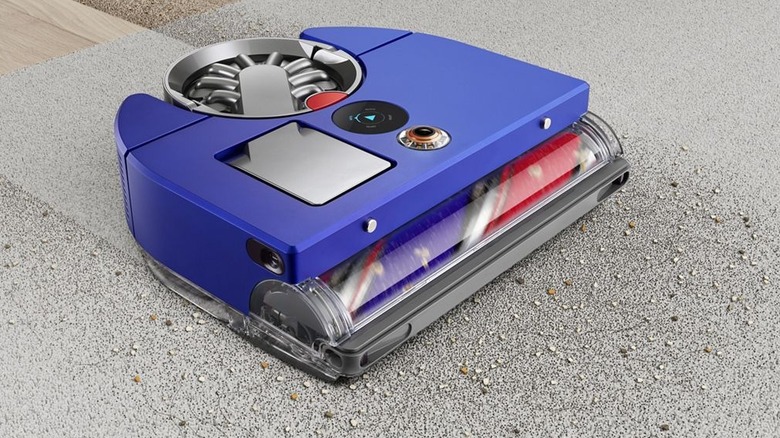
UK brand Dyson is a heavy-hitter in the manual vacuum world thanks to its proprietary bagless cyclone technology. That expertise has since been translated to robot vacuums, with the Dyson 360 Vis Nav claiming to have twice the amount of suction of any other on the market, at 22,000 Pa. It also takes less than an hour to clean a room, less than two hours to charge, and performs the best of all products reviewed by Consumer Reports on carpets.
The Dyson 360 Vis Nav stands out visually because of its unique D-shape, intended to help it clean corners, along with its unconventional side-mounted duct to replace the traditional side brush. Unfortunately, owner satisfaction is very low. This could be down to its relatively small dust bin, and the fact that the device is quite noisy. Or perhaps it's to do with the price tag; this model is discounted to $399.99 at the moment, but usually a buyer would have to part with $999.99. At least it comes in that sleek Dyson blue.
Eureka
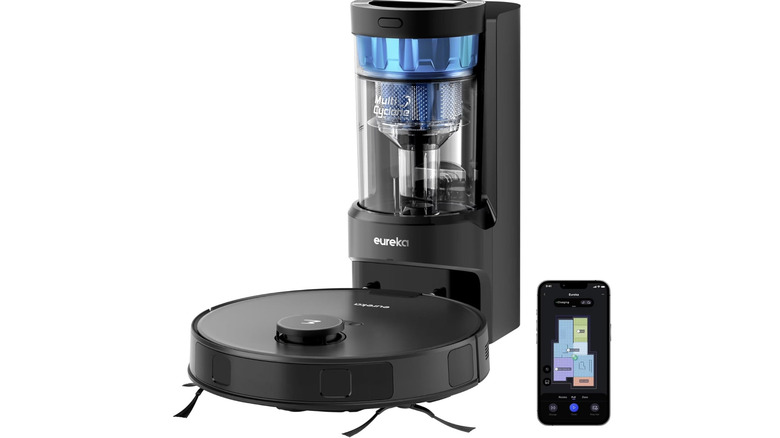
Eureka comes in third thanks to its bagless robotic vacuum NERE10SW. Like the Roomba, this model comes with a nifty auto-emptying base that means it can be left alone to clean for a matter of weeks, according to the manufacturer. It has about 8,000 Pa of suction power, which is significantly less than Dyson's offering, but the price tag matches this. It can be bought on Amazon for $280, compared to $350 for the previous Dyson model.
The NERE10SW automatically increases its suction on carpets to get rid of any stubborn crumbs. As a bagless model, it saves users money and helps to protect the environment too. Consumer Reports specifically praised its suction performance on bare floors and with pet hair, only noting that its side brushes may occasionally scatter debris as a drawback. It also takes just under two hours to clean a whole room, which is the longest of all the robot vacuums reviewed.
OKP
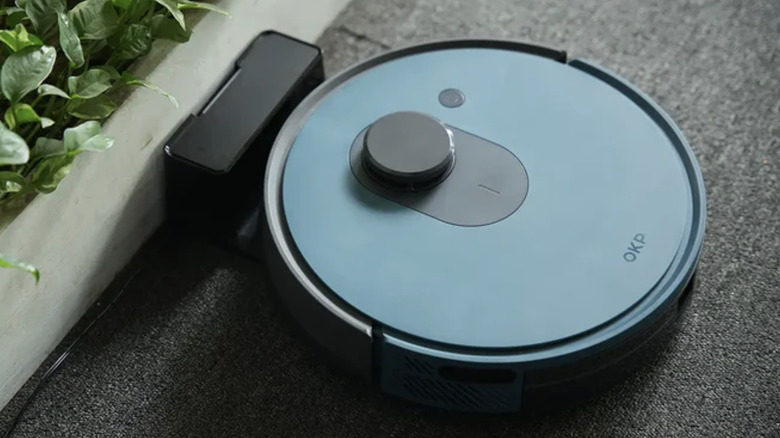
OKP is a lesser-known brand from China that exclusively manufactures robot vacuums. Its top product, according to Consumer Reports, is the OKP L1, another LiDAR-equipped vacuum that scores highly in most areas, especially with pet hair and on bare floors. One important thing to note is that the product was found to have a vulnerability during data security testing, which means it is not impossible for its admin controls to be breached by an unauthorized third party.
If you're not concerned about this aspect, the OKP L1 delivers promising results. It is great at tackling edges and its roller brush is easy to remove. It can be activated by voice when connected to either a Google smart speaker or an Amazon Echo, and will return itself to its charging dock whenever it is low on power. That being said, the vacuum can still run for 80 minutes before needing more juice.
Miele
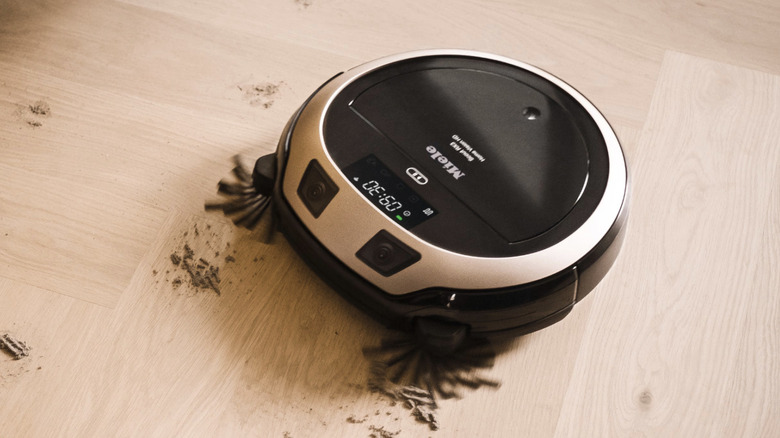
Miele is synonymous with high price tags worldwide, but the brand is also known for producing quality products that last for decades. Its Miele RX3 Home Vision received an average rating from Consumer Reports' reviewers for picking up pet hair, navigation, and ease of use. However, it does very well on bare floors and around edges. Its standout feature is a camera system that streams live images from the robot to your phone, allowing you to monitor cleaning progress (or keep an eye on pets or other dependents at home) while you're away.
The RX3 can run for a whopping 170 minutes before it needs to take itself back to its charging station. It is also a "Green Choice" product from Consumer Reports, meaning it is more eco-friendly than rival models. Unfortunately, the product is permanently out of stock on the Miele website. At the time of writing, it is available on Amazon for a discounted $799.99.
Samsung
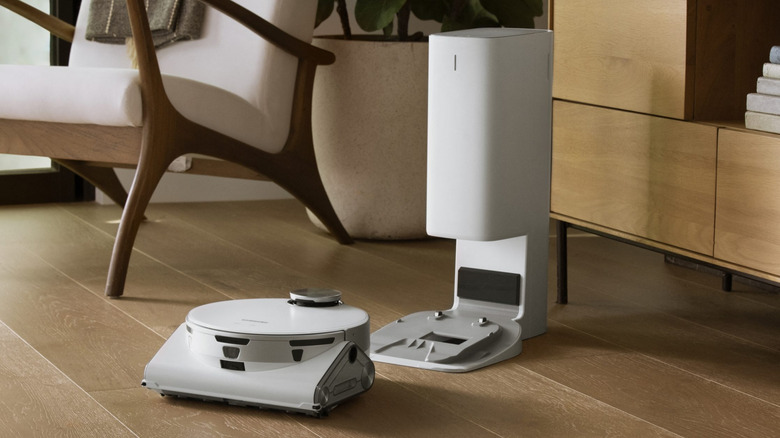
As a well-renowned brand offering a wide selection of great products, Samsung also manufacturers robot vacuums that reviewers appreciate. Its Jet Bot AI+ vacuum cleaner is the only device rated by Consumer Reports that's rated excellently in pet hair, edges, and ease of use. It has quite a small dust capacity, but because it can auto-empty into a larger bin on its charging base, this isn't too much of an issue.
Interestingly, the robot vacuum has no side brushes, relying on its jet cyclone power and main roller to pull dust that's out toward its sides instead. Consumer Reports' reviewers credit this design for producing less scattered debris compared with other models. It is also another "Green Choice" environmentally friendly product, with its reusable filters and intelligent suction that reduces energy usage.
But if you want this kind of top quality, you need to pay for it, as the Jet Bot AI+ is the most expensive robot vacuum Consumer Reports has listed. Prices start from $1,299.99 from the manufacturer. It also demands a relatively high clearance of 5.5 inches, which is worth taking into account when considering the furniture it needs to fit under.
Ionvac
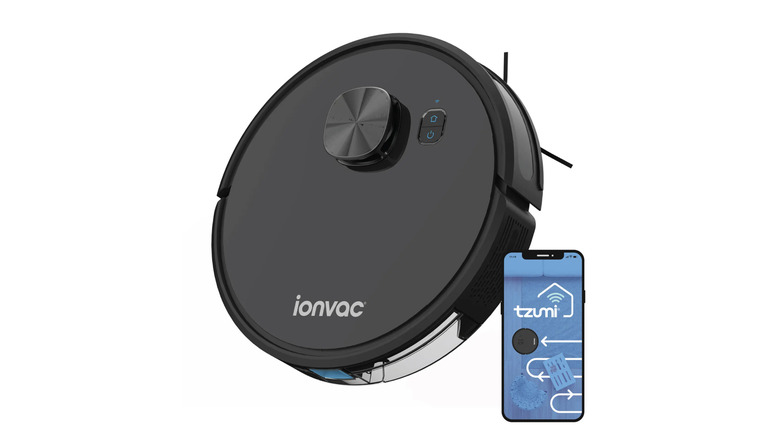
Ionvac is a range of products, manufactured by Tzumi. While this may be another brand that you haven't heard of, that doesn't mean it should be disregarded. The Consumer Reports-favored Ionvac 9048 performs well against pet hair and only requires 3.75 inches of clearance. It takes 80 minutes to clean a room with its 2,000 Pa of suction, and has a sizeable 0.6 liter dustbin to hold the debris. Like others on this list, it will automatically take itself back to its charging dock after about 120 minutes of cleaning.
With all that said, some users claim it has a penchant for starting up randomly in the middle of the night. It is available from Walmart for just over $100, but it is out of stock on the Tzumi website. User reviews are overwhelmingly positive, highlighting the robot's precise navigation and proficiency on bare floors.
Shark
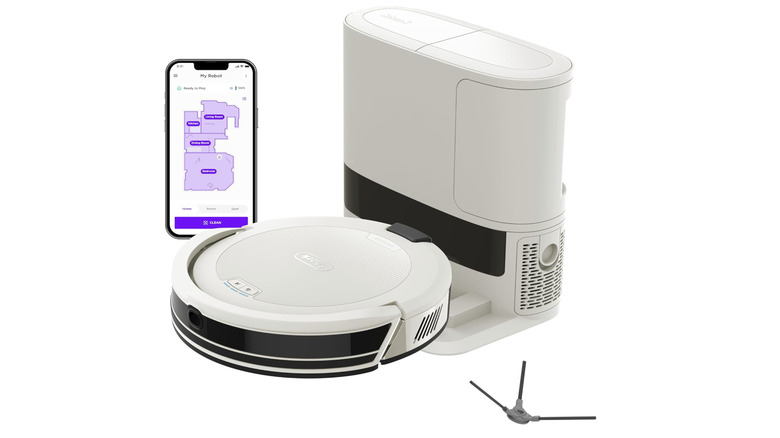
Shark has found itself tangled in lawsuits with Dyson over the years, after being accused of copying its products before undercutting it on price. While the execs at the warring companies may be kept awake by the stress, consumers only stand to benefit if Shark manages to reach the British firm's technical standards.
Indeed, Consumer Reports ranks the Shark Navigator AV2110S among the best at tackling pet hair, cleaning bare floors, and operating quietly, while its brand reliability reflects a dependable range of products. Reviewers on Amazon say its mapping accuracy and noise level are both OK, but they caveat that it is loud when self-emptying into the bin.
It will return to its charging dock when low on power, but remembers where it stopped cleaning so it can finish up the job later. Consumer Reports says it takes 70 minutes to clear a room, which is slower than Dyson. However, at about $320 on Amazon, it's cheaper than Dyson's 360 Vis Nav too.
Eufy
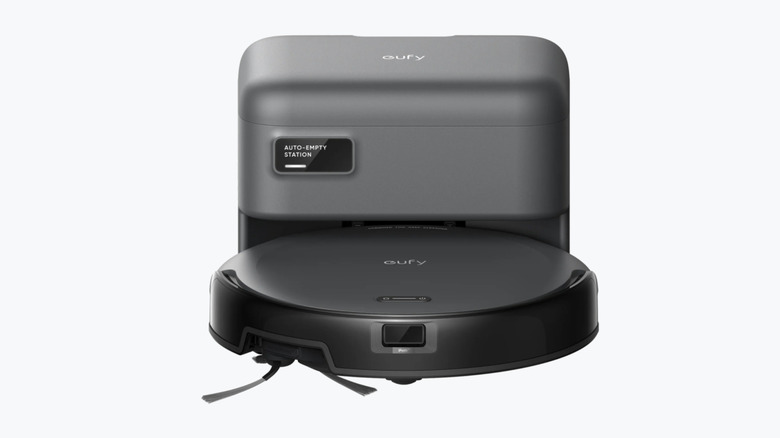
Eufy is probably best known for its security cameras and video doorbells, but it has ventured into the world of smart cleaning appliances. Somewhat ironically, reviewers gave its C10 robot vacuum a low rating for data privacy.
Nevertheless, the C10 is one of the best vacuums reviewed by Consumer Reports for finding its way around a home. It is jointly the second fastest model on our list when it comes to cleaning a room, gathering all debris in just 70 minutes, with its 4,000 Pa of suction power. It also requires the least clearance, measuring just 2.85 inches in height, made possible by its use of a point laser and infrared navigation array instead of LiDAR, which commonly relies on a turret.
Reviewers on Amazon again say that the model is pretty quiet except for when emptying into the dock, and are grateful for the generous 3-liter dust bag which reduces the frequency of doing so. It's also available for only $270, as Eufy doesn't pretend to compete with the Dysons and Mieles of the world. However, many reviews on Amazon also note that it frequently gets stuck under furniture and along edges.
Black+Decker
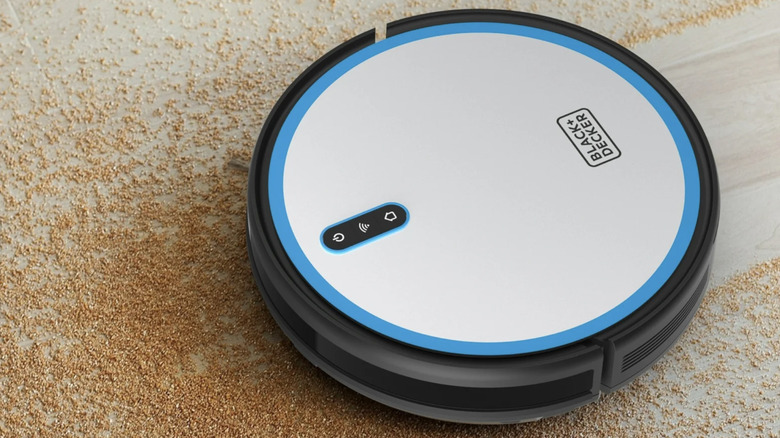
The final brand to round out our top 10 is Black+Decker. There aren't many home products the American tools giant hasn't turned its hand to, and robot vacuums are no exception. Its BDRV1-SLV performs solidly across most of Consumer Reports' testing categories. It can squeeze into tight spaces thanks to its low 3.25-inch clearance, and it offers 2,000 Pa of suction power.
While the BDRV1-SLV is available from Walmart for just $129.99, what you save on the upfront price you may spend on extra hands-on effort. It lacks an auto-empty feature, meaning that every time its dustbin fills up, you'll need to empty it manually. The robot does, at least, return to its dock on its own for recharging once a cleaning cycle is complete.
You may also want to be cautious about how much personal information you share with Black+Decker through things like app permissions, as the BDRV1-SLV was rated poorly in data privacy testing. At 90 minutes per room, it's also one of the slower cleaners on our list. However, as one Amazon reviewer put it, "it seems slow and confused, but is ultimately successful."
How do robot vacuums use LiDAR?
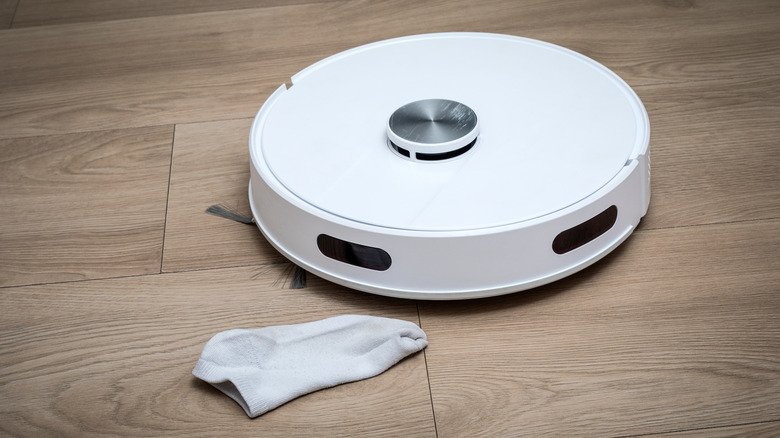
Many robot vacuums refer to LiDAR in their promotional materials, potentially with the hope that a scientific term will lead shoppers to believe the product is top of the range, so that they hit the Buy button as a result. In reality, LiDAR has been used in robot vacuums since as early as 2010.
The technology works by emitting pulses of light, often from a laser, and measuring how long it takes for them to be reflected back to a sensor on the front. With this data, a robot vacuum can build up a 3D picture of its surroundings and, therefore, a logical path that allows it to cover the whole room as efficiently as possible. It also orientates it on said map, meaning that the device can pick up where it left off if it runs out of charge mid-clean and needs to return to the dock.
There are a few limitations to using LiDAR on its own. First, it cannot determine how rigid or flexible an obstacle is, so the vacuum will avoid both a solid coffee table and a soft curtain, even though the latter could be pushed past without causing damage. Second, reflective surfaces such as mirrors can bounce the laser beams in unexpected ways, confusing the vacuum's map and occasionally leading to navigation errors. However, to overcome these challenges, many modern robot vacuums pair LiDAR with other sensors that will allow them to react to different materials.
How do robot vacuums use AI?
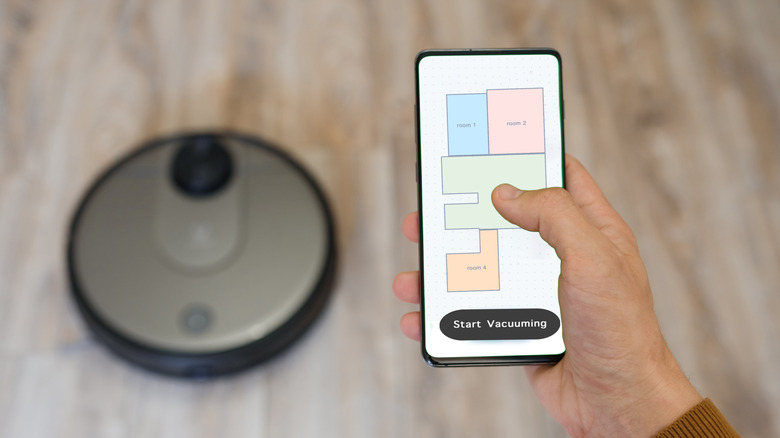
Since the rise of ChatGPT a few years ago, AI has been a huge buzzword in consumer tech. In the context of robot vacuums, it really means that sensor data is processed in real time, as the software uses what it has learnt alongside training scenarios to decide the best course of action, rather than relying on a few rigid, pre‑set rules. This allows the device to respond more intelligently. For instance, if a piece of furniture or other obstacle is moved, without AI this may lead to the vacuum getting stuck or missing an area, as it can't remember what it has done nor re-plan what it will do next. But with AI, it can design a new plan that takes the furniture's movement into account, and still clean the entire floor.
AI doesn't just have to be for the vacuum's mapping. The X11 Omnicyclone from Ecovacs uses machine learning to adjust the power needed per space. Others, such as the Roborock Saros Z70, use it to intelligently control a mechanical arm that can grab and move obstacles out of the way.
Methodology
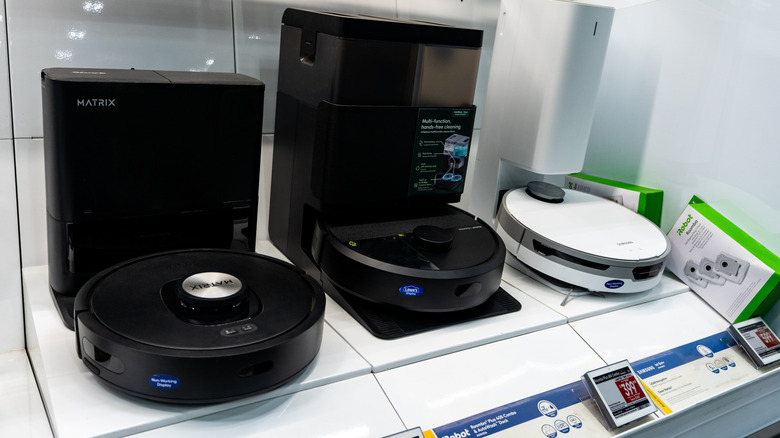
For this list, BGR identified every brand with one or more robotic vacuums reviewed by Consumer Reports, and chose the top 10 based on the average ratings of these products. We also took a deep dive into each brand's top-rated product. We judged its performance on carpet and bare floors, how well it gets rid of pet hair, how easy it is to use, how well it navigates rooms, the level of clearance it requires to operate, its noise levels, and its price. The brand's approach toward data privacy was also taken into account, as well as public user reviews such as those on Reddit, Amazon, and Walmart.