

Every Major Wi-Fi Router Brand Ranked From Worst To Best According To Users
We may receive a commission on purchases made from links.
Picking out a new router can be difficult. There are multiple options, and that's even before you decide on what brand you want to go with (and we have a few recommendations if you're looking for the best Wi-Fi routers). You might not expect it, but the brand you choose can also determine the overall quality of your router, much like choosing the best Ethernet cable for your home network. Not every router is made the same, and some brands are better than others, especially when you look at customer opinions.
We've found the major Wi-Fi router brands on the market and read the customer reviews to find the best ones. The top routers provide a reliable connection, a strong signal, high internet speeds, and quality experiences when using the Internet. These are the major Wi-Fi brands ranked from worst to best according to users.
8. Google
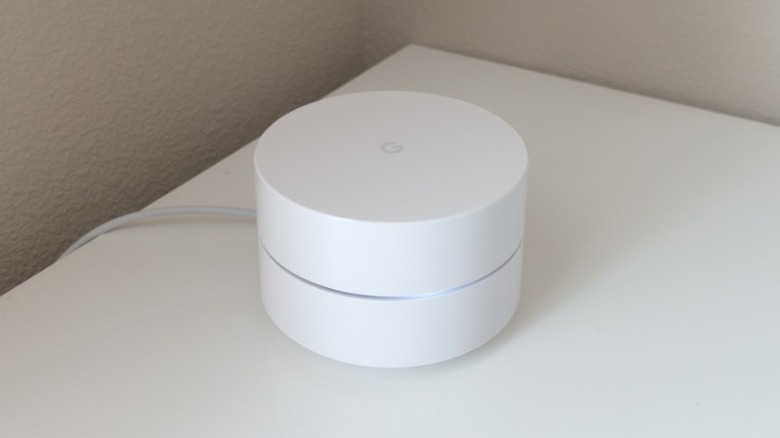
It's easy to associate Google with the internet, as it provides the largest search engine website that nearly everyone uses whenever they open up a browser. Although Google has a powerful search engine, not many customers are entirely satisfied with its router products. There is a wide range of reviews for its routers on its Amazon page, with the Nest Wi-Fi Pro, worth $149, being on the lower end with a 4.0-star rating from over 2,000 users covering 2,200 square feet, and a 4.5-star rating from over 15,000 customers for its AC1200 Mesh Wi-Fi system for $61 to cover 1,500 square feet.
Although the AC1200 mesh system does, customers still have a handful of problems with the connection and internet speed. Many note it's a fine product, but misses the mark that makes it professional. The groups are split, but these issues also appear for the Nest Wi-Fi network, where customers report even more issues, such as the signal strength, functionality, internet quality, and high price, as the Nest Wi-Fi is a more expensive product than the AC1200.
Overall, Google customers are not always satisfied with the router they receive from this company. The company has leaned heavily into the mesh system, focusing on compact, smaller choices than a standard router someone might expect to get from other companies. Although these systems are slick, they don't deliver the best results, and you can use your old router to achieve the same results.
7. Linksys
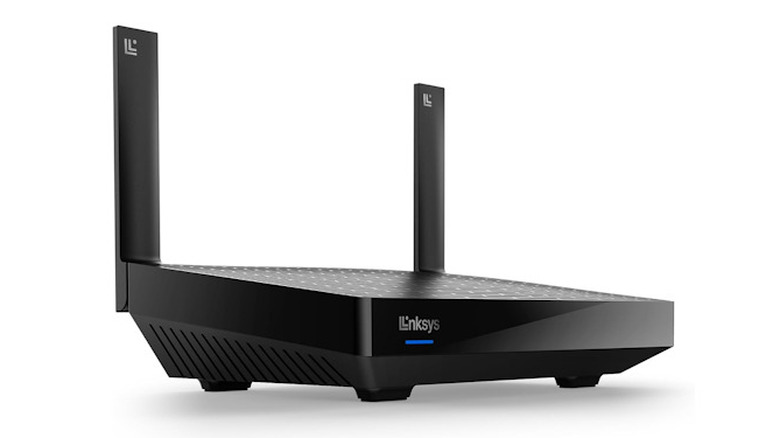
Linksys is another router brand that you may recognize, but it's not as popular, and for good reason. The company has several routers and mesh systems available, depending on your needs and preferences. There's a mesh system, the Velop Pro 6E, for $139 to cover 3,000 square feet, that you can place throughout your house and use smaller ones to boost the signal, which has a 4.0-star rating from 556 customers. Or you can purchase a traditional router like the Hydra Pro 6 that costs $119 to cover 2,800 square feet. It has a 4.3-star rating from 336 customers and connects with other Linksys mesh systems.
Although the reviews are overall positive, customers reported problems that make this router brand unreliable compared to others on our list. Customers who purchased the Hydra Pro note that they have issues using the application when setting up the product, and that when it is working, the signal is weak and the device frequently goes offline. Those who picked up the Velop Pro have similar problems, along with the overall speed being slower than expected, and the quality of the connection being poor, find the problems not worth the price of the product. It's a consistent trend for several products from multiple customers who buy Linksys, which makes it a hit-or-miss brand if you need a reliable router for your home or office.
6. Synology
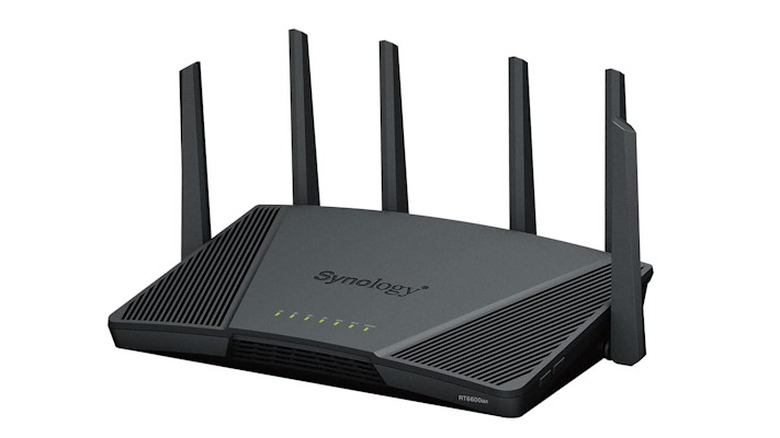
When you're looking for an all-around good router from a reliable company, going with Synology is a good idea, even though its products are some of the more expensive choices. There's the Synology RT6600ax for $329 that covers a little over 3,000 square feet and has a 4.2-star rating from 425 customers. Alternatively, there's the WRX5600 for $229 that covers close to the same amount and has a 4.0-star rating from 160 customers. Both products are over $200, with the RT6600ax reaching above $300. Many customers are positive about the security features of these routers, along with the speed and the overall design quality. It's likely a solid option if you're looking to use it for a small business with several people connecting to the device, rather than for a small house or personal use.
There are a handful of issues with Synology that carry over between products. Customers have issues with the signal strength and getting the routers to work reliably. Other customers have shared that they've also had negative experiences with customer support for these items, which is always a difficult thing to encounter when you're trying to get an online system to work. These consistent problems mean Synology is not a top router company, especially considering how expensive its routers are when compared to competitors.
5. Eero
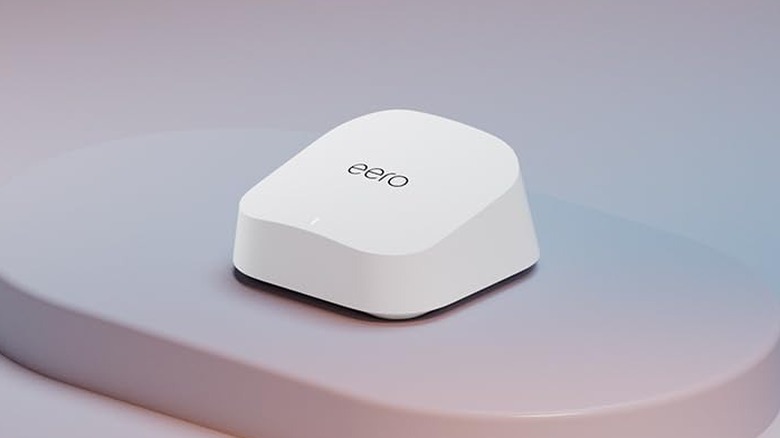
Eero is a solid choice for anyone with a strict budget who wants a router or a mesh system within their home. The single router for this system, the Eero 7 Dual-band, has a 4.4-star rating from over 1,300 customers. It's capable of supporting plants up to 2.5 gigabytes per second and covers up to 2,000 square feet. If you have a home with multiple walls or several rooms, get additional mesh routers that come with this system to help spread out the coverage. These do come in pack sizes up to 4, but you can get a single one for $139. As a bonus, it does work with Alexa, but you need an Alexa product to use those features.
Customers appreciate the overall quality of the Eero mesh network, how easy it is to set up, and the signal strength. Not everyone universally agrees, though, as customers share that some deal with weak connections, regularly dropped signals while using a wireless connection, or buffering. This tends to happen for those who purchased more than one Eero and grabbed a 2 or 3-pack, rather than the standard router. Given the lack of flexibility, it can be difficult to recommend Eero unless you're planning to add more routers to the mesh network. We believe Eero is one of the better mesh networks.
4. GL.iNet
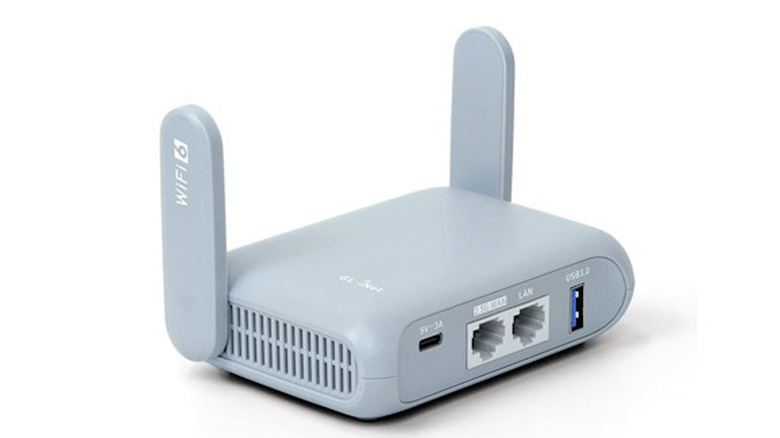
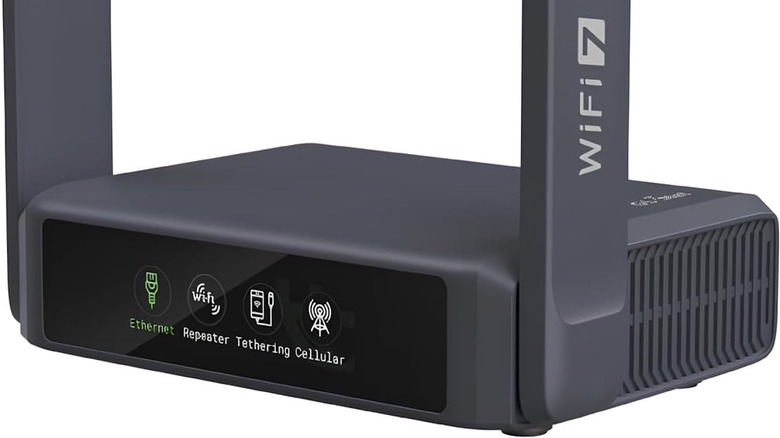
When you need a simple, straightforward router that you have the option to take with you while you're traveling, GL.iNet is a solid brand. It's a company that specializes in offering portable routers, like the GL-BE3600 and the GL-MT3000. You can get the BE3600 for $135 or the MT3000 for $84. Unfortunately, Gl.iNet does not detail how much coverage these can potentially do, and customers say it works well for smaller rooms and houses as they're both small, portable routers that you can take with you while traveling. However, there are at-home options, like the GL-BE6500. All of these products have an above 4.5-star rating from customers, as they feel secure and safe to use these devices while traveling.
The reviews for these products highlight how easy it is to set them up, the quality of the product when it does connect, and how easy it is to travel with them. The cases are durable and secure, meaning they should fit securely inside a bag or suitcase. Not everyone enjoys the connection quality, though, as it can prove to be unreliable. This may vary on the connection. For some, the connection has gone down, and they were unable to get it back up, especially when using the VPN feature. The VPN feature is a huge benefit to many when it does work. There are a few hiccups with these products, but customers overwhelmingly recommend them.
3. Netgear
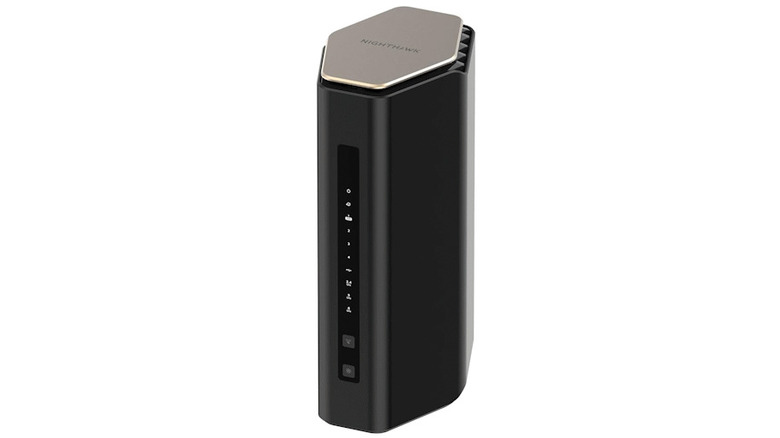
As a reputable router brand, Netgear has been around for a long time. It's a company that has had time to refine its product and offer multiple types, depending on a customer's needs. Focusing more on the standard products for a home, there's the Nighthawk Wi-Fi 7 Router for $189 to cover 2,500 square feet and the Nighthawk Dual-Band for $139 to cover over 2,200 square feet. Both of these items have a 4.4-star rating, and both have over 1,000 reviews. If you were to go beyond these two, the lowest reviews for Netgear routers only go to 4.3 stars, and that's reflective in what customers think at other locations, like at Best Buy.
What customers appreciate about these routers is that they're easy to set up, reliable, high-quality products, and they have a good amount of coverage within a home. Many appreciate the security features in the product, although they're not big fans of the NightHawk mobile application. The application has issues working with older Wi-Fi applications and lacks in-depth customization. Despite this, many share that the Wi-Fi signal is strong and stays connected. Compared to other router brands, customers like Netgear, but the price of their products could be adjusted. Other competitors offer similar features and internet quality at a more affordable price.
2. Asus
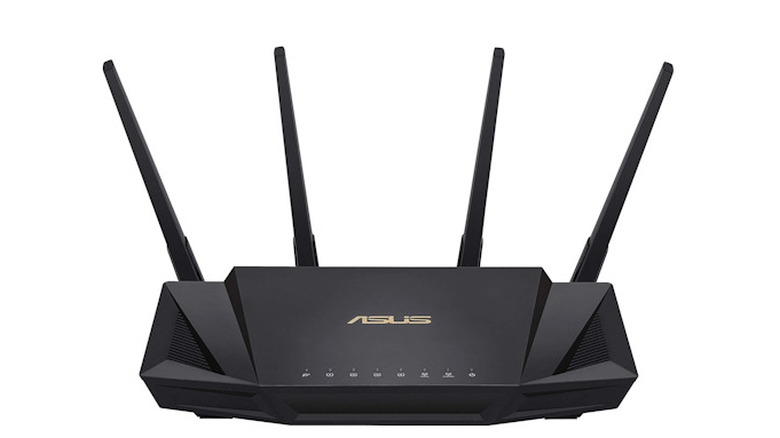
ASUS is a recognizable computer hardware company and has one of the best selections of laptops on the market. You can also find that it has some of the top-of-the-line best routers that you can get, and there's the option to get some incredibly expensive ones, like the ASUS ROG Rapture or the RT-BE96U. Because those cost a lot of money, those options might not be in everyone's price range. There are more affordable, equally good choices, like the RT-BE58U for $124 to cover 2,000 square feet or the RT-AX55 Dual Band for $114 to cover 3,000 square feet. Both of these products have 4.4-star ratings on Amazon and have similar reviews at Best Buy and Walmart.
Customers share that these products have reliable connections, especially for those who use them for computer gaming. The connection is strong, the speed is fast, and the signal is always high without being dropped, while also having a router that's easy to set up. What elevates these choices for users, based on customer reviews, is how easy the applications are to navigate, making it a user-friendly experience. Plus, given the lower prices of these routers, many feel they get exactly what they paid for. Now, ASUS does have more expensive and flashy options, but those are not required to get the best internet connection, meaning more customers can get access to these quality products without spending too much money on them.
1. TP-Link
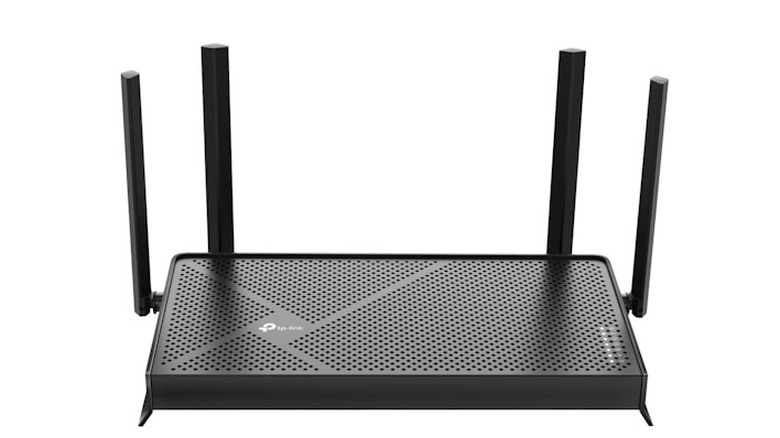
When it comes to being a compact, sleek, and functionally effective router, TP-Link is the must-have Wi-Fi router that you can go with. You'll choose to go with the TP-Link Dual-Band BE3600 for $86 to cover 1,600 square feet or the TP-Link Tri-Band BE15000 for $279 to cover over 2,500 square feet. Alternatively, you could go with the TP-Link Deco 7 for $199 if you're looking to get a mesh network installed in your home to cover much larger locations. The Dual Band has a 4.4-star rating from nearly 20,000 reviews, and the Tri-Band has the same rating from nearly 25,000 reviews. These high ratings are highly reflective of the positive outlook so many customers have with multiple TP-Link products, and for good reason, even if there are federal agencies trying to ban them.
The reviews praise these products as being easy to set up, having high-quality connections, reliable speeds, and high performance immediately out of the box. You'll be hard-pressed to find as reliable a router option on the market. There's no shortage of options, either, as you can also choose to go with the TP-Link AX1800, the TP-Link AXE5400 Tri-Band, or the TP-Link Archer BE6500. All of them have at least a 4.5-star rating, with thousands of customers recommending these options. It all comes down to your budget, as you can spend as low as $50, to more than $300.
Methodology
When choosing the routers to feature on this list, we reviewed multiple professional websites to look at their 'best of' and larger lists featuring wireless routers. Multiple brands appeared on these pages by Wirecutter, Cnet, Wired, PCMag, Tom's Hardware, and RTings. The ones that did not appear were ones offered by Gl.iNet, but the products' overall reviews from customers and positive reputation made them a reasonable choice to add to our list.
After determining what brands to feature on this list, we highlighted the more popular router choices from those brands and browsed through their Amazon and Best Buy pages, looking through customer reviews and first-hand experiences. We were able to use these to get a gauge on a product's quality, connection speed, signal strength, how reliable a connection was, and the overall affordability of these products compared to others on this list. The price of a product was also an important factor to consider. If an option was not affordable, it could be more difficult for homeowners or those with smaller spaces to purchase these items, as it might prevent them from purchasing a product, and force them to go with a different option.