

9 Common Problems The Tesla Model Y Has Had Since Its Release
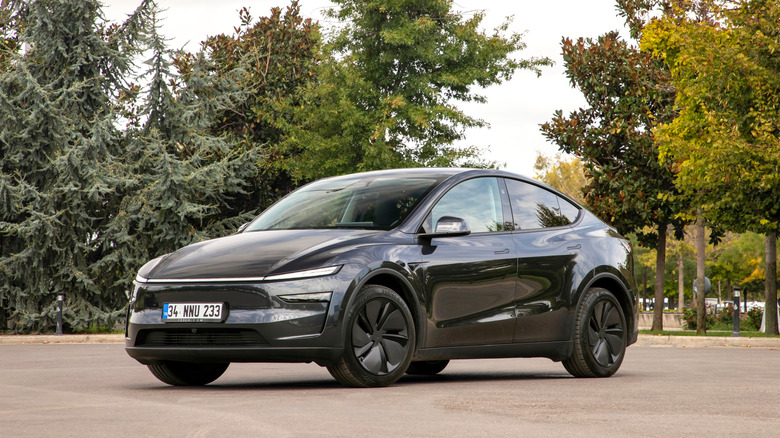
The Tesla Model Y is one of the most popular electric SUVs on the market. This car, like most of Tesla's products, is a very satisfying EV to drive. With a range that can reach up to 357 miles, a 0-to-60 acceleration speed of 3.9 seconds, a quiet cabin, roomy interiors, a ton of cabin space, and access to the patented Tesla Supercharger network, the Tesla Model Y has carved out a stellar reputation for itself. The reviews of this car are proof enough of how amazing the entire package is, with a score of 8.2 out of 10 on the Edmunds scale, a 9 out of 10 Car and Driver score, and impressive scores across the board on Consumer Reports. The general consensus is that you'll be more than satisfied with your purchase if you take the plunge and get your hands on a Tesla Model Y.
Even so, it's not like the Model Y has enjoyed the smoothest journey since production began all the way back in 2020. Just like any new EV, the Model Y has faced its fair share of issues that have led to consumer complaints and recalls. Sure, you'll enjoy a largely reliable electric vehicle if you opt for the 2026 model, but there's nothing wrong with being aware of the problems that the Tesla Model Y has had to deal with since its release.
Unreasonably small warning lights
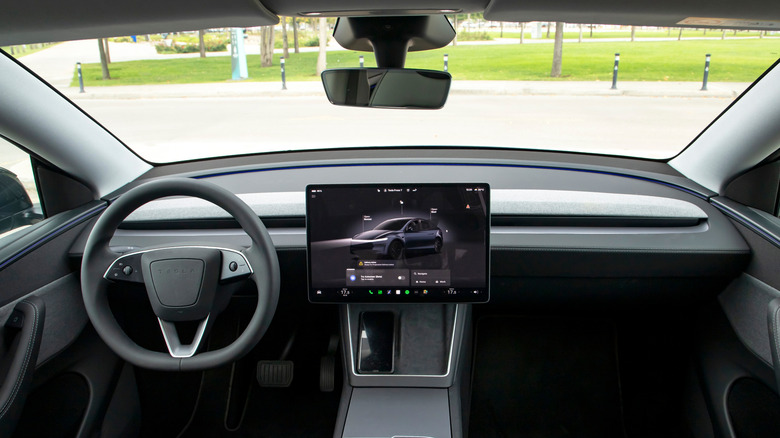
Tesla's EVs are generally considered to be some of the most stylish packages on the market, with their design ethos being a huge reason why its cars have sold like hotcakes. The Tesla Model Y is no exception, with this appealing vehicle selling more than 357,000 units in 2025 alone. However, in a bid to make its interiors as sleek as possible, Tesla ended up going overboard when it came to the warning lights on the instrument panel. The brake, park, and antilock brake warnings in early models had font sizes so small that the National Highway Traffic Safety Administration (NHTSA) had to step in and instruct Tesla to alter what could possibly become a safety hazard on a worldwide scale.
This led to a large-scale recall of pretty much every Tesla vehicle under the sun, including the 2019 to 2024 versions of the Tesla Model Y. The numbers are genuinely mind-blowing, with almost 2.2 million cars being recalled to address this issue. That wasn't the only time that Tesla's warning lights have come under fire — more recently, the company had to recall around 700,000 units of the 2020 to 2025 versions of the Model Y because the low tire pressure warning wasn't consistently displayed between drive cycles. This left drivers at a higher risk of getting into a car crash as a result of inadequate tire pressure, which prompted the recall.
Error-prone autonomous driving system
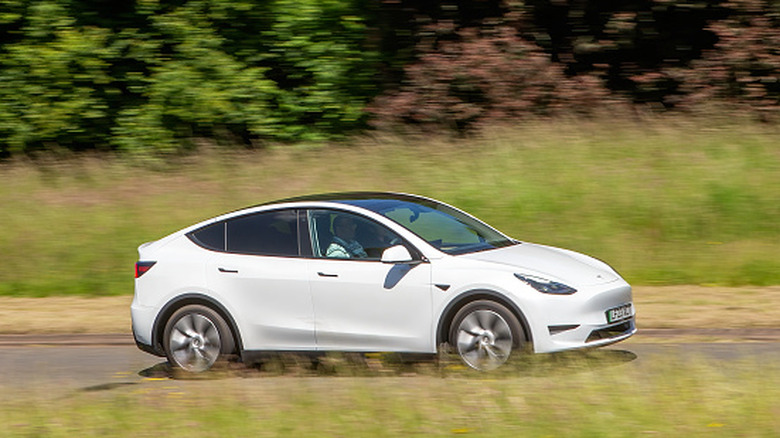
On paper, the Full Self-Driving (FSD) feature of modern Tesla vehicles sounds quite appealing. Operating on autopilot is pretty much what driving in the future looks like in the eyes of many, and Tesla's amazing work in developing this technology should be commended. Still, FSD has a long road ahead of it before it can be utilized hands-free without any issues. Without human supervision, enabling autonomous driving on your Model Y can be a major safety hazard. In Austin, Texas, alone, Model Y robotaxis got into five crashes between December 2025 and January 2026. It's a pretty damning statistic that makes FSD quite unreliable in the current day and age.
Of course, drivers themselves should be aware at all times, an idea Tesla reinforced with the recent addition of a "Keep Hands Ready" steering warning to FSD. Calibrating the Model Y's sensors regularly and keeping the software up to date are also good practices to keep in mind if you want the FSD to be as accurate as possible. Even then, the Model Y can exhibit issues with staying in its lane, detecting shifting obstacles on the road, and navigating intersections, so — and we can't stress this enough — keep your hands on the wheel and stay attentive no matter what.
Numerous build-quality issues
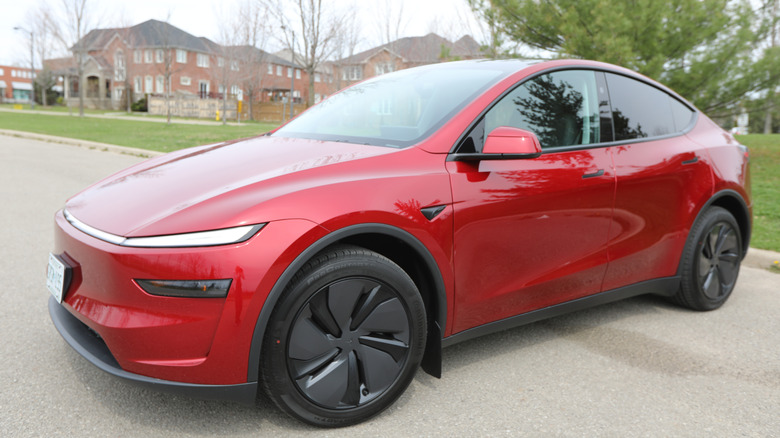
Most people would expect a company with Tesla's reputation to knock it out of the park in terms of build quality, but the reality has been the complete opposite, contributing to low reliability rankings for electric vehicles overall. Initially, build-quality issues for Tesla cars were attributed to Elon Musk's company being a relatively new player in the realm of automotive manufacturing. This excuse doesn't apply anymore, especially since the Tesla Model Y has been on the market for more than half a decade now, making these issues less justifiable.
Among the complaints many owners have is that the paint used on the car itself is susceptible to scratches and can wear off at a moment's notice, with one owner joking on Reddit about how even breathing on the coat of paint is enough for it to get damaged. Another common build-quality issue is misaligned panels, leading to an asymmetrical fit and gaps in the car's exterior that can result in serious problems. Aesthetics aside, an unreasonably large gap allows water to leak into the trunk in rainy weather.
The 2026 Model Y has also faced its fair share of build-quality problems aside from the panel gap we've already mentioned, with one owner reporting that the light bar placed at the front of this car was crooked, along with some kind of burnt plastic on the front-right wheel well panel, raising serious questions about the quality control of the modern Tesla Model Y.
12-volt battery failure
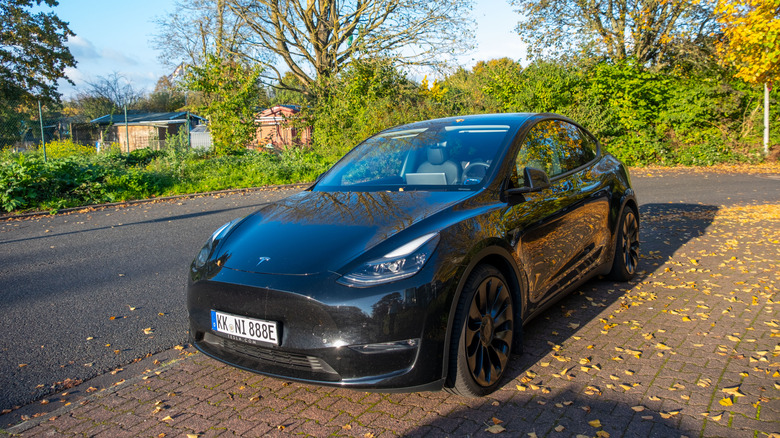
Aside from the massive battery that powers an EV's engine and helps it run for a ton of miles with ease, almost every electric vehicle — including the Tesla Model Y — operates a separate 12-volt battery in tandem. Not only does this power some of the car's electrical systems when the vehicle is not in use, but it's also responsible for kickstarting the car's main battery. Suffice it to say, if this 12-volt battery fails, then an EV becomes nothing more than an inoperative piece of metal.
Several Tesla drivers have reported on Reddit that their Model Y's 12-volt battery has failed on them, mandating a replacement ... and a towing service if they're stranded in the middle of the road. The most notable instance of this problem occurred in a 2021 model. Thankfully, at least one owner has noted that Tesla can replace this battery unit for a cheaper cost as opposed to a third-party repair service, which alleviates the severity of this problem somewhat. Even then, we recommend that you get your car serviced regularly to identify a potential battery issue well before it comes to pass.
Stiff, rattling suspension
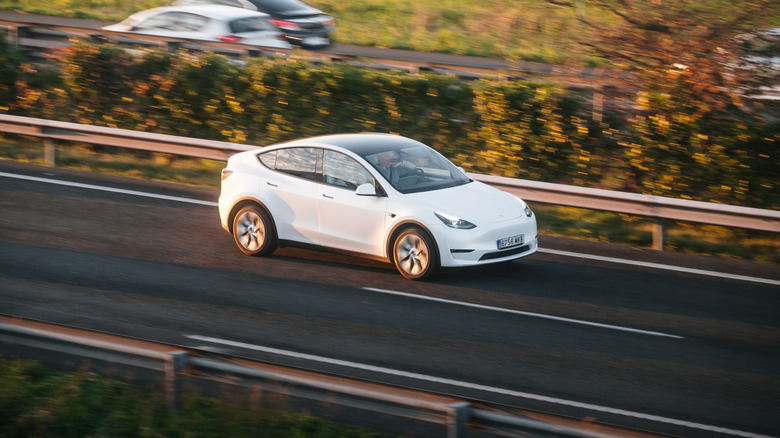
A car's suspension can make or break the ride experience. For the most part, the Tesla Model Y delivers a smooth drive that you'll have a great time with, but there are some caveats. Pre-2023 Model Ys were notorious for a stiff-feeling suspension, which led to a bumpy and uncomfortable ride. Thankfully, Tesla addressed this issue with a Comfort Suspension upgrade. Despite this change, complaints of a rattling, noisy suspension plaguing Model Y cars still happen even to this day.
Two pain points have been highlighted that might be the reason for this creaking suspension. First, the upper control arm ball joints wear out well before they're supposed to because of water and moisture getting trapped in these parts. Another culprit is the inner bushing tearing on the lateral and compliance links. Both these faulty parts make the suspension rattle, which is the last thing you'd want to deal with after just a few months of getting a spanking new Tesla Model Y.
Phantom braking and a lacking collision-avoidance system
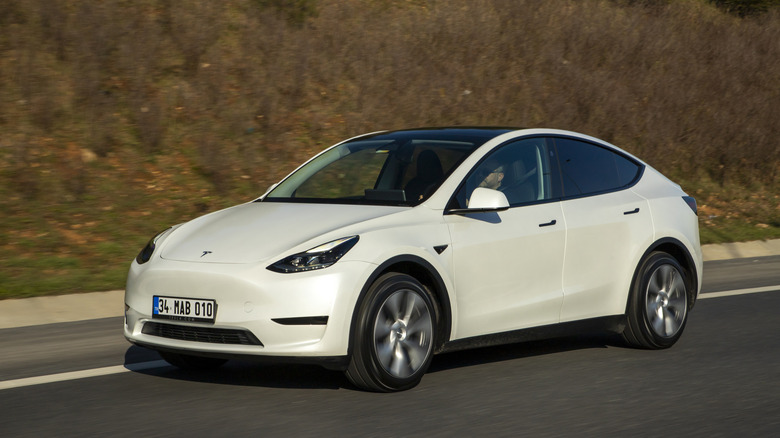
Advanced Driver Assistance Systems (ADAS) have become commonplace in most modern cars. It's only natural to expect this state-of-the-art technology from a manufacturer known for boasting some of the best software seen in an EV. Indeed, the Tesla Model Y's software and in-cabin tech are in a class of their own, which is why it's downright unacceptable that the Model Y's ADAS systems are far from optimal and create their fair share of issues. AI scientist Samaneh Movassaghi's infamous accident is a prime example of why you can't rely on the Model Y's tech to save you from any harm — her Tesla's camera-centric collision-avoidance system failed to detect an oncoming car that T-boned her. This problem is even more concerning when you consider that Tesla removed any radar sensors from the Model Y in 2021, with the ultrasonic sensors following suit in 2022.
The most prevalent problem with the Model Y stems from a phantom braking issue that is worryingly common. When operating this car on autopilot or using adaptive cruise control, the car may detect a non-existent obstacle on the road — usually an overhead sign, a shadow, or an object that is pretty far away — and slams the brakes. These false positives can lead to a dangerous situation on the road, especially since this problem is prevalent on two-lane highways , where high speeds and tailgating cars aren't uncommon.
The heat pump causing climate-control issues
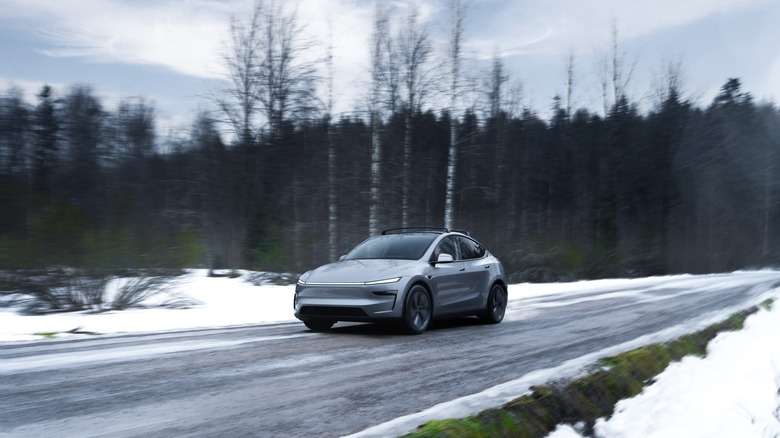
The climate control system and heat pump need to be working properly in your car, especially if you live in a region where subzero temperatures are common in winter. So, hearing that the Model Y has a faulty heat pump is a major cause for concern. The 2021 and 2022 versions of the Model Y were majorly affected by this, to the point where Musk stated that fixing this with a firmware update was a top priority. It seems that this update wasn't enough, given that Tesla issued a recall of more than 26,000 Model Y, S, X, and 3 vehicles later on to fix its heat pumps.
Apparently, the issue was largely attributed to a software fault, with a valve in the heat pump, called the Electronic Expansion Valve (EXV), staying open for longer than necessary. This led to the refrigerant getting trapped inside the evaporator, with the compressor eventually shutting down. These heat pump issues may be a thing of the past now, but you should keep these problems in mind if you're driving a Tesla Model Y from those years and haven't seen the heat pump acting up yet.
Problematic infotainment system
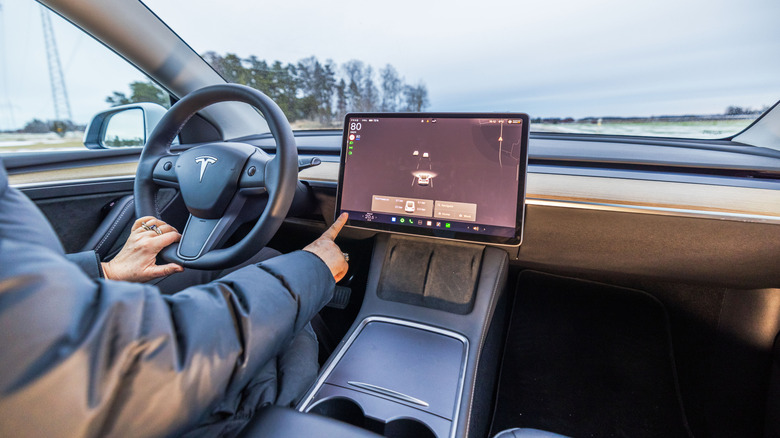
Tesla's infotainment system is supposed to be one of its biggest selling points. So, if this in-cabin tech itself is a pain point that can negatively impact your experience with the Model Y, then it's something to keep in mind. Since this EV, like most Tesla cars, lacks support for Apple CarPlay or Android Auto, the navigation, Bluetooth connectivity, and other aspects of the infotainment system should run smoothly to justify and compensate for this exclusion. Unfortunately, it seems that this gadgetry doesn't have a spotless record. For example, a user on the Tesla Motors Club forum stated that the car's navigation started acting up, with the GPS placing the car at a completely incorrect location.
Aside from this, the infotainment screen is also prone to lagging and freezing , which can be quite distracting on the road. Bluetooth connections aren't flawless, either, with audio playback exhibiting its fair share of glitches. For a brand that sells itself on its next-gen tech, these problems are quite disappointing and nowhere near the standards that Tesla should hold itself to.
Faulty cameras
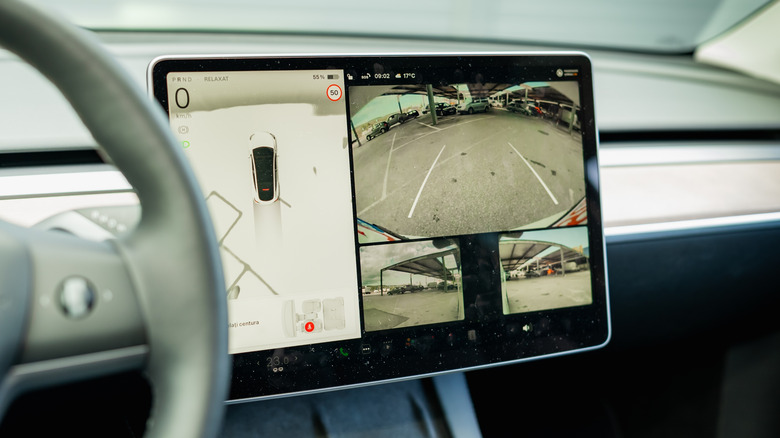
Cameras are the bare minimum people expect from modern vehicles, especially when it comes to Tesla's offerings. The Model Y is equipped with a suite of cameras that enhance the car's ADAS systems and aid the driver in performing trickier driving maneuvers. These cameras help map out any obstacles that allow the autopilot system to function safely at high speeds, detect any obstructions in the nick of time, and navigate tricky intersections. They also aid the automatic emergency braking function, record suspicious activity around the vehicle in Sentry Mode, and help the driver observe any blind spots when parking. On top of this, Tesla also has an in-cabin camera that monitors driver attentiveness, further reducing the chances of getting into an accident behind the wheel of a Model Y.
Unfortunately, Tesla's cameras haven't always lived up to those promises, which can naturally make you worry about your safety riding in the vehicle. The most severe camera fault affected the 2023 to 2025 versions of the Model Y. These vehicles, along with other Tesla cars, were recalled for an issue affecting the rearview cameras after the car's computer board shorted. Another recall was issued because backup cameras weren't working on the Tesla Model X, Y, and S. Aside from this, numerous Tesla Motors Club users have reported that their Model Y's cameras stopped functioning out of nowhere.