

8 Gadgets That Could Jump In Price Due To The RAM Shortage
We may receive a commission on purchases made from links.
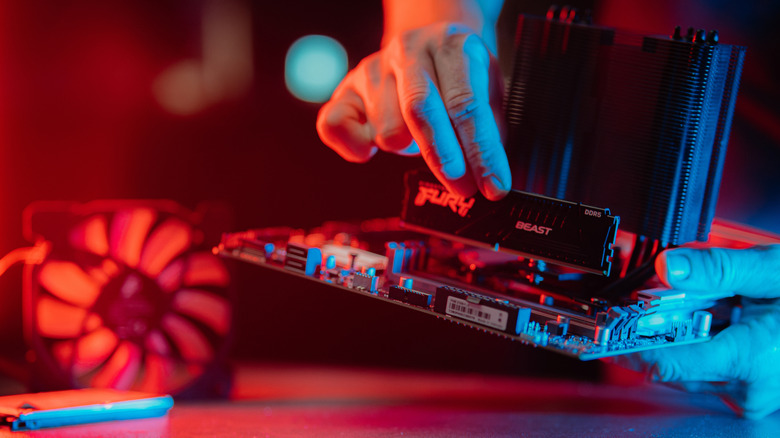
The AI industry is booming, with major tech companies investing truckloads of cash on artificial intelligence to stay ahead of the curve. The gripes against AI technology are well-documented, with people worried about the job market, rampant spread of misinformation, and — last but not least — the ever-increasing memory crisis. AI data centers that rely heavily on RAM to meet their high computing demands have caused a scarcity the likes of which has never been seen before in the market. The fact that RAM prices have already risen by 90% in the first quarter of 2026, compared to the final quarter of 2025, is proof enough. OpenAI, arguably the biggest artificial intelligence company on the market, has also secured a whopping 40% of the world's DRAM supplies for the coming years, which will further exacerbate this problem.
To make things worse, regular consumers who don't rely on AI tools very often are suffering from this RAM scarcity. Every smart device and processor-intensive system under the sun needs RAM to operate smoothly. Smartphones, gaming consoles, IoT-enabled devices, and computers are just a few of the many victims of this crisis, forcing manufacturers to either halt production or charge a hefty premium to make up for rising RAM costs. Either way, the net result is negative for consumers. If you're in the market for a technological upgrade, just keep in mind that these devices will burn a hole in your pocket that may get even bigger as the AI industry continues to grow.
Gaming consoles and handhelds
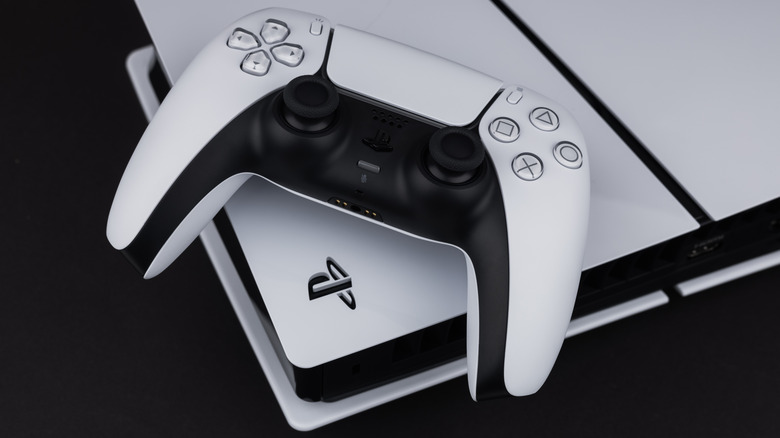
Anyone even remotely familiar with gaming hardware knows how these systems rely on powerful, high-capacity RAM to run processes smoothly and increase data reading speeds with minimal lag. The PS5 and the Xbox Series X use 16GB GDDR6 SDRAM, and it's no surprise that both consoles have struggled with the memory shortage. As a result, Sony is expected to delay its PS6 launch to 2029, with its current strategy being to monetize the existing player base as much as it can. Whether this means higher PS Plus subscription costs or inflated hardware prices is anyone's guess. The company was smart enough to avoid the early RAM shortage crisis by hoarding a decent chunk of GDDR6 RAM units, but Microsoft didn't have this foresight. As a result, the Xbox Series X might be facing its third price hike in just 12 months, just after the company announced that the Xbox Series X would reach a price of $649.99 in September 2025.
The handheld market isn't faring any better. The rumors of Nintendo increasing the price of the Switch 2 despite the console launching in the middle of last year are already gaining steam, with company president Shuntaro Furukawa acknowledging the situation. While the current memory shortage crisis won't impact prices for now, Furukawa couldn't give a definitive answer when asked about future price increases. Meanwhile, Valve's Steam Deck is also facing a production issue and is out of stock in several regions. The launch of its Steam Machine is delayed indefinitely, as is the Steam Frame, its latest VR headset.
Laptops and pre-built PCs

Buying a new laptop in 2026 is going to cost a pretty penny, and it will only get more expensive as the RAM crisis worsens. Hewlett-Packard's CFO, Karen Parkhill, has outright stated in an earnings call that HP will need to increase prices to deal with rising memory costs. Dell isn't far behind, stating that hardware costs will increase by 15% to 20% in a bid to offset memory costs. Finally, Lenovo has also declared a revised pricing policy for its hardware in 2026, becoming yet another victim of the RAM crisis.
Pre-built PCs aren't faring all that well, either. In fact, things are so bad here that the very concept of an affordable entry-level PC is dying out. According to a Gartner forecast, a pre-built PC that costs $500 or less will become a thing of the past by 2028. Take a look at the Raspberry Pi 5 and the Orange Pi 5B, two devices that use 16GB of RAM. The former launched last year for $120 before being forced to increase its price to $205, while the latter's 16GB RAM model was initially priced at $149, only for the cost inflate all the way up to $311.99. Both these so-called affordable single-board computers cost a whole lot more than they should because of AI, and other companies aren't far behind.
CyberPower, a company that develops pre-built gaming PCs, stated that it would increase prices after 2025's Black Friday in response to RAM and SSD price hikes. Framework's desktop system has also seen price hikes, with the most notable one being a major $460 increase for the model with 128GB of RAM, which could be acquired for $1,999 at launch.
Smartphones

Everyone knows that smartphones also use RAM to operate smoothly, so it's natural to assume that these devices will also see major price hikes across the board in 2026. A report by the International Data Corporation (IDC) declared that the average price of smartphones will rise by 14% in 2026, which isn't helped by yet another prediction that smartphone sales will drop by 12.9% this year because of the ongoing memory shortage. Samsung is one of the biggest smartphone companies to directly issue a statement addressing the RAM crisis. At CES 2026, Roh Tae-moon, co-CEO of Samsung's mobile division, warned consumers that the company's phones will inevitably see price hikes across the board to deal with a challenging economic situation and rising memory costs.
Speaking of Samsung, this company is also responsible for supplying LPDDR5X memory to its competitor, Apple. In the wake of RAMageddon, Samsung has now doubled the price of these units — a hike that Apple agreed to promptly in a bid to secure memory inventory and prevent the ongoing RAM shortage from stalling its manufacturing processes. Apple CEO Tim Cook has talked about how the company is aware of rising memory costs and is going to gauge several options to deal with this evolving crisis. What this means is open to interpretation, although a price hike isn't off the table.
SSDs and hard drives
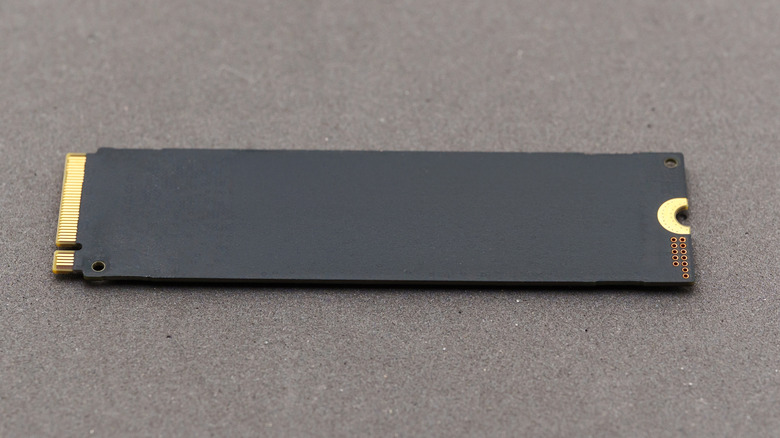
Along with DRAM, NAND flash memory is also facing a severe shortage, to the point where SSDs have become ridiculously expensive. Cameron Crandall, the Datacentre SSD Business Manager for Kingston, has already talked at length about the unprecedented price hike of NAND wafers. These parts are critical to SSDs and have seen a 246% price increase, which is bound to translate to price hikes for its product in no time. Take the 2TB Samsung 990 Pro with an attached heatsink — a product that was only $170 in November of last year is now retailing for $378.50 on Amazon!
Western Digital has also been affected by the AI industry boom, with the company declaring that it has already sold out its 2026 capacity ... in February! Irving Tan, Western Digital CEO, said in an earnings call that the storage space has been allocated to the company's top seven customers. These enterprises comprise the bulk of WD's sales, with the consumer market accounting for a paltry 5% of the company's revenue. If you have an old hard drive, then hold on to it, since it has become far more valuable than you thought possible. Khein-Seng Pua, CEO of Phison Electronics, has talked about how NAND prices in 2025 have doubled within the span of just six months. If things continue as they are, buying a state-of-the-art SSD to upgrade your desktop will become a wallet-burning nightmare.
GPUs
VRAM is a critical component of most GPUs, so it's no surprise that the industry-wide memory crunch is affecting these graphical processing units, as well. NVIDIA has already paused production of RTX 50 series graphics cards for the first six months of 2026. If you were planning to upgrade your PC hardware, then you're out of luck in this department. The worst part is that these six months may not be set in stone, with Colette Kress, NVIDIA's CFO, saying that the ongoing memory shortage will affect their operations all the way till the beginning of 2027 and perhaps longer. What does this mean for the average consumer? Well, the answer is pretty obvious — price hikes.
Both NVIDIA and AMD are clearly affected by the heightened memory costs, and it seems that the only way to counter this crisis is by increasing the prices of their GPUs. Costs for GDDR6 and GDDR7 have risen spectacularly, to the point where VRAM accounts for 80% of the cost of a GPU's materials. This is not great news for the NVIDIA faithful, since the inflated pricing of its products has already been the source of major debate. The fact that these prices will continue to be on the rise is not positive news for anyone even remotely interested in PC gaming.
Smart TVs

The debilitating effects of RAMageddon can't be stated enough, to the point where even smart devices that use RAM aren't safe from a price hike. The latest victims to face a price jump because of this chip shortage are smart TVs. For the most part, smart TV prices aren't on the rise yet, but people with industry knowledge have predicted that it's only a matter of time until your television costs way more than it should. If you're in the market for an upgrade, then purchase a smart TV right now before prices reach silly levels.
Samsung has pretty much confirmed that the writing is on the wall, with both Won-Jin Lee, company president and the head of global marketing, and Roh Tae-moon talking about how memory shortages and increased prices will lead to heightened prices not just for smart TVs, but consumer tech as a whole. Suffice it to say, becoming a couch potato will become more expensive than anyone imagined.
Wi-Fi routers
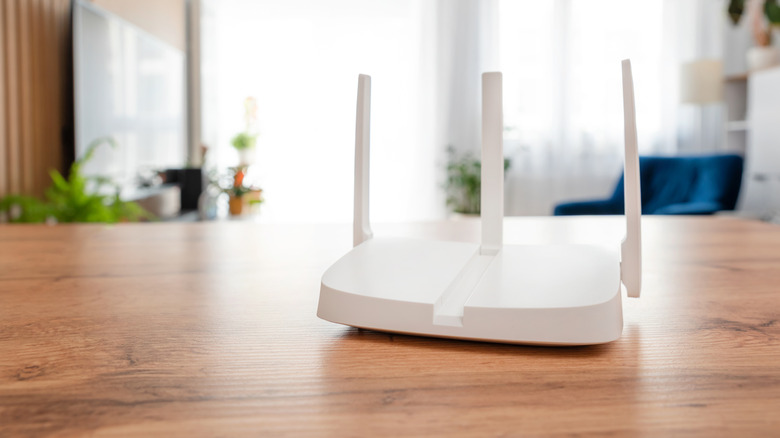
A rather surprising fact you may not be aware of is that Wi-Fi routers also use memory to manage multiple connections, ensure network security, and efficiently carry out high-speed data transfers. Memory used to account for only 3% of a router's total manufacturing cost, but this is poised to change over time. With memory prices increasing by a mind-blowing 600% , a router's memory will now account for 20% of the total cost.
As a result, telecom companies like Telcos are struggling to maintain supply, with RAM costs making it harder for them to develop routers and set-top boxes for consumers. Get an internet connection right now, since the classic Wi-Fi router freebie that came with every installation will soon become a thing of the past. A price hike for such a simple and widespread product should make it clear just how debilitating the RAM shortage crisis is for consumers.
Cars
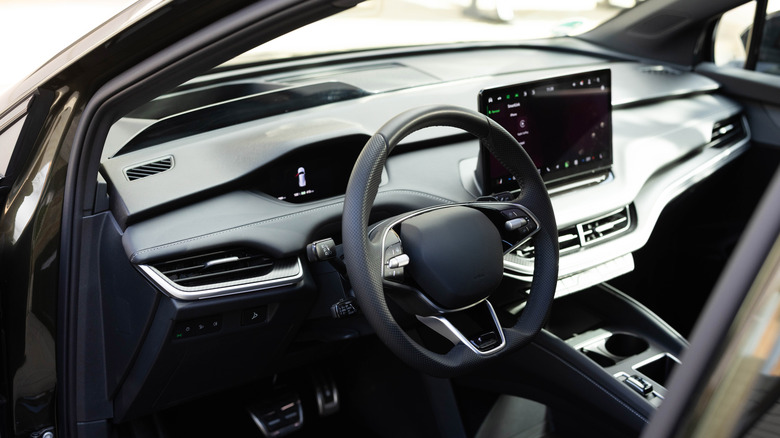
Automotives are already a hefty purchase for the average consumer, who will do everything in their power to find the best deal when buying a new vehicle. So, it's particularly irksome that even cars aren't safe from RAMageddon. With the heavy reliance of state-of-the-art vehicles on advanced software, a sufficient amount of RAM is required to operate ADAS protocols, power advanced infotainment systems, and help ECUs function smoothly. Now, with a global memory chip shortage affecting pretty much every consumerproduct under the sun, it seems that cars will also suffer from heightened prices, supply shortages, or both.
EVs will face the bulk of these price increases, since they use almost twice the amount of semiconductor materials as traditional vehicles. It's easy to see why a shortage of this product is problematic for car manufacturers. However, if you drive an internal combustion vehicle, don't assume that you're safe from this price hike — these fuel-powered automotives also utilize a decent amount of semiconductor components and may be among the many items skyrocketing in price due to the memory crisis.