

Home EV Chargers Might Be More Efficient Than Public Charging Stations - Here's Why
Buying a new car is always a big investment, which is why it's important to make sure you look after your car, as well as ensuring you are getting the most out of it. If you've made the leap to an electric vehicle, the chances are that saving money in the long run was part of what influenced your decision. Even the most reliable electric vehicles can still face issues, which is why it's important to make sure you're charging your EV in the most efficient way possible.
You might think the only real downside to using public fast chargers, such as Tesla Superchargers, is their cost. That's not the only issue: Batteries that are charged through fast chargers can often cause chemical stress, which can lead to long-term degradation of the battery, reducing your EV's battery life over time.
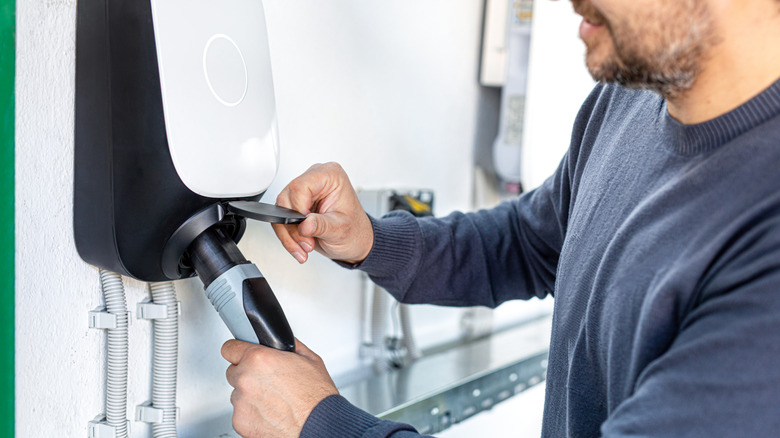
Of course, there are some ways to prevent this, including using a home charger. Charging at home doesn't come close to reaching the speeds of fast or super-fast charging. This allows the battery to reach higher temperatures at a steadier rate, helping maintain overall battery life.
Better EV battery life
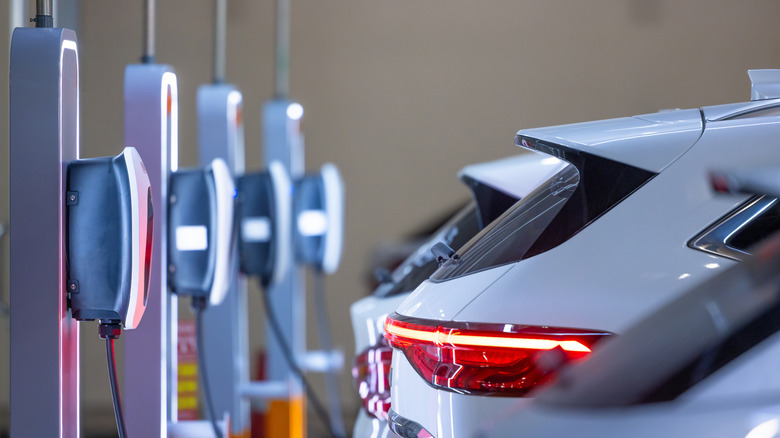
There are several benefits to using faster public chargers, the most obvious being the speed at which your vehicle will charge. There are downsides, which can often make home charging the best option. Of course, you will need to make sure you either have a home charger installed or at least the right tools to charge an EV at home, such as cables and adapters.
With home chargers being slower, it's easier to make sure you stay within the ideal charging range, which is usually suggested at 20%-80% of charge. Most of the top reliable EV brands stick to the 20-80 rule, suggesting that it can help maintain a longer battery life. Home charging produces less heat and therefore less strain on the battery. Recent studies show that regular fast charging using DC fast chargers of 100kW or more can lead to an average of 3% overall capacity loss. The faster you charge, the more heat is created, and if a battery becomes too hot, chemical reactions happen quicker; which can lead to the battery degrading and reducing its overall capacity.
Most modern EVs will include a feature that lets you schedule your charging, meaning you just leave it plugged in when at home, and it will only charge between the hours you have set.
Home charging saves money

As well as potentially maintaining longer battery life for your vehicle, charging at home is usually much cheaper. DC fast charging can cost upwards of 30–50 cents/kWh, and often includes fees; including additional costs depending on the time of day you charge, and even how many charging stalls are available. At home, there are no fees, other than the cost of your utilities. If you're lucky enough to use solar panels or another type of renewable energy, you could literally be charging for free.
While level 1 home charging only offers 2-3KW per hour (compared to DC fast charging's top bracket of 350+KW), it's still enough in most cases to get you back to 80% overnight. Some EV users opt for a level 2 charger, which can reach 3.3-11KW per hour, and is more convenient, as it can add significantly more miles per hour without degrading the battery like a fast charger.
One of the main cost-saving factors to keep in mind is your battery's health. If you can do anything to keep your battery from degrading too quickly, it's going to save you money in the long run, as replacing EV batteries isn't cheap. Using a fast charger as a top-up, and then routinely using home charging for day-to-day charging seems to be the way to go. It offers both convenience and the most efficient way to charge your electric vehicle.