

5 Android Flagships With Better Battery Life Than The iPhone 17 Pro
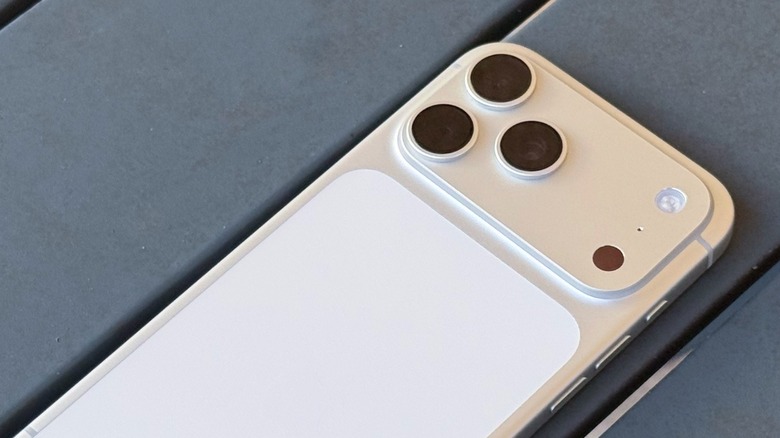
The iPhone 17 Pro, especially the Max version, offers the best battery life an Apple user can get on an iPhone. After all, we're talking about a massive difference here, as the smaller version features a 4,252 mAh battery, compared to a 5,088 mAh battery on the bigger model. While this already represents a significant jump over the previous generation, Apple also added an innovative vapor chamber cooling system and the new A19 Pro chip that makes these devices more energy efficient. However, when compared to the Android world, Apple could be easily left behind, especially if we're just considering numbers.
Chinese companies like Oppo and Honor are pushing the limits of battery capacity, and that gives them an edge over the iPhone in certain scenarios. Still, as we've learned over the years, spec sheets don't necessarily mean much in everyday usage — they simply give us an idea of the performance we might get from a product. Since getting a full day of battery life is one of the most important things people look for when buying a new smartphone, we've rounded up five Android flagships that have the specs or real-world test results to outlast Apple's iPhone 17 Pro models.
Oppo Find X9 Pro
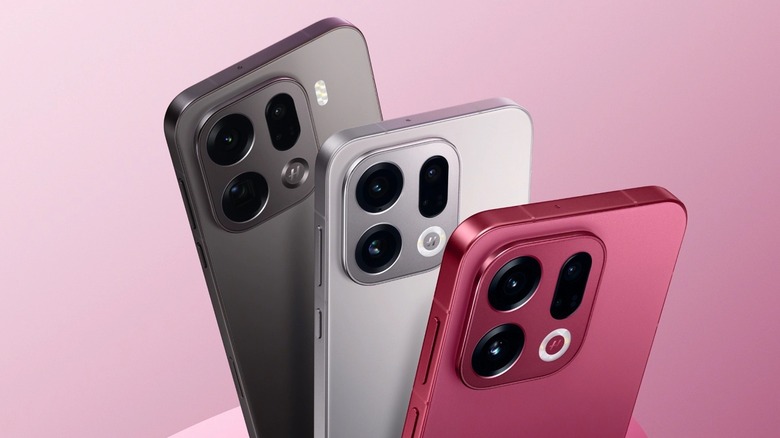
Released in late 2025, Oppo's Find X9 Pro has a massive 7,500 mAh silicon-carbon battery that some users report can last for multiple days. Here, the main difference is that Oppo uses a silicon-based anode instead of graphite, which is what Apple uses. Silicon can store more lithium ions than graphite by weight, which means companies using the newer tech can offer larger battery capacities without making the device thicker. Since this technology is still fairly new, Apple continues to use a conventional graphite battery, as it's more stable and predictable over many charge cycles than a silicon-carbon option.
Still, this is not the only thing that makes Oppo's Find X9 Pro a battery powerhouse and an all-around cool smartphone. It also features 80-watt charging with the company's proprietary SuperVOOC standard, going from 1% to 100% in around an hour. With a 6.78-inch LTPO OLED display, it features a refresh rate range of 1 to 120 Hz, HDR support, and up to 1,800 nits of brightness in ambient light. It's all powered by MediaTek's advanced Dimensity 9500 chip, which can't beat Apple's A19 Pro but will still deliver solid performance in everyday usage.
OnePlus 15
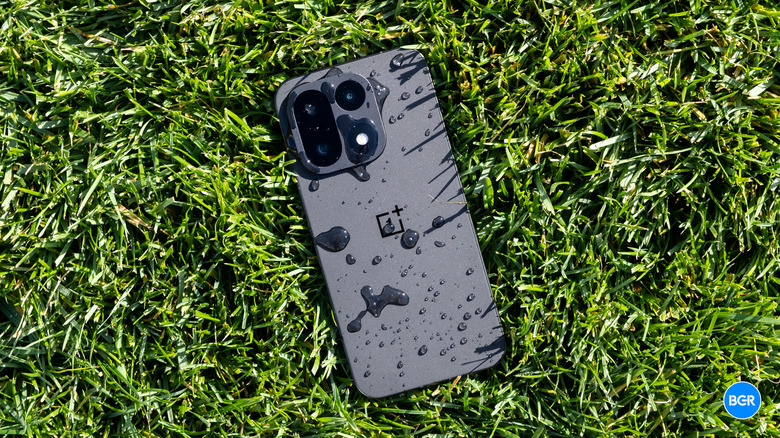
Also released in late 2025, the OnePlus 15 features an impressive 7,300 mAh silicon-carbon battery. Like Oppo's Find X9 Pro, this device also supports 80-watt wired charging and 50-watt wireless charging. Thanks to its silicon-carbon battery, OnePlus is able to get a bigger capacity in a smaller form factor, as it features two 3,650 mAh cells. According to reviewers, it's possible to end the day with up to 60% battery life, which shows this device can get to a second day of usage without issues.
Besides its giant battery, the OnePlus 15 has a beautiful 6.78-inch OLED display with a peak refresh rate of 165 Hz, which can be extremely useful for gamers. However, unlike Oppo's phone, OnePlus bet on a Snapdragon 8 Elite Gen 5 chip with 16 GB of RAM and 512 GB of storage, which checks all the performance and efficiency boxes for a premium smartphone.
After its partnership with Hasselblad ended, OnePlus introduced its own DetailMax camera, which is built around three 50 MP sensors. On paper, this should bring consistency to shots and recordings from any of the cameras. However, as we noted in our full OnePlus 15 review, real-life results can vary and sometimes look inferior to photos captured on the iPhone 17 Pro. Still, this is a solid phone for those focusing on battery life.
Samsung Galaxy S26 Ultra
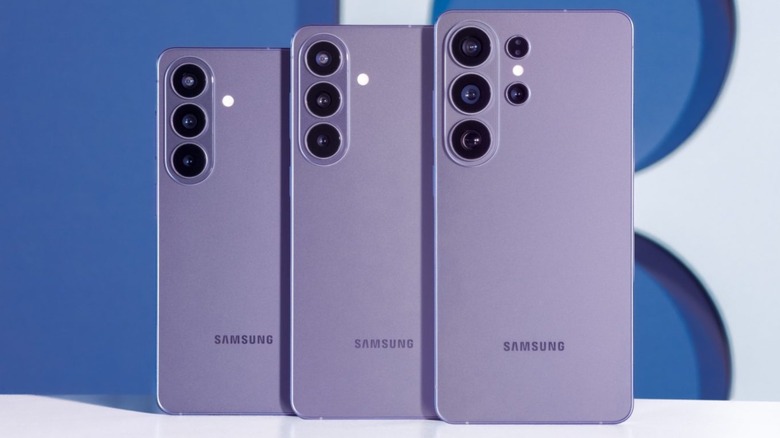
Unlike its Chinese competitors, Samsung is still pretty conservative with its batteries, especially after the Galaxy Note 7 exploded so many years ago. Still, the new Galaxy S26 Ultra features a 5,000 mAh power cell, which is on par with the iPhone 17 Pro Max. Early tests show that the battery on this device can surpass the one on the Galaxy S25 Ultra and even beat the iPhone 17 Pro Max. Besides that, Samsung offers 60-watt charging, which will get the battery topped up much faster than what Apple features.
Still, battery perks aren't the only reason to consider the Galaxy S26 Ultra. One pretty cool feature available with this phone is a new privacy display that lets users select which part of the screen they want to protect from prying eyes. Ultimately, this means you can make the screen's contents harder to see from over your shoulder, and you can do it for specific apps, notifications only, or even the entire display.
The Galaxy S26 Ultra also comes with top-tier specs, as it features the Snapdragon 8 Elite Gen 5 chip, up to 16 GB of RAM, and as much as 1 TB of storage. Its 200 MP main camera should take beautiful shots, and a 50 MP periscope camera should make zooming in a lot better as well.
Vivo X300 Pro
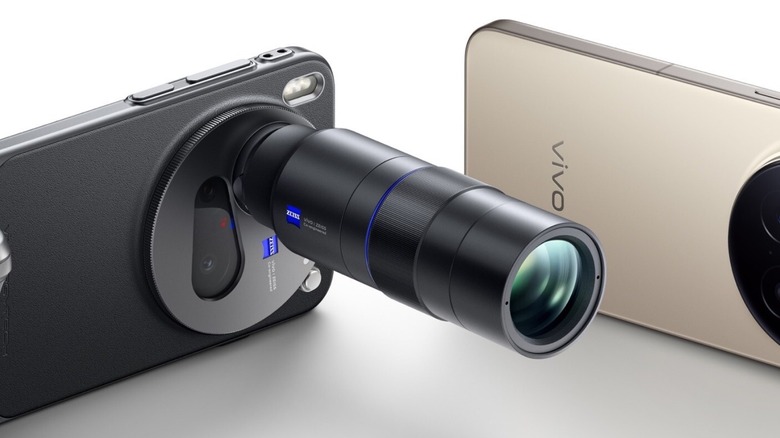
Also part of the late 2025 release cycle, Vivo's latest X300 Pro is a camera-focused smartphone that happens to feature killer battery life thanks to a 6,510 mAh cell. It offers up to 90-watt wired charging and 40-watt wireless charging, so it can go from 0 to 100% in under 50 minutes. Interestingly enough, in the EU market, it only has a 5,440 mAh battery, which might be explained by old legislation that makes higher-capacity battery configurations harder to sell.
That said, the Vivo X300 Pro can still be a very intriguing smartphone, whether it's the model with "just" a 5,440 mAh battery or the one that tops out at 6,510 mAh. Vivo uses the MediaTek Dimensity 9500 processor and pairs it with up to 16 GB of RAM and as much as 1 TB of storage. It has a 50 MP main camera, a 50 MP ultrawide sensor, and a 200 MP telephoto lens, with 3.7x optical zoom and up to 100x digital zoom. The front camera also features a 50 MP sensor.
Vivo partnered with Zeiss to produce the camera system, and some reviewers have said that the X300 Pro feels like a proper camera that just so happens to be a smartphone. And for the first time, buyers outside of China can purchase a camera add-on kit that comes with a telephoto lens, taking this device a step further into the realm of professional photography.
Honor Magic8 Pro
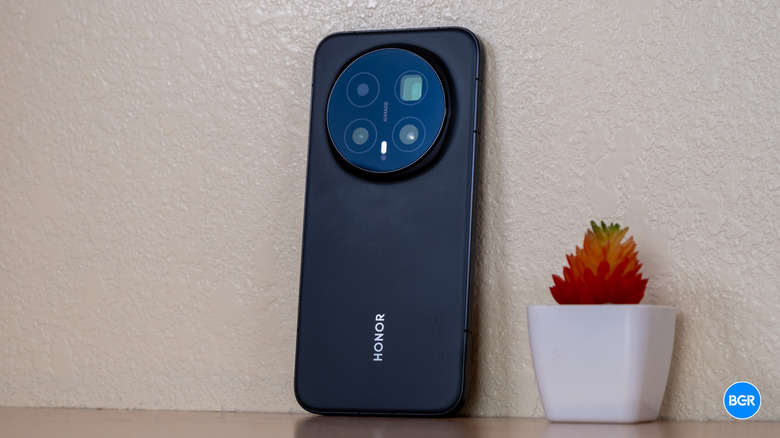
The Honor Magic8 Pro features a 7,100 mAh battery with outstanding 100-watt wired charging and 80-watt wireless charging. Like offerings from other Chinese brands, it also features a silicon-carbon power cell, taking the battery capacity of this phone to another level. When compared to the 5,088 mAh battery in the iPhone 17 Pro Max, the Magic8 Pro offers almost 40% more capacity in a smaller and thinner body.
Battery theatrics aside, this 2026 release features Qualcomm's Snapdragon 8 Elite Gen 5 processor, which brings important improvements over the previous generation, in addition to up to 16 GB of RAM and up to 1 TB of storage. With a 6.71-inch OLED display and a 120 Hz refresh rate, Honor's new flagship features a 50 MP main camera with a 50 MP ultra-wide lens, a 200 MP telephoto lens, and a 50 MP selfie shooter.
In our testing of this phone, images came out bright and rich in detail, and even at 10x zoom, the photos still looked sharp thanks to the high-resolution image sensors. The only downside, however, is that MagicOS 10 looks very similar to iOS, but Android users may prefer a UI more in line with Google's aesthetic. Like most of the devices mentioned above, the Honor Magic8 Pro looks superior to the iPhone 17 Pro on paper, but real-world use and personal preference might paint a different picture. Still, it's fair to say that these Android flagships offer killer battery life.