

Why There's Simply No Need For Touchscreen Laptops Anymore
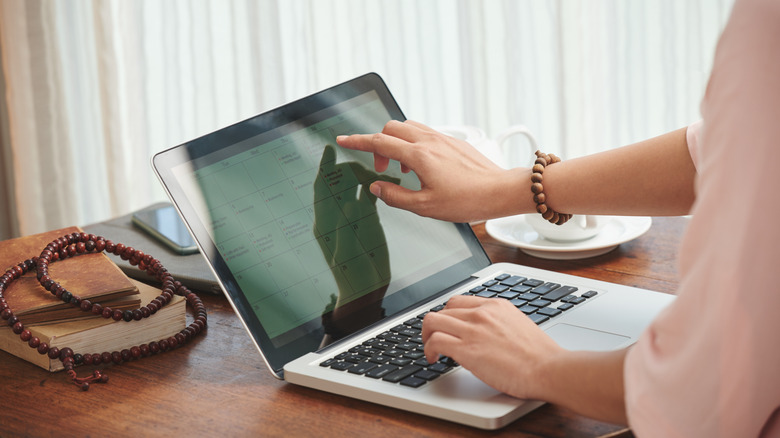
Laptops with touch-sensitive screens aren't new. We've had laptops with touchscreens for a while now, and you'll be surprised to know that the first model with such a display was launched by HP back in 1983. Although the trend hasn't become widespread, there are several companies that still make touchscreen laptops.
For example, HP's OmniBook X Flip, one of the best laptops of 2025 by Consumer Reports, has a touchscreen display. But that's just one example. There are also models from other major PC manufacturers like Acer, Asus, and Lenovo that have it. MacBooks have been laggards in this segment, and we've never seen a model with such a display, although we've seen some reports indicating that Apple might introduce a touchscreen laptop in the near future.
However, while some companies have continued to launch such models, it's safe to say that there's no need for such devices anymore. In fact, we can go as far as to say that for the majority of people, there's no point in getting a touchscreen laptop at all, considering their downsides far outweigh the upsides. The touchscreen functionality usually drains the battery more, and using it means you have to wipe the screen often to remove fingerprint smudges.
Touchscreen laptops are plagued by several issues
One of the biggest problems with touch displays on a laptop is that when you use it, you end up making your screen dirty due to fingerprint smudges. While you can do just fine with a few smudges here and there, you'll likely have them all over the display, making it much harder to read the contents of the screen, especially in a brightly lit environment. As a result, you'll have to clean your laptop's screen every now and then, which can be infuriating. The second downside to touchscreen displays is that they use more battery than non-touchscreen ones.
The first reason behind their higher battery consumption is that they typically have glossy screens, which force you to increase the brightness while working from a well-lit area. Additionally, because touchscreen ones have a sensor grid that has to stay active at all times when powered on to await your input, they end up using more power. As a matter of fact, some estimates suggest that a touchscreen can reduce battery life by as much as 15 to 25 percent, which is massive considering not all modern laptops have excellent battery life.
Furthermore, touchscreen laptops aren't as sleek and lightweight. This is because they have extra components on the display for the touchscreen feature to work, and in addition to that, they need to have a stronger hinge to keep them in place while in active use. Lastly, there's no point in touchscreen laptops because it isn't ergonomic to extend your arms above your desk for touch inputs. Instead, it's way better to use your keyboard and get an external mouse if you need the perfect ergonomic setup.
Laptops with touchscreens are great for a select few

While touchscreen laptops have a variety of issues that make them fall out of favor over non-touch ones for the majority of people, they can come in handy for a select few. For example, if you're a digital artist, you'll certainly be better off getting a touchscreen laptop with stylus support that allows you to draw directly on the display without buying an external input device like a tablet. Those who want to take notes on digital notebooks with a stylus pen will also find touchscreen laptops useful.
However, for the majority, there's no point in getting a touchscreen laptop. Therefore, before you splurge on such a laptop, be sure that you do need that functionality and can't do without it. Otherwise, you'll get it and have to endure all the downsides we've talked about without using the one functionality that makes this kind of laptop worth it for some.