

5 Android Phones Thinner Than The iPhone Air
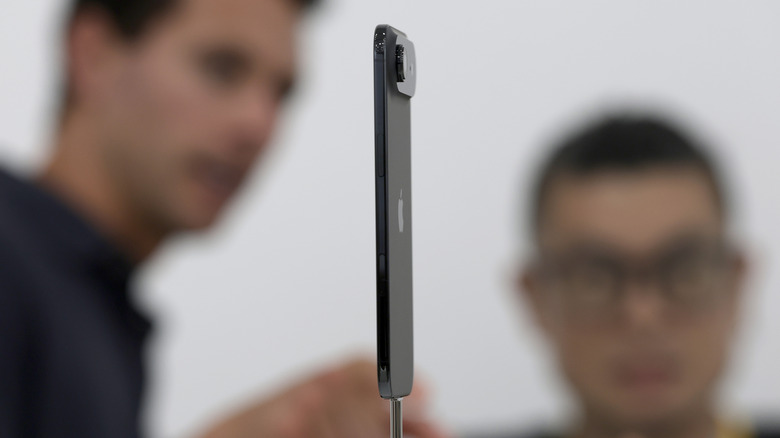
The iPhone Air, released alongside three iPhone 17 versions in September 2025, is Apple's thinnest iPhone ever, measuring just 5.64 mm compared to 7.95 mm for the standard iPhone 17, and 8.75 mm for the two iPhone 17 Pro models. The 2026 iPhone 17e is also thinner than the 2025 iPhone 17 models, but it is still much thicker than the iPhone Air, at 7.80 mm. It may not have sold as well as the other iPhone 17 models, but the ultra-thin handset features a high-end A19 Pro chip like the iPhone 17 Pro models, and offers all-day battery life, according to Apple's estimates and real-life iPhone Air battery tests. The Air is also considered to be a stepping stone in the development of the first foldable iPhone rumored to launch in September 2026.
But the iPhone Air isn't the world's first ultra-thin smartphone, nor is it the thinnest phone ever built. Android vendors have created several phones over the years featuring thinner profiles than the iPhone Air. Many of them were commercial devices like the Gionee Elife S7 and the Motorola Moto Z, though some of them were only concepts. Additionally, the latest foldable phones from Samsung and Honor offer an extremely thin form factor when unfolded. Here are some of the Android devices that are slimmer than the iPhone Air.
Gionee Elife S7
When Chinese vendor Gionee released the 5.5 mm Elife S7 in 2015, the thinnest iPhone consumers could buy was the 6.9 mm iPhone 6. This was two years before the iPhone X's arrival, which introduced Apple's all-screen display and the Face ID notch (and an increase in thickness, at 7.7 mm), and a decade before the iPhone Air's introduction. The Elife S7 wasn't the typical smartphone most Android users could buy, as Gionee wasn't a well-known name in the Android universe. Still, the phone turned heads with its thin profile.
The Elife S7 featured a 5.2-inch display with 1,920 by 1,080 resolution, a MediaTek processor, 2 GB of RAM, 16 GB of storage, and a 2,750 mAh battery. On the back, the phone had a 13-megapixel camera, while the selfie camera had an 8-megapixel sensor. The phone ran on Android 5.0. These specs pale in comparison with what the iPhone Air can offer a decade later. Apple's ultra-thin handset offers 12 GB of RAM, a 3,149 mAh battery, and up to 1TB of storage space. Like Apple, Gionee too claimed an entire day's battery life back in 2015, but it might have been a stretch.
The Gionee Elife S7 was a mid-range phone, so it was significantly more affordable than an iPhone. The handset sold for about €399 ($460) at launch, while the iPhone Air starts at $999. Apple also uses one of the fastest mobile chips in the industry, the A19 Pro processor, that outperforms most of its rivals.
Motorola Moto Z
Released in 2016, the Motorola Moto Z was a significantly more important ultra-thin phone than the Gionee handset. With a thickness of 5.2 mm and a weight of 4.80 oz (compared to 4.47 oz for the Elife S7), the Moto Z was a revolutionary handset that Motorola proposed to the world, including the U.S., where it was sold under Verizon's Droid branding. The reason Lenovo's Motorola was able to create such a thin phone was due to a new concept that Motorola was trying.
The $624 Moto Z was Motorola's first modular phone, a device that supported Moto Mods, or optional phone components you could add magnetically to the phone's back for specific features. That concept somewhat defeated the purpose of buying an ultra-thin handset. If you were to consistently use one of the Moto Mods, including one that extended battery life, you'd increase the phone's thickness. Then again, the iPhone Air has an exclusive MagSafe battery pack from Apple made specifically for the handset. When used, that battery pack adds extra thickness to the iPhone Air's body.
The Moto Z featured high-end specs, including a 5.5-inch display with 1,440 by 2,560 resolution, the Qualcomm Snapdragon 820 flagship chip, 4 GB of RAM, 32 GB or 64 GB of storage, and microSD support. The handset also came with a 13-megapixel camera on the back capable of 4K video recording, and a 5-megapixel selfie shooter on the front. Interestingly, the phone did not include a 3.5 mm headphone jack, even though most smartphones still had the standard audio port at the time. The same year, Apple removed the headphone jack from the iPhone 7.
Tecno Atom Modular Smartphone
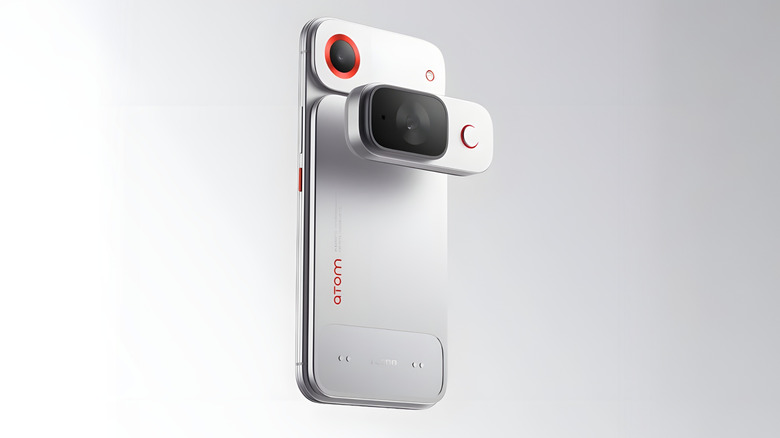
Jumping a decade into the future, the Tecno Atom phone is just 4.9 mm thick, even thinner than the Moto Z and iPhone Air. Like the Moto Z, however, the Tecno phone is a modular device meant to allow users to attach other modules to the handset, a feat that can potentially increase the actual thickness of the phone. Unlike the Moto Z, the Tecno modular smartphone isn't a commercial device. It's a concept phone unveiled at MWC 2026, about six months after the iPhone Air's introduction, to showcase the Chinese vendor's phone development abilities.
The Tecno Atom looks a lot like the iPhone Air, featuring a horizontal camera bump on the back that houses a single lens. On the front, the phone has a punch-hole display, like many other Android models available in stores, regardless of their thickness. One notable difference concerns connectivity. The Atom is too thin for a USB-C port, which means this concept device can be recharged only wirelessly. Since the Atom isn't going to be available in stores, the actual specs of the handset do not matter, and Tecno doesn't reveal them. But it's reasonable to expect such a device to feature an efficient but powerful processor, and an ultra-thin battery.
Tecno showcased several magnetic modules that can be attached to the back of the Atom, including battery pack modules that can go up to a 6,000 mAh capacity and large camera sensors.
Galaxy Z TriFold
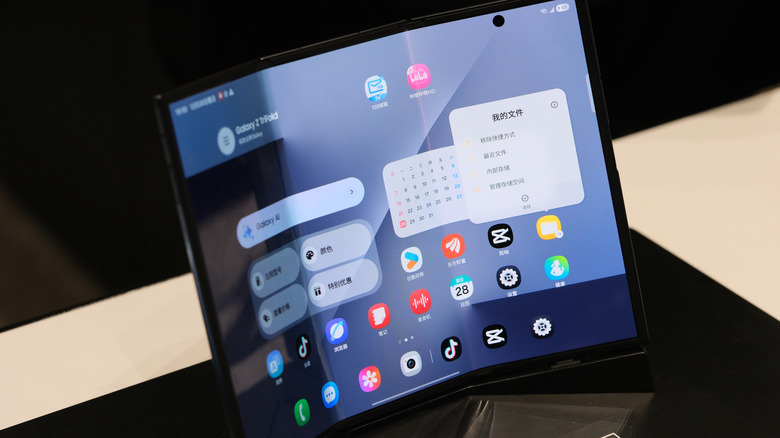
Launched in late 2025 in Korea, and early 2026 in the U.S., the Galaxy Z TriFold is Samsung's first foldable phone with three display sections and two hinges. The Galaxy Z TriFold is also Samsung's most expensive foldable, retailing for almost $3,000 in the U.S. Folded, the TriFold has a 12.9 mm profile that's more than twice as thick as the iPhone Air. However, it's when you unfold the device that you get a tablet-sized smartphone that's thinner than the iPhone Air. In fact, each of the three sections of the Galaxy Z TriFold has a different thickness: 4.0 mm, 4.2 mm, and 3.9 mm. That's a remarkable accomplishment for a foldable device, though it may also raise durability concerns.
Samsung may use marketing terms like Armor FlexHinge to describe a metallic hinge design and Armor Aluminum to describe the phone's metal chassis. But this doesn't change the fact that the handset has moving parts that need to be handled with care, particularly the large 10-inch foldable display.
The Galaxy Z TriFold features high-end specs, including LTPO AMOLED panels that support up to 120 Hz refresh rates, the Snapdragon 8 Elite chip, 16 GB of RAM, and 512 GB or 1 TB of storage. The foldable has a triple-lens camera on the back, which includes a 200-megapixel main sensor, a 12-megapixel ultra-wide camera, and a 10-megapixel telephoto lens. Despite having three ultra-thin sections, the Galaxy Z TriFold houses a large 5,600 mAh battery that supports 45 W charging speeds.
Honor Magic V6
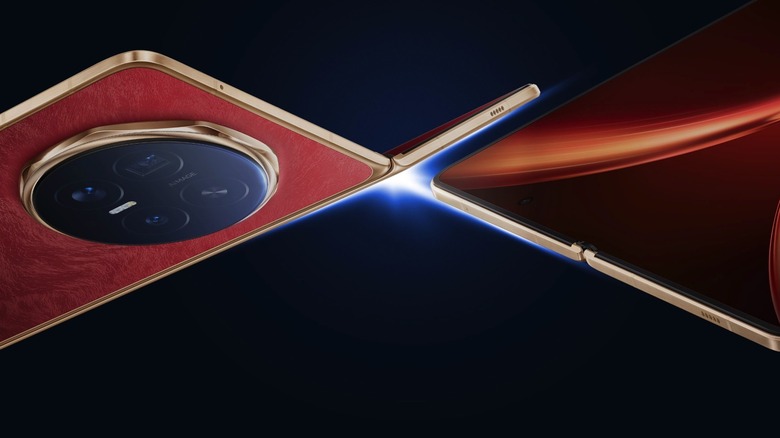
The Galaxy Z TriFold isn't going to be the foldable phone most people buy, despite its bleeding-edge technology. But you don't need a triple-foldable phone to take advantage of an incredibly thin foldable. That's where Chinese vendor Honor comes in, which announced the Honor Magic V6 at the same MWC 2026 event where Tecno showed off its Atom concept handset. The Honor Magic V6 is a commercial device that has an ultra-thin profile, measuring 4.0 mm or 4.1 mm depending on the model, which makes it much thinner than the iPhone Air. The thickness isn't surprising, considering that Honor has been making some of the industry's thinnest foldables in previous years, well before the arrival of devices like the iPhone Air and Galaxy Z TriFold.
Priced at 8,999 yuan ($1,309) in China, the Honor Magic V6 features high-end specs as well, including a 7.95-inch OLED foldable display with a 120 Hz refresh rate, 5,000 nits of peak brightness, and a 2,172 by 2,352 resolution. The cover screen measures 6.5 inches and also supports a 120 Hz refresh rate, offering an even higher peak brightness, at 6,000 nits. The Snapdragon 8 Elite Gen 5 chip powers the handset, paired with 12 GB or 16 GB of RAM and up to 1 TB of storage. The triple-lens camera on the back has two 50-megapixel sensors (wide and ultrawide) and a 64-megapixel periscope telephoto lens that supports 3x optical zoom.
Finally, the Honor Magic V6 is the only handset on the list to feature a silicon-carbon battery, with a capacity that reaches 6,660 mAh in Europe and 7,150 mAh in China. These batteries support significantly faster charging speeds than the iPhone Air's 20 W speeds. That's 80 W (wired) and 66 W (wireless).
How we chose these ultra-thin iPhone Air alternatives
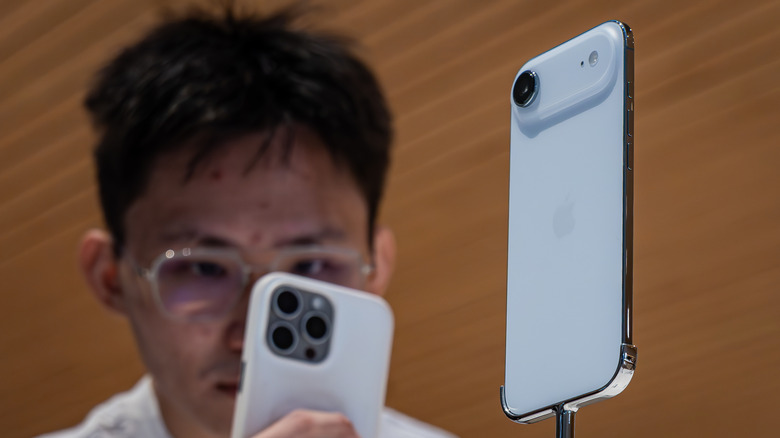
When looking for examples of ultra-thin Android phones that are slimmer than the iPhone Air, we went back in time to find notable examples that some Android users may remember. The Motorola Moto Z is one such device. We also looked at concept phones that are only meant to showcase technologies that some companies may be experimenting with.
Foldables may seem like an unusual type of device to compare with traditional candybar phones. But ultra-thin foldables are part of the current mobile landscape, with foldable phone sales expected to grow in the coming years. The upcoming iPhone Fold is seen as a potential growth catalyst for the industry. These devices compete directly with candybar phones. The thinner they are, the more appealing they become to consumers. But despite their thickness, they feature advanced technologies and high-end specs, as the Honor Magic V6 proves.
We'll also point out that other thin Android phones are available commercially, but they didn't make the list because they're all slightly thicker than the iPhone Air. These are the Galaxy S25 Edge (5.8 mm), Tecno Spark Slim (5.93 mm), Infinix Hot 60 Pro+ (5.95 mm), Honor Magic 8 Pro Air (6.1 mm), and the Motorola Edge 70 (5.99 mm).