

5 Graphics Cards More Powerful Than The PlayStation 5 Pro's
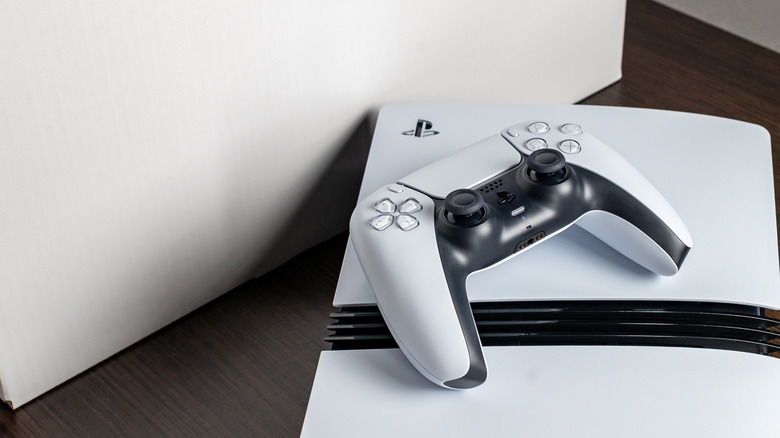
The PlayStation 5 Pro is an excellent choice for gaming, for the graphics alone. PlayStation announced at the PS5 Pro technical seminar (via YouTube) that it has a larger custom AMD GPU than the base PS5 that uses a hybrid RDNA architecture. The Pro uses RDNA 2 for its base but has features from RDNA 3. The GPU is said to perform 45% faster than the base PlayStation 5 in general rendering and makes ray-tracing up to three times better. It even comes with a custom silicon for its AI-upscaling.
The PS5 Pro's Performance Mode combines the graphics quality of high-fidelity mode with the greater FPS of the PS5's Performance Mode, giving you high-quality 4K visuals with AI upscaling from native 1440p while still promising to output 60 FPS. In practice, the PS5 Pro reaches a peak of 60 FPS when running "Black Myth: Wukong," but more intense combat sequences put it closer to 50 FPS.
Despite the PS5 Pro being an improvement over the base PS5, it's still nowhere near the performance that high-end PCs can achieve. Most mid-range GPUs that perform better than an AMD 9060 or an Nvidia GeForce RTX 5060 are capable of outputting better visuals. If you have a larger budget and don't mind spending more than an entire PS5 Pro on a GPU, pretty much any upper-end NVIDIA or AMD card will perform better, but we've tried to list the most budget-friendly graphics cards that are still more powerful than the PS5 Pro's.
AMD Radeon RX 9060 XT
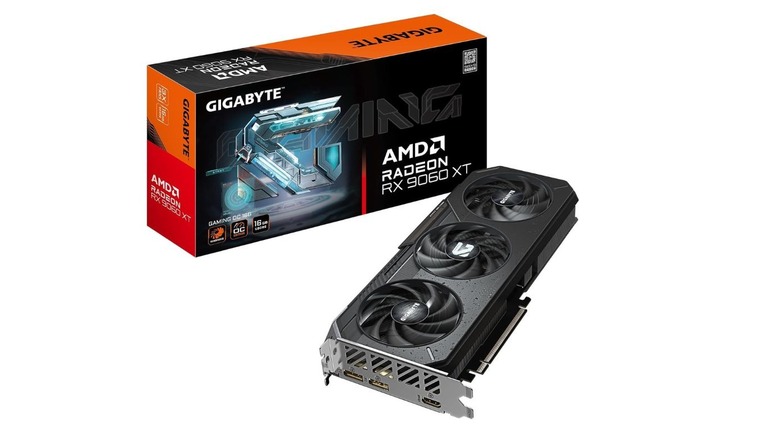
AMD's Radeon 9060 XT card is part of its latest 9000 GPU series that came out in 2025, with the RX 9060 XT itself being in the middle in terms of performance between the base 9060 and the 9070. Being a mid-range card, it can provide solid visuals in 1080p and is fine for most gamers, but ultimately isn't powerful enough to run triple-A games at 60 FPS at 4K consistently.
In terms of performance, any Radeon 9060 XT GPU can outperform the PS5 Pro. Not only can it output the same frame rate and resolution with ease natively, but it can also use features like FSR to further enhance the displayed graphics, just like the PS5 Pro's PSSR. The AMD card performs better than the PS5 Pro even with games heavily optimized for the console. According to tests conducted by Digital Foundry, the card hovered between 50 and 70 FPS — bordering on the upper end more often — when running "Black Myth: Wukong" on High settings made to simulate the PS5 Pro's performance mode, while the console only reaches a peak of 60 FPS.
The RX 9060 XT is the closest in power to the console's GPU. There are certain places where it'd beat the Pro — mainly in terms of raw performance and general FPS in most games — and there are places where the PS5 Pro performs better — mainly ray-tracing. It's the one of cheapest cards you'll find that can compete with Nvidia's RTX 50 cards and compares to the PS5 Pro's performance, having an MSRP of $349, but it's going for around $460 on Amazon.
NVIDIA GeForce RTX 5060 Ti
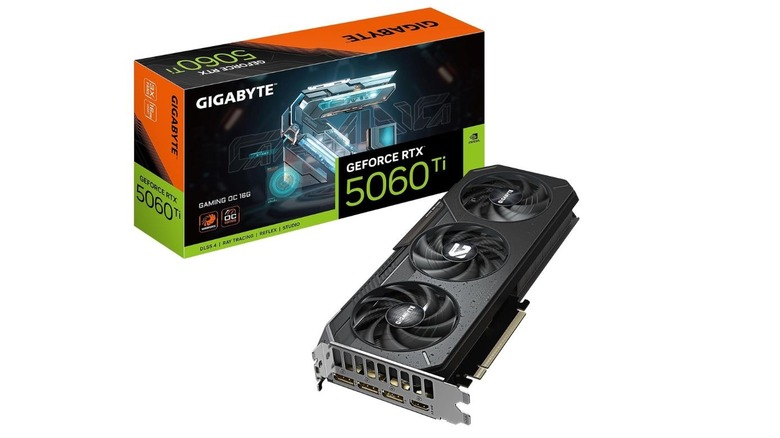
If you want an AMD alternative, there's Nvidia's GeForce RTX 5060 Ti. Like the 9060 XT, the 5060 Ti is a mid-range card that's a step below NVIDIA's highest-end GPUs. It has a slightly higher MSRP than the 9060 XT at $429, but it also ends up performing much better during most tasks. In the same Digital Foundry comparison that showed the RX 9060 XT outperforming the PS5 Pro in graphics-intensive games, the 5060 Ti performed even better, showing significantly better FPS than both the PS5 Pro and RX 9060 XT.
By the numbers, the card showed a frame rate range of 50 to 80 FPS. This means the card performs about 2% better than the RX 9060 XT on average, resulting in a 20% performance increase in FPS over the PS5 Pro. The console's main advantage is ray-tracing, but the GeForce 5060 Ti gives it a much better run for its money than the RX 9060 XT. When running "Alan Wake 2" with ray-tracing set to low on an upscaled 4K resolution, the console showed a very consistent 30 FPS, whereas the 5060 Ti hovered between 27 and 29 FPS.
It's still not as good as the PS5 Pro here, but it performs significantly better than the 9060 XT, often outputting twice as many frames per second when running "Wukong" at its highest graphics settings and ray-tracing turned on. As for its price, it's one of the most cost-effective graphics cards out there, and you can find a new card for about $549 on Amazon, though it's not unusual to find a used one for less.
NVIDIA GeForce RTX 5070
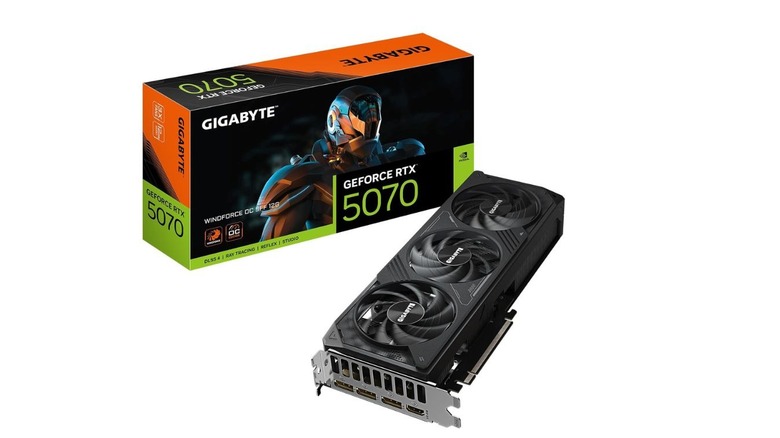
NVIDIA's RTX 50 series is set up in a similar manner to AMD's RX; you get the entry-level RTX 5050, the mid-range RTX 5060, and then its higher-end cards, which include RTX 5070, 5080, and 5090. The higher the number after the RTX 50, the better the performance, but also the more expensive the card will be. As such, an RTX 5070 card will be significantly better than the 5060 Ti, a GPU already more powerful than the PS5 Pro.
The RTX in NVIDIA's gaming-focused GPUs stands for Ray Tracing Texel eXtreme, which is just a fancy way of saying that these cards are much better at ray-tracing than non-RTX cards. In terms of cost, the card has an MSRP of $549, the same as an RTX 4070. In terms of actual price, though, the card can be found for $649 on Amazon, a hundred bucks more expensive than the 4070.
This might seem like a bad deal, but the 5070 performs around 15% better than the base 4070, according to tests done by the YouTube channel Testing Games. Using the GPU performance hierarchy table by Tom's Hardware to compare this performance to the 5060 Ti, which is more powerful than the PS5 Pro's GPU, you can find a 13 to 15% increase in performance across the board. This makes for an impressive more than 30% increase in graphics-processing power over Sony's console.
AMD Radeon RX 9070
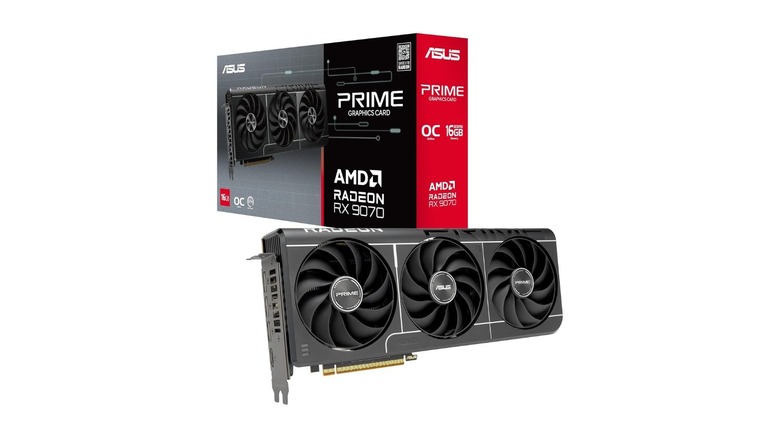
Since it has been established that any good mid-range graphics card beats the PS5 Pro in performance, it's not surprising that AMD's highest-end mid-range GPU (or entry-level high-end GPU, depending on who you ask) smashes its competition across the board, including ray-tracing, which should be the PS5 Pro's strong suit.
The RX 9070 has the same MSRP as the 5070 at $549, but the cheapest one we could find on Amazon was $709. Even considering the slightly higher price, the card makes for a good deal, as it performs better than most other cards on this list, being almost as good as a 5070 Ti in certain areas. In terms of ray-tracing, it can consistently perform better than the RTX 5060 Ti in most circumstances, though the latter isn't too far behind.
According to Tom's Hardware GPU hierarchy, the card performs slightly better than NVIDIA's 5070 when ray-tracing isn't considered, performing 4% better on average in certain games. With ray-tracing performance considered, the card is about 6% weaker than the cheaper NVIDIA 5070 GPU, though the difference is less severe at max 4K resolutions. When compared to the PS5 Pro's performance, you'll find a 20% increase in power, though the card itself is almost priced like an entire PS5 Pro console.
NVIDIA GeForce RTX 5070 Ti
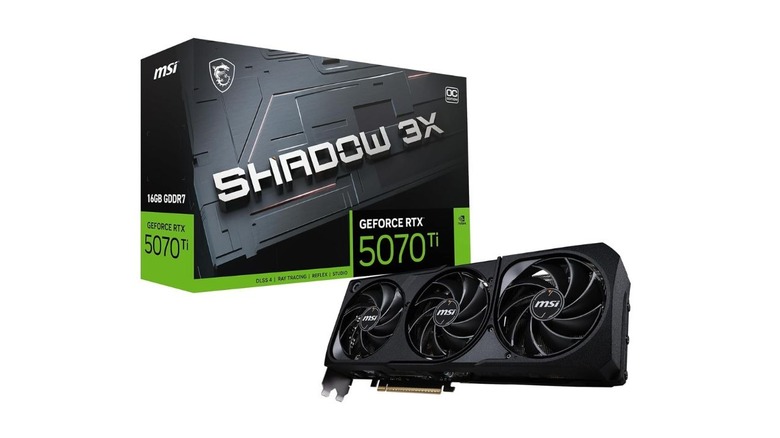
A step above the base 5070 graphics card, it shouldn't be a surprise that the 5070 Ti is an upgrade over anything else previously mentioned. With the base 5070 already performing significantly better than the 5060 Ti that competes with the PS5 Pro, there's not a speck of doubt that the 5070 Ti's performance puts the PS5 Pro to shame. This makes sense, though, as this NVIDIA graphics card has an MSRP of $749, with the lowest price we could find currently on Amazon being $949. This means that just the card itself ends up being more expensive than a full PS5 Pro, making it a little harder to praise it.
If you value high-quality visuals, this cost is well worth it, though. In the GPU ranking by Tom's Hardware, the 5070 Ti performs about 7% better than the RX 9070 in terms of general performance and 24% better than the RTX 5060 Ti. The card truly shines when it comes to ray-tracing, where it outperforms the 9070 by a whopping 14 to 20% margin and is up to 34% more powerful than the GeForce 5060 Ti that competes with the PS5 Pro. In hard figures, this makes the card more than 40% stronger than the GPU inside the PS5 Pro, completely obliterating the latter in graphics performance.
How we chose these GPUs more powerful than a PS5 Pro's
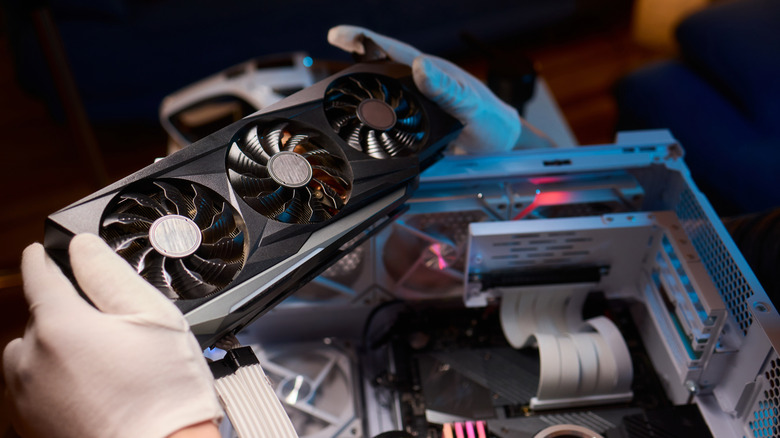
Comparing graphics cards isn't just about which GPU can theoretically output more power. The power consumption heavily influences the results, and games made for a console are generally much more optimized, requiring less processing power to function.
For this list of graphics cards more powerful than the PS5 Pro, we went through a series of tests by independent testers and other publications comparing different games to see how each card performed when compared to the PS5 Pro in terms of FPS on the PS5 Pro's Performance Mode and equivalent settings on the non-PS5 Pro counterparts. Some of these tests directly compared games across different GPUs, whereas others put the non-PS5 Pro graphics against one another in more PC-exclusive settings. We chose to only focus on the FPS, as either option gives similarly gorgeous 4K visuals when upscaled.