

10 Money-Saving Smart Home Automations That Do All The Work For You
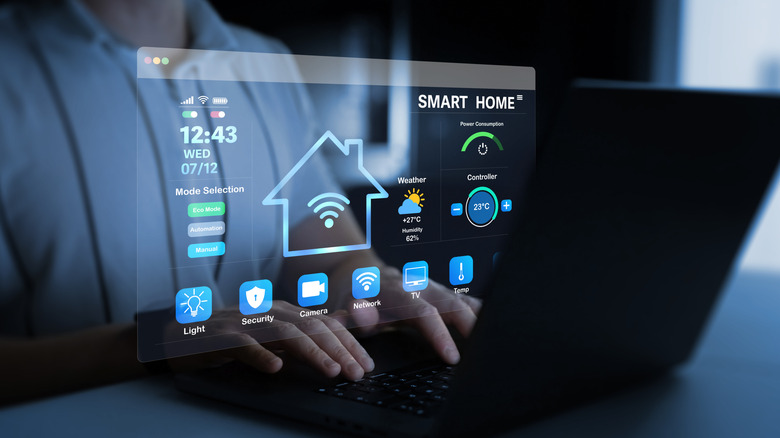
While the sci-fi dream of a butler robot that does household chores for you is not yet a reality, there are many household tasks that you can actually automate with smart devices. Smart homes are not a new concept, but what started as a complicated DIY ecosystem has now become a practical framework with dozens of useful options. Not to mention standalone smart automatons that make your life easier without requiring a whole smart home setup.
Not that the proper smart home setup is particularly difficult anymore, either. All you need is Wi-Fi and a smart hub device. And just like that, you can start adding smart devices throughout your house and control them with voice commands or your smartphone. The best part is that you can set things up to work automatically, based on a fixed schedule or even in response to sensor data.
There are two main reasons for investing in smart home devices: comfort and cost savings. The comfort is easy to understand. Having some of your repetitive daily tasks handled by a machine frees up a lot of time and removes the headache of keeping track of them yourself. As for the cost savings, they come from efficiency. Smart devices can turn themselves on and off exactly when required, instead of running until a person remembers to switch them off. And some can use sensors to even decide where to act, giving even better efficiency.
Robot vacuum
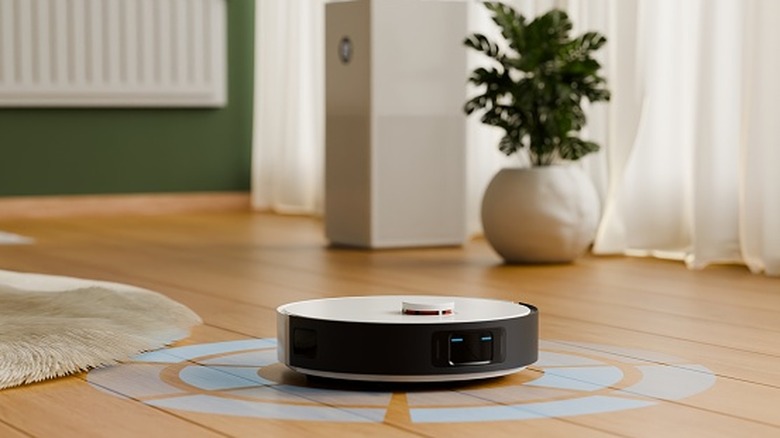
If we are talking about smart home automatons that can do your work for you, the list must begin with an actual robot – a robot vacuum. While every other appliance and smart device is meant to be installed in one place and do its job, a robot vacuum services the whole house, autonomously moving from room to room. Let's get the concerns out of the way first: Robot vacuums have improved a lot from the early days of poor cleaning and wandering around in circles.
The best robot vacuum cleaners are equipped with smart mapping functions to create a model of the house and then clean it thoroughly, tracking the areas covered to avoid wasting time. The cleaning functions have gotten an upgrade too, with mopping addons and side brushes you can add to deal with corners. These days, a decent robot vacuum can reliably clean up floors and navigate through furniture.
It cannot be overstated how much time and effort a robot vacuum can save. Especially if you have pets and have to spend every day cleaning up the fur. With this, you can automate a crucial daily chore and have the house clean itself in the background. Many models are fitted with a tiny mop as well, which properly wipes your tiled floors without extra input.
Pet feeder
Cleaning up the fur is not the only task a pet adds to the chore list. Even more important is feeding them regularly. Pets are particular about meal time, and will pester you if you delay their food by even a few minutes. Normally, you adjust to this by setting reminders and adding it to your daily routine, but that's not always possible. What if you are busy with another task? What if you are not in the house?
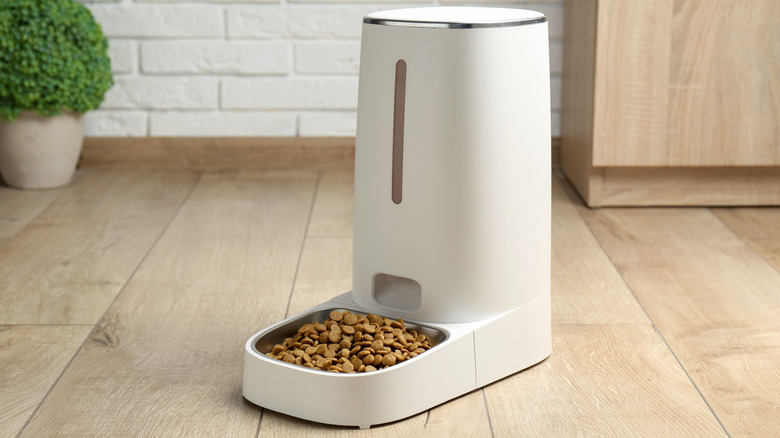
While you can always rope in another person to take over for you, another option is to get an automatic pet feeder. It works exactly as you might expect, dispensing your pet's meals at preset times. You just need to fill up the feeder itself. A lot of these models also come with a camera, so you can keep an eye on your pet, too. Even if you are outside, you can tune in to the camera feed to watch your pet come running for the meal.
Also, just like the robot vacuum, this isn't a device that requires a full smart-home setup. Most models serve as standalone smart machines. You may need to tinker with it a bit at first to ensure it dispenses the right quantities of food, but it is an inexpensive and convenient device you can find among other great pet gadgets at Costco.
Smart thermostat
One of the biggest essential monthly expenditures after food and rent is the heating bill. Unlike those two, though, this is an expenditure you can actually control and reduce with the right measures. There are many ways to passively cut down on your heating bills. Improving your house's insulation, sealing leaks, and covering drafty windows are among them. But another impactful way is to get a smart thermostat.
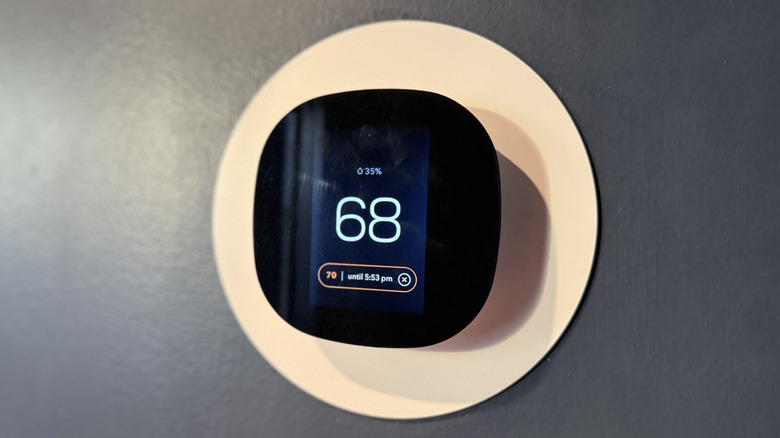
The basic premise of a thermostat is simple. It uses sensors to monitor the room temperature and activate the heating when the temperature falls below a specified level. And once the room is sufficiently heated, it turns it off, ensuring no extra energy is wasted heating an already warm room. A smart thermostat goes even further. The main difference is that it gives you complete control without the need to manually fiddle with its buttons. A smart thermostat connects to your smartphone via Wi-Fi, so you can adjust its settings from anywhere inside or outside the house.
The best part is that you can set up automated behaviors as well. A smart thermostat can account for the weather, the temperature in various parts of the house, and even the proximity of people to it. This lets it control the heating more efficiently than a normal thermostat can, giving you a better experience while also saving electricity. There are many other ways to get the most out of your smart thermostat.
Smart lights
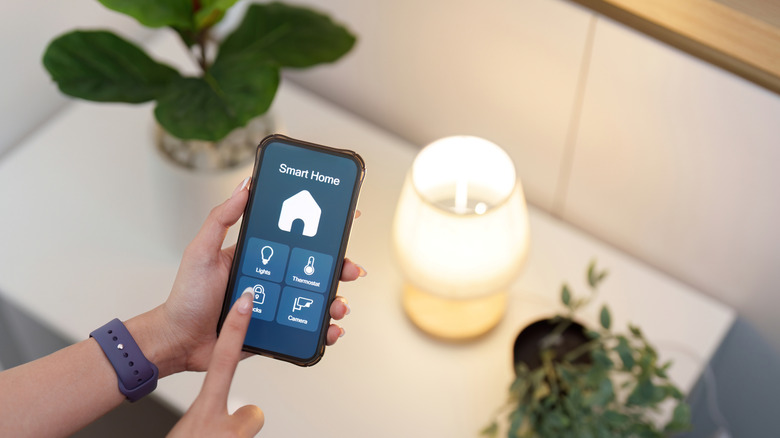
When you think of a smart home, the first thing that comes to your mind is probably a smart light. These were among the first devices that started the trend, and have come a long way as the segment has matured. Smart lights are no longer just a cute gimmick to play around with, but a useful technology that can save you money. Just like smart thermostats, they achieve this by being more efficient than manually operated lights.
You may think that there is no need to optimize lighting, but think again. An individual lightbulb may not consume much power, but there are enough of them operating for dozens of hours every day in your house for the cost to add up. Any method that can cut down on their usage significantly reduces your power bill. And while you can try to do this manually as well, you will get more consistent results more comfortably with smart lights.
Motion-sensing lights can be installed in low-traffic areas of your home, like hallways, where you don't need constant lighting. These lights will turn on whenever you are actually walking through one, and turn themselves off automatically as you leave. For normal rooms, you can run your lights on timed schedules or control them with voice commands. You can also operate them remotely. Not only is it efficient in terms of power, but it also saves you the effort of remembering to flip the switch or the cost of leaving the lights burning when you run out of the house.
Indoor drip irrigation kit
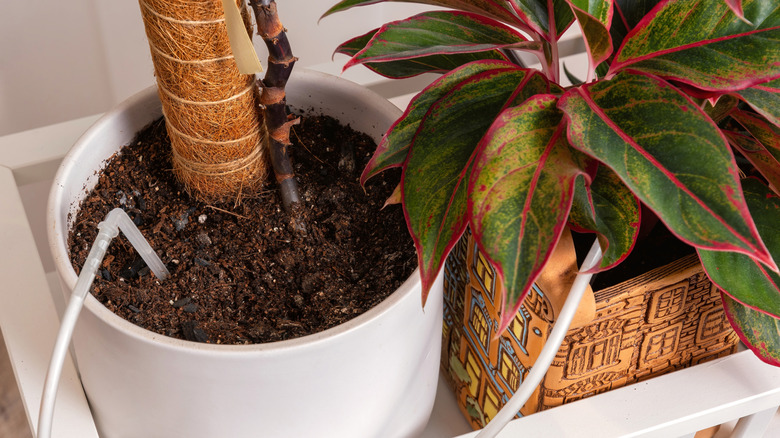
Gardening can be a fulfilling hobby, but past a certain number of plants, watering them becomes a time-consuming chore. Not to mention, it is very easy to mess things up by overwatering or underwatering your plants, so you need to be very precise about how much and how often you water them. Most budding gardeners occasionally forget to water their plants, caught up in their demanding schedules, and are greeted by wilted flowers and drooping stems.
Thankfully, watering your plants is another task you can fully automate now. It is not particularly complex to set up either. The system requires a device to regulate water flow, a container to draw water from, and tubing to deliver water to every pot. The water is delivered through a drip mechanism that properly hydrates the soil without excess runoff. The combined package is called a drip irrigation kit, and can easily water an entire garden without any manual intervention.
It is also completely customizable, so you can set your own watering routines. You can specify the intervals between waterings (daily, twice a day, or a specific number of hours), decide how long it will water each time, and set the exact time of watering. All that you need to do is to top up the main tank every now and then, letting the drip irrigation kit handle delivering it to the plants.
Smart plug
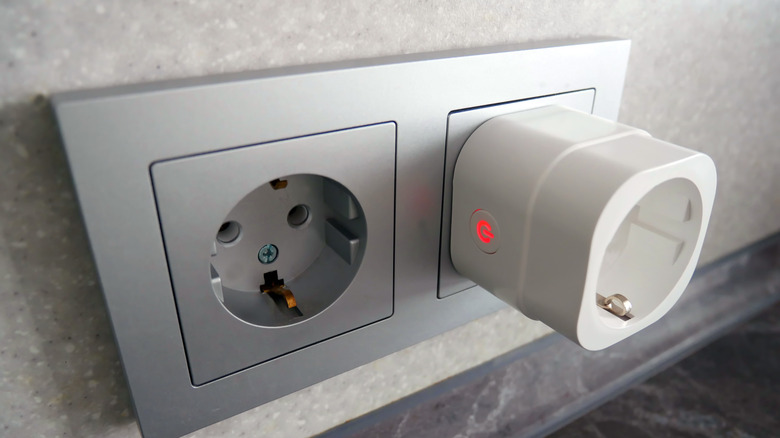
There is a lot of variety in smart devices available these days. You can get smart bulbs, smart cameras, washing machines, thermostats — the list goes on. But it is a finite list, and there are many appliances in your home that do not come in smart variants. What is the point of a halfway smart home where you still need to manually operate half the devices? Is there any way to turn them smart as well?
Actually, there is, at least to an extent. Smart plugs can slot into any power outlet and turn it "smart", letting you control it through Wi-Fi like any smart device. You can turn it off or on remotely, set schedules for it, or link it to sensor data. This means that any device plugged into a smart plug essentially becomes a smart device as well.
There are limitations, however. A true smart device doesn't just let you control when to power it on, but also its functions. A smart plug cannot control the device plugged into it, but it can control the power. That said, there are many cool ways to use smart plugs in your home.
Smart security system
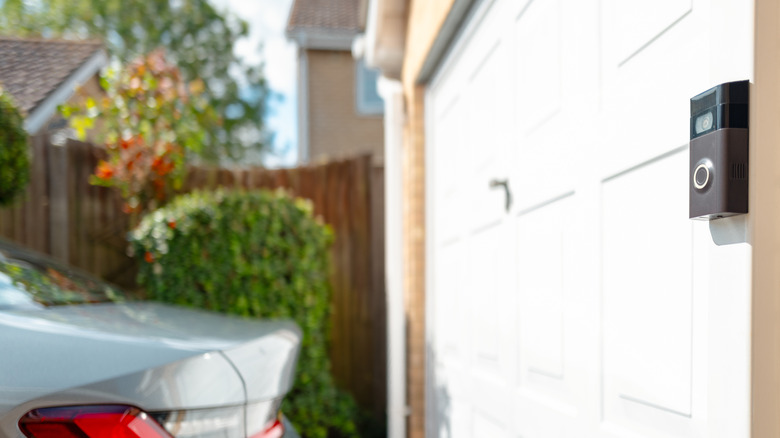
Many get a Ring camera for their door, but many hesitate to go further and invest in a full smart security system for their homes. After all, as long as you just keep your doors locked and valuables in a safe, you should be good, right? Certainly, but manual security measures can never be as comprehensive. The front door is not the only means of forced entry, and forgetting to lock a door or window once will lose you far more in stolen goods than the cost of smart security.
Instead of manually putting together various security devices to safeguard your home, consider investing in a complete smart security system. A framework like this combines cameras, alarms, and smart locks to completely secure your house against intrusions. All of these pair with your Wi-Fi to be a completely customizable system, giving you full control and transparency. It is one of the simplest ways to make your home more secure.
You can remotely lock or unlock your doors, watch over the house through your camera footage, and get a complete report of any suspected activity noted through the motion sensors. The complete setup is certainly an expensive one, but you can also start small. Any number of cameras can be added to this system one by one, so start by covering obvious locations and a couple of smart locks for your external doors. Some turret cameras can detect motion and swivel around for greater coverage as well.
Smart window blinds
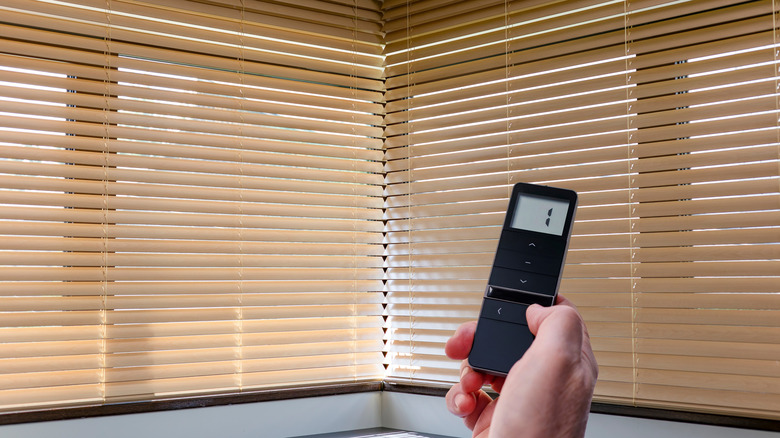
Smart lights can give you automatically regulated lights in your house, but that only covers the artificial lighting. What about regulating the natural lighting coming into your home? You can, of course, do this with window blinds, but pulling them down and rolling them up again is another chore. Not to mention, you need to manually track the sunrise and sunset times to ensure you catch the sunlight.
Motorized window blinds have been around for a while, letting you roll them up with the press of a button, but why not go further and automate this as well? For a long while, there were no good options for this beyond DIY automation using an Arduino. But now smart window blinds do that out of the box, pairing a motorized function with full smart hub compatibility. Some let you convert dumb blinds into smart ones.
Apart from making it easier to roll up the blinds, this lets you set up automated schedules for them, too. The blinds can be set to roll up at sunrise and go down the moment sunlight is no longer streaming through the windows. This can be done for each window separately, taking into account its orientation. Or even take the weather forecast into account to adjust the height of the shades. Not to mention controlling the blinds with voice commands, just like any other smart device linked with your smart home hub.
Smart water leak sensor
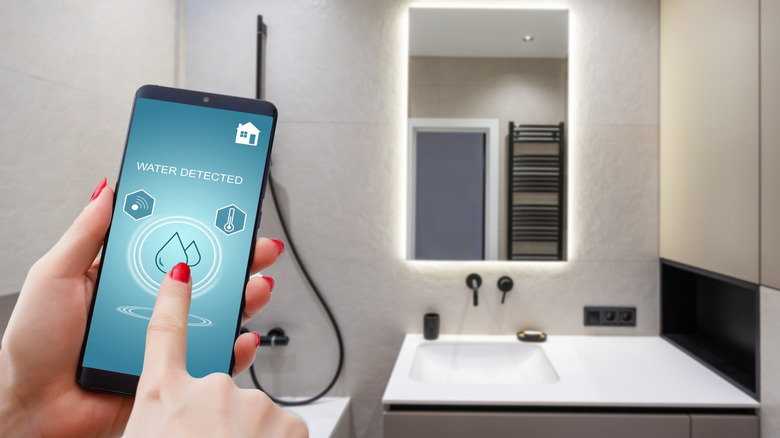
Most smart devices are about automating household chores and making your life easier. Smart lights, smart plugs, smart watering, and robot vacuums fit this approach. But there are also smart devices that take on a more preventive role. Devices that save you effort and money not by doing a chore, but by preventing you from incurring losses. Smart water leak sensors fit this category.
Water leaks sound like a trivial issue until it actually happens. An undetected leak can slowly build up over time, causing catastrophic water damage. What could have been solved with some sealant ends up costing you quite a sizable sum. And the problem is that there is no easy manual solution to this. Water runs through every part of your house, and since plumbing is out of sight, you are not going to regularly peek into every inch of the network to spot leaks.
Smart water sensors address this problem by monitoring entire areas of your house for leaks without manual input. Using multiple sensors, this device monitors a wide area, beeping an alarm if even a droplet of water is detected. Smart means it can connect to your home Wi-Fi and send you alerts on your phone, so you know immediately when a pipe starts leaking and can fix it cheaply before it becomes a problem.
Smart ventilation system
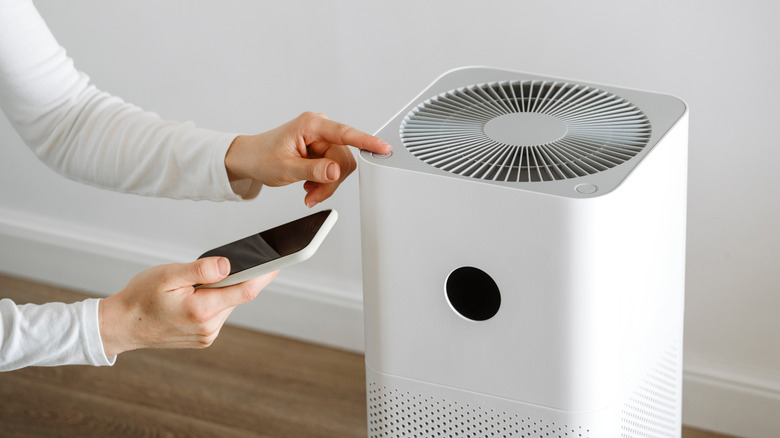
We have talked about using a smart thermostat to regulate your home's heating, but that's just one aspect affecting your home environment. The other big factor is ventilation. It can be a tricky thing to manage, as you don't want permanent openings to leak heat. You can install vents with flaps, but you have to manually control them, which is not very effective.
The main challenge is manually assessing air quality. It is not like you can tell how healthy the air parameters are without an instrument, so you are left to randomly cycle the vents and hope that is enough. Not to mention, different areas of your house will have different conditions.
The premise of a smart ventilation system is simple enough. It uses sensors to measure air parameters like CO2 and humidity, automatically adjusting ventilation as needed. Different rooms can be measured and controlled separately, and since the whole framework integrates with a smart home hub, you can also control it via your smartphone or voice commands. This approach saves power and keeps the air in your house cycled, helping ensure your home is a safe and comfortable place to breathe.