

Crash Dummies Cost Far More Than The Cars They Test - Here's Why
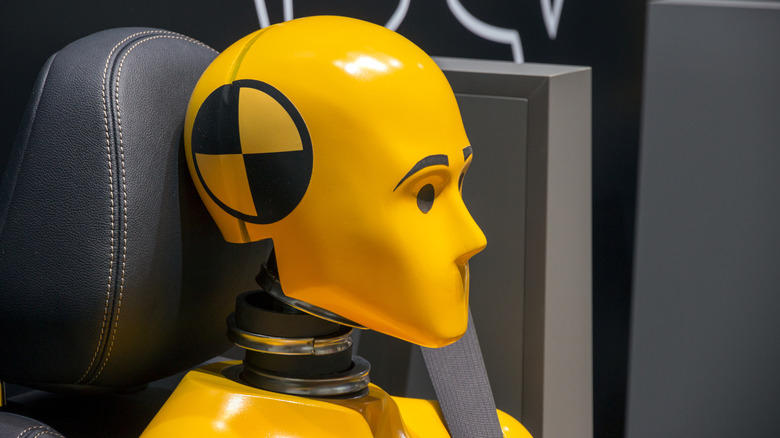
While you still have many uses for older cars, modern cars have come a long way since. We've reached the point where some don't even need a physical car key anymore and you can even 3D print car parts right at home. Perhaps a less interesting but much more important change is how much better present-day cars are at dealing with crashes and protecting occupants, largely because of crash dummies. Crash dummies don't seem too impressive at first glance. Most wouldn't expect much to go into building a device made specifically to be put in a crashing car. However, crash test dummies used by automobile manufacturers are often more expensive than the cars they're tested in.
Humanetics, the most prominent supplier of high-quality car test dummies in the world, has multiple dummies it manufactures for different uses. A Side Impact Dummy (SID) from Humanetics can cost around $400,000, and that's not even its most expensive one. A Test device for Human Occupant Restraint (THOR) dummy, made to sense incoming forces from all directions, can often end up costing up to $1 million U.S. dollars. To put this into perspective, a single THOR dummy can cost more than three brand-new Lamborghini Temerario supercars , each priced at around $300,000.
One key reason behind these high prices is their durability. Car crash dummies are made to last, often functioning for up to 30 years. They're not replaced after a single crash (unless they are irreparably damaged); the same dummy goes through hundreds of thousands of tests involving forces that can destroy even the most durable of automobiles.
Crash test dummies offer invaluable data gathering
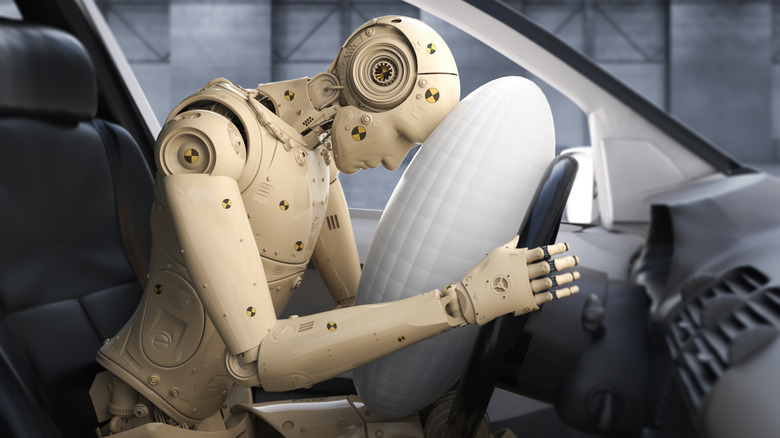
These dummies are made to simulate living human bodies — almost like how humanoid robots are being designed to simulate real humans. The goal is to accurately transfer test data to real-world applications. Forces affect human bodies differently than they do hard solids. A human body is made of flesh, muscles, and bones, all of which have different compositions. As such, crash dummies use a mixture of metal, rubber, and foam to emulate an average body composition, and the data sensors inside show how any damage would affect a human being through pressure mapping. Showing how an incoming force is distributed in a human body helps design more reliable ways of reducing the risk of fatal injuries in a car crash, and crash dummies are integral to this.
The sensors inside — which crash dummies often have more than 100 of — measure the severity of incoming forces and how they affect a human body in microseconds. The technology that enables the collection of such accurate data in such small bursts of time is incredibly costly, adding to why the crash dummies used in cars are so expensive.
Humans are also very different from one another, so there's a lot of research and funds going into accounting for these differences. A historic focus on male-emulating test dummies has resulted in a larger risk to female drivers. According to a 2011 study published in the American Journal of Public Health, female drivers are 47% more likely to suffer extreme injuries compared to male drivers in the same scenarios. To improve safety outcomes for women, those working on these dummies have to focus on details as minute as the difference in distance between the steering wheel and the bodies of male and female drivers.