

Why There's Simply No Need For Wi-Fi Extenders Anymore
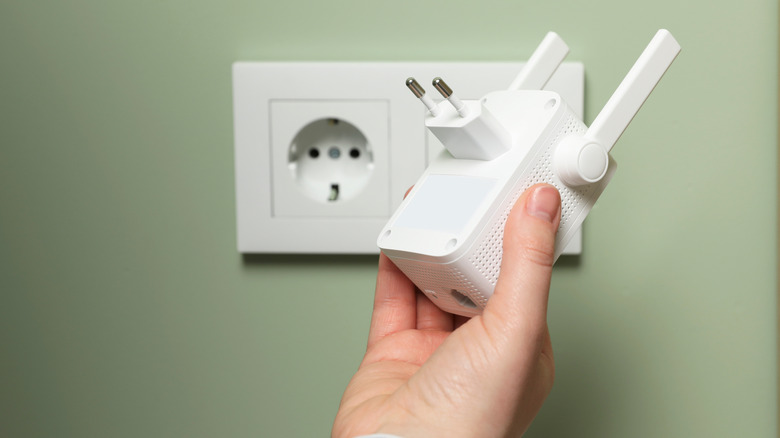
What should you do if your router doesn't deliver a strong Wi-Fi signal to your entire house? The answer seems obvious: You should use a Wi-Fi extender to boost the signal the rest of the way, right? Actually, using a Wi-Fi extender is a common Wi-Fi mistake you should avoid. Expert testing shows that extenders result in slower speeds, higher latency, and more congestion on your home network. Now that there are reliable Wi-Fi mesh systems that do the job better, there's simply no need for Wi-Fi extenders anymore.
There are still rare cases where an extender can be beneficial. They pick up the signal from your router and repeat it, enabling you to connect from slightly further away. Experts and manufacturers agree that this makes extenders useful for eliminating very specific signal dead zones. The problem is that these devices work on a four-step process: They receive data from the router, send it to the connected device, get a response signal from that device, and finally return that information to the router. It's double the work, which means you're halving your bandwidth. At the same time, it interferes with the entire network by introducing a rebroadcasted frequency to the mix.
Why Wi-Fi mesh systems are so much better than extenders
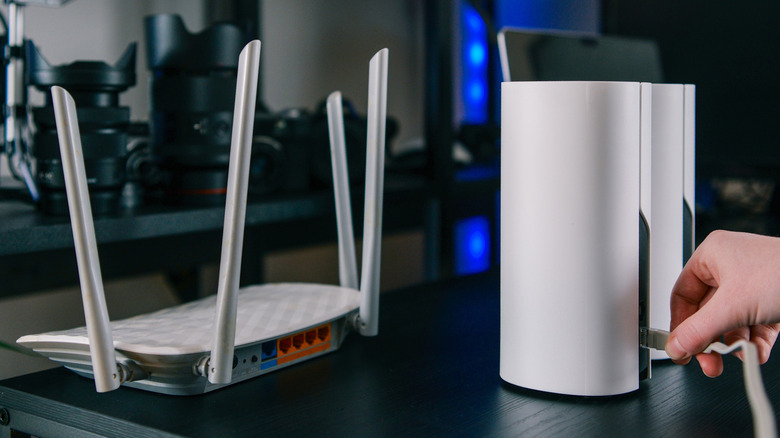
A Wi-Fi extender can technically stretch the distance of your signal, but it becomes so weak that it's barely usable. By comparison, using a Wi-Fi mesh system is genuinely one of the best ways to increase your internet speeds while expanding coverage range. Mesh Wi-Fi uses multiple device nodes to create one seamless network with a continuous signal. If there's a room in your house that's getting low download speeds, a mesh system will likely fix that.
Mesh systems use a dedicated backhaul channel to deliver bandwidth as efficiently as possible from node to node. Testing shows that the best mesh systems use this technology to achieve internet speeds at the node that are comparable to what you'd get from the main router.
Before investing in either an extender or mesh system, there are a couple of ways you can try addressing slow internet without spending unnecessary money. Sometimes moving your router to a better location is enough of a fix. Putting aluminum foil behind your router is another trick that's scientifically proven to help eliminate dead zones. Of course, connecting your devices directly to the router with an Ethernet cable is still the best way to get maximum speed. If you really need a way to extend your Wi-Fi range, though, a mesh system is the way to go.