

Are Hard Drives Still Worth Buying In 2026?
We may receive a commission on purchases made from links.
Due to the high demand for specialized memory chips used in AI data centers, we're living in an era of unstable gadget prices. A variety of gadgets are expected to receive a jump in price due to the memory shortage, and certain companies are already increasing the price of their products, with Sony announcing a second round of PlayStation 5 price hikes in March 2026.
German site ComputerBase has been tracking the price of SSDs and HDDs since September 2025, and as of this writing, the site's data suggests that they've increased by an average of 86.59% and 50.83%, respectively. The most expensive HDD has risen by roughly 72%, while the most expensive SSD tracked by the site is up by about 170% since September 2025. For this reason, if you were planning to build your PC in 2026 or had already started shopping for parts in 2025 but hadn't bought storage yet, the current price of SSDs and HDDs might hurt your wallet.
Since HDDs haven't risen in price as much as SSDs, you might be considering getting one as a way to save some cash. However, SSDs are better than HDDs in terms of speed, durability, and energy efficiency. But with their higher price, you might be wondering whether it's worth buying an HDD instead. While we would typically advise against buying HDDs, they're worth it in 2026 as they haven't risen in cost as much as SSDs and are the perfect option if you want a bulk storage solution to help replace cloud storage services.
Why HDDs still make sense in 2026
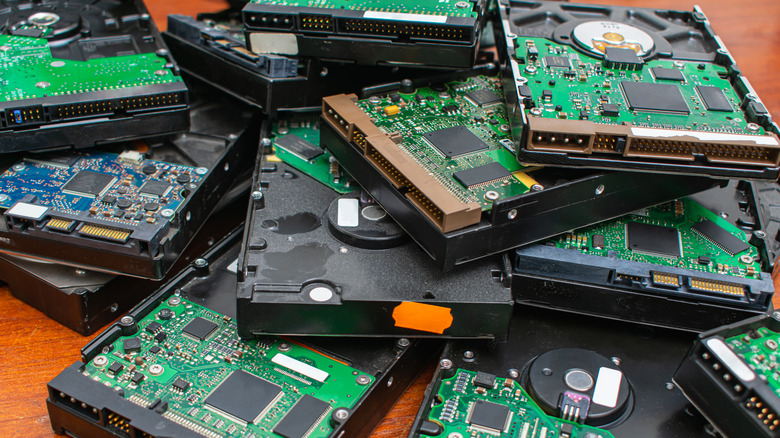
As noted above, both HDDs and SSDs have risen in price since 2025. Typically, HDDs cost less than SSDs, and in the current market conditions, you're much better off getting a hard disk for better cost-per-gigabyte despite both rising in price. One area where HDDs shine is bulk storage, as they're not only cheaper but also more suited for the task since SSDs are unreliable for long-term cold storage. The lower price of HDDs and the fact that you can get them with larger storage capacities make them suitable as a backup solution for storing your photos, videos, and other important documents for future use.
For example, you can buy a Seagate Exos 32 TB HDD for just $760 or a 24 TB Western Digital HDD for $549. With that same budget of under $1,000, you'll be hard-pressed to find any of the best SSDs with 8 TB of storage. For example, a 4 TB Samsung SSD 9100 PRO is currently going for around $793 on Amazon, while its 8 TB variant is roughly double the price at $1,595. One of the main drawbacks of getting a hard drive over an SSD is speed. However, for bulk storage, you probably don't need the snappy speeds that SSDs offer.
When you should (and shouldn't) buy a hard drive
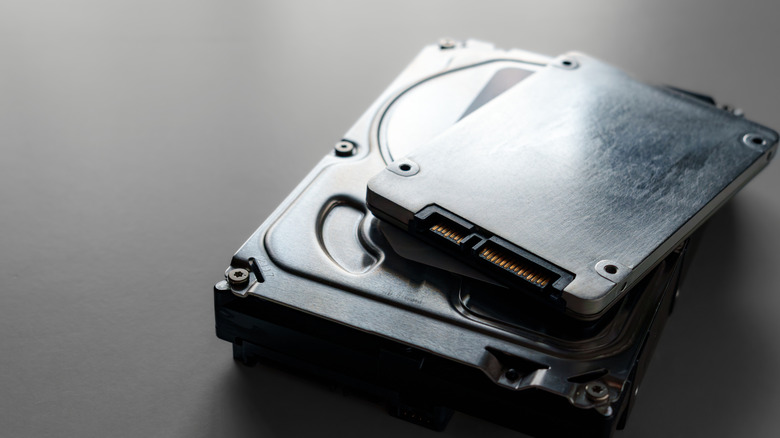
While you'll get far more storage when you opt for a mechanical drive instead of an SSD for your computer at the same price, there are certain cases where we still recommend you avoid an HDD. If you're building a PC, for example, you should get an SSD to run your OS and applications as it'll give you faster boot times and quicker app launches. That SSD will come in handy in ensuring your PC is snappier, and if you're into gaming, you'll enjoy faster load times.
This isn't to say that you should spend close to $1,000 or even more to buy an SSD. You can use a dual drive approach by getting both an SSD and an HDD for a perfect balance of speed and storage. Get the largest SSD you can afford to act as your primary drive, where the OS and applications run, and then have an HDD as the secondary option for file storage. This hybrid setup is more cost-effective and is also being considered as the best strategy for data centers due to the sharp increase in the price of storage.