

5 Darkest Sci-Fi Movie Universes Of All Time, Ranked
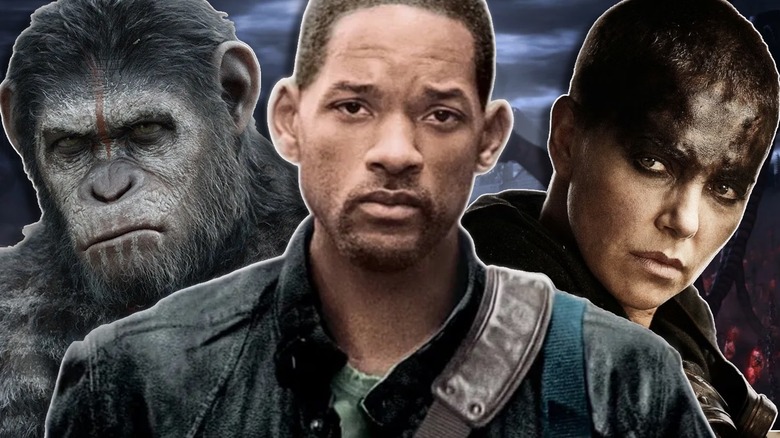
As rightfully highlighted in the classic sitcom "Cheers," making your way in the world today takes everything you've got, and that demand has only become greater in recent years. Don't worry, we've been there. You get halfway through a daily doomscroll and wonder if we've ended up in the wrong timeline. Worry not, though, because as testing as times might be, Hollywood has played a part in bringing a variety of hellish universes to life that remind us things really aren't that bad after all. In fact, we've made a list of the really bad ones we're glad we'll never see. Maybe. Fingers crossed.
From futures that have left humanity in the dust, to worlds of tomorrow that we'd prefer to move further down the calendar, this brutal bag of planet-wrecking timelines crammed with killer robots and bloodthirsty monsters highlights just how lucky we are. The annoying thing about it all, however, is that as much as we hate to admit it, they're all universes we can't help but love going back to.
Realms of alternate reality that we wouldn't dare consider sending our least favorite in-law to (you know the one), but would happily observe from the comfort of our sofa or favorite cinema screen. So take a look at this list of universes and reconsider that ours might actually be a decent one.
The Planet of the Apes
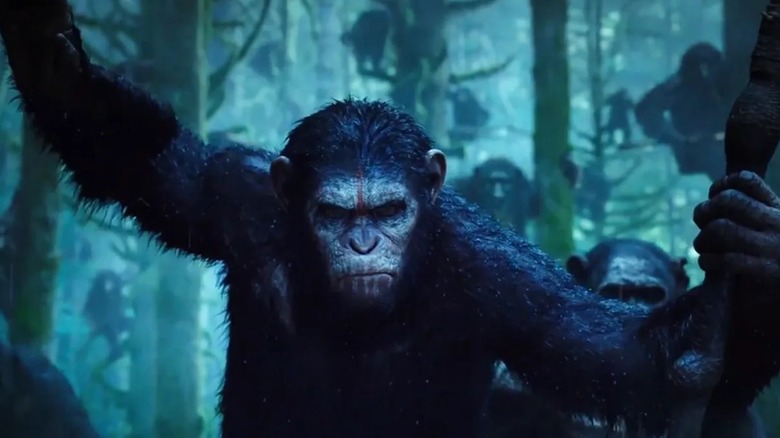
In 1968, crafty director Franklin J. Schaffner and a very angry, hairy-chested Charlton Heston delivered one of the best sci-fi movie twists of all-time. In doing so, it also laid the groundwork for a bleak, human-hating universe that we, as viewers, became increasingly conflicted about with every installment.
"Planet of the Apes" was another world ruined by man's proclivity for war, but in doing so, it led to the "Rise of the Planet of the Apes" and Caesar (Andy Serkis), as well as the gradual extinction of the human race. The result was a world left untamed and unimpacted by us, and honestly, things turned out okay. It's almost like we're a blight on the world or something.
But while watching super-smart apes slowly take over the planet was all well and good, it's seeing things from the perspective of out-of-the-loop astronaut George Taylor (Heston) in the original movie that highlights just how bad things can get for humanity. No longer the top of the food chain and now forced to either serve or be studied by the highly advanced apes, it's only with the arrival of the man with more brain cells than usual that the tide turns in an otherwise terrible world for us. It's one that has no sign of reverting back to the way things were.
Mad Max's Wasteland
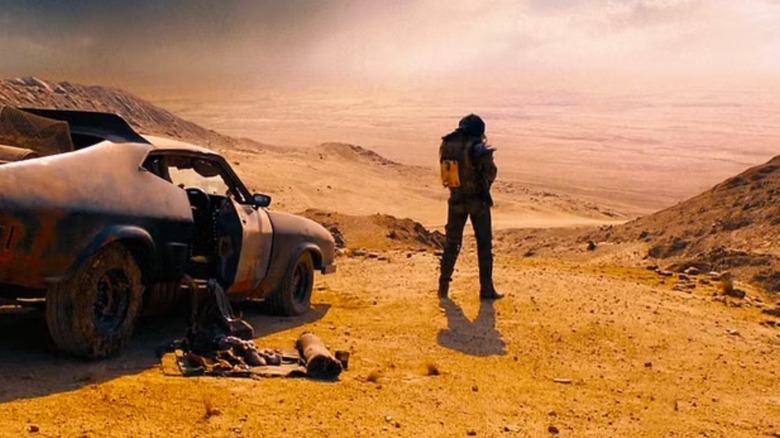
Much like the "Planet of the Apes" universe, George Miller's world of road warriors and warlords is one that we're not just dropped into, but actually see approaching from the horizon. In the original "Mad Max" from 1979, Max Rockatansky (Mel Gibson) is living in a world that's running on the last few dregs of civilization and the fuel that helps to keep it going. By the time we're reunited with him in "The Road Warrior" in 1981, the world has officially met its end, with law and order replaced with leather codpieces and motorized chaos.
While the old times are still a cherished memory, what comes next doesn't make Max's universe worth sticking around in. The world continues to descend into a dusty apocalyptic domain, reaching a peak with "Mad Max: Fury Road" (with Max played by Tom Hardy) and various areas of the wasteland ruled by different tyrants, who all hold sway thanks to either control of water, gas, or guns to keep their corner of the world running.
Sure, the high-speed, pulse-pounding car chases make for a great spectacle to see, but being involved in them comes with a high risk of, well, you know, death. No matter how cool it all looks, it's something we'd prefer not to "WITNESS!" or be part of, and that's even with the flaming guitar player included.
The Terminator's Judgment Day future
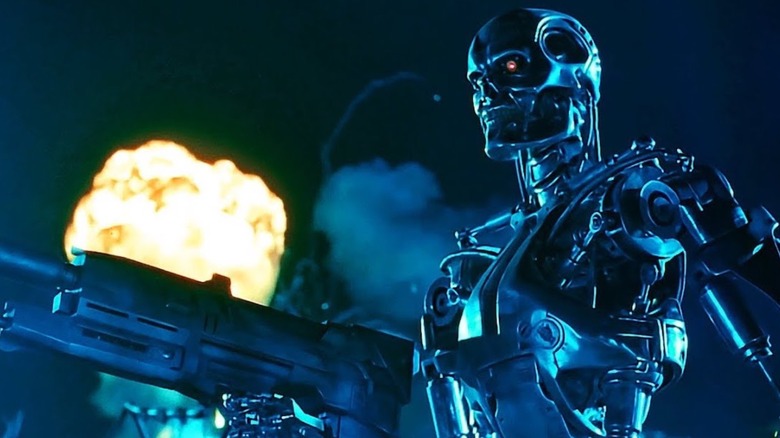
As the world continues to dabble with artificial intelligence, director James Cameron has argued that we absolutely shouldn't, and even built a world around the horrible hypothetical of it all getting too testy with us. The "Terminator" universe is easily up there with one of the worst ones to live in, especially because it's another nightmare that's absolutely our bad.
As laid out by Arnold Schwarzenegger's T-800 in "Terminator 2: Judgment Day," "The system goes online August 4th, 1997. Human decisions are removed from strategic defense. Skynet begins to learn at a geometric rate. It becomes self-aware at 2:14 a.m. Eastern time, August 29." From there, the world goes boom and finds itself under a permanently darkish blue hue, paved with bones and nightmarish metal skeletons firing lasers at what's left of the human resistance.
While a little more advanced than the wastelands of Mad Max, the world post-Judgment Day is still stuck in a new dark age, where kids are forced to watch flaming television sets, and what's left of humankind is fighting from the rubble of a forgotten era. To make matters worse, we learn that, depending on which sequels you acknowledge (which, at this point, might be few), Judgment Day is inevitable. The good thing, at least, is that we've had a leader who fights back against the machines, leaving this world of tomorrow with a fighting chance; we've just still not seen it succeed, really.
I Am Legend's post-apocalypse
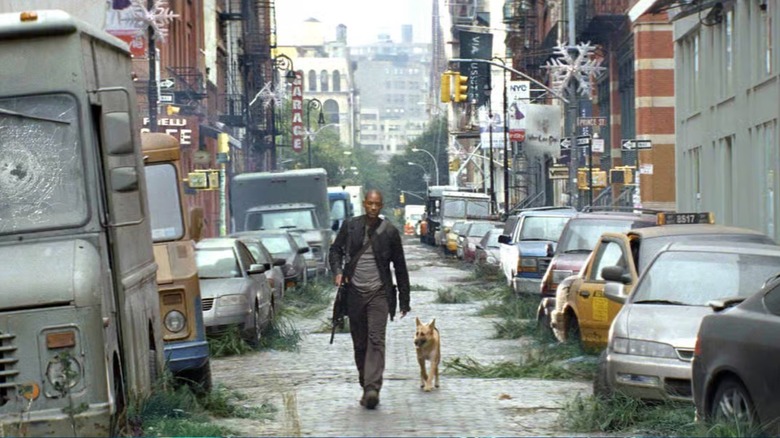
The last man on earth is not alone, and the future he's in isn't that great because of it. Richard Matheson's "I Am Legend" was adapted three times, but it's the one Will Smith inhabits in Francis Lawrence's 2007 iteration that's easily the bleakest.
Left alone in New York City, the world is overrun by Darkseekers, and Robert Neville (Smith), seemingly the only human left on the planet, is battling a horrific virus that turns us all into light-hating monsters. This kind of bleak day-to-day existence is worse than most listed here, simply because of the isolation and loneliness Neville experiences, and the alternatives he resorts to in order to survive.
He might have a decent car and a dog to keep him company, but that doesn't mean anything if there's barely a glimmer of hope to keep him occupied. Besides trying to find a cure for those left skulking in subways and coming out at night to entice Neville into the open, he's left conversing with either his dog, Sam (which we won't talk about), or mannequins he's placed around the city to help keep himself sane. There's also the biggest negative for some DC fans: in this future, we never got to see a Batman and Superman movie, which is a future some might be better off without.
The Matrix universe
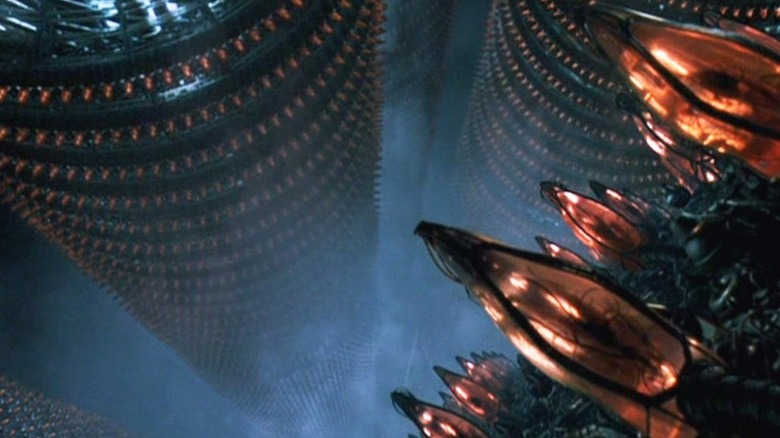
When Neo (Keanu Reeves) discovers the rabbit hole in "The Matrix," the outcome is arguably the most horrifying and harshest truth about any sci-fi future. As is the common thread through every bleak glimpse beyond the present on this list, this robot-riddled apocalypse is absolutely our own doing.
As Morpheus (Laurence Fishburne) puts it, "We don't know who struck first, us or them, but we know that it was us that scorched the sky." While a poisonous, thunder-cracking smog blotting out the sun is one thing, the worst part of this future is that humanity doesn't even know it's lost. While Neo and the rest of us are living lives we believe are real, the truth is that we're being kept wired up in a bath full of jelly as human batteries, allowing the machines to remain ticking.
This realization is something of a double-edged sword. While Neo and his freedom-fighting pals are on a mission to rescue humanity from its digital prison, it raises the question of whether it's really worth it. Taking the red pill wakes us up to the truth, but also brings a constant fear of being hunted by machines, a high risk of death, and three square meals of horrific-looking porridge. With all that in mind, it's almost understandable why (kill spree or not) Joe Pantoliano's Cypher attempts to return to a life of ignorance, and the longer we spend in the real world, the harder it is to argue with him.