

5 Reasons Why I Chose PC Gaming Over Consoles In 2026
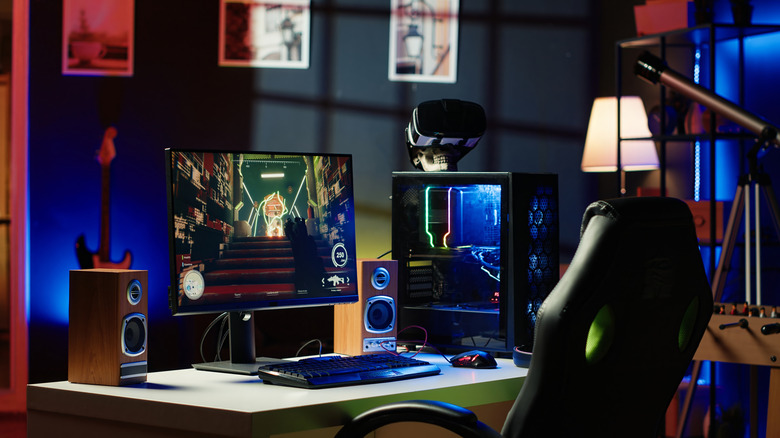
There are many reasons gamers choose PC over consoles in 2026, and I can personally vouch for some of them. Building a gaming PC was never a purely rational decision for me, since it has always involved my love for games, research, and the desire to play as much as possible. Even with the pricing crisis pushing the cost of graphics cards and RAM through the roof, I still believe desktops remain one of the best platforms for gaming.
I know that to save some money, a console might seem like the better option, but even those have been affected by this pricing crisis, hurting those waiting to buy a Nintendo Switch 2. And even though building a gaming PC today is not as cheap as it once was, I still think it makes sense. It's a long-term investment that you can improve over time, making it easier to fit into different budgets.
On top of that, owning a gaming PC comes with a few perks that give it a real advantage over consoles, such as more aggressive store sales and an even larger game library. Depending on what you want to play, performance can also be better, even if you do not have a flagship graphics card. All of that, combined with the fact that a gaming PC is not limited to playing games, makes it something that is still worth having in 2026.
Gaming PCs offer completely free online multiplayer
Microsoft was one of the first companies to charge players to play online when it launched Xbox Live Gold in 2002. Years later, Sony and Nintendo followed the same path and charged extra fees for players to access online features on their consoles. And for people who enjoy multiplayer games, I think this is one of the biggest advantages of owning a gaming PC.
On PC, platforms like Steam or Epic Games Store don't charge you a monthly subscription to play online. So, if you have a game with online multiplayer focus, like "EAFC" or some "Call of Duty," you can just play it without worrying about whether your subscription is active. These fees can get expensive, since the highest PlayStation or Xbox tiers can go over $100 a year.
For me, that makes a difference. Whether you have a DIY PC or a prebuilt, you don't need to keep thinking about renewing it every month or worry about the price increasing. I also don't need to spend more to access a mode that already comes with the game. So for people who play online frequently, a gaming PC is a fairer choice than a console.
PCs have a much larger game library than consoles

On Steam alone, you can find more than 100 thousand games available. While some vary in quality, it's still easier to find something I like than in the more closed ecosystems that consoles have. Of course, sometimes one exclusive or another does not come to PC, but that is a smaller issue compared with the variety of games.
Also, PCs have better backwards compatibility with their own games, since a 90s title can still be playable nowadays. Sometimes you need a mod to get full compatibility, but you can do it. On consoles, that does not happen. Sometimes I want to play some classic PlayStation 1 or 2 JRPGs, but I can't, since they didn't receive official ports for modern consoles.
The retro console emulators are another major point on a gaming PC, since some desktops can even run games from the PlayStation 3 era. So, if you own a copy of your favorite game and it doesn't receive a port for modern consoles, you can download an emulator and play it again. By using filters or upscaling, it's possible to enjoy the same game, but now with a better resolution and overall experience than before.
You can easily upgrade gaming PC parts over time
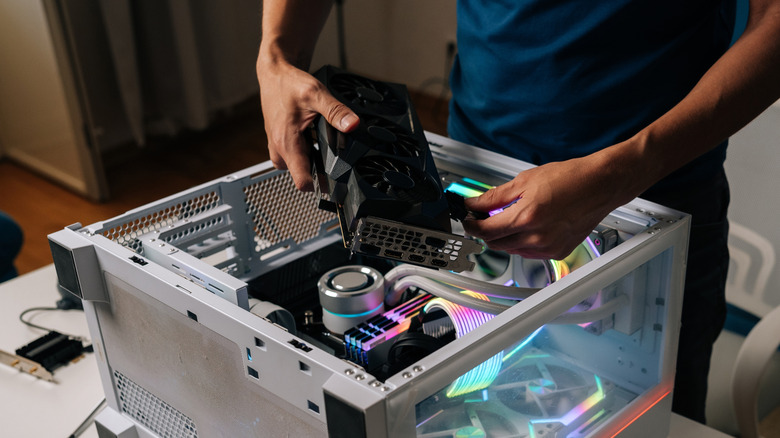
One good thing about consoles is that you can't build a full gaming PC kit for the same price as a console, especially if you include extras like a monitor. But desktops are better in this case because you can make small changes to your build as time goes on. It's more difficult with consoles. They usually only get an upgrade when they release a "pro" version — in which case you have to buy a whole new console if you want to upgrade — or when you add more internal storage.
As a beginner PC builder, my setup was very basic when I decided to leave my laptop behind in 2019 and build a gaming desktop for the first time. With my Ryzen 5 3600, RX 580, and 16 GB of RAM, I could still play some titles with reasonable performance, such as "Cyberpunk 2077." By doing some trade-offs, such as playing on Medium Settings, I could play from start to finish with a steady FPS.
Now I have a Ryzen 5 5700x3D, an RTX 4070 TI, and 32 GB of RAM. However, even if those settings are perfect for me now, I know that I also have a lot of room for future upgrades and can upgrade my CPU and RAM for better DDR5 components. And even if they cost more now, it's a possibility for the future.
Mods give PC games a much longer lifespan
Many of my favorite games, like "Crusader Kings 3," "Baldur's Gate 3," and "Mount&Blade Bannerlord," have a strong mod community and users interested in creating new content for those titles. Because of their creations, I can enjoy those titles even more. Putting a total conversion mod about "Game of Thrones" in "Crusader Kings 3" is a game-changer.
A few of those games, like "Baldur's Gate 3," can be played on consoles with mods. There are still some limits, though, even with official support from Larian on PlayStation or Xbox. Many mods released on PC you can't find on consoles, and even if the developer does a good job approving it in small batches, the total number is still very different.
In that regard, I think owning a gaming PC is much better. Even if the vanilla experience in those games remains fun for a while, mods can extend the entertainment. Some of them don't even exist to affect gameplay or change some game mechanics, but to fix bugs. "Skyrim" has several community-made patches that fix small issues across the whole game.
PCs give you full control over your graphics settings

Not only with mods, but games released on PC also tend to come with a variety of settings that you can change. You can adjust the resolution, frame rate, controls, and even other small settings that can make all the difference in performance. With few tradeoffs, such as reducing shadow quality, you can play many modern titles with modest hardware, regardless of which major PC brand you own.
On consoles, the situation is a little different. Only in recent years have games arrived with two different presets, Performance or Quality Mode, for players who value FPS more and are willing to give up some graphic quality in exchange for greater stability. Even with those changes, console players still remain limited to the settings that developers already set in advance.
For me, that freedom matters, since on PC I have more ways to customize my game. Also, some features come first on PC. Path Tracing, for example, has been available in the PC version of "Cyberpunk 2077" since 2023. However, that feature only reached PlayStation 5 in April 2026, years after the game launched.