

5 Common VPN Myths You Should Never Fall For
In the past decade, VPNs have evolved from tools used in offices and work environments to mainstream apps used by regular users. This was largely a result of increased awareness around online privacy. But even today, people fall for common VPN myths, things that have either been debunked or are no longer valid. For instance, many still believe in myths like VPNs protect your system from online threats, they slow down internet speeds, or that free VPNs are as good as paid ones.
On the other hand, some of the myths stem from how VPNs are advertised, say aspects like complete privacy, a no-logs policy, or access to geo-blocked content. While most reliable and popular VPNs follow a strict no-logs policy, some do track user activity. Apart from that, in many cases, access to geo-blocked content remains restricted even with VPNs as streaming services now have better VPN-detection mechanisms. You can't really take every claim at face value. The fine print that we typically ignore paints a clearer picture of the claims made by VPN providers.
So, if you still believe everything you have read about VPNs so far, it's time to find out which claims are highly exaggerated and those that are simply not true.
VPNs are illegal or operate in the gray area
One of the most common misconceptions surrounding VPNs is that their use is illegal, falls into a gray area, or that only hackers need VPNs. While VPNs are illegal in some countries, there's no global blanket ban on their use. They are legal in the USA, Canada, Japan, and most parts of Europe. In some countries, even the top security organizations recommend VPNs for enhanced security, like the FBI in the U.S.
As for countries that outright ban VPNs, the list isn't long, and some of the bigger names include Belarus, Iraq, Iran, North Korea, and Turkmenistan. There are others where VPN use isn't banned altogether but is either regulated or restricted. These include the UAE, Venezuela, Oman, Myanmar, Egypt, and India. Lastly, countries like China allows users to pick from a set of government-approved VPNs.
So, if you are in a country where VPN use is legal and encouraged, there's absolutely no harm in using one. On the contrary, it will make your web activity more private. Without a VPN, websites can track your activity and build a profile of you. But as soon as you switch to a VPN, it becomes a lot more challenging for websites to do that. Keep in mind that while a VPN may be legal, using it for illegal activities goes against the law.
VPNs guarantee total privacy
While a VPN encrypts your traffic and makes it harder for websites and ISPs to track your data, it doesn't eliminate that possibility. For instance, your ISP can still figure out that you are using a VPN. And while it can't exactly track the websites that you are visiting, the ISP can still make an educated guess based on your internet usage patterns.
Websites, on the other hand, see that the requests are coming from the VPN's server, masking your true IP address and location. But interactions on the site are still recorded and can be tied to your profile. For instance, if you log in or sign up for a service while using a VPN, they will still have your details. Similarly, if you register for a newsletter, they will have your email address. That data can still be traced back to you.
Then, there's the no-logs policy aspect. Most VPNs keep some logs like error reports and connection timestamps to improve their services, and that shouldn't be an issue. The problem begins when some VPNs share these logs with third parties, like advertising services and brokers, to monetize that data. That's why experts always say that not all VPNs are safe, and you should only stick with reputable solutions.
VPNs protect you from malware and viruses
Many users believe that VPNs provide all-round web protection, which is completely untrue. All they do is encrypt your traffic and hide your IP address. They don't scan your downloads for viruses or warn you of malicious sites. Your system is just as likely to get infected with a VPN as it is without one. For protection from these threats, you will need a reliable antivirus solution. That said, a few VPNs do come with some level of web filtering and protection, but these are generally pretty basic, typically offered as add-ons, and can't replace a full-fledged security software.
On the other hand, there's always the risk of the VPN itself infecting your system with malware. This is usually the case with malicious services masquerading as VPN providers. Apart from infecting your system, these can keep track of your activity and sell that data to third parties. That's why you must always go with a major VPN service.
VPNs are only meant for PCs
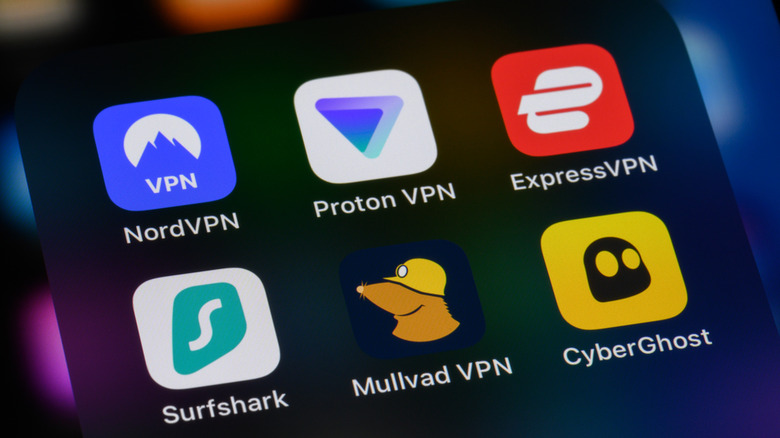
This myth stems from the fact that VPNs were initially designed for PCs and used in work environments. Back then, computers were the primary source of internet access. But that's no longer the case. Today, we use mobile phones to access the internet. That's where we install the commonly used apps, and it's the device housing our most sensitive data. Besides, we switch between Wi-Fi networks on smartphones more often than any other device, from home and office networks to public hotspots at cafes and airports. So, it makes more sense to install VPNs on mobile phones than it did a decade or two ago. For this reason, most VPN providers now have dedicated Android and iOS apps.
Apart from smartphones, we now have VPNs for tablets, smart TVs, streaming sticks like the Amazon Fire TV Stick, and even gaming consoles. Alternatively, if a device doesn't natively support VPNs, you can set up a VPN at the router level. This protects all devices on the network. So, if you have always thought that VPNs are limited to PCs, the landscape has evolved significantly. In today's interconnected world, almost every device benefits from the additional privacy layer that a VPN provides.
VPNs significantly slow down the internet speed

For the longest time, users believed that VPNs slowed down their internet, and that was partially true. When you use a VPN, instead of directly connecting you to the website or service, it reroutes the connection through its own servers. This additional step does impact internet speed, but the slowdown isn't as noticeable as it used to be. Modern VPN protocols are designed to largely minimize this, and as a result, you don't notice a drastic fall in internet speed.
What still matters is how far the server is physically located and the current server load. If the server is located in a faraway region, it will increase the latency and lower the internet speed. Similarly, if too many people are using the same server, there will be an impact on performance. But this is usually the case with free VPNs, where you have limited servers to choose from. On paid VPN plans, you have several available servers to choose from. And as long as you pick a nearby server with low load, the internet speed will not experience any major slowdown.
Also, sometimes, a VPN can actually increase your internet speed on certain platforms. This happens when your ISP is throttling speeds for specific services like Netflix or YouTube, and a VPN helps prevent that by encrypting your traffic.