

The 7 Best Folding Smartphones Ranked Worst To Best According To Real Users
We may receive a commission on purchases made from links.
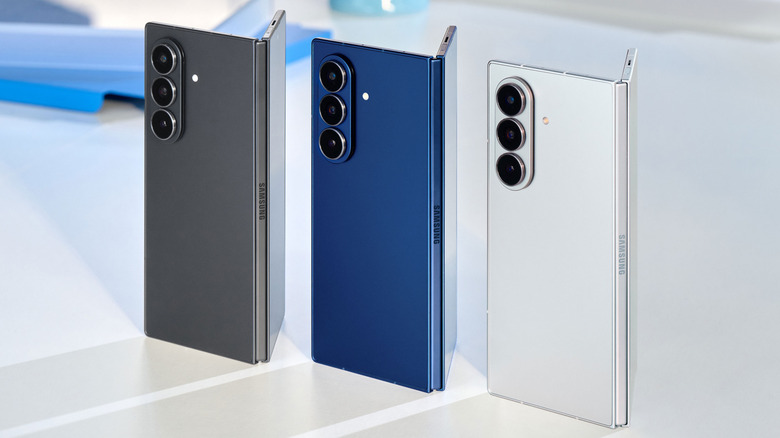
Despite their improvements, it's hard to deny that slab phones can feel a bit boring. Every year, you get the same glass-and-metal sandwich with different internals, but in a brand-new color. Maybe that's why, when Samsung took the stage to announce the first Galaxy Fold in 2019, even the average consumer took notice. Sadly, this attention didn't translate into sales. The first foldables just weren't ready for everyday wear, with issues pertaining to the display and hinge. Now, however, the reality has changed — for the better. You don't have to worry about dust and water as much, and even the battery life and performance are almost on par with the slab phones.
There are two kinds of folding phones on the market. A retro flip-style phone, where a normal-sized device folds in half for better portability, and a book-type style, which is more for power users who need a tablet-sized display to work on the go. Regardless of your preference, there are plenty of choices. But they can be super confusing, especially when you consider the competition from Chinese makers like Oppo and Honor. While such phones aren't available in the U.S., we decided to put them against the big players from Samsung, Google, and Motorola to see where they stack up, based on real user reviews.
7. Motorola Razr 2025
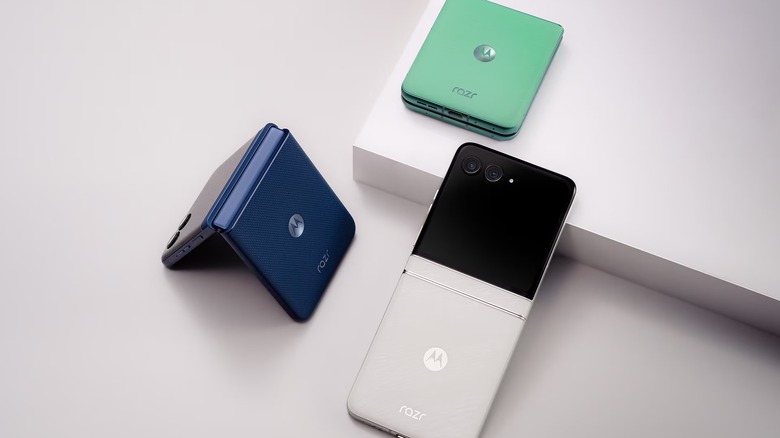
Flip phones, as portable as they are, add a layer of friction between you and their big inner display. In theory, this pause could make you think about why you're picking up the phone, helping you focus on better things than Instagram Reels. At $549.99 on Amazon, the Motorola Razr 2025 makes perfect sense for a first-time flip buyer. Design-wise, we wouldn't call it inventive, but real buyers say the aluminum frame has stood the test of time in both indoor and outdoor use. The redesigned titanium hinge lets you position the phone in different ways. The Razr 2025 is IP48 certified, meaning you can take it for a quick swim, but dust particles smaller than 1mm will be a concern. Maybe skip the beach.
The displays, of which there are two, are headlined by a 6.9-inch 120Hz OLED panel, paired with an outer 3.6-inch 90Hz OLED panel that wraps around the camera cutouts. The best part? You can run most apps on the cover screen, albeit with some aspect-ratio issues. Performance is, sadly, where the cracks start to appear. In our 2025 review of the Razr, we found that the MediaTek Dimensity 7400X is fine for everyday use, but its lack of raw performance kills any gaming dreams. Some buyers also highlighted the phone's thermal headroom — or the lack thereof — which, once exceeded after using the phone outside, led to weird lags and crashes.
Optics are handled by a 50MP main sensor, coupled with a 13MP ultrawide lens. According to PhoneArena, photos from the main sensor are decent in good light, with Motorola's software leaning towards punchy colors. Take away that light, and both sensors suffer from noise, and the shutter speed is about a second more than desired.
6. Motorola Razr 60 Ultra
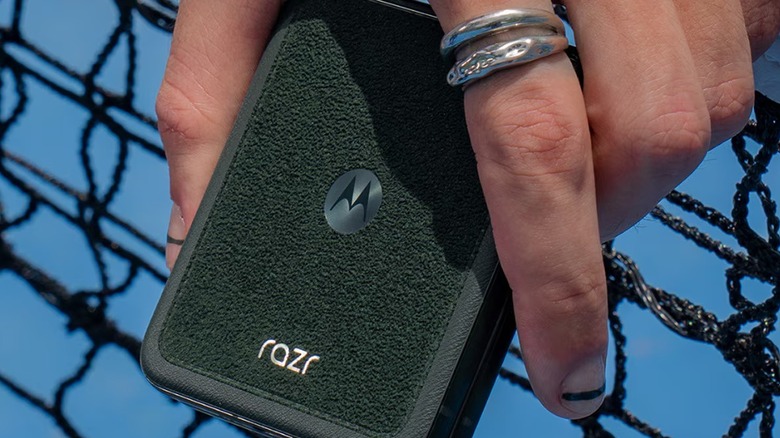
The Motorola Razr is probably the phone that comes to mind when anyone thinks about the early 2000s. If you'd like to experience the same feeling without the annoyances of the Razr 2025, then the Razr 60 Ultra is the best Motorola has to offer. Physically, almost nothing has changed from the predecessor, aside from a 10 g increase in weight. But Motorola's Pantone partnership means you get an array of new vibrant colors, including wood veneer and even premium back materials like Alcantara. It's not revolutionary, but at a time when most brands are turning down the saturation, it definitely adds some character that buyers absolutely love.
The biggest update to the Razr Ultra is the outer display, now a 4-inch OLED panel with a 165Hz refresh rate. Likewise, the inner 7-inch screen has the same features and a peak brightness of 4,500 nits. Motorola also added more widgets to the outer screen and improved app functionality to reduce how often you need to open the phone.
Under the hood lies the flagship Snapdragon 8 Elite processor, which, based on our review of the Razr, is leaps and bounds faster than the regular Razr. You can play games, and we haven't heard stories of users getting performance throttled on a hot summer day. The Razr Ultra features a 50MP main sensor paired with another 50MP ultrawide lens. In practice, MrMobile says it handles HDR competently in daylight, producing crisp photos that can go head-to-head with the Samsung Flip 7. Low-light obviously exposes a few gaps in Motorola's processing department, but buyers say the shots still look social media–worthy, nonetheless. What's not very good is the 3 years of software support, which at $799.99 on Amazon is a tough pill to swallow.
5. Samsung Galaxy Flip 7
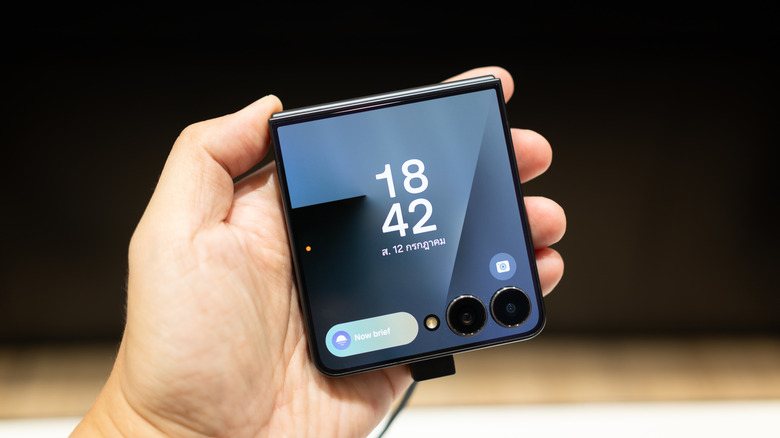
After years of iterating on similar internals in the category Samsung helped co-found with Motorola, the Galaxy Flip 7 ($899.99 on Amazon) is the most complete flip phone on the market. And these aren't just what we found in our review of the Galaxy Z Flip 7, but agreed to by experts and users alike. This praise mainly stems from the updated cover display, which now stretches edge-to-edge (even around the camera modules) and lets you do almost everything. But, in classic Samsung fashion, not everything is easy. In real-world use, the Korean smartphone maker tries its best to prevent you from using apps on the cover screen, with buried settings and app installations. That being said, features like the ability to resize apps to different aspect ratios if the square form factor doesn't work well are a welcome addition.
With the new waterdrop hinge, the inner 6.9-inch LTPO AMOLED 120Hz display opens almost flat. The Z Flip 7 also packs a 4,300mAh battery, but its benefits are partly overshadowed by the Exynos 2600's shortcomings, which experts found to be slightly worse than the Snapdragon 8 Elite. Still, users say the Flip 7 is an all-day phone, and it earns a lot of points back with 7 years of software support. This is industry-leading.
When it comes to cameras, the 50MP main sensor produces natural-looking photos that TechRadar says are closer to those from an iPhone than previous efforts. Portraits are handled beautifully thanks to Samsung's mature image processing, and you get portrait videos in 4K quality as well. While the selfie shooter is a little less capable, the fact that you can just ignore it and use the main lens with the cover screen makes up for it to most buyers.
4. Honor Magic V5
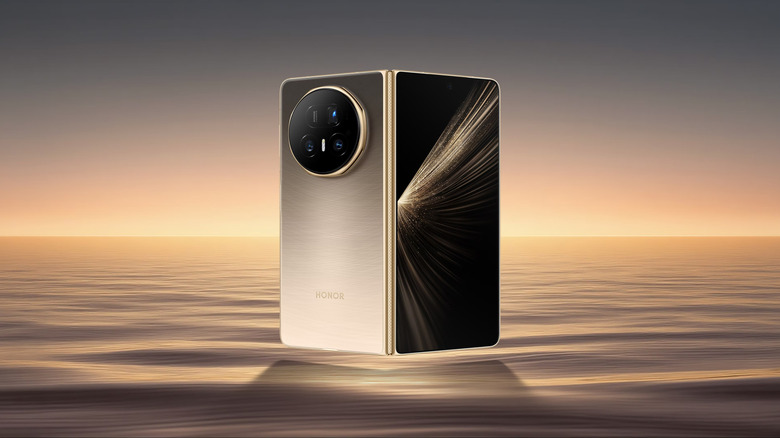
Yes, the Honor Magic V6 has already been announced in China. But reviews are yet to come, and it isn't coming to global markets anytime soon. Until then, the Honor Magic V5 grabs the number four spot, as it's still a very capable phone. Honor toned down its flashiness with the V5, giving it a more subtle yet premium look, especially in the copper finish. Unfolded, it measures just 4.1mm thick, and the central camera module keeps it from wobbling on a table. Buyers say that the IP58 and IP59 ratings offer solid protection against water, though we'd still recommend keeping it away from fine dust.
Our review of the M5 said that both displays on the Magic V5 are excellent, with plenty of usable screen space on the LTPO AMOLED panels, even in sunlight, thanks to the 3,000-nit peak brightness. Since Honor isn't afraid to try new technologies, a 5,820 mAh silicon-carbon battery finds its way into the Magic V5. The result? Superior all-day battery life with moderate use, with some charge left to spare, as per TechRadar. The cameras, of which there are three, include a 50MP main, a 64MP 3x telephoto, and a 50MP ultrawide. Sure, the photos are detailed, with accurate dynamic range and good low-light performance, but that's not the point. Experts report that Honor's filters give you more control over the final look of your photos.
Sadly, MagicOS is still a big departure from stock Android, with a cluttered interface. That being said, the new multitasking features are similar to those in ColorOS, and you can now customize the icons and change their shapes, too. Coupled with the Snapdragon 8 Elite, the V5 is a handy foldable that's held back only by the fact that you cannot buy it in the U.S.
3. Pixel 10 Pro Fold
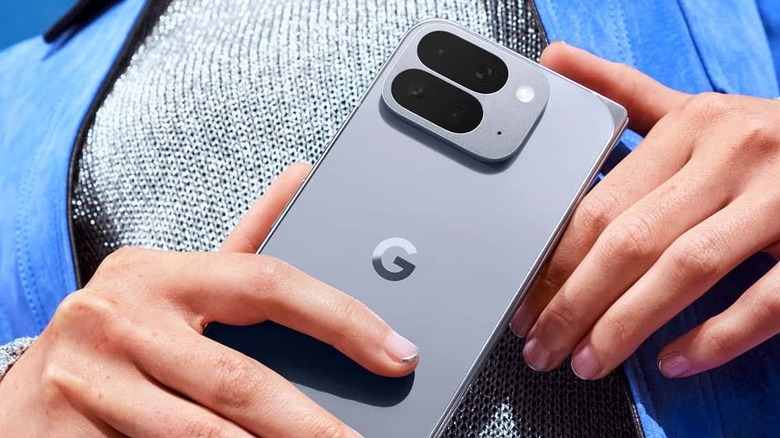
Durability is the biggest concern for foldable phone buyers. After all, you want your shiny, expensive piece of folding glass and metal to work well for at least a few years. This hasn't been easy. We've seen reports of folding phone buyers experiencing issues with sand trapped inside the hinge or water ruining the internals. Well, that's not a problem with the Pixel 10 Pro Fold ($1,799 on Amazon). Google somehow sealed off the internals to get an IP68 rating. What this means is that you can technically go for a swim in a meter-deep water, and nothing should go wrong. The catch? Compared to the Samsungs and Honors with sub-5mm thicknesses, buyers say the Pixel 10 Pro Fold feels much bulkier, like two slab phones joined by a hinge.
Nevertheless, the rest of the 10 Pro Fold is really good. The outer 6.4-inch OLED 120Hz display has a more conventional aspect ratio, meaning you aren't typing with cramped thumbs. Inside, you're greeted with an 8-inch panel running Android 16 with Google's stock UI. Our review of the Pixel 10 Pro Fold praised how well the Android experience translates to the big screen, with fun colors, slick animations, and some folding-specific features like Drag and Drop. As this is a Google phone, you also get tons of AI features, headlined by Magic Cue, which suggests contextual information.
Things start going downhill if we look at what powers all these AI features: the Tensor G5. Based on benchmark results, the G5 lags behind the latest Snapdragon in multi-core performance. Google also skimped on updating the camera sensors (48MP primary, 10.5MP ultrawide, and 10.8MP telephoto) from last year's 9 Pro Fold. Still, users say daylight images here are colorful, marked by the signature HDR-heavy look. However, zoomed-in nighttime photos lose details and look more like paintings, as per TechRadar.
2. Samsung Galaxy Fold 7
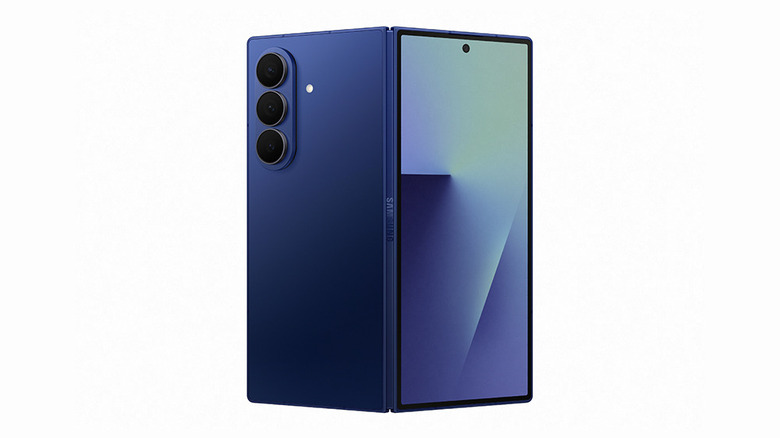
It's not often that a major smartphone brand like Samsung decides to change multiple things in one generation. Most brands prefer to iterate on a winning formula. Well, that hasn't been the case with the Galaxy Fold 7 ($1,675 on Amazon), which, after years of being same-same but different, has upped the ante. These changes are most apparent in the design. Unfolded, the Fold 7 is 4.2mm thin, which is down from 5.6mm on its predecessor. The 215g weight is comparable to that of any slab phone, and the aspect ratio is now wider to accommodate a better typing experience.
Both displays are top-of-the-line QHD AMOLED panels with a variable refresh rate. Sadly, Samsung has had to remove the digitizing layer for the insane thinness, meaning your beloved S Pen no longer works. Also, the hidden underscreen camera is gone. That being said, the rest of the optics are really good. The setup is led by a 200MP primary sensor, along with a 10MP 3x telephoto and a 12MP ultrawide lens. While a higher megapixel count doesn't necessarily translate to better images, both MrMobile's and our review of the Galaxy Fold 7 found that the sensor pulls more details in low light by binning down to 12MP. Daylight photos are handled beautifully, even in challenging HDR scenarios. The only bummer for some buyers has been the telephoto lens, which at 3x feels limited compared to rivals.
The Snapdragon 8 Elite for Samsung powers the device, and the performance is very solid. Buyers suggest the Fold 7 can handle demanding titles like "PUBG" at high settings without a hint of stutter. Also, OneUI 6 is one of the most mature foldable software experiences. Its multi-window features are easy to set up, the AI is helpful, and even the Dex Mode offers some useful functionality for keyboard and mouse users.
1. Oppo Find N6
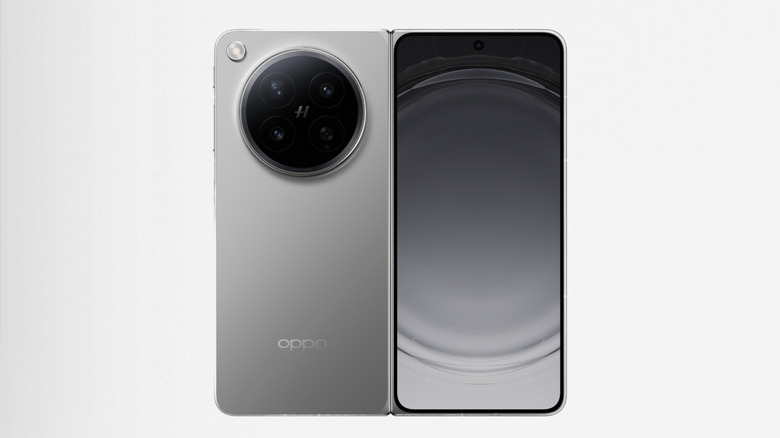
Oppo has been doing folding phones in Europe and China for quite a while. The Find N6 may be the best foldable you can't buy in the U.S. because it makes very few compromises. Remember the crease that bothers you when using the phone? Oppo has gotten rid of it (almost) with a Zero-Feel Crease design. You can still see it when the light falls perfectly, but according to buyers, the dip in the display's performance is pretty much absent. Folded, the N6 is just 8.9mm thick, it weighs a manageable 225g, and you even get an IP59 dust- and water-resistant rating.
Oppo makes some of the best camera phones, and that expertise shines through in the Find N6's optics, which comprise a 200MP main sensor, a 50MP ultrawide, and a 50MP 70mm telephoto lens. Colors are handled in collaboration with Hasselblad, and while we can't say photos here are exactly like those from Oppo's slab phones, they are very close. Digital Camera World's review said both the highlights and shadows retain stellar detail in any lighting, and the shots look natural with a subtle hint of vibrancy. The Hasselblad filters add a style to your shots that you won't find elsewhere. Sure, the zoom is limited to 3x, but the 50MP sensor lets you crop in up to 10x and still get Instagram-worthy shots.
The Find N6 runs on a special version of the Snapdragon 8 Elite Gen 5 processor, translating to roughly a 5%–10% drop in benchmark scores. In practice, you won't notice any of that missing performance, as the N6 breezes past every task and even gaming. You also get a big 6,000 mAh silicon-carbon battery to power the internals, and we found it lasts over a day of medium-to-heavy use. All this, coupled with OPPO's retention of stylus support, makes the Find N6 among the best folding phones on the market.
Methodology
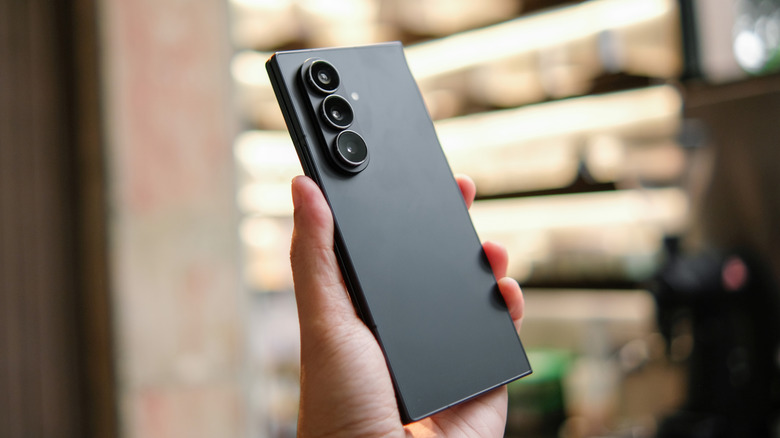
Despite being relatively new, the folding phone market has matured significantly. You have phones catering to different needs and niches, but that also makes ranking them difficult. As a result, we combined our reviews of many of the phones mentioned with reviews from trusted media outlets and YouTubers, including TechRadar, PhoneArena, and MrMobile.
All that said, we didn't just look at how well these phones fold, but also how they handle the regular smartphone experience, like being able to play games on the big screen without overheating, taking good photos regardless of the lighting, and most importantly, using the phone outdoors in rain or dusty conditions. To keep things fair globally, we also included Chinese flagships.