

5 Sci-Fi Movies That Should Have Been Massive Hits But Bombed Instead
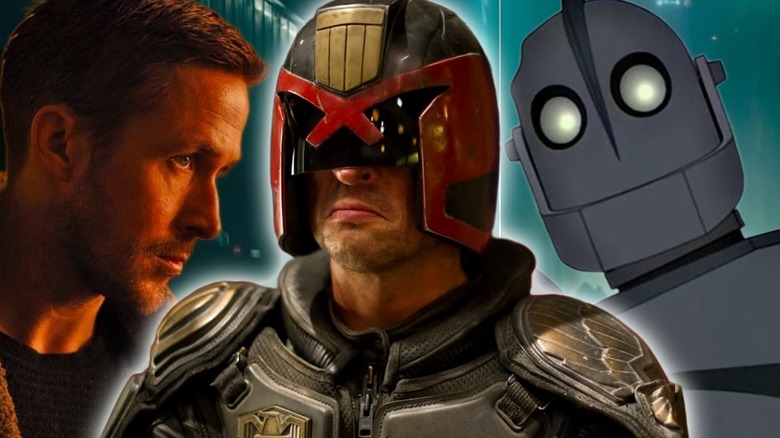
Just like a time-traveler once said to a bunch of clueless '50s high-schoolers, "I guess you guys aren't ready for that yet. But your kids are gonna love it." In the case of some sci-fi stories that braved the big screen, that's certainly true.
Sci-fi movie history is littered with misfits that, upon initial release, didn't check enough of the general audience's boxes. As a result, they were lost to the box-office bin of financial failure. It would only be a few years later that they'd gain a second life from diehard fans or become acknowledged as the sci-fi greats they'd always been.
But just which of the best sci-fi films were unlucky enough to find themselves on this list? What was it that saw some now-adored movies make their debut as immense misfires because of poor advertising or mega competition at the box office? Why was it that in some cases, movies were greeted by audiences that simply couldn't wrap their heads around a film that was years ahead of the curve? To kick things off, there's a cult classic that thankfully just waited a while to see what happened, and eventually went on to become a sci-fi body horror masterpiece for the ages.
The Thing
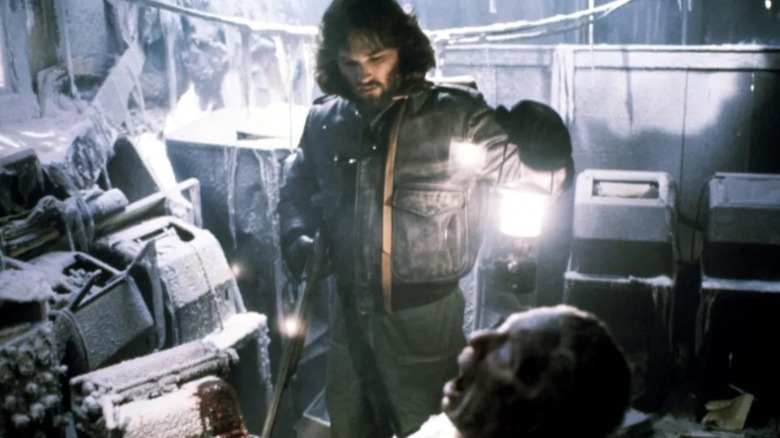
It might've gone on to become one of John Carpenter's most beloved works, but "The Thing" had a tough time becoming a success when it debuted in theaters. The impressive remake of "The Thing from Another World" had all the ingredients to be a hit, including some incredible body horror sequences and a consistently brilliant lead in Kurt Russell. Unfortunately, even the movie's adaptable alien couldn't compete with a creature from another world that was dominating Hollywood in 1982, and doing so in a far more welcoming fashion. It turns out that rather than watch Russell give a blood test that would turn into the stuff of nightmares, audiences were more interested in making a family-friendly call to "E.T. The Extra-Terrestrial."
Steven Spielberg's movie about a boy and his best friend from beyond the stars was unstoppable, changing sci-fi forever and adding yet another immense hit to the director's growing filmography. Unfortunately, it proved that audiences wanted aliens to come in peace and take us on flying bike rides, not rip our arms off with an open chest cavity with teeth.
As a result, while having a two-week head start in theaters, "E.T." grossed $619 million at the box office (although it was banned in some countries). "The Thing," however, crawled away with a disappointing $20.9 million. The positive, of course, is that time was kinder than initial audiences, with "The Thing" becoming a beloved sci-fi horror and widely regarded as one of the greatest remakes ever made.
Strange Days
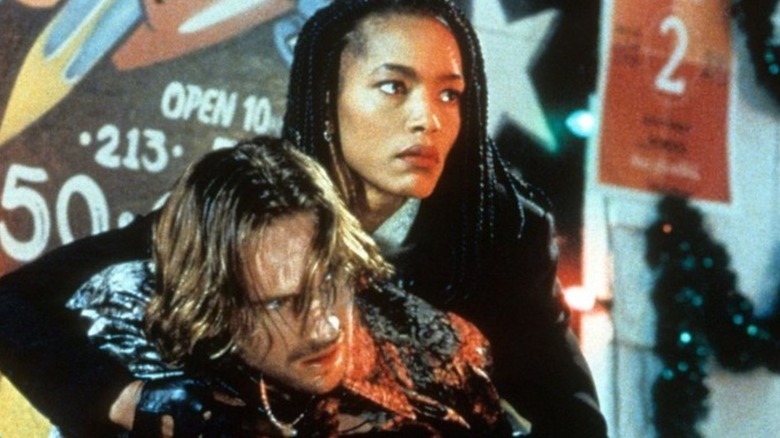
The biggest gamble with sci-fi movies is that sometimes they're simply just way ahead of their time. Such is the case for "Strange Days," which on paper should've been a hit when it arrived in 1995, written by James Cameron and helmed by "Point Break" and "The Hurt Locker" director, Kathryn Bigelow.
Starring Ralph Fiennes and Angela Bassett, the movie takes us into a future where people have become addicted to SQUID (Superconducting Quantum Interference Device), which records memories and allows the wearer to relive them with startling accuracy, as if it were real life. A murder mystery begins to unfold, though, when Fiennes' former cop gets hold of a SQUID that stores evidence of a murder that sees him and Bassett on the run.
Watch "Strange Days" now, and it's hard not to see fragments of "Minority Report" and "The Matrix" woven into Cameron's tale, which didn't receive as warm a welcome as either of those films. Instead, the movie grossed an abysmal $8 million at the box office, which couldn't cover the $42 million budget. Audiences weren't willing to get hooked into this dark future, where police corruption was on the rise and society was dependent on technology. Nowadays, even finding a physical copy of "Strange Days" is rare, but worth it for a film that has rightfully earned cult status.
The Iron Giant
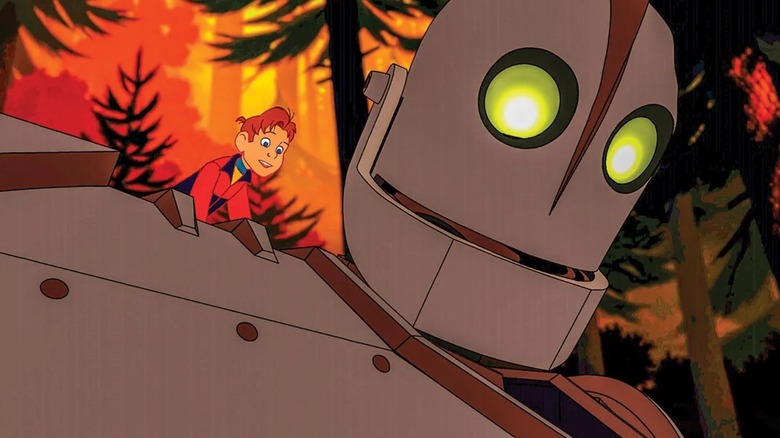
Before Vin Diesel lent his voice to a talking tree with only a three-word vocabulary, he breathed life into the highly advanced nuts and bolts of a killer robot who just wanted to live in "The Iron Giant." Helmed by Brad Bird, the director of "The Incredibles" and "Mission: Impossible — Ghost Protocol," the film was loosely adapted from author Ted Hughes' book, "The Iron Man" (no affiliation to Tony Stark), and followed a young boy in 1957 named Hogarth Hughes (Eli Marienthal) who befriends the titular hero. The premise was inspired by Bird's sister, who was tragically shot and killed by her husband. Bird wanted to tell the story about "what if a gun had a soul? Would it still want to be a gun?"
With Jennifer Aniston and Harry Connick Jr. joining the proceedings and "Happy Gilmore's" Christopher McDonald in top form as the paranoid federal agent with his sights set on Hogarth's big pal, the film had enough talent and heart to earn immense praise from critics. Unfortunately, it wasn't enough.
Given that Warner Bros. had already been stung by the animated box-office bomb "Quest for Camelot" the previous year, the studio wasn't willing to put in the effort to promote the film, regardless of how much of a hit it could've been. The result was disappointing worldwide earnings of $31.3 million against a $50 million budget. Thankfully, over the years, the film has become a cult classic that younger generations have belatedly discovered, giving them a heartwarming introduction to a different kind of Superman.
Dredd
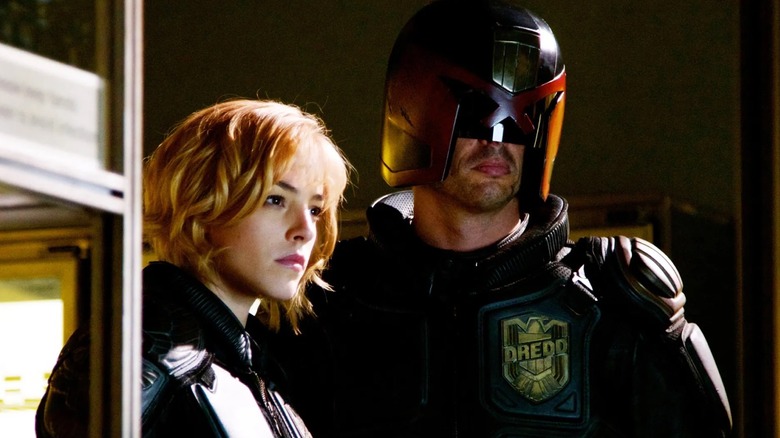
Karl Urban has petitioned for roles he wanted like Henry McCoy in "Star Trek," and just recently elevated a floundering franchise as Johnny Cage in "Mortal Kombat II," but one part he's hungry to go back to is Judge Joseph Dredd in Pete Travis' "Dredd." The problem is that when he made his debut as Mega City One's toughest lawman, not a lot of people showed up for the fanfare. Against a $45 million budget, the reboot of the hard-as-nails comic book character earned only $41.5 million, which feels criminal in itself.
Critics and fans' initial reactions were overwhelmingly positive, praising Urban for staying under the iconic helmet in contrast to Sylvester Stallone's 1995 attempt, in which Sly's face was often placed front and center. The movie was also riding on a sterling script from "Civil War" and future "Elden Ring" director, Alex Garland, who, according to some, practically ghost-directed the film as well.
In Urban's eyes, though, "Dredd" died a death in theaters thanks to the studio's poor effort in getting the word out that a new judge was in town. "Dredd represented a failure in marketing," he told Yahoo. "I saw the tracking of that film weeks before it came out, and the fundamental problem was no one knew it was being released. Once it came out on DVD and it sold 750,000 copies in the first week in North America alone, it was very clear that the audience had discovered it."
Blade Runner 2049
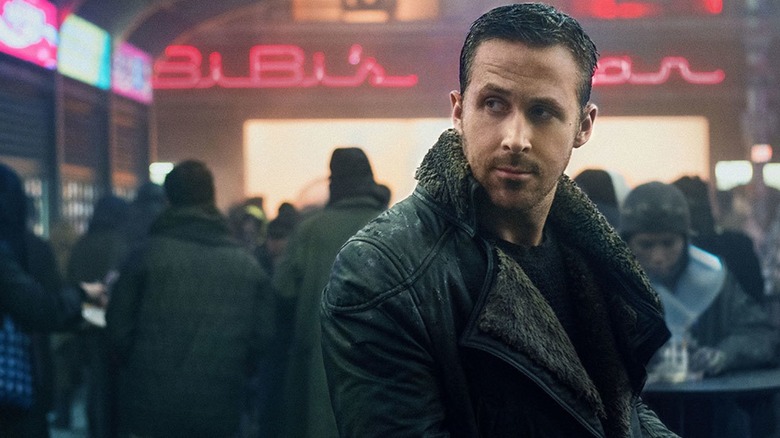
"Blade Runner 2049" faced an uphill battle from the get-go. After 35 years, the original, a misunderstood masterpiece in its own right (and which had given fans multiple endings to boot), had a tumultuous legacy that director Denis Villeneuve would help shape. Unfortunately, the original's cult status seemed to carry over to its successor, with "Blade Runner 2049" falling short of expectations.
The film might've broken past its $185 million budget, but it ended up at around $276 million, leading to failure for a multitude of reasons. For one, the movie was going up against killer clowns returning to screens with "IT," which was breaking records of its own in the horror genre. Additionally, there was yet another poor marketing strategy for a film sequel that, while coveted by cinephiles, wasn't on the radar of regular moviegoers.
Even with the big names of Ryan Gosling and Harrison Ford, marketing kept story details to a minimum, hiding as much as they could, which ostracized viewers who didn't even know what happened in the original. Warner Bros.' domestic distribution president, Jeff Goldstein, said in a statement to Reuters, "The audience for it was narrower than we anticipated. We did well in the major and high-profile markets. Alcon and Denis made an amazing movie." There's no question about that, because just like our first outing with a Blade Runner, "2049" is a masterpiece in its own right and deserves the same amount of love, even if the world was just a little late to give it.