

11 Old-School Gaming Accessories That Used To Be Essential
We may receive a commission on purchases made from links.
The evolution of video games has been a fascinating journey. From the early days of a video game crash, which nearly threatened the very existence of this industry, to today where this sector outsells the movie and music industries combined, video games have turned into an enduring facet of pop culture. There's a reason why collectors go berserk and pay astronomical prices for retro gaming hardware. This includes a wealth of accessories that were all the rage back in the day when video games were still in their infancy, and companies were taking risks and experimenting with what worked and what didn't.
This led to gimmicky controllers and console add-ons that never hit the mark and achieved paltry sales. On the other hand, innovations like motion controls, haptic feedback, and the very concept of a home console itself are here to stay for the long haul. In between products that became failures and others that became the standard, there were accessories that struck a sweet spot at the time and attained substantial popularity only to become forgotten relics as the gaming industry roared on without them.
Nintendo 64 Rumble Pak
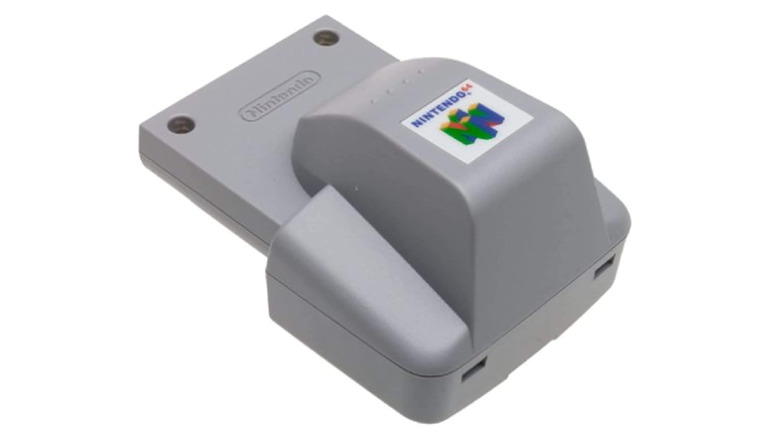
Before PlayStation's DualShock burst onto the scene with its built-in haptics that became a common feature in controllers ever since, Nintendo decided on a slightly more roundabout solution to enable this force feedback in their gamepads. This was achieved with the release of the Rumble Pak in 1997, which made the Nintendo 64 controller vibrate when you performed actions in supported games.
It was bundled with "Star Fox 64", which was the first game to use the Rumble Pak for enhanced immersion, and the suite of games that used this accessory eventually increased over time. By the end of its lifespan, generational titles like "Banjo-Kazooie" (and its sequel), both "The Legend of Zelda" games, "Perfect Dark," "Conker's Bad Fur Day," "Donkey Kong 64," "F-Zero X," "GoldenEye 007," "Paper Mario," "Resident Evil 2," and all the "Mario Party" games — not to mention "Golf" and "Tennis" — supported the Rumble Pak.
The Nintendo DS also supported the Rumble Pak, which came free with "Metroid Prime Pinball," but was plagued with noisy force feedback and an initial offering on just four game titles. Eventually, this lineup of games expanded to 51 titles, including classics like "Hotel Dusk: Room 215," "Mario & Luigi: Partners in Time," and "Elite Beat Agents."
NES Zapper
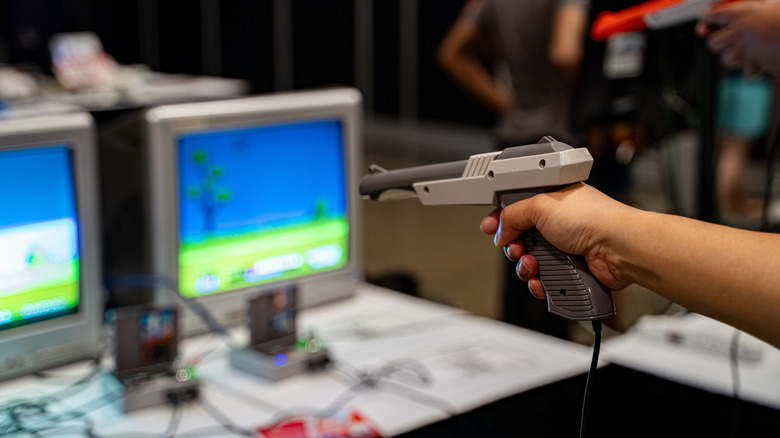
It speaks to the rampant popularity of "Duck Hunt" that the snickering dog who makes fun of your inaccurate shots continues to be one of the most hated video game characters of all time. Without the widespread acceptance of light guns, this game would've never enjoyed the legacy it does right now. All credit goes to the NES Zapper, an accessory so popular that it helped boost the sales of the console itself!
It used an infrared light to gauge where the player was shooting on the screen, which was surprisingly accurate for the time. Given the impact of this accessory, it's surprising that only 17 games supported its technology by the time the NES Zapper retired. Ultimately, it was the "Duck Hunt" and NES Zapper combo that ended up being one of the most impactful gaming experiences on the Nintendo Entertainment System, a gaming console that defined the '80s. Many people have fond memories of shooting either ducks or clay pigeons while trying to avoid the dastardly dog's disapproval.
Guitar Hero Controllers
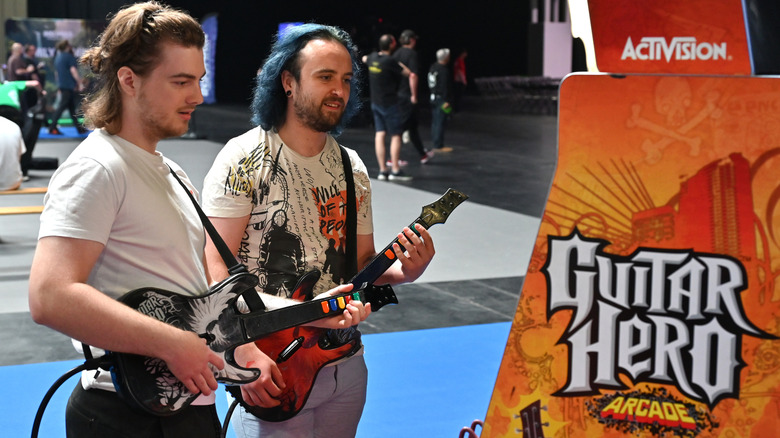
Speaking of games and accessories that combined to unlock generational gaming experiences, we would be hard-pressed not to talk about "Guitar Hero." It enjoyed an amazing debut in 2005 and became one of the most popular titles on the PS2, and it also found success on Xbox 360, Wii, and arcade games (shown above). While the selection of tracks and rhythm gameplay was excellent, what really made "Guitar Hero" a sensation was the controller that came packaged with it.
Initially, the guitar controller modeled after the Gibson SG came with a copy of either "Guitar Hero" or its sequel "Guitar Hero II", which let players feel like rockstars as they nailed their favorite songs and riffs. Other controller models eventually came into the fray later on, resembling popular guitars like the Gibson Explorer, Kramer Striker, and Gibson Les Paul. As popular as this video game was, "Guitar Hero" and its biggest competitor, "Rock Band," tapped into a 2000s fad that eventually died down over time.
Wii Nunchuk
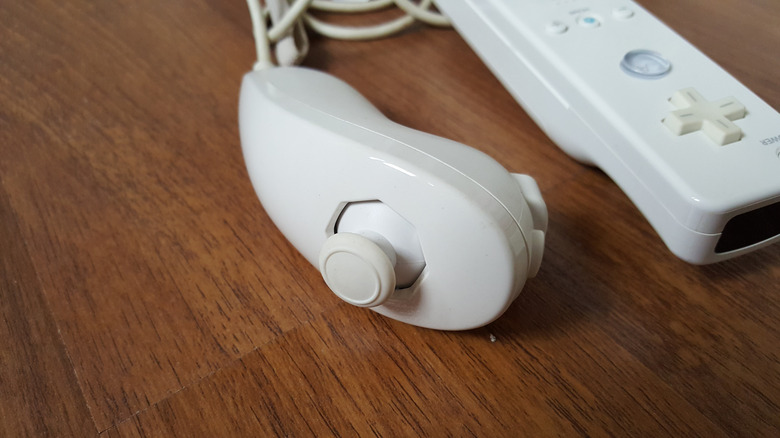
With the Wii's focus on motion controls dominating this console's approach, the remote that came with the console decided to forgo an analog stick and bore a striking resemblance to a regular television remote. These are so competently made that you can still uncover some clever uses for your old Nintendo Wii remotes. However, as much as Nintendo insisted on the use of motion controls for this console, it was clear that they needed to add analog controls to support third-party titles and traditional games. This is why the Wii's release also saw the debut of the Nunchuk, named for how it would connect to the Wii Remote and make the entire setup look like a nunchaku.
Given that any remotely complex game supported the Nunchuk in some way, it's clear why this accessory became necessary for Wii users who wanted to maximize their gaming experience. As unique as the Wii Nunchuk was, Nintendo eventually transitioned to traditional controller setups. While the Wii U Gamepad's controller was a unique, bulky design that ended up being a failure, the Nintendo Switch Joy-Cons were a massive success with a hybrid functionality that allow you do some very cool things with your Joy-Cons. Sure, the Nunchuk may have faded into obscurity as the Wii was phased out, but the design of the Joy-Cons makes it clear that their DNA persists in modern Nintendo products to this day.
Wii Balance Board
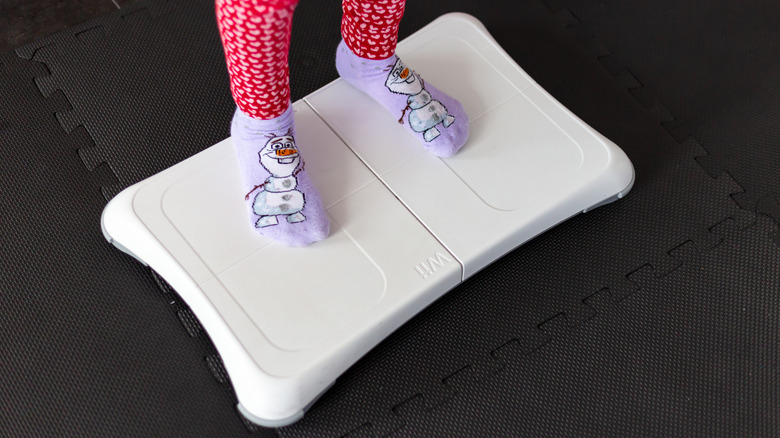
Speaking of Wii accessories that became gaming necessities in the eyes of many, the Wii Balance Board also deserves to be a part of this conversation. After all, the mere fact that this gaming peripheral entered the Guinness Book of World Records as the best-selling personal weighing device of all time speaks volumes. "Wii Fit" is the most notable title in the console's library that encouraged players to use this balance board for a multitude of exercises. This brainchild was the result of Miyamoto's fitness craze, with this legendary developer striving to develop a unique accessory that would work with the "Wii Fit" prototype to allow for more complex aerobic activities. After extensive experimentation and the removal of a hazardous cord, the Wii Balance Board was born.
This device could support weights of up to 330 pounds., and it's cordless design necessitated the use of batteries, with Nintendo stating that four AA batteries would keep the Wii Balance Board running for almost 60 hours. The board is split into four segments, with each of them housing a load sensor that could detect player movement and calculate the amount of strain they put on the device. Aside from "Wii Fit," this balance board was supported by other titles, including "Wii Music," "Mario & Sonic at the Olympic Winter Games," and "Super Monkey Ball: Step & Roll."
Game Genie
Any retro gamer is familiar with the hair-pulling difficulty of some infamous old-school titles. After all, games were still trying to shake off the arcade cobwebs, which focused on an intentionally high degree of difficulty curve that goaded players into putting more coins in the machine (to beat high scores or extend progress) and leaving arcade owners with more profits. This is why the term "Nintendo Hard" exists, with NES games like "Battletoads," "Ghosts 'n Goblins," "Mega Man," "Ninja Gaiden," and "Teenage Mutant Ninja Turtles" boasting a level of difficulty so intense that people were bound to fail after making decent headway, forcing them to start from the very beginning.
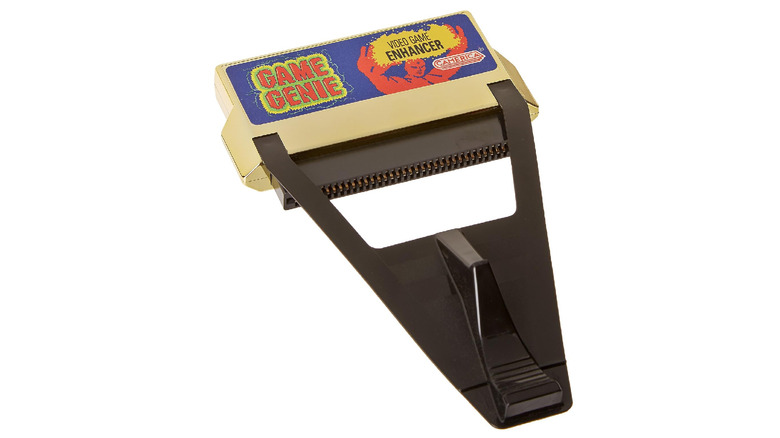
For this reason, cheating accessories like Game Genie became so popular during the age of retro gaming. For the NES, it served as a cartridge extension that could connect to both the console and the video game that is causing problems for you. Input codes specific to a game, and you could enjoy everything from infinite lives to level jumping in no time. It's a revolutionary accessory that made these difficult games approachable for the masses and popularized video game cheats. The Game Genie was also available on the Sega Genesis, covering all bases and keeping both sets of fans happy.
It's a shame that extraneous circumstances prevented the Game Genie 2 from existing, but it set the foundation for other code-breaking accessories to populate the market. These include Action Replay and Code Breaker, but the most popular spiritual successor to the Game Genie is the GameShark. It worked similarly to the Game Genie, although it could store codes for easier access the next time around. The GameShark came for popular consoles like the Nintendo 64, PlayStation, PlayStation 2, Game Boy, and Game Boy Color.
Multitap
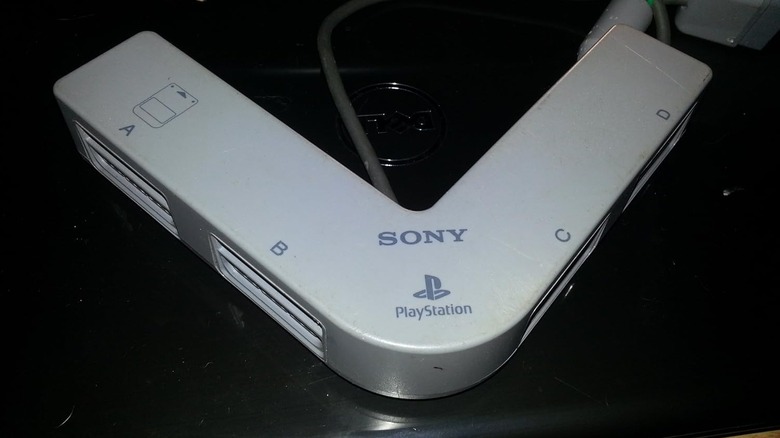
With wireless connectivity becoming the norm in modern consoles, we've started taking multi-controller connectivity for granted. Now, four simultaneous controller connections — with the Switch and its successor going overboard with a total of eight supported controllers — is pretty much expected from any modern console. This wasn't the case back when gaming was still in its infancy. Consoles like the NES and its successor, along with both the PlayStation and PS2, only supported two wired controllers at once. If you wanted to enjoy 4-player gameplay in titles that supported it, then you needed a multitap.
This now-forgotten piece of technology was essential for people who wanted to enjoy multiplayer games with their friends. These multitaps were designed to let four players connect their controllers at once and play sports games, the majority of "Bomberman" games, professional wrestling titles, and kart racers. Eventually, as wireless connections helped consoles come with four-player connectivity out of the gate, the need for wired controllers and multitaps was eliminated.
Joystick
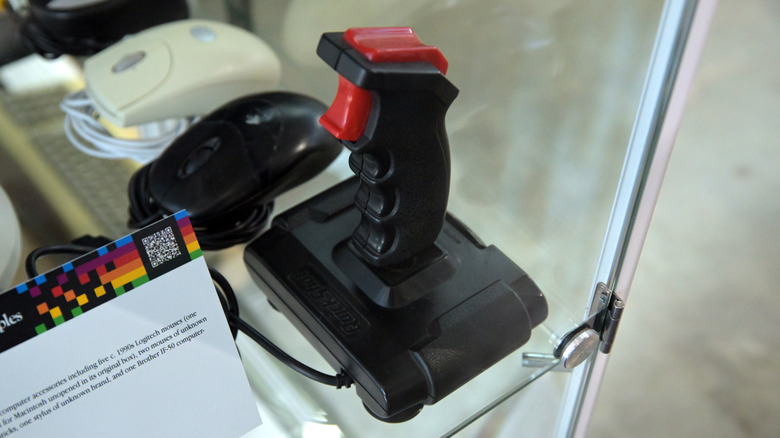
Analog controllers have become so ubiquitous in modern gaming that most companies have stopped experimenting with unique control schemes. Gone are the days when iconic gamepads like the three-pronged N64 controller and less iconic gamepads like one shaped in the form of the Wu-Tang Clan logo became some of the most bizarre PlayStation gadgets ever made. However, if there's one massive casualty that stemmed from the rise of the standard analog controller, it was the downfall of joysticks.
The iconic Atari 2600 joystick, which became a staple of home console gaming before Nintendo entered the fray, is what arguably popularized this control scheme. Not long after, flight simulation titles and space flight games became popular, and a variety of unique joysticks entered the market to simulate the act of using proper flight control, with notable mentions being the Cheetah, Competition Pro, and Quickshot lineup of joysticks. Don't assume that this was limited to PC games, since Sony also tried — and failed — with its bulky PlayStation Analog Joystick.
PS2 Memory Card
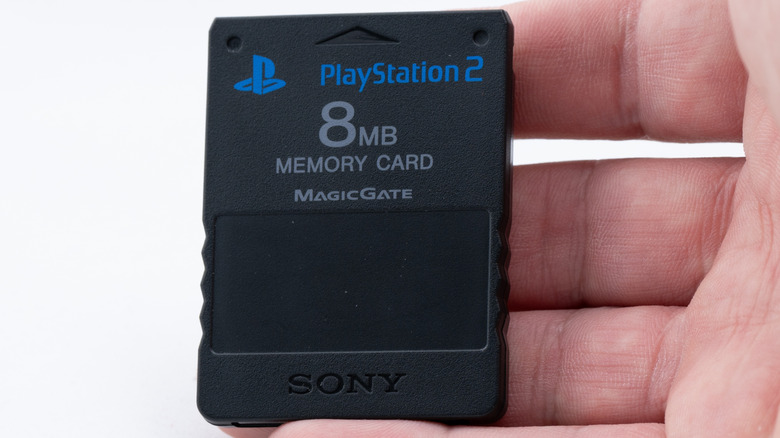
Modern gamers have no idea what it's like to play video games without being able to save their progress. One reason second-gen consoles — like PlayStation, Xbox, Nintendo 64, and the GameCube — were so popular is that they all used memory cards. However, with the PlayStation 2 selling more than 160 million copies to become the best-selling home console of all time, it's easily the most popular platform to use memory cards. Playing any PS2 game without this critical accessory was a recipe for disaster, since you'd be unable to save your progress without the extremely useful 8MB of storage it provided.
If you didn't want to get another memory card to support more saves, then Katana's licensed third-party memory cards provided more space to store your precious in-game data. These came in both 16MB and 32MB variants, making them a must-have for PS2 fanatics who played every game under the sun that launched for this device and didn't want to delete their saves to make room.
Cartridge Dust Cover
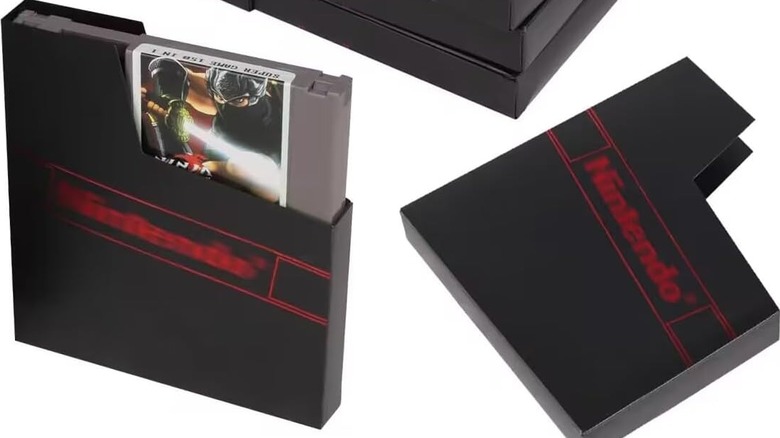
The golden age of gaming with cartridges came with its fair share of widespread myths. The most popular one of the lot was how cartridges were susceptible to accumulating dust, which prevented all the pins from making a proper connection with the console. As a result, the act of blowing into cartridges to remove said dust became popular in gaming households. It wasn't until much later that people figured out that this did close to nothing to remove dust from problem points. In fact, this was even more harmful for your game, since flecks of spit that landed on your cartridge's pins would eventually corrode this critical part.
Instead of this problematic approach, a far simpler and elegant solution was to use a dust cover to protect your cartridges. Serious gamers who wanted to protect their hardware from damage found these covers to be pretty useful. Eventually, with discs and special cartridges coming with covers of their own, these once-essential dust covers became yet another video gaming relic.
Wii Wheel
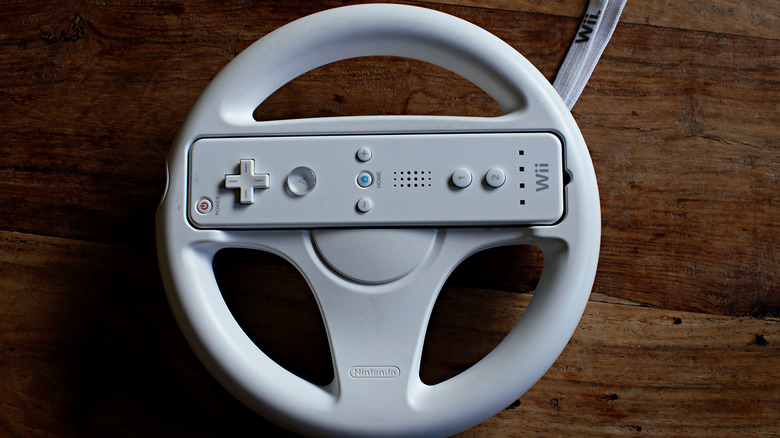
"Mario Kart Wii" is one of the most successful video games of all time, shipping a little over 37 million copies. This made it the best-selling "Mario" game for the Wii and only second to "Wii Sports" as the highest-selling Wii game of all time. It's also second in terms of being the best-selling racing game ever made, which makes for some impressive stats and makes it clear that almost everyone who owned a Wii had this popular kart racer in their library. What made this version of "Mario Kart" so special was that it came bundled with a Wii Wheel, with the entire package costing an affordable $49.99. This definitely played a part in bumping the game's sales, since people got an accessory for this amazing deal.
The Wii Wheel was inherently pretty simple, taking on the form of a steering wheel with space in the middle to slot in the Wii Remote. This gave "Mario Kart" more of an immersive feel as players used tilt-steering while turning this remote. There's also a trigger at the back of the Wii Wheel to let people use the B button easily. Eventually, more games added support for the Wii Wheel, including almost every "Need for Speed" game released for the Wii, "Excitebots: Trick Racing," and "Sonic & SEGA All-Stars Racing."