

Even This Cheap TV Brand's Best Models Can't Impress Consumer Reports
We may receive a commission on purchases made from links.
Marketing from TV brands like Samsung and LG may lead one to believe you have to drop thousands on mini-LED and OLED technology to get a good picture, but there are just as many cheap TV brands out there that punch well above their weight class. Unfortunately, one of these companies doesn't shine as brightly as it once did, at least according to Consumer Reports. Five or six years ago, one of the most recognizable names in the budget TV space was Vizio. But back in 2024, Walmart purchased the LCD and OLED manufacturer, making it difficult to find Vizio TVs anywhere other than the ubiquitous big-box retailer. But more importantly, it seems like Vizio lost what made it lauded in the first place: great picture quality at a budget-friendly price.
Consumer Reports put 14 Vizio TVs through rigorous lab testing, and not one model fared better than "below average" for its overall score. We stepped away from the pros to try and gain some user feedback, and the official Vizio subreddit was pretty revealing. It seems that modern Vizio TVs aren't all that reliable, with numerous users reporting slow interfaces, app crashes, and other annoying glitches. Even Rtings, a trusted consumer tech review site, went on record to say most Vizio TVs are riddled with bugs, and that the smart TV's operating system "leaves much to be desired."
Vizio's production has been declining since the start of the decade
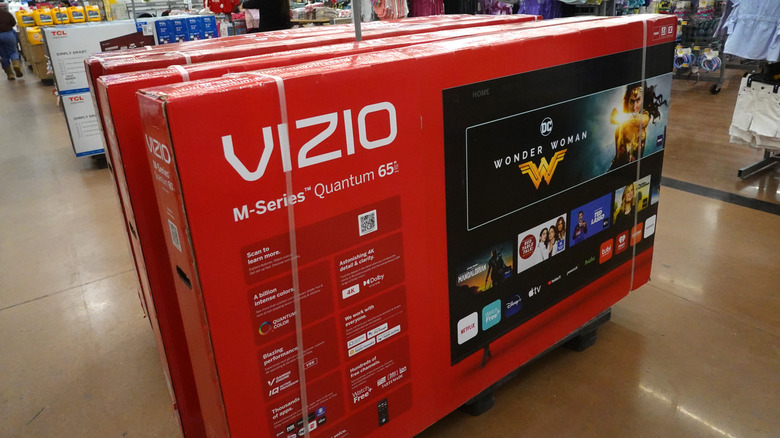
In the brand's heyday, Vizio's offerings were on par with the output of modern TV makers like Hisense and TCL. But another potential reason for Vizio's fading image is that, since 2020, development and production have slowed to a crawl. The company only released a handful of mid-tier TVs in 2022, and just two new QLED models in 2023. The Mini LED Quantum Series was released in early 2026, and it's one of the cheapest mini-LED sets on the market — but at this point, Vizio's efforts may be falling into "too little, too late" territory.
It's difficult to stay competitive when Hisense and TCL are running circles around your products — never mind some of the budget-friendly mini-LED and OLED sets you'll be able to find from Samsung, LG, and a couple of other big-name manufacturers. These other brands have also taught us that more advanced features — including mini-LED backlighting and those ever-useful HDMI 2.1 ports — aren't big asks anymore.
Entry-level TVs like the 65-inch Hisense U6 ($580) may cost a bit more up front than something like the $500 Vizio Quantum Series, but the former has HDMI 2.1 support, a native 144 Hz refresh rate, and uses the Fire TV operating system for streaming apps and other web-connected capabilities. So, while you might pay more for that 65-inch Hisense, objectively, it's designed to give you a better overall TV experience — especially when it comes to motion clarity and features that make for a great gaming experience on your TV.