

What Happened To MHL? Why The HDMI Standard Disappeared
We may receive a commission on purchases made from links.
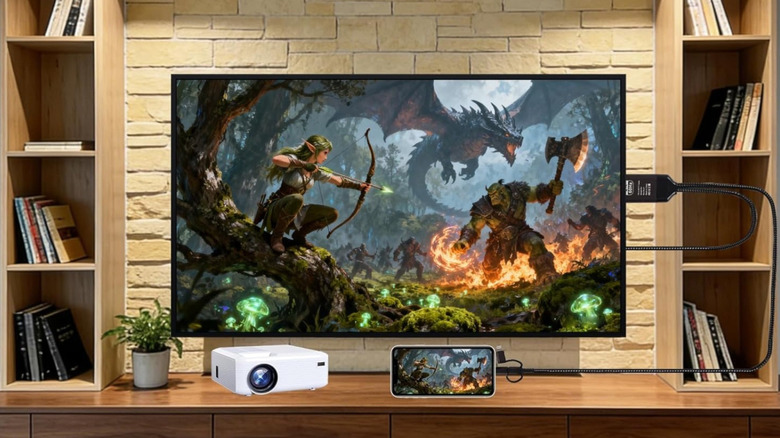
Consumer tech is always evolving, so it's not unusual for outdated inputs and outputs to go the way of the pet rock. In modern smart TVs and mobile devices, one connection that's all but forgotten is Mobile High-Definition Link (MHL). This was an HDMI technology that allowed consumers to plug a phone or tablet into an MHL-compatible port on TVs, monitors, and projectors. MHL transmitted video and audio data to a display, making it one of the pioneers of screen mirroring.
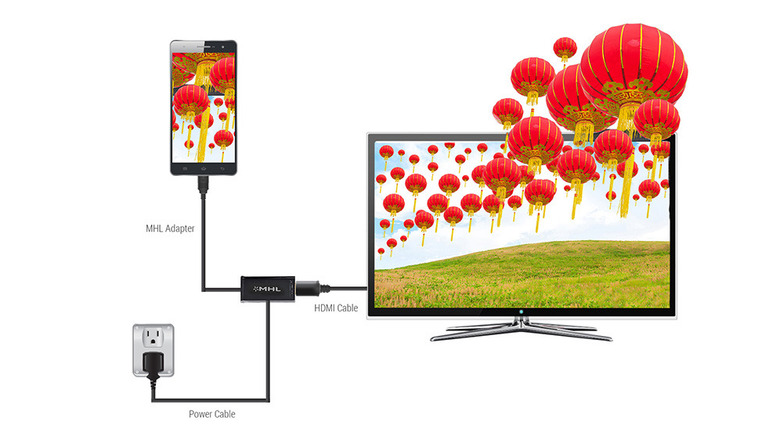
Using MHL often required an MHL adapter. How it worked was you would run a USB cable into one end of the adapter (which sometimes required AC power) and an HDMI cable from the adapter to an MHL-certified input on your TV. The MHL 3.0 standard (released in 2013) added 4K support, device charging, and a few other features to MHL's list of capabilities, but nothing could trump "wire-free."
Apple AirPlay, Google Chromecast, and Miracast introduced wireless screen mirroring and content casting, a convenience that MHL simply couldn't compete with, not to mention the fact that no additional hardware was needed to complete the handshake between Device A and Device B. The 2010s also introduced streaming devices and smart TVs, meaning many of the apps and services you may have relied on on your phone (e.g., Netflix, YouTube) were now built into your TV or streaming device.
The rise and fall of 2010s connectivity, or how wireless and USB-C killed MHL
Once wireless mirroring and content casting hit the mainstream, the MHL standard did its best to persevere. In early 2015, consumers were treated to superMHL, an upgrade that boosted resolution and frame rate performance (delivering up to 8K/120Hz), increased charging power, and added USB-C compatibility — which the MHL Consortium would label as "MHL Alt Mode." But there wasn't enough support for the new standard, and it wouldn't be long before brands like Samsung — once deeply involved in MHL's development — would end support altogether.
Heading into the 2020s, MHL was still struggling to maintain a foothold. This was also around the time that smartphone manufacturers, including Apple, were switching over to USB-C, which paved the way for DisplayPort Alt Mode — a wired connection that delivered video, audio, and power when your device was connected to a display via USB-C. Smart TV software had also rapidly evolved to the point where casting apps from your phone were no longer necessary.
Nowadays, MHL in all its forms is a relic of the past, and your only solid chance of seeing an MHL port is on legacy TVs and other display tech. Wireless device mirroring and USB-C connectivity rule the roost, and HDMI technology has made major strides, too, especially in gaming optimizations (e.g., Variable Refresh Rate, Auto Low Latency Mode). The reality is that the world doesn't need MHL much anymore, but the adapter ingenuity was fun while it lasted.