

8 Of The Best AirPlay Speakers You Can Buy
We may receive a commission on purchases made from links.
There is no shortage of excellent wireless speakers on the market, but not all of them support Apple AirPlay. For example, the Marshall Middleton 2 is an impressive portable speaker, but it completely lacks Wi-Fi connectivity, making it incompatible with Apple AirPlay. But why does that matter? Well, an AirPlay connection relies on your home network, and the wireless protocol allows for higher bandwidth streaming compared to Bluetooth. AirPlay provides better overall audio quality, the ability to stream to multiple speakers with multi-room audio (AirPlay 2), and support for Siri voice control.
For anyone deep in the Apple ecosystem, these features make AirPlay a seamless and reliable way to stream audio. Fortunately, brands like Sonos, JBL, Naim, and Harmon Kardon make plenty of great AirPlay speakers for you to choose from. To help you find the right fit, we've rounded up speakers that prioritize high-fidelity audio performance and smart features like automatic room calibration for a hassle-free experience. From portable outdoor speakers to complex all-in-one systems for the living room, these are the best AirPlay speakers you can buy.
Apple HomePod (2nd Generation)
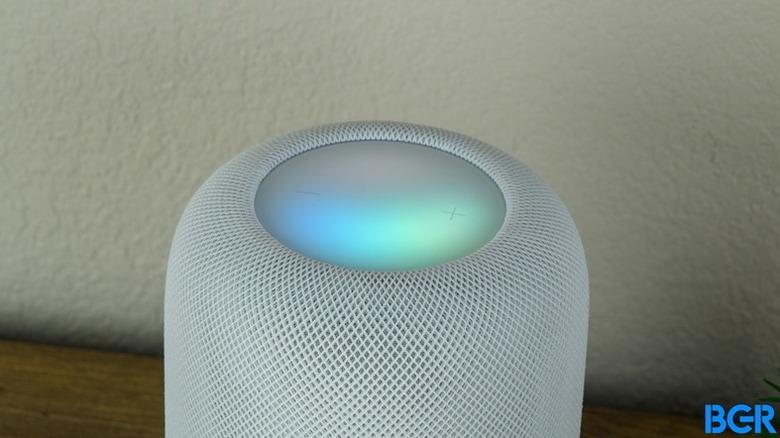
The 2nd-generation Apple HomePod has been around since 2023, yet it remains an excellent option in 2026. This rounded, cylindrical speaker has a mesh coating on the exterior, and its sleek appearance with both black and white color options allows it to fit into any living space. The HomePod supports Spatial Audio, Dolby Atmos, and lossless audio, provided you have an Apple Music subscription. Apple's room-sensing feature also works surprisingly well, with the HomePod automatically tuning the sound to the room it's in.
But it's not just about the features, as the HomePod is also sonically impressive. Overall clarity is great, there's a lot of detail in the output, and a welcome amount of spaciousness. With built-in temperature and humidity sensors, you can use the HomePod to trigger HomeKit automations — like closing the blinds if the room is hot. It also listens for smoke alarms, notifying you on your iPhone in case there's something to worry about. You also get support for Matter, a smart home connectivity standard, allowing the HomePod to talk to and control other smart home devices.
At $300, the HomePod is a worthy investment for those deep into the Apple ecosystem. If you use Apple Music and HomeKit and own an iPhone, the overall integration is excellent, and you're also getting great sound quality. You also get great support, as Apple continues to add features to the HomePod.
Cambridge Audio Evo One
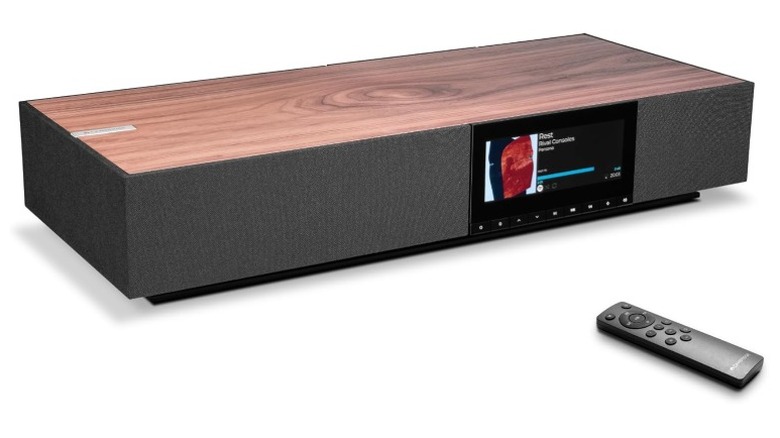
The Cambridge Audio Evo One is not your run-of-the-mill AirPlay speaker. While it fully supports wireless audio through AirPlay 2, Spotify Connect, Chromecast, and Bluetooth, it's actually an all-in-one audio solution with a massive range of physical connectivity options. The Evo One also has an HDMI eARC port to connect to your TV, a phono input for connecting to a turntable, and an Ethernet port for a reliable network connection.
An all-in-one system such as this provides a high-fidelity listening experience without the clutter of separate receivers, amplifiers, and tangled speaker wires. The Evo One is equipped with a 14-speaker system capable of 700W of amplification, meaning there's more than enough volume to fill even the largest rooms. What Hi-Fi praised the spacious soundstage and its ability to handle drastic dynamic details. You can also adjust the seven-band EQ for the Evo One by using Cambridge Audio's StreamMagic app.
It's undoubtedly expensive at $1,800, but the performance and connectivity options here are undeniable. The Evo One also features a 17cm color display that beautifully displays album artwork. As an AirPlay speaker, it's a great investment for the living room, as you can seamlessly switch to it as an audio source from your iPhone whenever you want a more impressive listening experience.
Apple HomePod Mini
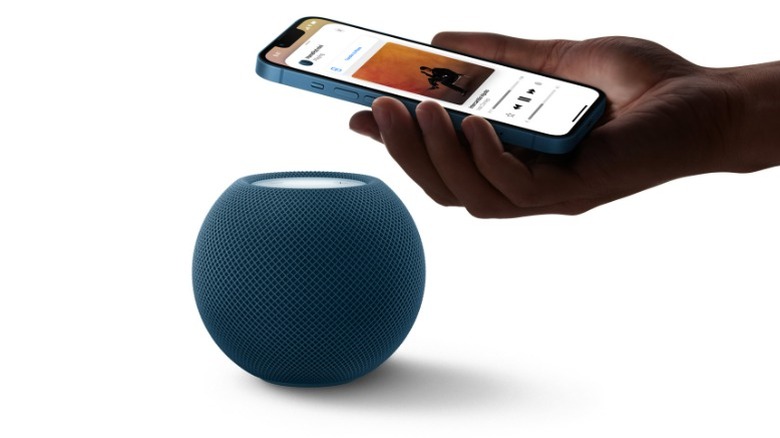
The HomePod Mini is a more compact version of the standard HomePod, and despite the size, it still packs a punch. While it lacks the automatic room-sensing feature of its larger sibling, it still has the built-in Siri integration. It also works with HomeKit automations and features support for the Matter smart home standard, letting you easily control third-party smart home devices.
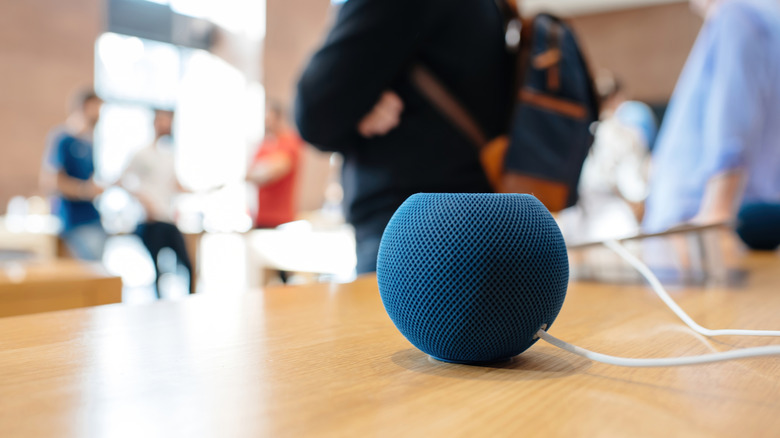
The HomePod Mini is shaped like a small plant pot, and it comes in more color options (Blue, Midnight, White, Yellow, Orange) than the standard HomePod. Its smaller size obviously results in less bass and a narrower soundstage, but the HomePod Mini sounds great for its price and size. What Hi-Fi's review points out how it gets more than loud enough for the average living room, while also delivering a decent amount of bass and clarity. The HomePod Mini also supports Dolby Atmos and Spatial Audio through Apple Music.
The more dedicated listeners will appreciate the better sound quality of the standard HomePod, but those on a budget will still be happy with the Mini. For $100, you get respectable sound quality, but also the usual Apple ecosystem perks, such as handing off music by bringing your iPhone close to the speaker and seamless Apple Home integration.
Sonos Ultimate Immersive Set with Arc Ultra
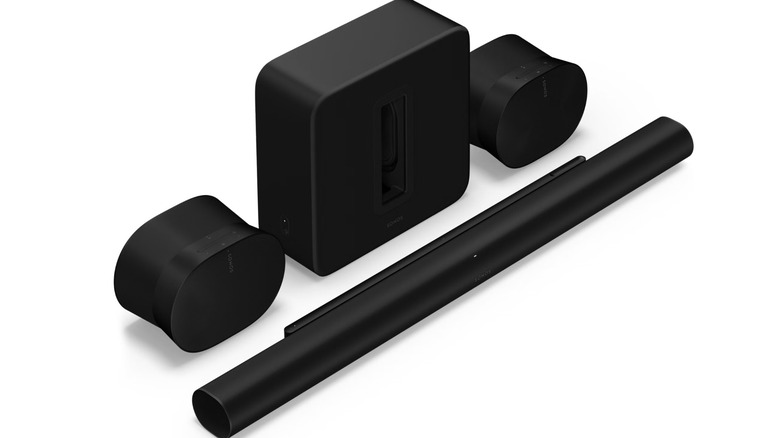
This bundle of Sonos products includes the Sonos Arc Ultra soundbar, the Sonos Sub 4 wireless subwoofer, and a pair of Sonos Era 300 wireless speakers. The Arc Ultra soundbar acts as your main center channel, and it supports Dolby Atmos to create directional height and surround effects. For the full home theater setup, place the Era 300 speakers and the Sub 4 around your room, and pair them wirelessly to the soundbar through the Sonos app.
On its own, the Arc Ultra already creates an immersive soundstage, but the addition of the subwoofer adds that deep, punchy bass that makes movies more satisfying. You'll want the Era 300 speakers to act as rear satellites, which also support Dolby Atmos. The complete setup provides a highly immersive experience, one that's hard for standalone soundbars to compete with. With AirPlay 2 support, you can quickly jump into a high-fidelity listening or movie-watching session without worrying about cables (ignoring the power cables).
With that said, the Sonos Ultimate Immersive Set is quite expensive, costing nearly $3,000. However, you don't have to buy it all at once. You can just get started with the Arc Ultra, and if you need more channels or a subwoofer, buy the Sub 4 and Era 300 down the line and easily pair them with the Sonos app.
Sonos Move 2
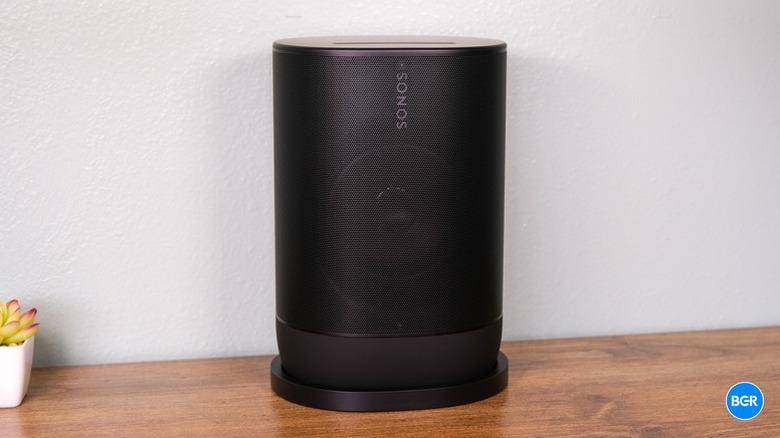
The Sonos Move 2 is a versatile AirPlay speaker, offering a high-fidelity audio experience that you can move from your living room to the porch or backyard. It features dual tweeters and three amplifiers, making it a stereo experience with separate channels, unlike the mono experience you got with the original. The Move 2 comes with a wireless charging base, and it takes around three hours to fully charge.
Battery life is rated at an impressive 24 hours, but while the Move 2 is technically portable, it weighs around 3 kg. This makes it hard to move around, so it's a better fit for the home and planned trips rather than taking it with you on a whim. When outside, the Bluetooth works reliably, but AirPlay 2 provides higher bandwidth when a Wi-Fi connection is available. The speaker also features Trueplay, a room correction feature that uses mics to adjust the sound to its surroundings.
Overall sound quality is quite good, with plenty of depth and clarity. Bass is tight and controlled, and it tends to get loud. It also features an IP56 rating, meaning it offers protection against dust and light rain or splashes. The Sonos Move 2 also supports Alexa, Siri, and the brand's own Sonos VoiceControl assistants.
Bowers & Wilkins Zeppelin Pro Edition
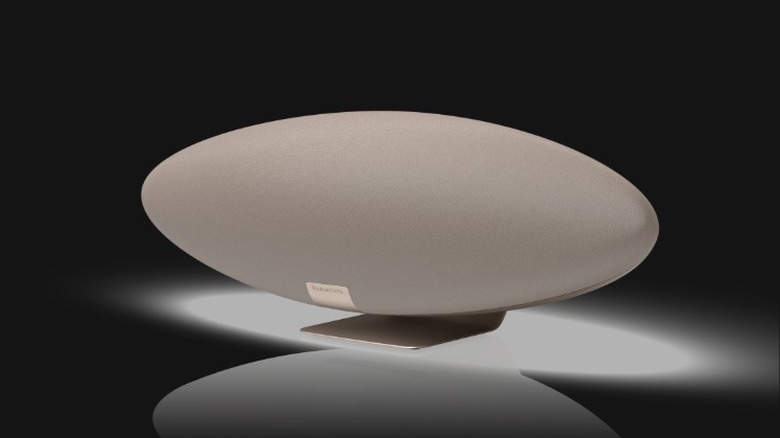
The Bowers & Wilkins Zeppelin Pro is as much of a showpiece as it is an excellent-sounding speaker. As the name suggests, the speaker's shape mimics a zeppelin airship, and it's available in two colors: Space Grey and Solar Gold. Apart from AirPlay 2, it also supports Spotify Connect, Bluetooth 5.0, and Tidal Connect (through the Bowers & Wilkins Music app). There are no physical inputs of any kind here, so the Zeppelin Pro focuses more on the ability to stream music rather than using your own files.
This wireless setup provides 240W of amplification through five drivers. For a single-unit speaker, it creates a surprisingly wide soundstage that allows tiny details in a track to shine. Loudness is not an issue either, as the Zeppelin Pro confidently manages to fill a room with sound. However, there's unfortunately no support for Dolby Atmos music.
If you're fine with the lack of surround support and physical inputs, you'll find a powerful 240W speaker that looks great without having ugly cables in view. If you have Android users in the house, they can use Spotify or Tidal Connect to stream Wi-Fi to the speaker without AirPlay 2.
JBL Charge 5 Wi-Fi
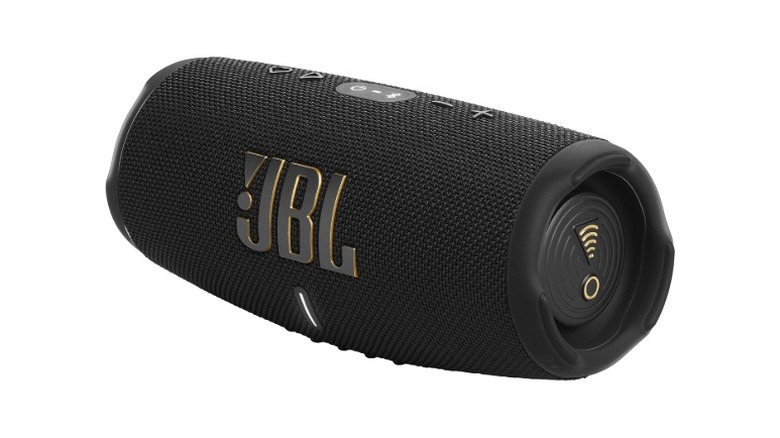
The JBL Charge 5 has been succeeded by the Charge 6, but the newer version still lacks Wi-Fi and AirPlay. Until we have that option for the Charge 6, the Charge 5 Wi-Fi is the better portable option for AirPlay support. It features the iconic, rugged JBL design and an IP67 water-resistance rating, making it perfectly suited for outdoor use. When outdoors and without Wi-Fi, Bluetooth 5.3 provides a reliable connection. But when Wi-Fi is available, you can use AirPlay for higher bandwidth streaming.
Apart from AirPlay 2, the JBL Charge 5 Wi-Fi also supports Chromecast and Spotify Connect. This allows non-iPhone users in your house to still enjoy the benefits of streaming audio over Wi-Fi. While it's a bit on the heavier side at over 2 pounds, it's still more portable than larger Bluetooth speakers like the Sonos Move 2. The Charge 5 Wi-Fi features a slightly larger woofer than the original, and despite being a single-unit speaker, it provides a decent enough soundstage and separation.
Battery life is around 20 hours, which is similar to the original Charge 5. It also takes a bit longer to fully charge (around 6 hours). The newer Charge 6 provides around 24 hours of battery life and faster charging, but you'll have to give up AirPlay if you go that route.
Sonos Era 100 SL
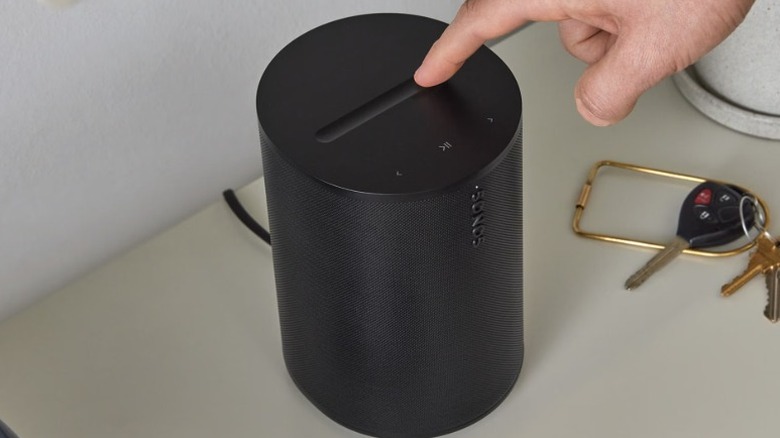
The Sonos Era 100 SL is an accessible entryway to the Sonos ecosystem. Compared to the standard Era 100, the SL version ditches the microphones, meaning it has no voice control. However, it still supports TruePlay — Sonos's room-correction feature — by using your iPhone microphone to map out the room. Unlike the more expensive Era 300, the Era 100 SL does not support Dolby Atmos. The omission of Atmos support and microphones translates to a lower price, but still great sound quality.
With the Era 100 SL, you get dual tweeters and a mid-woofer under the hood. It does a great job of filling the room, and while it's not a 360-degree speaker, it still sounds good even if you're not directly sitting in front of it. The bass is a bit overpowering at times, but it still does a good job of retaining detail across various tracks.
It's a good alternative to the Apple HomePod, though Apple's speaker comes with Dolby Atmos support and Siri integration. However, the Era 100 SL provides better bass and treble adjustment and easy integration with other Sonos speakers, such as the Arc Ultra soundbar.
Methodology
To round up the best AirPlay speakers you can buy today, the selection process prioritized models that balance high-fidelity audio with reliable wireless performance. We specifically looked for speakers that were capable of room-filling audio, while maintaining clarity and detail even at high volumes. Features like automatic room correction, multi-room synchronization, and integrated voice assistant support were an added benefit where possible.
For portable entries, like the Sonos Move 2 and JBL Charge 5, durability and IP ratings for dust and water resistance were essential. Battery life was also important for such speakers, and we aimed for 15 hours as the baseline. To confirm our judgments on sound quality, we drew from recent expert reviews and hands-on testing from the likes of Rtings, What Hi-Fi, Techradar, and Soundguys. The final selections represent a good mix of premium, mid-range, portable, and budget options so readers can find the right speaker for their needs.