

8 Of The Worst Places To Put Home Security Cameras
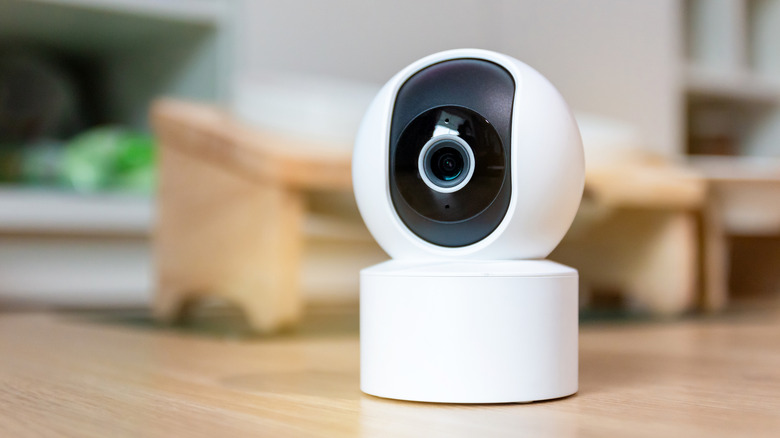
Installing security cameras are among the simple ways to help make your home more secure. Modern smart models have companion apps that will let you look through their lenses in real time, and they have different storage options for the videos that they record. However, even premium, feature-packed security cameras can only do their job if they're positioned well.
There are clever ways to hide indoor security cameras at home, and the best outdoor security cameras can monitor a wide area, but proper surveillance starts with understanding the limitations of these devices. If they're set up in the wrong place, they won't be able to protect your family, and worse, they can compromise their safety and privacy.
If you're thinking of setting up security cameras around the house, or if you want to check if you've made mistakes in your decisions on where to install them, you should consult this roundup of the worst places to put home security cameras. We've also provided alternatives to help you identify better areas for these devices.
Private areas like bedrooms and bathrooms
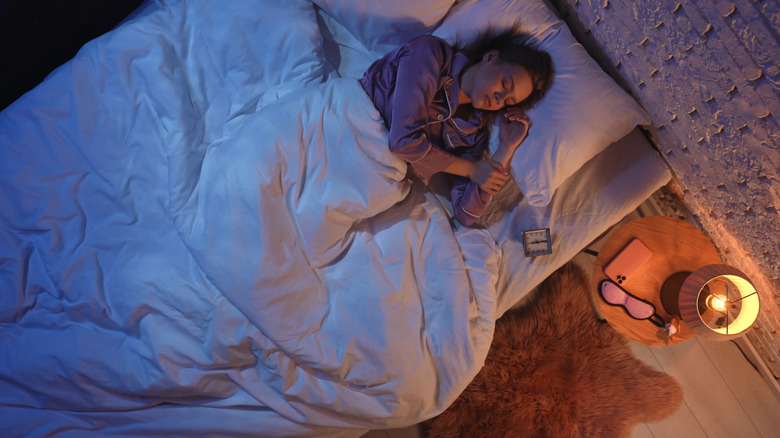
First and foremost, security cameras shouldn't be placed in areas where your family members expect privacy, such as in their bedrooms and the bathrooms. They're supposed to provide a sense of safety, not make them uncomfortable in their own home. Additionally, it would be very troublesome if hackers find a way to break into your cloud storage and access sensitive recordings from your bedroom, as they can use the videos for blackmail.
To keep an eye on your loved ones while they're at home, security cameras should be placed in shared spaces such as in the living room or the kitchen. If you really want to make sure that there are no thieves sneaking into the rooms of your house, you could instead install contact sensors that trigger an alarm whenever your doors or windows are opened, and arm them whenever you and your family are away.
Facing outside through windows
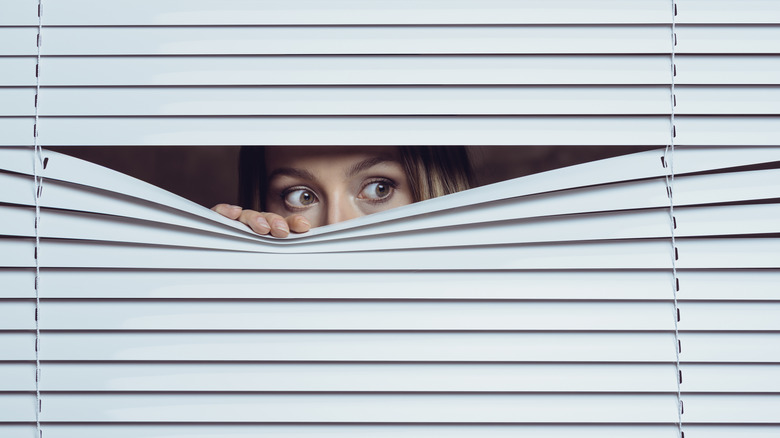
You may think you're being clever by placing an indoor security camera in a spot that will let you pan it to look outside through your window. It's not going to work as you intend though, as the glare from the glass won't give you a good look of your yard. An awkward position may also get you accused of looking into your neighbor's property, which could be seen as an invasion of privacy and lead to a lawsuit.
If you want solid surveillance of your backyard, you have to buy an outdoor security camera. These devices are designed to withstand the elements, and you can set them at an angle that won't make your neighbors uncomfortable. It's going to be an additional cost, but fortunately, security cameras are among the tech products you should never pay full price for. You can take advantage of discounts on bundles with multiple units of an outdoor security camera, or a package that also includes other smart home devices such as video doorbells.
At the end of narrow passages
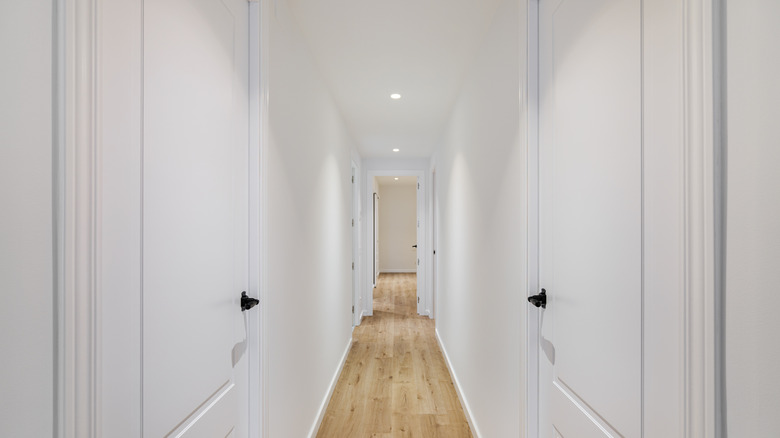
When you buy a security camera today, you can expect a wide field of view and the possibility of pan and tilt controls while you're checking the livestream through its companion app. However, these features are negated if you place it at the end of a narrow passage, as you'll mostly see walls even if you adjust the camera's angles.
If it's important for you to monitor passages and hallways, for purposes like checking where your pets are hanging out, you should consider placing a security camera at the corner instead. This will allow you to maximize the coverage of the device, especially if it has a panning and tilting option as you can swivel it from looking at one passage to another. In fact, if the security camera has a very wide field of view, you may be able to see both hallways at once.
Under bright lights
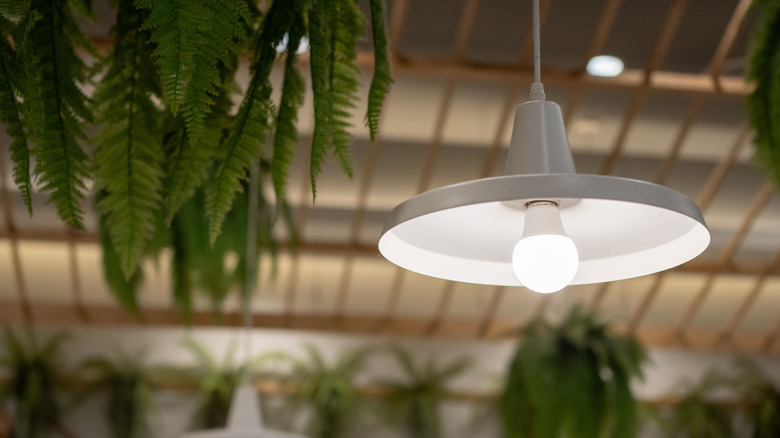
While security cameras will benefit from proper lighting, too much will result in glare that could block its sight or make it difficult to see details in the videos that they take. This could happen to indoor security cameras when they're placed right below lamps and other lighting fixtures, and to outdoor security cameras if the sky takes up too much of their field of view.
To avoid these issues, you have to be mindful of light sources and the sun when you're installing security cameras. For indoor security cameras, you should turn on the lights after you temporarily affix them to a spot to check if there are any visibility issues. Meanwhile, for outdoor security cameras, you have to place them at an angle that doesn't look towards the direction of the sun. While some of these devices may come with features that automatically adjust exposure and white balance to bypass this problem, it's not a good idea to rely on them as you never know when a crucial piece of footage can be lost because the sun is shining too bright.
Too low or too high
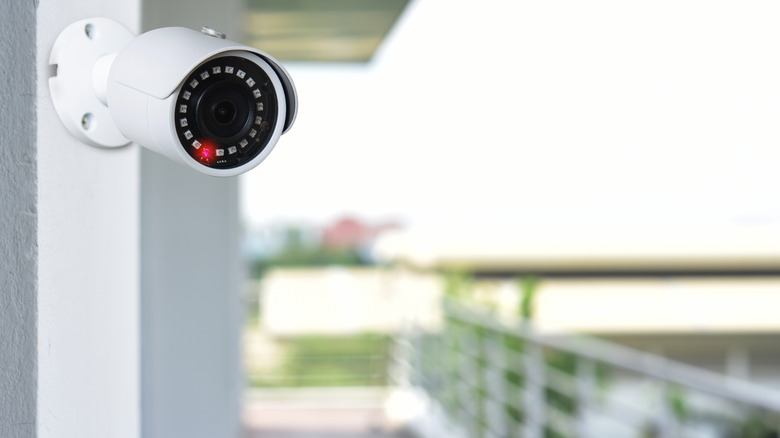
Particularly for outdoor security cameras, you shouldn't place them too high or too low. If they're too high, you may get a wider look at your driveway or your backyard, but this often negatively affects video quality. The camera may catch a suspicious person, but if it's too high up, it would be hard to discern their facial features. On the other hand, if the device is placed too low and easily spotted, it becomes open to sabotage.
A good position for an outdoor security camera is anywhere between 8 to 10 feet from the ground. At this height, it will be able to capture details such as faces and license plates, and it's just out of arm's reach to avoid vandalism. This is less of an issue with indoor security cameras, but installing them higher would give you more coverage with fewer cameras compared to more cameras at eye-level places.
Outdoors with too much exposure
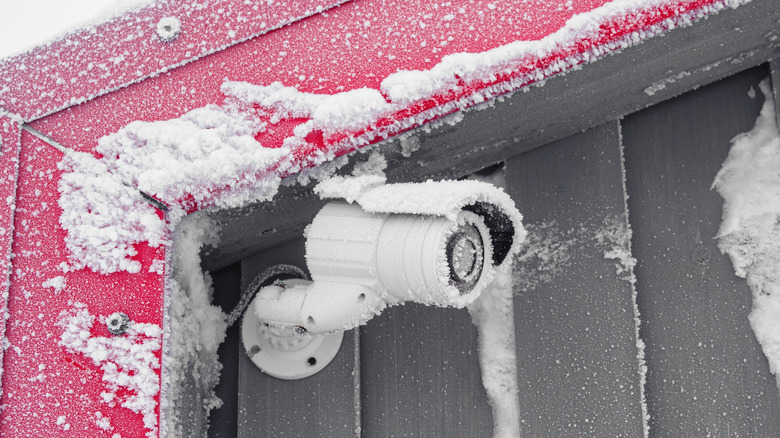
Outdoor security cameras are designed to endure harsh weather, and their IP ratings show how much punishment they can take. However, it's still not a good idea to place them where they would be entirely exposed, particularly to snow. This is because even if security cameras are weatherproof, they may still be affected by the buildup of moisture, which can result in lower image quality and reliability issues in the long run.
If possible, outdoor security cameras should be placed underneath the eaves of a roof, or anywhere with similar protection, to prevent them from being covered in snow during winter and submerged in torrential rain. If this isn't ideal as it wouldn't allow for the angle that you want for surveillance, and you really have to place it on a wall where it would be fully exposed, you should invest in a security camera with an IP67 or IP68 rating for the durability needed to survive harsh conditions.
Above the fireplace or near any heat source
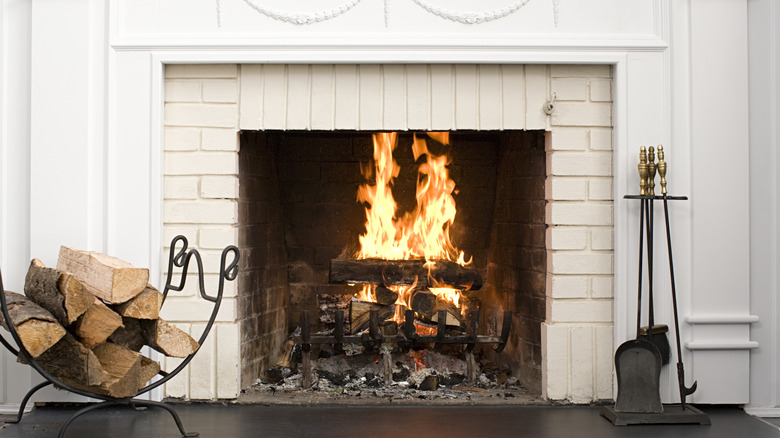
The fireplace is usually at the center of the living room, so you might think that placing a security camera above it would provide good coverage. While that's true, there are other issues with positioning the device there, or near any other heat source such as exhaust vents and space heaters. Dust and debris may collect on the security camera's lens and block its sight, and the prolonged exposure to heightened temperatures may damage the electronics or its battery.
For optimum coverage of your living room, you can consider placing it in an elevated position at a corner. You should also be mindful of windows in the same sense as avoiding heat sources, as the glass may have a magnifying glass effect on the security camera and raise it to dangerous temperatures during extremely sunny days.
Anywhere with a chance of obstruction
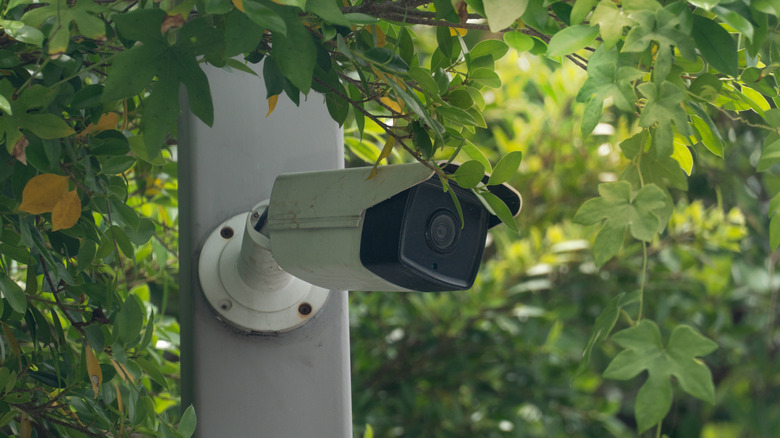
You may think that you found the perfect spot for your security camera, but you need to consider possible obstructions. There may not be anything along the device's line of sight upon installation, but for outdoor cameras, trees and their branches may eventually grow and cover them, and for indoor cameras, opening doors may conceal faces of potential intruders.
When you're installing a security camera, you should ask yourself if there's any chance that its view will be blocked. You need to carefully analyze where you plan to position the device before pushing through with it, or else you may find yourself having to move it to another spot, or regretting that an obstruction made what would otherwise be crucial footage useless. Select a place with no elements around it that move or grow so that it would be a permanent location for your security camera.