

Honor 600 Review: A Display That Might Burn Your Eyes Out
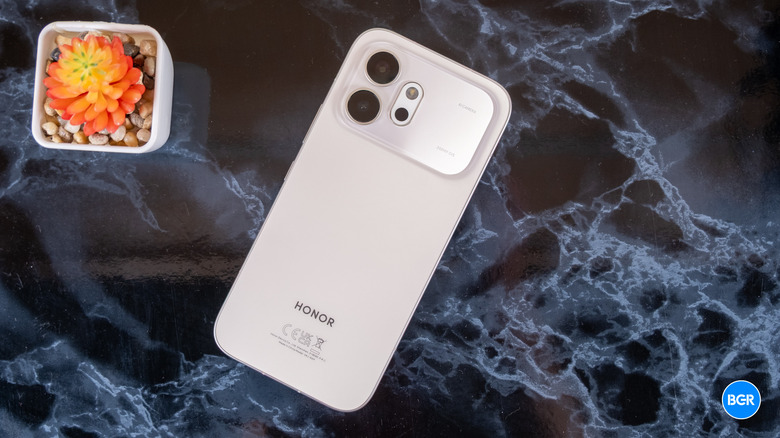
Honor's been on a tear in the mid-range space for a couple of years now, and the Honor 600 is one of its most ambitious attempts yet. The device is built as a mid-range device but expands higher into flagship territory for certain components and features that could make it one of the better buys in its price range. At around €550 (~$639), it's not necessarily cheap. It also seriously undercuts the price of flagship phones while matching or beating some of them.
Perhaps the most interesting features include the huge 7,000mAh battery, 200MP main camera, and display brightness that ranges up to a huge 8,000 nits, according to Honor. For context, even Honor's highest-end slab phone, the Honor Magic8 Pro, doesn't hit 8,000 nits — instead only offering up to 6,000 nits of peak brightness.
Simply having a bright display doesn't make a phone worth buying. How does the Honor 600 actually compare against other devices in this price bracket? I've been using it for a while now to find out.
Design
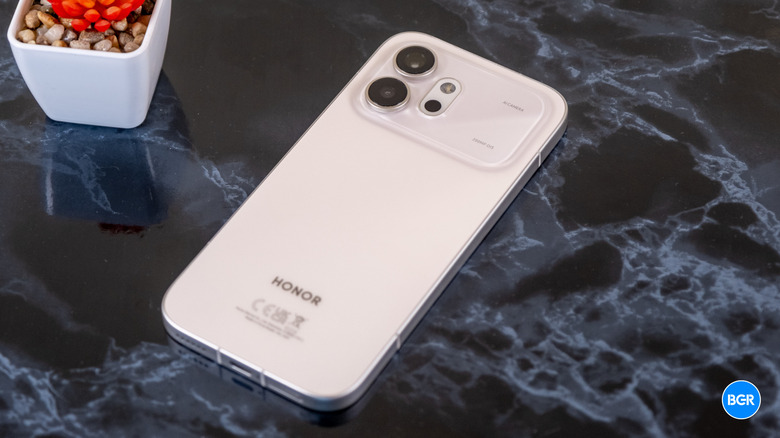
Phones are getting bigger and bigger, and ten years ago, the Honor 600 would have been considered pretty big. These days, it's closer to compact, and considering what's packed inside of it, its size is actually impressive. It measures 7.8mm in thickness, which is decently thin, but it still has a 7,000mAh battery. Of course, that's one of the advantages of newer silicon carbon battery tech, and I'm glad to see that tech expanding into mid-range phones already.
The build quality is quite good, too. The phone has an aluminum frame coupled with a matte glass back and rounded edges that make it decently comfortable to hold. If you've seen images of the phone online, you've likely seen the orange model, which, yes, looks suspiciously like the iPhone 17 Pro's flagship color. I don't have that orange model; instead, I have the golden white colorway, which looks quite nice. There's also a basic black color, which will appeal to those who want something a little more subtle.
Additionally, the phone is quite durable. It has an IP68/IP69K rating, which means that it's not only rated to survive submersion at up to 1.5 meters for up to 30 minutes, but it should also survive high-pressure water jets in certain situations. Of course, you won't want to test that, and like any phone, I recommend doing your best to keep it away from water where you can. If an accident does happen, it's much more likely to survive than many other phones that don't have such a high rating.
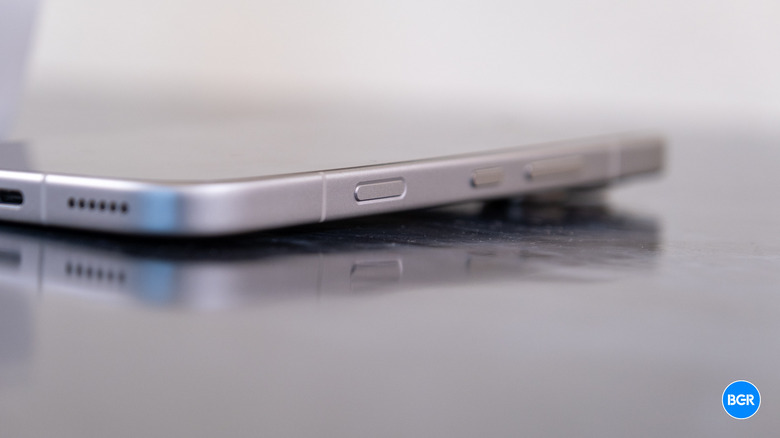
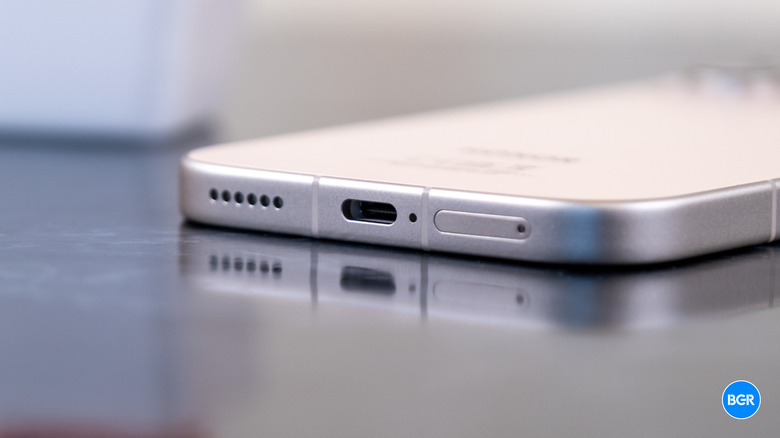
Most of the rest of the design is familiar, though there are some extra surprises. On the back, there's a large edge-to-edge camera module with a dual-camera setup, accompanied by a flash. On the right edge, there's a volume rocker and power button, along with an additional button that's used to trigger Honor AI. I do wish that button was on the left edge instead of the right edge and higher up on the device. Its current placement makes it difficult to mount the phone without accidentally pressing buttons.
Thankfully, the button is customizable, though most of the customization options are related to AI. You can set different functions for a short press, double press, or long press, with options including opening the camera, triggering AI settings, AI screen suggestions, AI memories, Google Lens, and so on. I wish it offered additional customizations like simply choosing an app to open or triggering other functions that aren't AI related. As it stands, most people probably won't use it much except to open the camera, which makes an additional hardware button feel like a bit of a waste.
Display
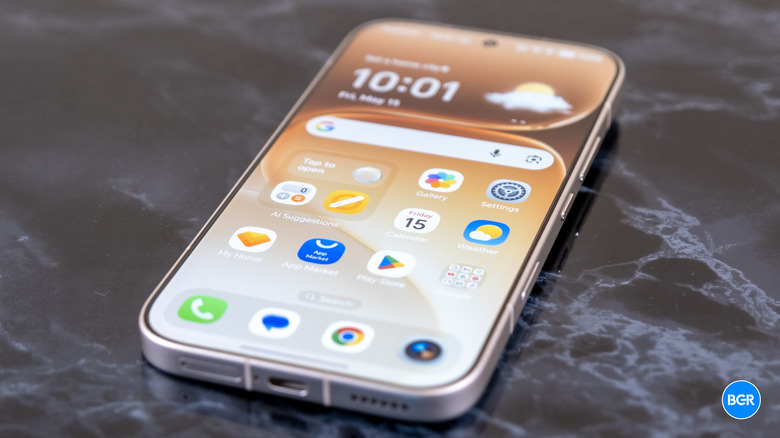
The display is one area where the Honor 600 punches way above its class, at least in some aspects. The device has a 6.57-inch LTPS AMOLED panel with a 2728 x 1264 (458 ppi) resolution and a 19.4:9 aspect ratio.
The refresh rate is 120Hz, but this is where Honor cut a corner. Instead of true adaptive LTPO, you get fixed stepping between 60Hz, 90Hz, and 120Hz. It's smooth in use, but it's not as power-efficient as a proper LTPO panel. That's not something that impacts how the screen looks, of course — just how much power it consumes.
Its standout spec, however, is how bright it gets. Honor says that it hits a peak brightness of 8,000 nits, which is enormous. I wasn't able to hit the full 8,000 nits — however, I did reach almost 7,000 nits in testing, which is still far brighter than the vast majority of phones, even flagship devices. It's worth noting that the brightness tanks at larger window sizes. That 7,000 nit measurement was with a 2% window, but by around a 40% window, you'll get closer to 2,000 nits, or one quarter of what Honor rates the display as offering at its peak. To be clear, this is normal screen behavior, at least to an extent. A phone's peak brightness is almost always measured at small window sizes and designed for HDR highlights in content rather than full-screen brightness tests. But it's still worth mentioning, given the fact that reducing brightness by 75% is pretty significant.
There are other helpful display features, too. For example, the phone has 3,840Hz PWM dimming, DC dimming, and a 1-nit ultra dark mode. Altogether, the phone offers one of the best-looking displays you can buy on any phone, let alone a phone in this price range. Perhaps the only knock against it is that it's not as color accurate as some other devices, likely a result of engineers not spending as much time tuning the screen for a mid-range phone as they might have for a higher-end device. Honor's other phones, like the Magic8 Pro, offer quite color-accurate displays.
Performance
There are some areas in which the Honor 600 is decidedly mid-range, and one of those is performance. Under the hood, the phone offers a Snapdragon 7 Gen 4 processor, coupled with either 8GB or 12GB of RAM and either 256GB or 512GB of storage.
In day-to-day use, the phone is smooth and responsive, opening and closing apps easily without stuttering or lagging. But it's not really a high-performance phone beyond that. Its benchmark scores are fine, but they certainly don't approach higher-end devices like the Magic8 Pro or iPhone 17 Pro, and while the phone is fast enough for most mobile games, don't expect the same framerates. Games will lag noticeably behind the Honor 600 Pro, which has a Qualcomm Snapdragon 8 Elite — though, to be clear, I haven't tested the Honor 600 Pro.
All of that is to be expected. This is not a flagship phone; it's a mid-range device, and the chipset is an area where you expect manufacturers to save some money.
Battery and charging
Apart from the display, the battery is another headline-making spec, especially for a phone in this price range. The global Honor 600 packs a 7,000mAh battery (Europe gets a slightly smaller 6,400mAh cell, which is still huge), and Honor rates it to retain over 80% capacity after five years of daily charging. In real-world use, the battery life is excellent, and I think most light to moderate users will be able to get two full days of use out of it.
That said, if you push the phone or keep the display brightness high, the battery life goes from being impressive to mostly normal. Part of that has to do with the fact that the chip powering the device isn't as efficient as some other chips. Another part of it has to do with that 8,000-nit display. Again, though, if you're not as aggressive with how you use your device, you'll get through long periods of time without having to charge.
Charging is 80W wired via Honor SuperCharge. I hit 28% in 10 minutes and 75% in 30 minutes, which is quite quick. There's also 27W reverse wired charging. Unfortunately, however, there's no wireless charging on this phone, which is a bit frustrating to see. I'm not all that surprised, given the fact that many Chinese phone manufacturers were slow to adopt wireless charging at all, let alone on mid-range and budget devices. I still would like to see wireless charging at all price points from all phone manufacturers.
Camera
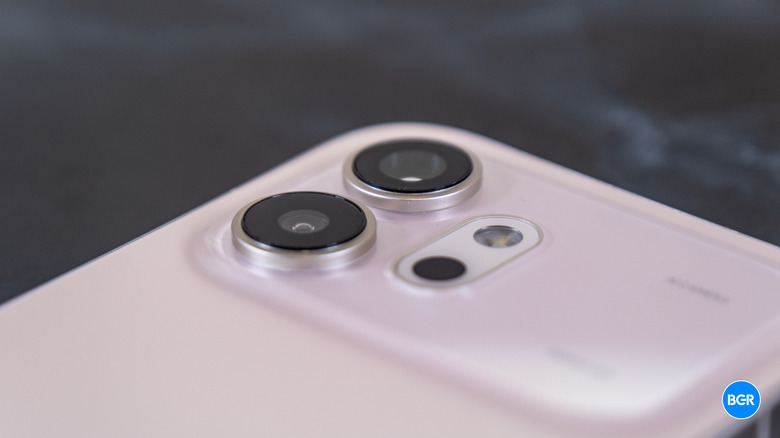
The Honor 600 has a dual-camera system, and there is no telephoto camera. Thankfully, the main camera and ultra-wide cameras that are there are pretty good. The main camera has a 200-megapixel resolution with a 1/1.4-inch sensor, and it has optical image stabilization. The ultrawide camera sits in at 12 megapixels with a 112-degree field-of-view, while the front-facing camera has a 50-megapixel resolution.
Again, what's missing is a telephoto camera, which would have been nice to see even at this price point. There are plenty of similarly priced devices and even cheaper ones with telephoto cameras these days, like the Nothing Phone (4a). I'm hoping more devices get triple camera systems at lower price points over the next year or two.
That said, even without a telephoto camera, the main camera has a high enough resolution to deliver good detail at moderate levels of zoom. You'll get detailed and sharp images at up to around 4x or 5x zoom, at least with decent lighting. In low light, expect image quality to drop significantly after 3x or 4x zoom.
For the most part, the main camera delivers decent color accuracy in bright light, with solid dynamic range for a device at its price point. That's true of the ultrawide too, which I actually found to be more color accurate than the main camera, though with much worse dynamic range.
Basically, don't expect the camera to be as impressive as more expensive flagship phones. To be clear, even Honor's flagship phones aren't quite at the same level in photography as some other brands out there. Where Honor excels is in areas like display and performance.
Of course, as you would expect these days, there are a number of AI-based camera features on the phone. They perform fine, but they're not all that impressive. Again, these aren't features that I really use much, so that didn't bother me.
Software
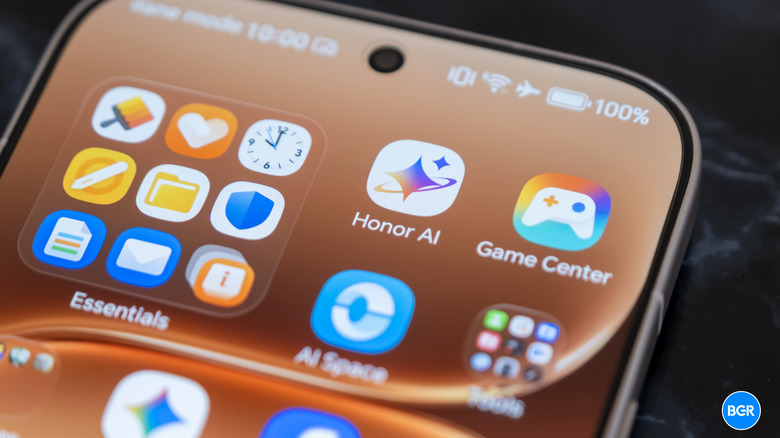
The Honor 600 ships with Android 16 and MagicOS 10 on top, with six years of OS and security updates committed from launch. That's an impressive support window for a mid-range device, though it still trails the seven years that Samsung and Google now offer on their flagships.
MagicOS 10 leans heavily into AI. Beyond AI Image to Video 2.0, you get Moving Photo Eraser for cleaning up unwanted elements, AI Magic Color for one-tap color grading, AI Photos Agent for voice-driven editing, and a handful of other creative tools. Again, how much you actually use these features will probably vary from person to person — but they're there if you want them.
One standout feature that Honor has been leaning into is interoperability with the Apple ecosystem. Honor has built in instant screen sharing and drag-and-drop file transfers between the Honor 600 and iPhones or Macs, which works genuinely well in practice.
Everything else about Honor's operating system is fine, but it's not necessarily my favorite. There are quite a few extra apps that you might not want on your device, like TikTok and something called ReelShort, along with a few games like "Block Blast." Honor's software has gotten cleaner over the years, which I do appreciate. Customization has improved as well, which is nice, but it's certainly not as clean as Google's Pixel UI.
Conclusions
The Honor 600 is a pretty impressive phone. In some ways, it's squarely mid-range, like in its processing power and cameras. In other ways, it matches or beats flagship devices, such as in its screen brightness. There's really nothing that I dislike about the Honor 600, except for the lack of wireless charging, which plenty of users have yet to adopt anyway.
This isn't a flagship killer in the literal sense — the Snapdragon 7 Gen 4 won't run intensive games at high frame rates, and the digital zoom can't compete with a real periscope lens. But for the things most people care about, like getting decent photos and not having to worry about battery life, the Honor 600 has a lot going for it.
The competition
The competition has heated up in the mid-range over the past few years. For starters, there's the Nothing (4a) and (4a) Pro, which offer some advantages and some disadvantages compared to the Honor 600. Both of these devices have dedicated telephoto cameras, and their camera performance in general is a step ahead of Honor. But their batteries aren't as big, so they simply won't last as long on a charge.
Other competitors include the Google Pixel 10a, which probably isn't as good as the Honor 600 in any meaningful way, except the camera, which I find to be a little better than the Honor 600's.
Should I buy the Honor 600?
Yes, if you're looking for a phone in this price range and prioritize great battery life and a bright screen.