

Direct Sunlight Might Pose Real Risks To Your TV
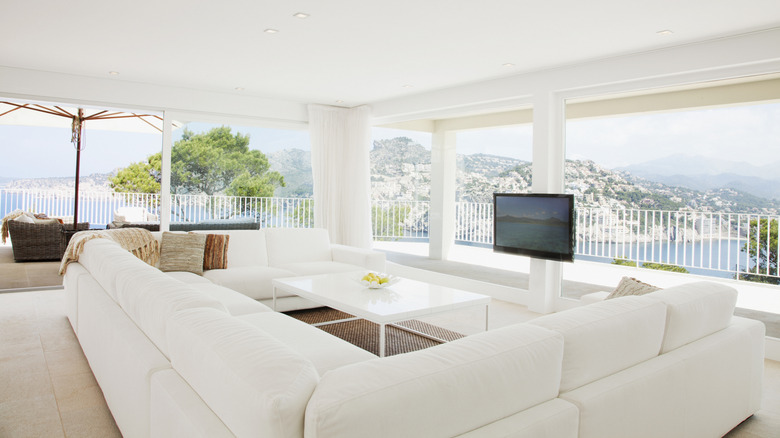
Go ahead and binge your favorite streaming show from your porch or backyard tiki bar, but doing so could pose risks to your television depending on several factors, such as what type of panel type you have, how long it's subjected to sunlight, and how much heat gets trapped around your screen. Direct sunlight probably won't damage your television right away, but choosing the wrong TV or having an incorrect setup could shorten the lifespan of your device.
OLED TVs aren't always worth the money for budget options, and that's especially the case with devices that are outside or could be subjected to direct sunlight. Researchers in South Korea subjected lab-built OLED test devices to 300 hours of UV radiation. They found the light damaged the cathode/electron-injection area, which helps produce a bright and stable image on your screen. The UV rays also caused a material migration in the cathode structure, shifting silver and magnesium atoms from their positions. Both issues can reduce your screen's brightness over time and shorten its lifespan.
If you're shopping for LCD TV, however, Samsung – the company behind some of the best bright-room TVs — says direct sunlight will not affect an LCD TV's durability but glare may be the biggest issue you'll face. That's because LCD TVs use liquid crystals to transmit or block light, forming an image on your screen. OLED TVs are different as they use organic material that emits light, which can degrade over time when exposed for long periods.
What happens when direct sunlight heats your TV
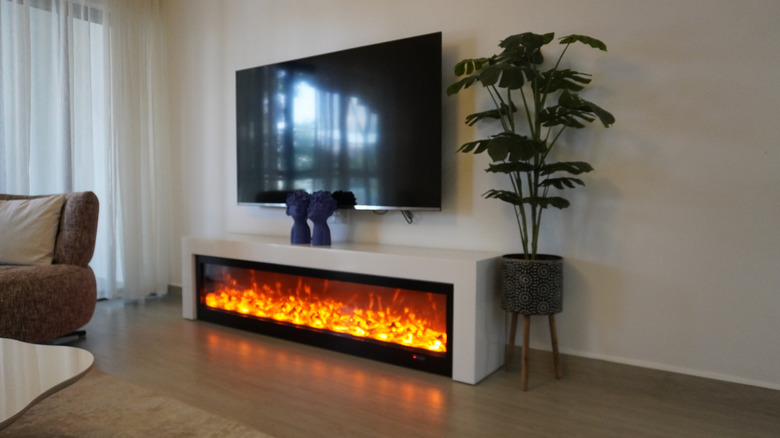
Light degradation isn't the only risk for your TV. The amount of heat that builds from the sun can also cause damage. It can warm the screen, enclosure, internal components, and even the stand it sits on. LG tells customers that higher ambient temperatures can affect an LCD, causing its liquid crystals to deteriorate or discolor over time. Sony says to leave enough room for ventilation around a TV and keep the ambient temperatures above 32 degrees Fahrenheit and below 104 degrees Fahrenheit. OLED TVs also suffer under heat. Researchers in China found high thermal stress severely reduced OLED luminance and increased voltage demands.
Heat from sunlight is a risk because your TV already generates heat through normal use. The team at Rtings.com offers some of the best insight on heat-related damage. They turned the brightness on 100 TVs to max, then kept them running for 126 hours per week, checking results every couple of months for two to three years. The biggest heat-related problems were in LCD TVs with thin, edge-lit screens. The internal heat warped the reflector sheets, cracked light guide plates, and burned-out LEDs. As for OLEDs, the Rtings team mostly found screen burn-in, a known OLED risk, and one reason why upgrading to an OLED TV may not be worth it. If you keep your TV out of direct sunlight for long stretches and give it decent ventilation, your TV has a better chance of lasting.