

How Many Of These 5 Extinct PC Brands Do You Actually Remember?
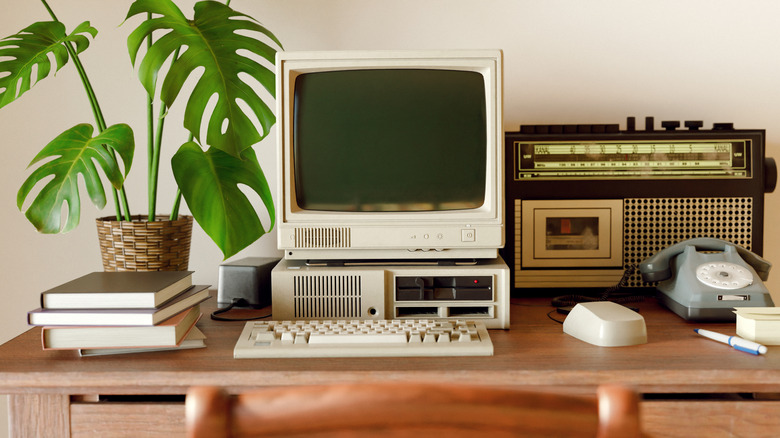
Today's PC landscape is dominated by a handful of power players, with a few other recognizable brands that contribute to an incredibly competitive market. Some of the names among today's best desktop PCs are Dell, HP, Lenovo, Microsoft, and Apple. Alternative but still widely-recognized brands include ASUS, Acer, and MSI. These companies make computers in numerous forms, with all-in-one desktop units and feature-packed mini PCs joining the ranks of traditional tower PCs as popular options over the years.
But these brands aren't the only contributors to the evolution of personal computing. Computers today are faster, sleeker, and more efficient than the PCs of yesteryear, but the market has been shaped by decades of competition, innovation, and in some cases, failure. A number of extinct PC brands, like Packard Bell and IBM, have seen success over the years, before fading away as personal computing needs have changed.
Some brands that drove the PC industry forward during its formative years are gone, but that doesn't mean they're entirely forgotten. The influence of giants like Compaq and Gateway can still be seen in certain ways, while the cultural impact of a brand like Commodore continues to conjure nostalgia. With time, tech companies have a tendency to be acquired, transformed, or to go out of business entirely. Let's take a look at some PC brands that helped shape the industry before disappearing from the market.
Compaq
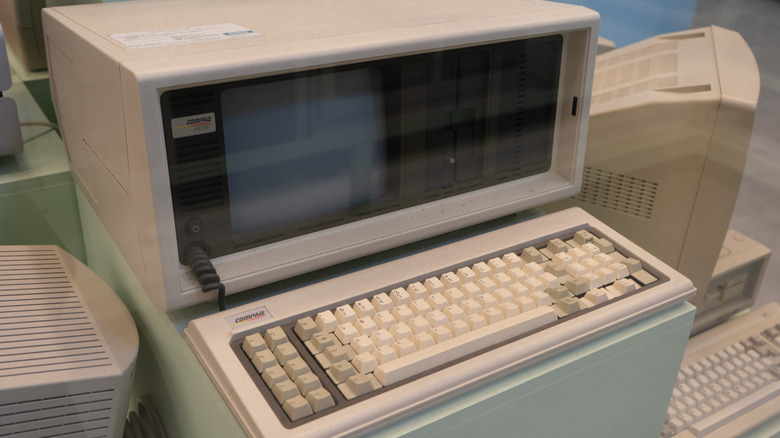
Compaq was founded in 1982 by three former Texas Instruments engineers. It had an immediate impact on the computer market, which was dominated by IBM at the time. Compaq's goal was to make a computer that worked like an IBM PC but cost significantly less. It's first product was the Compaq Portable, which sold for $2,995 when it launched in 1983. While Compaq would become known for desktop PCs, the Portable was an early predecessor to the laptop.
The company saw success through the 1980s, but it was the Presario line of PCs from the 1990s that defined Compaq's peak years. With numerous models priced under $1,500, the company sold more than 100,000 Presarios in the first 60 days after launch in 1993. This amounted to some $500 million in sales that year alone. In 1994, Compaq surpassed IBM as the world's top PC seller, and its revenue reached $20 billion in 1996.
With hopes of becoming a full-service technology company and competing at the enterprise level, Compaq used its skyrocketing revenues to acquire several companies. The change in focus opened the door for brands like Dell to make a move in the budget PC market. A direct-to-consumer sales model was emerging, allowing PC shoppers to bypass middlemen like Circuit City and undercutting Compaq's reliance on these retail outlets for sales. HP acquired Compaq for $25 billion in 2002 and retired the name in 2013 after more than a decade of using it as a budget brand label.
IBM
While PC brands like Compaq have gone extinct, some have managed to adapt along the way, like IBM, which has reinvented itself multiple times since forming in 1911. Today IBM operates as one of the world's leading enterprise technology companies. Its main focuses are cloud computing, AI, and business consulting. There was a day, however, when IBM was the biggest name in personal computing.
In fact, the idea of both businesses and consumers owning a PC was fueled in large part by IBM. It released the 5150 Personal Computer in 1981, and while other brands had developed personal computers prior to the 5150, the IBM name carried more weight. The company made the decision to build its PCs with off-the-shelf components, making it more affordable for consumers, but legally copyable by competitors. For a period during the early 1980s, IBM held about 80% of the entire PC market.
But IBM's design and manufacturing strategy was part of its downfall within the PC market. It's PC became a template the entire industry built around, and competitors began to undercut IBM on pricing. Over the course of the next decade, the company's PC market share fell from 80% to just 20%. With its margins too thin too justify staying in the market, IBM chose to stop making PCs. In 2005 it sold its entire PC division to Lenovo for $1.75 billion.
Commodore
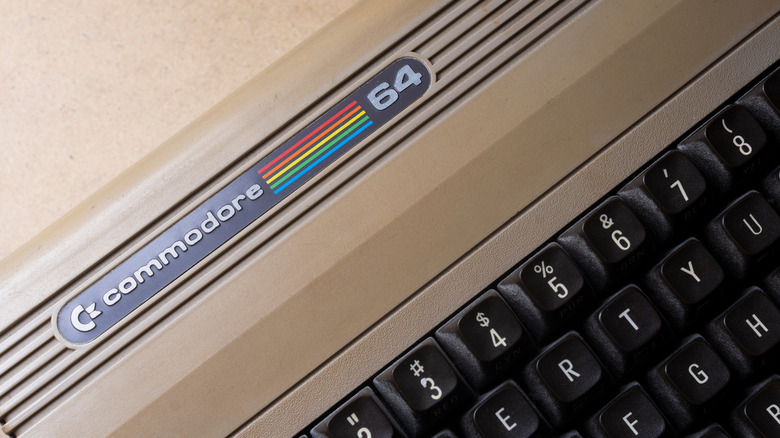
Commodore is a PC brand that comes with some nostalgia. Founded in the mid-1950s, the company's early endeavors consisted of manufacturing typewriters and adding machines. It would go on to make electronic calculators throughout the 1970s before jumping into the PC market with the Commodore PET in 1977. The company followed up with the VIC-20, a more affordable home computer that introduced millions of people to personal computing.
But the Commodore 64 (C64) took this brand to its peak, with between 12.5 and 17 million C64 machines sold. To this day it's the best-selling desktop computer according to the Guinness Book of World Records. The C64's original retail price of $595 undercut much of the competition, and was attractive to home users because it could connect to a television set and run games in addition to other software.
But Jack Tramiel, the founder of Commodore, proved to have a difficult leadership personality. He clashed with the company's board, and his aggressive style strained relationships with suppliers and resellers. Tramiel was forced out in 1984, though his experience proved irreplaceable at Commodore. The company cycled through leaders over the next decade, and in 1994 declared bankruptcy after posting a $366 million loss in 1993. The Commodore name changed hands several times after that, but it was finished as a computer company.
Packard Bell
The original Packard Bell was a radio and television company that faded into obscurity by the late 1960s. In 1985, the rights to the dormant brand name were purchased by an entrepreneur named Beny Alagem. He and his partners believed the name still carried weight among older American consumers, and even hoped their products might benefit from confusion with large, established companies like Hewlett-Packard and Bell Telephone.
Alagem and his partners launched Packard Bell Electronics in 1986, and the company's first computers started hitting retail shelves in 1987. Packard Bell went straight to mass-market retailers, selling its budget PCs through outlets like Sears and Walmart. Their target consumer was first-time PC buyers. By the mid-1990s Packard Bell held nearly 13% of the PC market in the United States and was briefly the top-selling PC brand in the country.
Some of today's most reliable budget PCs come from brands like Dell and Acer, but if it were still around, Packard Bell likely wouldn't be among them. Its reputation for PC quality was poor, and competitors quickly began to match its prices through direct-to-consumer sales models. The company got out of the American market entirely in the year 2000, and the Packard Bell brand name was acquired by Acer in 2008 for $46 million.
Gateway
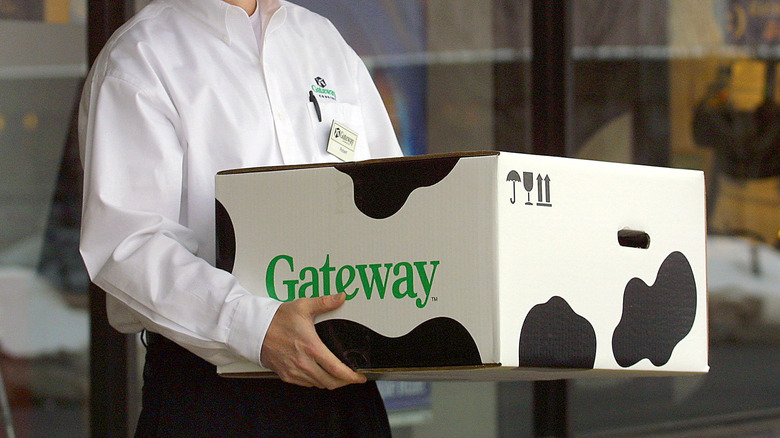
Gateway was a popular PC brand not only because of the computers it made, but because of the branding around it. Founded on a family cattle farm outside of Sioux City, Iowa in 1985, Gateway's beginnings would go on to inspire its packaging. Throughout the late 1980s and 1990s, Gateway computers were shipped in black-and-white cow-spotted boxes. Prior to jumping into the PC market, Gateway sold software and peripherals for computers made by Texas Instruments.
Where several PC brands of the era were put out of business by direct-to-consumer sales models, Gateway took this model a step further, selling its computers to consumers through the mail. This allowed the company to keep costs low and allowed buyers to customize their PC before purchasing. By 1997 Gateway had reached nearly $6.3 billion in revenue, and by 2004 it held a 25% share of the retail PC market, behind only HP and Dell.
Today the Gateway name survives under Acer's ownership, with Acer making the acquisition in 2007 for $710 million. This is a fraction of what Gateway was worth at its peak. Its decline started with the rise in the popularity of laptops. As the desktop PC market continued to decline, Gateway was never able to achieve any kind of turnaround and became another PC brand that has gone extinct.