

5 Android Phones Thinner Than The Galaxy S25 Edge
We may receive a commission on purchases made from links.
There are many ways to rank different smartphones against one another. While some buyers value top-end performance and how a phone handles heavy loads like graphic-intensive gaming, others might prefer a simpler phone with a bigger battery and a better camera. One distinguishing factor that is largely only seen at the most premium prices is thinness, a trend that's especially relevant nowadays.
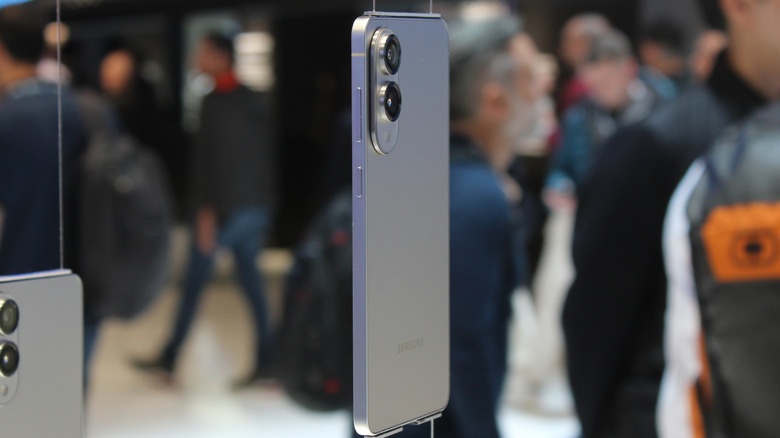
It's a technological marvel how thin some phones can get while still offering competitive specs. Take the Samsung Galaxy S25 Edge, a 5.8 mm phone that weighs just 163 grams but has the same chipset inside it as the much thicker S25 Ultra while featuring a main camera with the same 200 MP resolution as its thicker counterpart. The thinner form factor ultimately does cost it a telephoto camera and a decent chunk of battery life, but the S25 Edge is still a solid phone, all things considered — especially since it also gets the latest One UI 8.5 features.
The Galaxy S25 Edge might be thin, but it's not the thinnest phone around. The iPhone Air released in late 2025 is already thinner, and even an approximately $240 Infinix Hot 60 Pro+ is only slightly thicker, being 6 mm thick instead of 5.8. If you want to go even slimmer, there are still phones much thinner than the Samsung Galaxy S25 Edge, some of them even from Samsung itself.
1. Apple iPhone Air
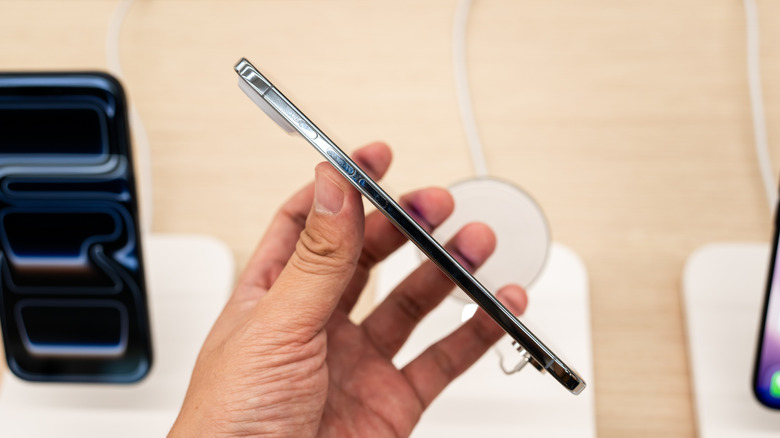
Released on September 19, 2025, the iPhone Air is the thinnest smartphone Apple has ever launched. It has a thickness of just 5.6 mm, making it 0.2 mm thinner than the Samsung Galaxy S25 Edge. Despite being thinner, however, the iPhone Air is very slightly heavier than the Galaxy S25 Edge, weighing 165 grams compared to the Edge's 163.
The iPhone Air is a good hundred bucks cheaper than the Galaxy S25 Edge ($999 compared to $1,099), and it shows with some of the decisions Apple has made. The iPhone Air does have a similar wide camera to the iPhone 17 Pro, but the telephoto and ultra-wide cameras are completely absent — whereas the S25 Edge has both a wide and ultra-wide camera while lacking only a telephoto lens compared to the S25 Ultra. The iPhone Air also only records 4K video at up to 60 fps without the ProRes encoding found in other iPhone models, whereas the S25 Edge can record 8K videos.
Apart from this higher video resolution, both phones' main cameras are competitive, and neither one has a clear edge over the other. This is true across many other areas as well, including how both phones perform. The S25 Edge has a much larger 3,900 mAh battery compared to the iPhone Air's 3,149 mAh, but many independent tests have shown that the phones last about the same time — with neither of them having an impressive battery life.
2. Samsung Galaxy Z Fold 7
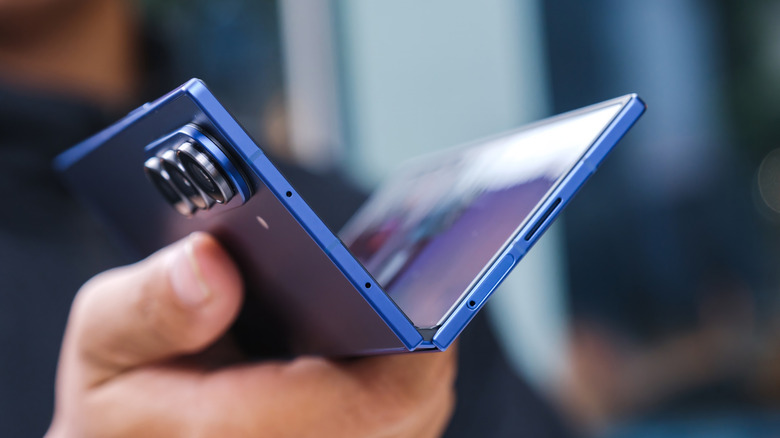
The Samsung S25 Edge is one of the thinnest phones around, but even Samsung has phones that are slimmer — provided you're willing to ignore the fact that the Galaxy Z Fold 7 is a foldable and only really thinner than other ultra-thin phones when opened. When folded, the Z Fold 7 is still a decently thin 8.9 mm and fits in your pocket almost exactly how an iPhone 17 Pro would, but it's nowhere near the S25 Edge in thinness. It's when you unfold the phone that the magic happens and you see the 4.2 mm chassis in all its paper-thin glory.
If a slab phone were to be this thin, it would simply be impossible to fit in everything that is required of a good phone — with our current technology, at least. However, since the phone has twice the width of a normal phone when unfolded, Samsung has twice the area for its components to work with. This is how the Galaxy Z Fold 7, despite being thinner than two USB-C ports, manages to accommodate the S25 Ultra's primary camera alongside the telephoto camera missing from the S25 Edge, plus a 4,400 mAh battery (500 mAh more than the S25 Edge) and storage options that go up to a terabyte.
3. Samsung Galaxy Z Trifold
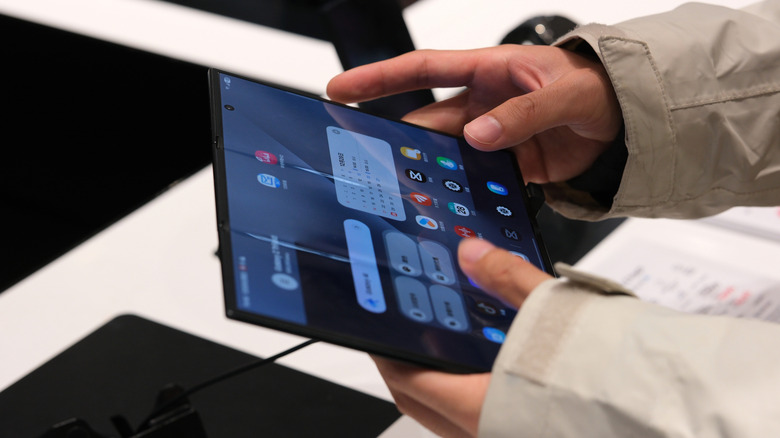
The Fold 7 isn't the only phone in Samsung's lineup that beats its own Galaxy S25 Edge in ultra-thinness, with the Samsung Galaxy Z Trifold being a remarkable 3.9 mm when unfolded. Unlike the decently thin 8.9 mm folded thickness of the Fold 7, however, the Trifold is a much bulkier 12.9 mm brick when closed up. This thicker-than-average form factor isn't the biggest issue for the average consumer, however — with an absurd $2,899 price tag, the phone specifically targets enthusiasts.
The Galaxy Z Trifold manages to achieve this thinness based on the same principles used in the Fold 7 and other foldables. If twice the width of a normal phone means that Samsung has more real estate and can afford to make the phone thinner, then it stands to reason that a trifold would achieve even more absurd levels of slimness, which it does.
As far as its specs go, it's pretty much the same as a Fold 7, just with a larger internal screen and other subtle differences. Ultimately, the Galaxy Z Trifold manages to accommodate more storage options despite being thinner than the S25 Edge, keeps its telephoto camera, and has a 5,600 mAh battery that's larger than not only the Galaxy S25 Edge's, but also the Galaxy Z Fold 7's.
4. Oppo R5
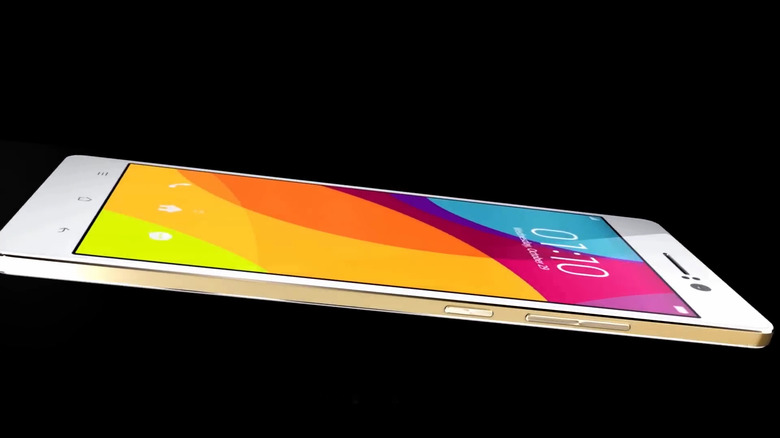
While there are plenty of foldable phones that are slimmer, the Samsung Galaxy S25 Edge and the iPhone Air are the uncontested kings of ultra-thin slab phones released in recent years, with not many coming even remotely close to their sub-6 mm levels of thinness. However, despite being a slab phone and coming out all the way back in 2014, the Oppo R5 is thinner than the iPhone Air and the Samsung Galaxy S25 Edge.
2014 was a time when many smartphone companies were competing to make the thinnest phones possible, a trend that seems to be coming back now. Oppo's R5 was among the top ultra-thin phones if you only cared for the thinness. The phone achieved this by being one of the first smartphones to ditch the headphone jack, a trend that ultra-thin smartphones of today follow, including the Galaxy S25 Edge.
As for its specs, it had a subpar performance even for its time, and was missing a lot in pursuit of being as slim as physically possible. Apart from not having a headphone jack, the phone had no SD card slot and could only support a single nano-SIM as well.
5. Vivo X5 Max
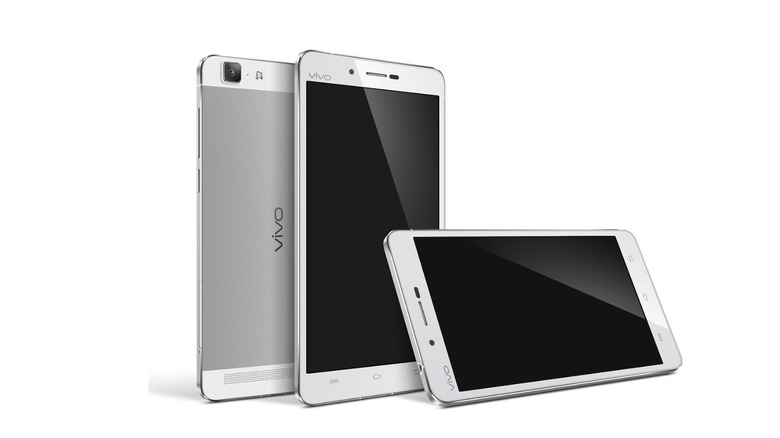
There are many things a phone loses in pursuit of ultra-thinness that we associate with premium phones. We saw phones start losing their headphone jacks about a decade ago — though there are still some very good phones with headphone jacks in 2026. In recent years, we're now seeing camera bumps getting bigger and bigger as companies continue to develop ultra-thin phones. Both of these make sense; with less real estate to work with, components that require more space simply cannot fit.
This, however, might not be entirely true. A phone from 2014, the Vivo X5 Max, manages to be just 4.8 mm thick — a full millimeter thinner than the S25 Edge — and still has a 3.5 mm headphone jack, something that ultra-thin phones of today have completely gotten rid of. Unlike the Oppo R5 that also cut out its headphone jack, the Vivo X5 Max also keeps two SIM slots, with one of them also allowing a microSD card.
The phone also barely has a camera bump, further accentuating just how far ahead of the curve it was when it comes to thinness. Still, the X5 Max is an incredibly outdated phone, which means it has nothing going for it apart from its thinness. You might not be able to find one for yourself, but the X5 Max does show us that if Samsung or Apple truly wanted their flagships to have headphone jacks, they could figure out a way to do so.