

5 3D Printer Brands That Can Compete With Bambu Lab
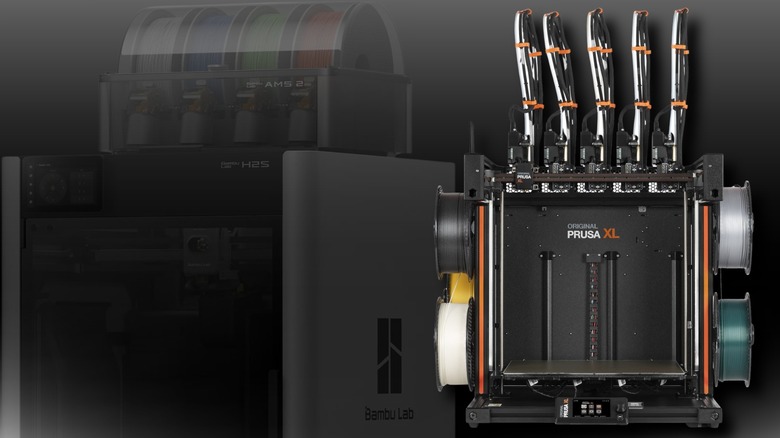
Bambu Lab originally bridged the gap between accessibility and consumer 3D printing for buyers by delivering fast, reliable multi-color printing right out of the box. The maker community has previously praised Bambu Lab for making additive manufacturing accessible while looking good doing it. But a major shift toward an Apple-like closed-source ecosystem has slowly alienated a large proportion of the maker community, mainly by going against the freedom and creativity that its customers value. Even Bambu Lab's community-driven library, Makerworld, is making waves due to its recent re-uploading issues, causing some users to look for other websites with free 3D printing projects.
The rug-pull against consumer choice hit its climax in late 2025 when Bambu Lab sent legal cease-and-desist threats to an open-source developer who created a local network workaround for OrcaSlicer. Creators and makers feel that the company is actively locking down its hardware, forcing prints through its cloud servers, and restricting third-party modifications under the guise of security.
For those that don't want big tech companies telling them how to use the hardware they paid for and are against internet dependencies, telemetry tracking, and firmware lockouts, there are some fantastic alternatives. Of course, there are basic specifications and use cases one should consider before buying a 3D printer, but several competitors offer incredible 3D printers with speed, multi-material compatibility, and total local control over hardware. We've checked out some of the best 3D printer brands on the market right now, and we're confident makers won't miss Bambu Lab one bit.
Prusa Research
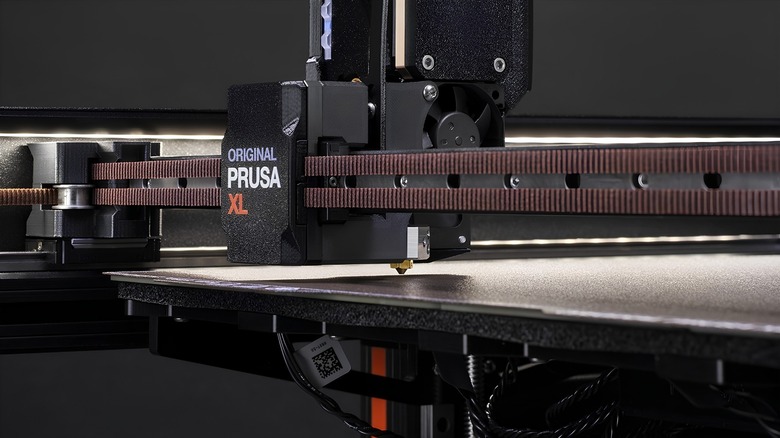
In many ways, Prusa Research is the polar opposite of Bambu Lab. It prioritizes freedom and long-term repairability — in fact, it's the industry benchmark in the eyes of the maker community. Prusa built its global reputation on open-source hardware, PrusaSlicer software, and total community transparency. While Bambu Lab is locking its ecosystem down, Prusa 3D printers are giving their users greater local network control and immediate access to replacement parts, many of which come included with the hardware as 3D printable parts. Projects don't need to go through a remote corporate server, either, which helps ensure privacy for a creator's proprietary designs.
Prusa offers ridiculously powerful consumer options like the Original Prusa XL, which supports up to five printer heads while delivering exceptional reliability, high-speed performance, and complete local control. For makers who want to delve into engineering filaments securely with a smaller footprint, the Original Prusa Core One handles complex tasks while remaining fully moddable, ensuring there are always cheap ways to upgrade the 3D printer. Industry experts consistently put the brand's hardware in their top 3D printer roundups thanks to premium quality, open ethos, and excellent customer support. Speaking as a regular user of a 5-tool-head Prusa XL, I can fully get behind this brand, especially because of its offline functionality and its ability to last for years thanks to a mix of practical components and 3D printable replacement parts. There really isn't a more consumer-friendly option for anyone already into 3D printing or who wishes to pick up the hobby for fun projects and practical applications.
Voron Design
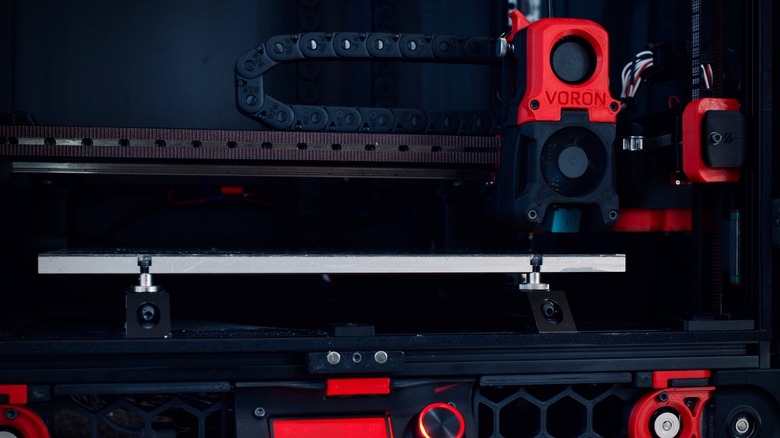
For makers who completely reject corporate ecosystem constraints like the ones found in Bambu Lab hardware, Voron Design is a pure, non-commercial open-source project. This collective doesn't sell fully assembled consumer hardware ready to go out of the box. Instead, it provides comprehensive, public blueprints and Klipper firmware configurations that allow makers to construct a performance-focused 3D printer from scratch using self-sourced components and curated third-party packages.
Building a 3D printer like the Voron 2.4 R2 requires a serious commitment from the builder and will take up a fair bit of time to get the job done right, but the payoff with Voron is unmatched speed and endless repairability options. Because makers are assembling every belt, motor, and wire, users can have total autonomy over upgrades without ever asking a manufacturer for permission. Reviewers taking a look at the premium bundles, such as the LDO Voron 0.1 kit, highlight that these custom setups cut hours off total print times while maintaining incredible layer consistency. Voron also maintains configurations for the compact Voron V0.2 and the stationary-bed Voron Trident. For makers looking for a high-speed 3D printer aimed specifically to their needs rather than a cloud data farming situation, this maker community initiative provides the ultimate freedom for those comfortable with building their own 3D printer.
Creality
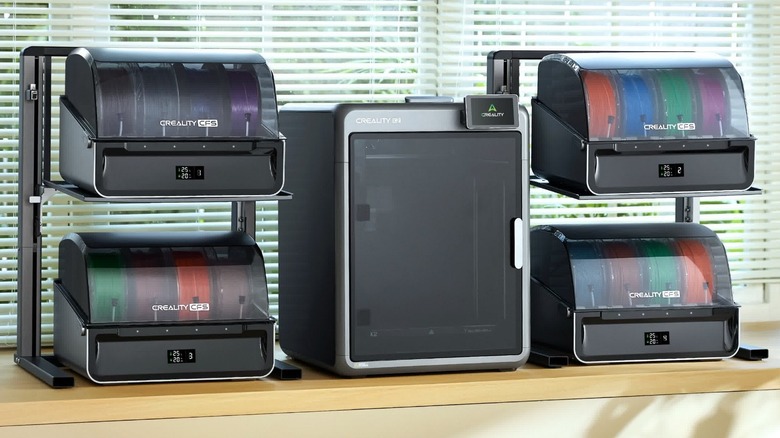
As one of the largest consumer 3D printer manufacturers in the world, Creality has built its global following on affordable, open-source Cartesian (linear relationship between XY motor movement and toolhead XY motion) printers. It previously focused on budget-friendly DIY starter kits, but the brand has since modernized its entire catalog to challenge high-end closed systems. By adopting open-source Klipper firmware configurations across its newest high-speed lineups, Creality has made itself a solid contender against Bambu Lab 3D printers, offering makers choice with fantastic build quality.
For makers who want fast out-of-the-box performance that can rival proprietary setups, the enclosed Creality K2 has the structural rigidity and automatic leveling to contend with Bambu Lab. For multi-color and large-scale 3D prints, the Creality K2 Plus introduces an advanced material system that manages multiple filaments seamlessly.
This intelligent CFS system allows makers to manage up to 16 spools of filament on the fly, with a 350 mm x 350 mm x 350 mm build area that can handle engineering filaments thanks to its enclosed active heat chamber. Noise isn't an issue, either, thanks to a step-servo motor system that pushes quiet 30,000 mm/s² acceleration across five motors. There's a massive community behind Creality 3D printers, alongside easy access to replacement parts and the freedom to modify software configurations without triggering restrictive legal threats from the manufacturer.
Sovol 3D
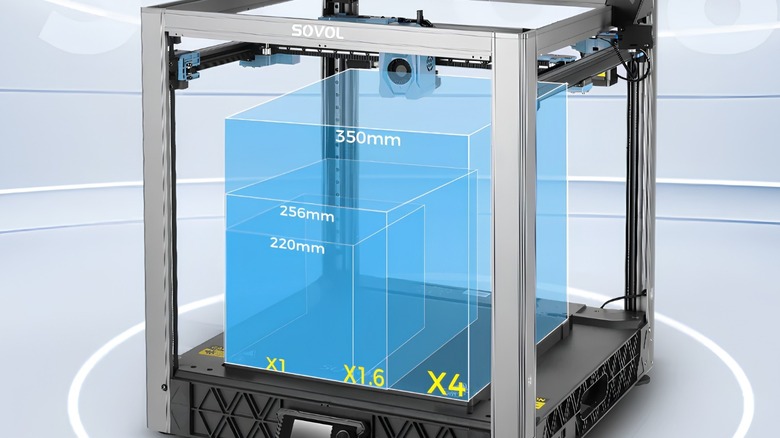
Makers looking for an affordable open-source option usually think of Sovol 3D for its commitment to community-driven development. This manufacturer creates highly capable machines based on proven, open-source layout designs. Instead of making users navigate proprietary software plug-ins or restricted network settings, it uses open-source Klipper-based firmware straight out of the box to maximize customization. Think about taking on a Voron 3D printer project, but it's more or less ready to go out of the box, including firmware and optimizations. This simply gives makers more time to customize and print their projects instead of pumping days of work and patience into building a 3D printer from scratch.
One of the best 3D printer choices in its current lineup is the Sovol SV08, which is a large-format CoreXY printer that has a massive 350 mm build volume for a fraction of the cost of premium closed-system competitors. Reviewers praise Sovol 3D's take on the Voron 2.4, focusing on its CoreXY speeds of up to 700 mm/s and how much easier it is for users to buy a 3D printer that's ready to use out-of-the-box. It cuts through long printing queues efficiently while remaining completely accessible to third-party slicers, local network management utilities, and community-driven print servers, proving to makers that they don't need to spend a fortune to get results while escaping the clutches of restrictive corporate ecosystems.
Qidi Tech
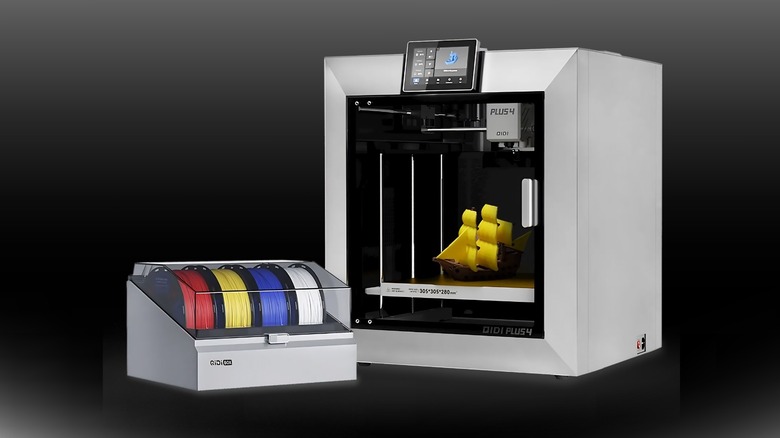
For makers who want to print technical, industrial-grade engineering filaments without sacrificing local network control, Qidi Tech is a great choice. This manufacturer specializes in fully enclosed FDM 3D printers equipped with actively heated chambers, allowing users to print advanced materials like nylon, polycarbonate, and carbon fiber composites with minimal warping. It runs this industrial-grade hardware via open-source Klipper-based firmware, which also means complete local access for makers.
Models like the Qidi Plus 4 offer a strong additive manufacturing environment that guarantees excellent layer adhesion on complex structural parts. In technical evaluations, experts highlight its powerful heating elements and reliable high-temperature extruder as features that consistently deliver professional results. It also has premium features found in Bambu Lab printers such as auto calibration and a toolhead performance upgrade so that this 3D printer can get to work straight out of the box following a simple automated setup process. The toolhead nozzle reaches temperatures of up to 370 degrees Celsius, and that's supported by a second-generation 80 W bimetal hotend for advanced filament handling.
Qidi frequently earns itself solid review scores and spots on comprehensive roundups thanks to its heavy-duty performance without sacrificing a user's freedoms with its hardware. 3D printers like the Qidi Plus 4 Combo are reliable machines that operate perfectly on an isolated local network, keeping private STL files safe from third-party cloud servers.