

Fast Charging Vs. Regular Charging: Which Is Better For Your Android Phone?
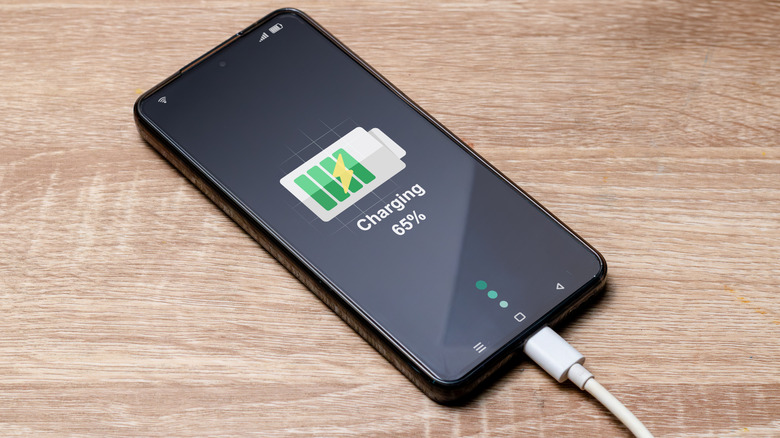
Fast charging and regular charging serve different needs. If your Android phone needs a quick boost during the day, fast charging is usually the way to go. But if you can wait or want to leave your phone charging overnight, you will want to use a regular charger. As for which one is better for your Android phone, the answer is regular charging, as it has a slight edge over long-term battery health.
When you charge your Android phone with a fast charger (15 watts or higher), it will get hotter because of the higher current involved. But as long as you're not charging your phone the wrong way, like keeping it at 100% all the time, don't fear using a fast charger when convenience calls for it. Also, don't stress too much about battery degradation, because the impact is usually minimal.
A YouTube channel called HTX Studio tested this by hooking six Android phones to a mechanism that charges and discharges device batteries, with half of them connected to a fast charger and the other half to a regular charger. When the phones were full, a custom app drained the batteries to 0%. Afterward, it would signal the mechanism to charge them to 100%. This loop ran for six months, with each smartphone completing 500 charge cycles (simulating about a year and a half of use). What they found was that fast charging depleted the battery capacity by an extra 0.3%. While negligible, the extra heat from fast charging can still be a concern for lithium-ion batteries.
Regular charging puts less stress on the battery
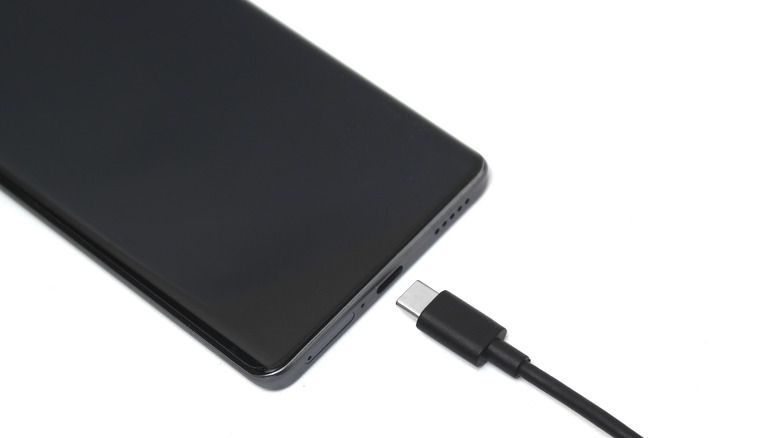
A regular 5-watt charger usually takes about three hours to charge a phone from 0% to 100%. But the process will produce significantly less heat at any given time than a 15-watt fast charger that can give your Android phone a full charge in about 90 minutes. As tech influencer and YouTuber Marques Brownlee explained, your phone's battery is like a sponge that absorbs electricity. When it's low, it absorbs it quite well. As it fills up, that absorption rate decreases, and some of it runs off, turning into heat.
This explains why your Android phone heats up more the longer it stays on a fast charger. Heat is the enemy because prolonged exposure can cause the battery's anodes and cathodes to clog up due to the crystallization of its electrolyte solution. When that happens, the battery loses its capacity. The benefit of regular charging is that it's less harsh on the battery and ideal for a wide range of scenarios where heat can be generated.
So, even if the degradation caused by a fast charger is unnoticeable, the less you stress the battery, the better. But no matter what charger you're using, keeping the battery between 20% and 80% full keeps the stress at a minimum while still being ready to use. Luckily, modern Android phones have battery protection features that prevent or delay charging to 100% after it reaches 80%.
Fast charging is still fine if you do it right
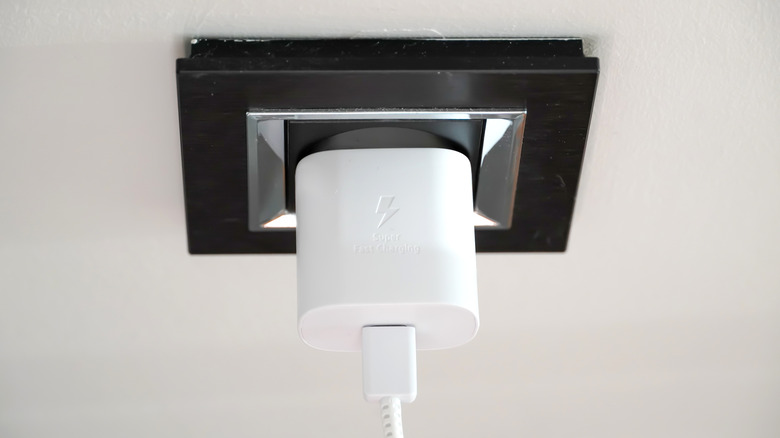
Modern Androids are built to handle fast charging, and it is likely to be the dominant charging method moving forward. As Marques noted, the fast charger isn't pumping 15 watts or more into your phone's battery constantly. The manufacturers of these phones and chargers are aware of the sponge analogy. The phone and charger constantly communicate using the USB Power Delivery (USB-PD) protocol to negotiate safe charging levels.
Usually, the fast chargers deliver a high current initially (from 0% to 50% in 30 minutes) and then taper it off as the battery reaches 80%. Furthermore, the battery has a "brain" called the Battery Management System (BMS), which prevents overcharging and overheating. So the biggest thing you have to worry about is excess external heat from your environment, which can make your Android phone even hotter when using a fast charger. When fast charging, you should only use a charger from a reputable brand that has the USB-IF (USB Implementers Forum) logo on it to show it uses the USB-PD protocol. Not sure? You can cross-check its model number on the USB-IF Product Search page.
Also, take care to use wireless fast chargers sparingly, as those inherently generate more heat due to how inefficient the process is compared to wired charging. Otherwise, follow general good charging habits like not fast charging in situations where the battery can get hotter. This includes direct sunlight, while playing games, or placing the phone on a heat-absorbing surface or under the pillow.