

Bifacial Vs. Monofacial Solar Panels - What's The Difference?
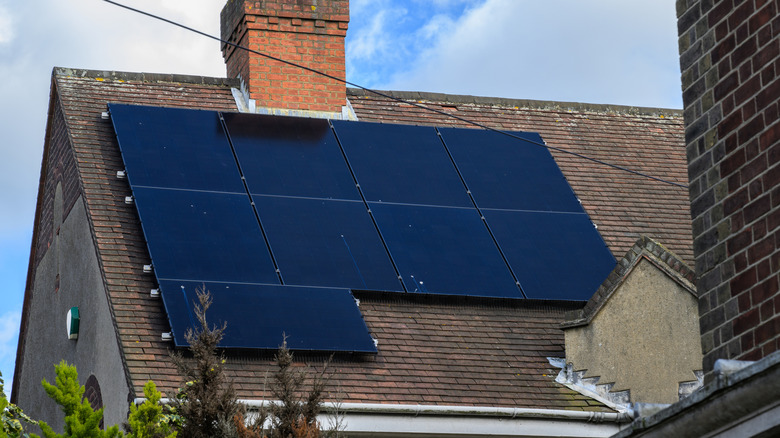
Solar panels might all look the same to the untrained eye, but they actually come in different types and technologies. Understanding these differences is one of the first things you should know before getting solar panels installed in your home. Among the most common you'll come across in the market is the distinction between monofacial and bifacial solar panels.
As the name suggests, monofacial solar panels are panels that only work on one side, specifically the side directly exposed to the sun. They're the traditional type of solar panel and are commonly used for residential rooftop systems. On the other hand, bifacial solar panels are panels with solar cells on two sides, both the front and back. That means both sides capture energy when exposed to light. The sun-facing side captures sunlight that hits it, while the back side — which isn't in direct sunlight — absorbs reflected light from other sources instead, including water, light-colored rooftops, and even snow.
It's easy to think that the bifacial solar panel is the way to go since you essentially get two panels for the size of one. But there's actually more to it than meets the eye. To help you better decide which type is best for you, we'll walk through the differences between monofacial and bifacial solar panels in terms of panel design, installation, efficiency, and practicality.
Differences in panel design and installation
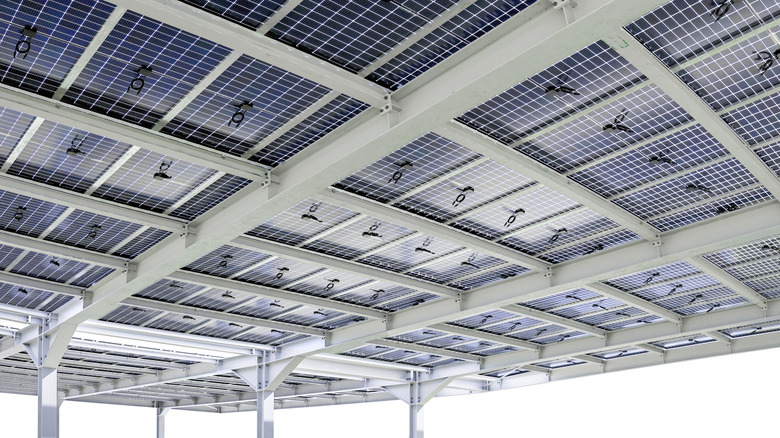
At first glance, it might be hard to tell a bifacial solar panel apart from a monofacial model. After all, both come with standard solar panel lines and look much like any other panel out there. But upon closer inspection, you'll see that they differ in design.
Monofacial panels have tempered glass front and a backsheet that's usually either black or opaque white. Bifacial panels also come with a glass layer on top, but unlike monofacial designs, their rear side must be transparent to work. Some models use transparent plastic on the back, while others install a glass layer. This dual-glass structure does make the bifacial panels heavier than their monofacial counterparts, though. However, they're still usually slimmer, and thanks to their often frameless design, they can fit in better visually in many situations.
Since bifacial solar panels are double-sided, mounting them is more complex than mounting monofacial panels. For one, the bifacials need to be elevated at least three feet above the ground and tilted at a steeper angle for maximum back exposure. The support rails should also be narrow, and the junction boxes small. Other than the mounting system, installation location is crucial for bifacial solar panels as well. They're best installed where reflection is high, such as on light-colored roofs, sand, and snow, for maximum reflection. For instance, with sand and white gravel, you can get as much as 25% more than monofacial, but on dark roofs, it's only 5%. Installation for the monofacial solar panels isn't as strict. As long as the front of the panel is in direct sunlight with minimal shade, you're pretty much good to go. That means the mounting system can be flexible, especially since monofacial panels are also lighter than bifacial models.
Differences in efficiency and practicality
Bifacial and monofacial solar panels are significantly different when it comes to efficiency and practicality. Since bifacial panels have two working sides, they're inherently more efficient than monofacial ones. In a report by solar manufacturer LONGi in 2018, bifacial solar panels produced 11% more than their monofacial counterparts when installed on cement ground and 19.27% over a solar tracking system. In terms of durability against the elements, bifacial panels generally fare better. Their dual-glass design reduces the risk of mechanical damage, wind exposure, and degradation from UV rays. The fact that they can be installed upright also helps reduce the buildup of snow and debris on the panels.
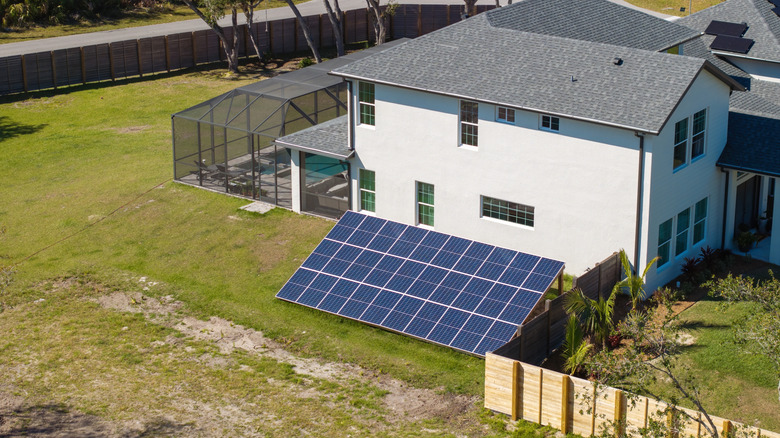
But just because bifacial solar panels are more efficient and durable doesn't automatically mean they're the better pick. Thanks to their panel design and complex installation and hardware, bifacial solar panels can cost more than monofacial panels by roughly 3% to 8%, or even higher. Since they require elevated mounting racks, bifacial solar panels aren't the best choice for most roof installations, either. Roof installation typically means laying the panels flush against the roof, which, in turn, minimizes light reflection to the back and causes the back cells to perform poorly, or not at all. You can still use bifacial solar panels for your home, but you need enough space for a ground mounting. If you have pergolas or canopies in your yard, though, they can sometimes serve as your mounting racks to save space and money.
Installation-wise, monofacial solar panels, on the other hand, work well even when flush with the roof or mounted on the ground. They tend to be more affordable for homeowners, too, so you could have more budget left over to install solar panel batteries.