

5 Classic Pieces Of Tech That Will Remind Boomers Of Their Childhood
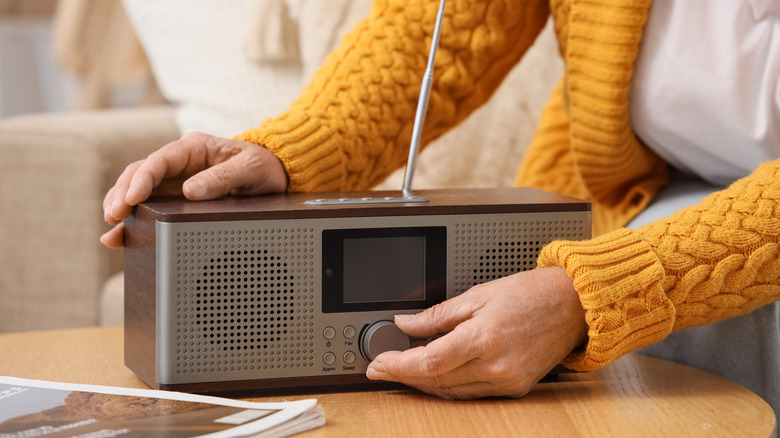
There were more than 76 million people born in the United States during the baby boom between 1946 and 1964. Factoring in immigration, the total number of baby boomers living in the U.S. by 1999 was around 79 million; that's a lot of people who likely had a shared experience with the iconic tech products that defined their early years. From wood-cased electronics with a now-vintage aesthetic to nostalgic bygone inventions, certain classic tech products are sure to remind boomers of their childhood.
Today, estimates from the Pew Research Center, based on U.S. Census data, show that there are fewer than 67 million boomers. This demographic — which still accounts for approximately 20% of the nation's population — can collectively look back on nostalgic gadgets that every boomer will remember using. Among them are the five classic electronics listed below that will bring back memories of the good old days.
Vinyl record players
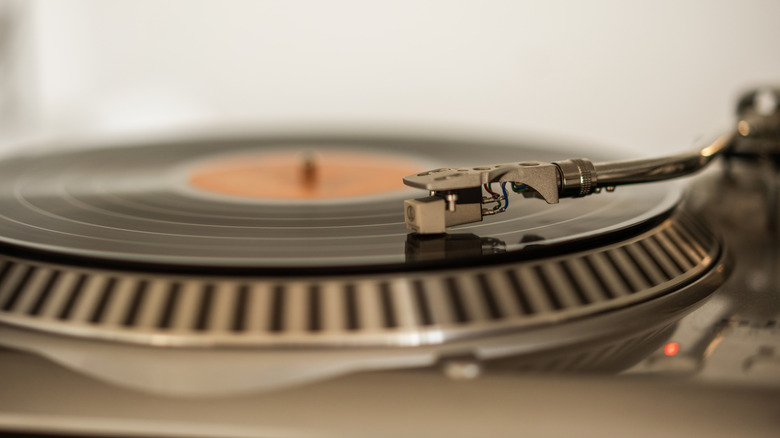
Vinyl records are still popular among music enthusiasts, with arguments still raging to this day regarding whether CDs or vinyl have better audio quality. Boomers will remember that the enduring trend of using vinyl as a music medium dates all the way back to 1948. Before that, music records were manufactured from pressed shellac. As it turned out, vinyl was more durable, more flexible, and capable of being played many times without heavily degrading the sound quality.
When Philco began mass-producing vinyl record players in 1955, it changed the face of music for many families. In particular, children growing up in the '50s learned to love music in an unprecedented way. Vinyl aficionados feel that the medium conveys the quality, warmth, and tactile immersiveness of the original music in a way that other music mediums cannot. That's why they're so collectible today, and the availability of vinyl in the '50s is arguably the reason why icons like Elvis Presley and the Beatles were able to rise to super-stardom.
Telephone party lines
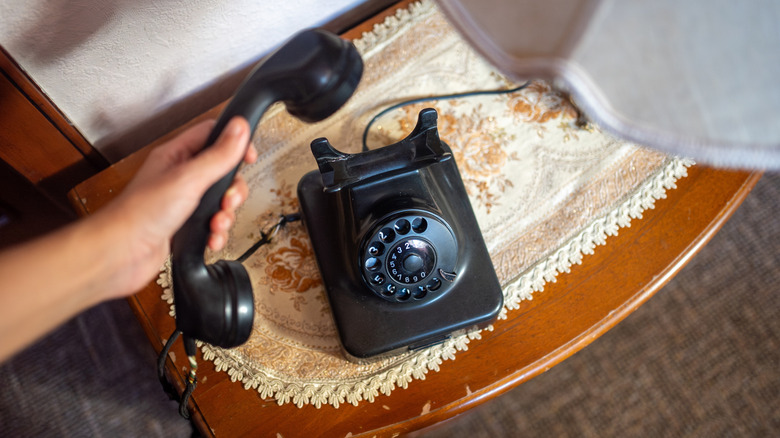
When you look back on what phones were like in the 1940s, you'll get a startling reminder of landlines, rotary dials, and wall-mounted units. It was a highly analog and somewhat inconvenient time in hindsight, but a particular piece of telephone tech introduced a communication quirk that only boomers remember: party lines. In the '40s, it was very common for a household's phone line to be shared with other nearby members of the community. These party lines were beneficial for infrastructure because they meant that fewer wires could be used to provide telephone services to many people.
However, this meant that a person had to wait for their neighbors to free up the party line before making their own call. On top of that, while the line was in use, everyone in the neighborhood could listen in on the conversation taking place. For adults trying to use the phone for important matters, the party line was often nothing but trouble. For children, though, it could be a fun yet mischievous way to listen in on friends or interrupt parents during a conversation. Ultimately, few technologies have seen as many innovations come and go as telephones. By the 1980s, things like party lines and blocky cellular phones had started to find their place among pieces of dead 80s tech that stir up emotions in every boomer.
Transistor radios
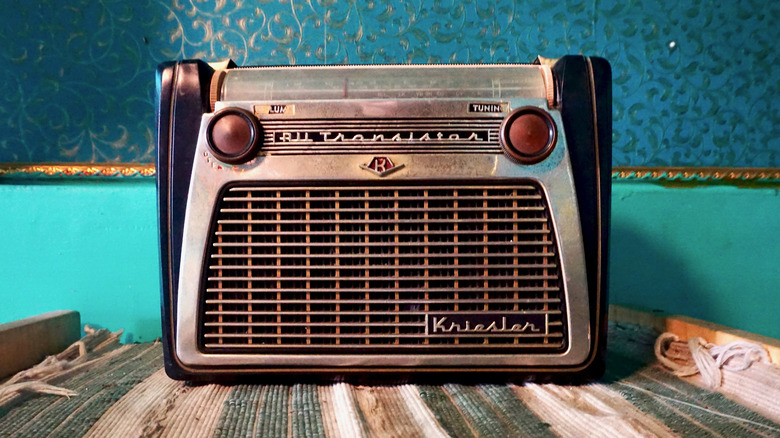
The younger generations might already see radios in general as a thing of the past. In reality, an emergency radio is still one of the most essential gadgets for power outages and blackouts. But the tech has certainly evolved; boomers still remember the transistor radio that was more portable and practical than any that came before. Previous radios used vacuum tubes that were able to power electronics via "thermionic emission." This phenomenon involves the heating of a cathode to create an electric current flowing toward a charged anode.
Following the invention of the transistor in 1947, it became possible to manufacture radios that were not only smaller and more energy-efficient but also more affordable for consumer use. The first consumer transistor radio was the Regency TR-1, released by Texas Instruments on October 18, 1954. For families who owned a TR-1 at the time, it was a way to feel connected to the world both at home and on the go. Boomers growing up in the '50s likely look back at the transistor radio as a unifying device around which the whole family would gather.
Clock radios
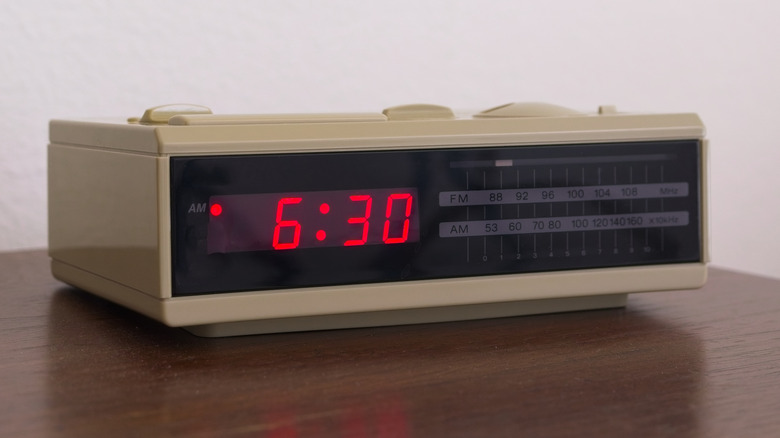
After the transistor radio became a staple of the '50s lifestyle, people truly recognized the convenience of having access to a radio everywhere — including the bedside. The clock radio was actually first introduced to the market with the Telechron Musalarm 8H59, but General Electric further innovated on this tech with the Model 7H241 "Snooz-Alarm" clock in 1956. This practical design ensured that you could have an alarm clock, pre-sleep entertainment, and an early morning news source all within reach from the bed.
The integration of a radio was not the only stylish innovation that clocks underwent during the baby boomer era. After the patenting of the first digital alarm clock in 1956, the market started to see charming wood-cased clocks like the General Electric 7-4646A clock radio that boomers may remember from when they grew into adulthood in the late '70s, which are sure to evoke reminiscence of a time when these types of clocks could be found everywhere one looked.
Console TVs
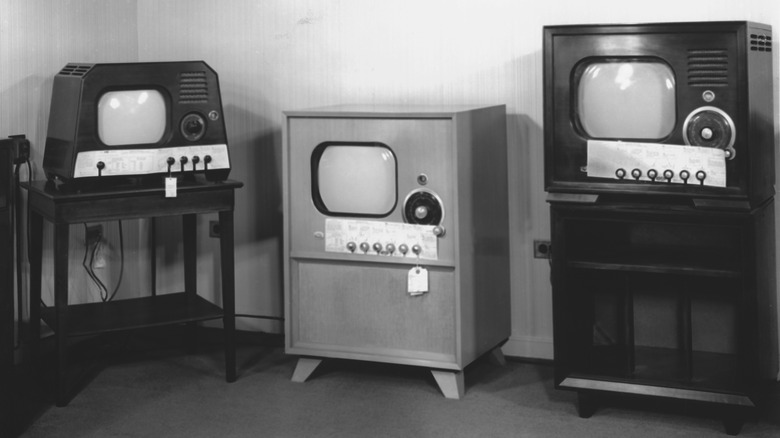
Unlike other classic pieces of tech on this list, televisions are something that have remained overwhelmingly common but have also evolved beyond recognition. Modern displays are just super-thin panels packed with things you didn't even know a smart TV could do. In the last century, if you wanted a TV that did more than just show moving pictures, you would actually go out of your way to get a super bulky console TV.
Console TVs were a cross between a television set and a piece of furniture. The TV itself would be housed in a wooden cabinet, some of which were lavishly designed and beautifully finished. Certain units even contained built-in speakers, a radio, a phonograph turntable, or extra cabinet storage space. By combining traditional craftsmanship with the major home entertainment technology of the time, console TVs were undoubtedly the centerpiece of many boomer-era living rooms. Baby boomers who lay eyes on these TVs today are sure to get a rush of meaningful childhood memories.