

What That Extra Black Ring On Your Headphone Audio Jack Actually Does
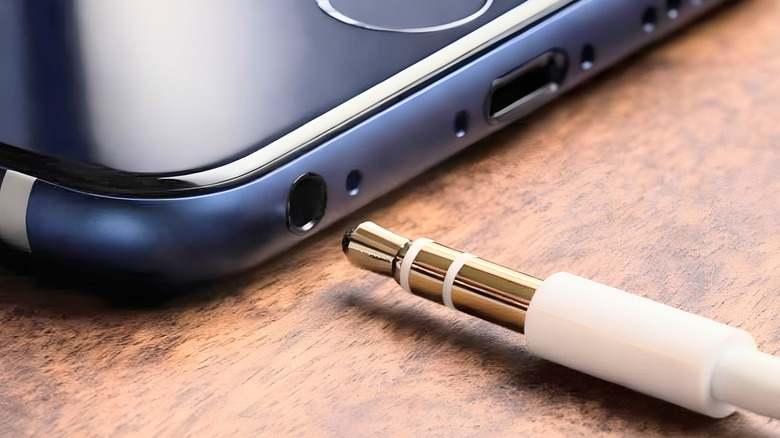
If you've ever plugged in a wired set of headphones or an audio device using a 3.5-millimeter plug, you may have noticed several plastic rings around the connector. The exact number can vary between cables, but there are usually between one and three rings, and they show up in multiple colors, such as blue, black, and sometimes others. They actually serve a distinct purpose, even if it seems like they're only for aesthetics. That purpose has to do with the type of plug, which also correlates with the number of rings present. Known as a TS (tip-sleeve, with one ring), TRS (tip-ring-sleeve, with two rings), or TRRS (tip-ring-ring-sleeve, with three rings) plug, the rings are meant to separate and assist with the transmission of various audio signals. They're made of non-conductive materials and operate as insulating bands.
For example, a plug with two rings is generally for transmitting stereo audio. The rings separate the right and left audio channels, helping to modulate which channels get what audio stream from the source. Meanwhile, the sleeve of the metal plug serves as the grounding contact. Three rings (TRRS) are generally for a plug that handles both audio and microphone streams — two rings are for the stereo audio channels, and the other ring is usually for the microphone channel. More than three rings elevate the audio feed by helping to separate various high-quality channels.
The insulating rings aren't just on headphone or headset plugs, but also a wide variety of connectors on other audio cables for equipment like instruments, amplifiers, and so on. More connectors – including 6.35-millimeter, 2.5-millimeter, and 4.4-millimeter plugs – have the rings present, as well. With old wired headphones being "cool again" and making a popular resurgence, it's a good time to explore the technology.
What happens if those rings break?
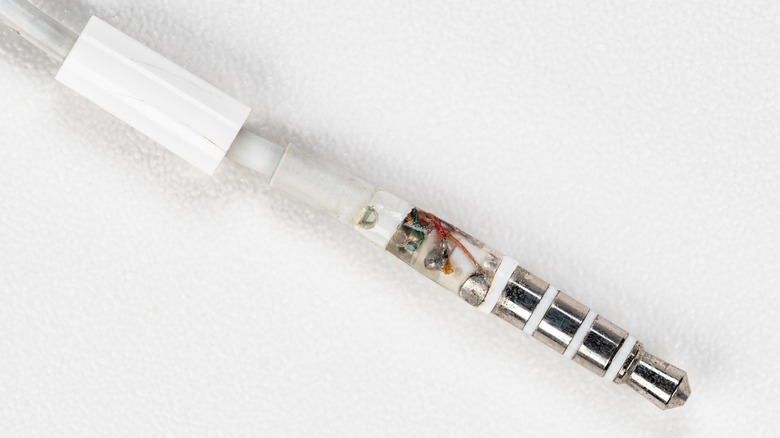
Because they act as separators, if the rings are damaged, it may result in unexpected behavior. The audio stream could cut out while listening, there may be extreme static or distortion, the sound channels may blend or stereo sound may not play at all, or — when present — the microphone may not work. Without the rings separating them, the metal sections touching could short-circuit.
A TRS plug, with two rings, is separated into three parts: the tip, or very top that plugs into the device; the rings; and the sleeve, or back portion, that acts as the ground — hence, the name, "tip-ring-sleeve." Depending on which ring breaks and where, it can affect the different sections of the connector. The same is true with a TRRS plug or those with extra rings for the microphone and additional audio channels, though a more common form of damage happens when the actual cable is twisted or bent. A frayed or broken wire may occur just behind the plug from regular wear and tear.
There are ways to repair a damaged plug on a headphone cable or similar audio cable, but it's often just easier and more cost-effective to replace the entire cable. Of course, sometimes the cable is hardwired at one end, meaning you cannot simply swap the cable with some wired devices. In that case, it makes sense to repair, but know, it's a fairly technical process and may require a soldering iron. It shouldn't come as a surprise, then, that cable damage is one of the major signs you probably need new headphones.
Some people still swear by 3.5-millimeter and aux connections
Bluetooth has become more common and is typically an easier connection method than wires and plugs, albeit wireless. That's why smartphone makers stopped including headphone jacks in most flagship phones. Plus, removing the port inside the phone frees up space for other important components and helps keep them thinner in size overall. But many people, audiophiles included, still prefer to use wired headphones because they're a form of analog audio. One of the arguments for which audio input port is best has to do with the difference between analog and digital audio. Connections like RCA or 3.5-millimeter, and aux carry raw audio signals between sources, and they're widely compatible with a huge selection of gadgets, old and new. That argument even carries over to USB-C versus 3.5-millimeter ports, and which delivers better audio quality. Arguably, analog signals still sound as good as, if not better than, digital audio solutions at times because of that raw audio stream. They also experience less latency or interference, thanks to the wired and physical connection versus a wireless stream, the latter of which is more prone to interruptions.
Another benefit that wired devices have over wireless and Bluetooth options is the seamless plug-and-play support. You can plug 3.5-millimeter headphones into a PC, laptop, Steam Deck, compatible phone, tablet, handheld media player, TVs, audio equipment, and much more, and it all just works. Moreover, they don't need to be charged, and they'll work right out of the box.