

Motorola Razr (2026) Review: The Only Foldable To Get At This Price
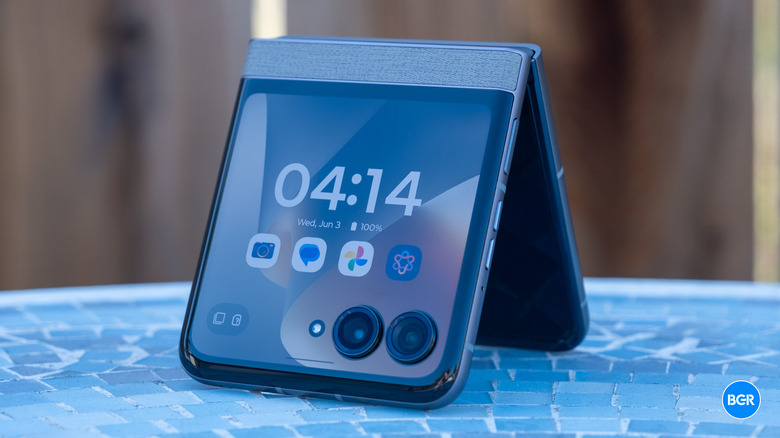
Motorola has had a big year when it comes to foldable phones. The company finally took the wraps off of its first book-style foldable, in the form of the Motorola Razr Fold, which I found to be one of the best foldable devices to date. But it also launched the latest-and-greatest in its line of flip-style devices, starting with the standard Motorola Razr (2026).
On paper, not much has changed about the standard Razr. The phone gets a minor chip bump, but mostly keeps everything else the same compared to the 2025 iteration. To add insult to injury, it comes with a $100 price increase -– which might seem a little hard to justify.
So, does the Motorola Razr (2026) do anything else to justify the price increase? Or should you skip it altogether? I've been using the phone to find out.
Design
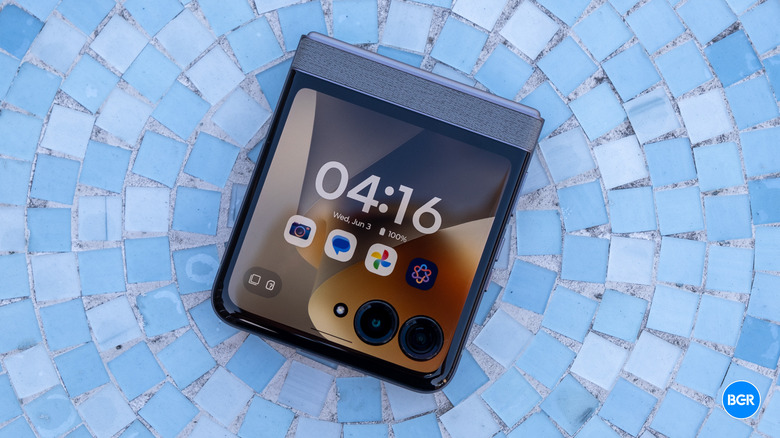
Generally speaking, the Motorola Razr (2026) has the same design as last year, including the cutout for the cameras. Compare that to the Razr Ultra, which doesn't have that cutout and looks more modern. The Razr's footprint is identical to last year's device, measuring in at 88.1 x 74 x 15.9mm — which means if you liked how the 2025 model felt in your pocket, you'll like this one too. Unfolded, it measures 171.3 x 74.0 x 7.3mm.
The build is what you'd expect at this price. It has an aluminum frame that holds everything together, while the back is finished in vegan leather, and the cover screen is protected by Gorilla Glass Victus. It feels good in the hand — the leather back in particular gives it a bit of personality that the Galaxy Z Flip 7's glass back lacks. The device is available in a few different colors and finishes, and they all look pretty unique.
The phone has an IP48 rating, which means it's protected against dust particles larger than 1mm and can survive submersion in up to 1.5 meters of fresh water for 30 minutes. That's decent for a folding phone, though it's worth noting the "8" in IP48 is reassuring while the "4" is a reminder that fine dust can still get in. That's a step down from some other foldables that have received more impressive ratings in recent years.
The cover display is smaller on the standard Motorola Razr than the Razr Plus and Razr Ultra, which means there's a small forehead above the screen. It's not overly distracting, and frankly, not really that big of a deal. It didn't change what I actually used the screen for compared to the other devices. That said, it can make the small screen feel even smaller. If that matters to you, then you may want to upgrade to one of the other Razr models.
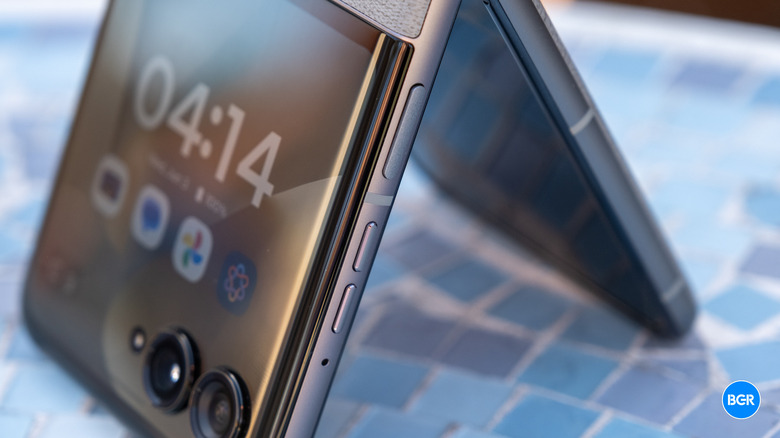
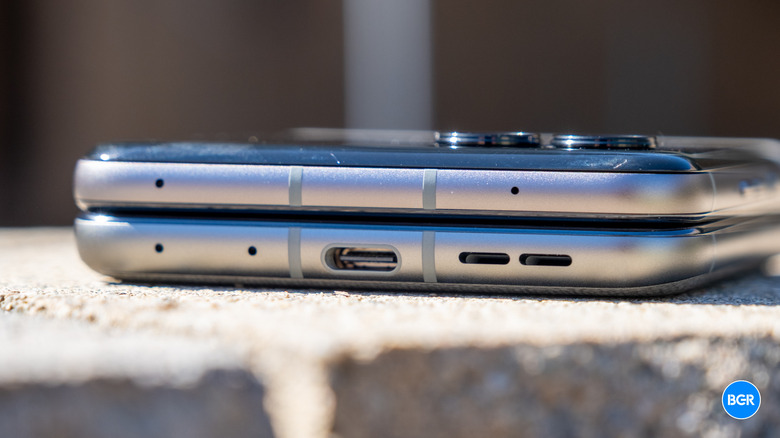
As for buttons and controls, there's a USB-C port on the bottom along with a power button and volume rocker on the right side. The power button doubles as a fingerprint sensor, which I found to be accurate and fast. The Razr doesn't have the AI key you'll find on the higher-end Motorola Razr Ultra, but I haven't found the button to be all that useful, so I certainly didn't miss it when I was using the base model.
The hinge feels solid and the phone closes with the satisfying snap you'd expect. There's no real gap when shut, and the crease on the inner display is reasonably minimal. It's not invisible, but it's not distracting either, and you'll get used to it pretty quickly.
Display
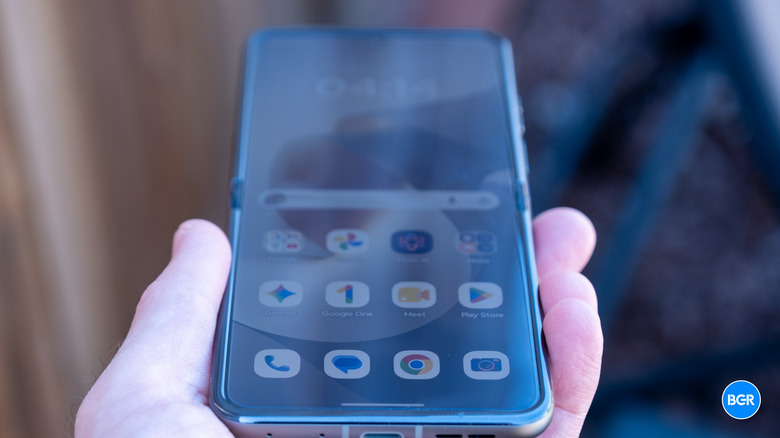
The Motorola Razr (2026) has two displays, including a 3.6-inch AMOLED cover display with a 1056 x 1066 resolution and a density of 413 pixels per inch. Its refresh rate hits 90Hz, which seems low in a world of 120Hz panels, but frankly isn't a big deal for a cover screen that you're only likely to interact with in short bursts anyway.
The inner display is a 6.9-inch LTPO AMOLED display with a 1080 x 2640 resolution and a pixel density of 413 pixels per inch. It has a higher 120Hz refresh rate, and it's much more useful on this display, as you might expect.
The display quality is good. It gets quite bright — Motorola rates it at 3,000 nits, and I actually measured higher than that, at almost 3,800 nits at a 2% window size, and still more than 3,000 nits at a 20% window. That peak did drop off at larger window sizes than that. The display was also decently accurate, and while it's certainly not reference-level display quality, you won't notice any issues when it comes to color accuracy.
Performance
The Motorola Razr (2026) is powered by a MediaTek Dimensity 7450X coupled with 8GB of RAM. It's a minor step up from the 7400X from last year, and you won't notice much of a difference. Day-to-day performance is fine. The phone handles general use — messaging, browsing, social apps, and light gaming — without any real complaints. Animations are smooth, apps open quickly, and switching between the inner and outer displays is seamless.
But the 7450X is an incremental update over the 7400X in the 2025 base model, not a major one. You're getting a modest bump in CPU and GPU performance, and that's about it. In benchmarks, it lands comfortably above budget territory, but well below flagship. The Galaxy Z Flip 7's Exynos 2500 and the Razr Plus's Snapdragon 8s Gen 3 are in a different league entirely.
In Geekbench 6, the device hit 1,113 in its single-core test and 3,377 multicore. That's pretty mediocre, and, again, it represents only a very minor upgrade over last year's model. Basically, if you're looking for something that's capable of handling more than basic mobile gaming, you'll probably want to step up from the Razr.
Storage options are 128GB and 256GB. The 2025 model shipped with 256GB as the floor, so Motorola has effectively cut the base configuration to hit the new entry price. If you go for the 128GB version, you're saving money but giving up storage that was standard a year ago.
Battery and charging
The 2026 iteration of the Motorola Razr has a 4,800mAh battery, which is a minor upgrade over the 4,500mAh one found in the 2025 model. Actual battery performance is indeed slightly better than last year's model. In a video playback test, the 2026 Razr lasted around three hours longer. Again, the battery life isn't incredible, but it's good enough to get through a day of moderate use. Don't expect to be able to stretch it to two days, though.
When you do run out of juice, you won't necessarily be able to charge it all that quickly. Charging speeds are the same as last year: 30 watts with a wired connection or 15 watts wireless. I actually found the new model to be slightly slower relative to the battery percentage, but that's likely due to the larger battery size. Either way, I wish the device charged quicker. And I wish it supported Qi2 magnetic accessories.
Camera
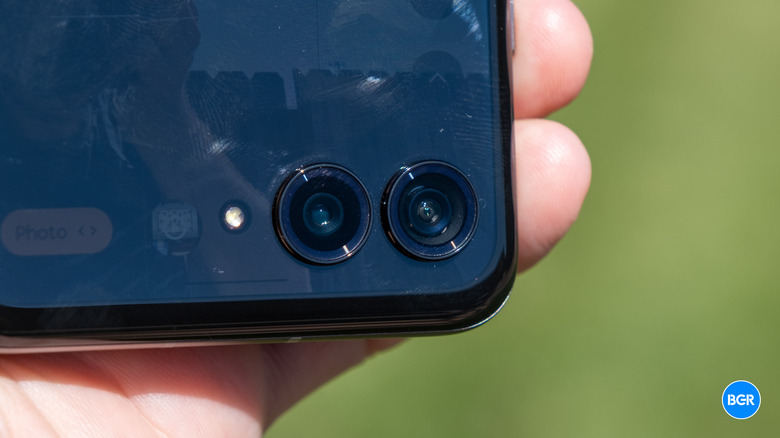
The Razr gets a slight hardware bump when it comes to the camera. On the 2026 model, you'll get a dual 50-megapixel camera system, made up of a main camera with a 1/1.95" sensor at f/1.7 a 50-megapixel ultrawide at f/2.0. That's a solid step up from the 13-megapixel ultrawide camera that was on the 2025 iteration of the Razr. On the front, there's a 32-megapixel selfie camera at f/2.4, carried over from the previous model.
It's not just the hardware that has improved over last year's model. The actual camera performance is better too. Notably, the 2026 Razr has more accurate colors, both on the main camera and on the ultrawide. Colors aren't completely accurate — you'll still get a decent amount of saturation for that punchy, vivid look, but it's certainly not over the top. Even better is the fact that the camera seems to perform better in low light too, producing sharper, more detailed images.
None of these changes are dramatic. All three of the cameras on the 2026 Motorola Razr are fine at best, and there are plenty of phones at this price point that perform better when it comes to camera quality. It's just that they're not foldable devices.
Software
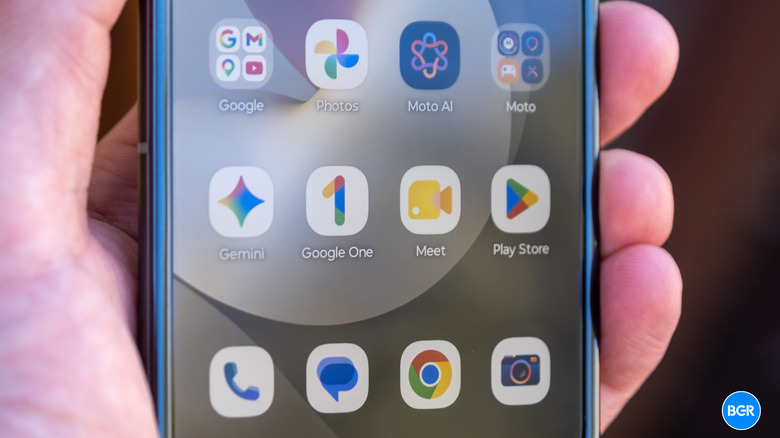
The Razr (2026) ships with Motorola's lightly skinned version of Android, which is decently stripped-back. There isn't a whole lot of deviation from what you might consider stock Android, at least when it comes to things like menus and general design.
As you would expect in 2026, there is a hefty emphasis on AI features. Unlike the Razr Ultra, you won't get a dedicated hardware button for AI features, but that button on the Ultra is pretty limited in what it can be used for anyway. The AI features themselves are fine, but if you're anything like me, you probably won't end up using them that much. Moto AI is Motorola's hub for AI features, but it lives alongside Gemini, which I think most will find more useful.
The Razr does ship with some bloatware, but it's far from over the top. Perplexity and WhatsApp come pre-installed, as do Adobe Scan and a range of Motorola apps that you probably won't touch. Some of these can be uninstalled, but the Motorola apps are there to stay. Again, it's not over the top, and the extra apps that aren't built by Motorola can be uninstalled if you so choose.
Conclusions
The Motorola Razr (2026) certainly isn't a perfect phone, but it's still one of the only foldables at this price point. If you're interested in a flip-style foldable phone, the fact is that unless you're willing to spend more, you're kind of stuck with the Razr.
Maybe saying you're stuck with it isn't quite the best phrasing. But the fact is that if you choose this phone, you will need to compromise on plenty of things that other phones do a whole lot better at the price. If you do like the idea of a flip phone, really only use your phone for things like scrolling social media and browsing the web, and don't care much about getting the best camera, then you'll like what's on offer by the Motorola Razr (2026).
The competition
There isn't much competition when it comes to flip-style phones at this price point. If you want a flip phone with better specs, you'll have to spend a decent amount more.
If you're not married to the idea of a flip phone, though, you can get a significantly better device for the same price. The OnePlus 15R has much better performance, a much better camera, and a much better battery. It's probably the phone most people should get in the $800 range. Alternatively, if you're willing to stretch your budget to $900, you could get the higher-end OnePlus 15, which has a telephoto camera and one of the best batteries of any device. Or you could get a device like the Samsung Galaxy S26.
Again, though, none of these devices are flip phones. If that's important to you, and your budget is a bit tighter, then the Motorola Razr (2026) is the way to go.
Should I buy the Motorola Razr (2026)?
Yes, but only if you're specifically looking for a flip phone at $800 or less.