

4 Reasons Why '60s Tech Still Feels More Futuristic Than Where Reality Ended Up

When was the last time you bought a tech product that actually felt futuristic? For me, it was the PlayStation Portable that I bought with birthday money in 2006. Not only was it a massive leap forward in handheld gaming, but it was also a portable multimedia powerhouse that looked cooler than anything I'd ever seen. It wasn't too long after that, though, when Apple released the first iPhone in 2007. In hindsight, that moment may have been the first sign that our reality was deviating too far from the futuristic-feeling tech trend that started way back in the '60s.
You see, it's hard for a new smartphone, tablet, or gaming device to feel futuristic when it looks like every other black slab that's come before it for the last 15+ years. By contrast, electronics from the 1960s and 1970s shaped an entire generation. And now, young people are looking back on those once-futuristic gadgets with a sense of yearning. This yearning is an example of retrofuturism: the collective interest in how the idea of "the future" was viewed in the past.
The tech we use is a perfect reflection of how we view the future. Today, our tech is sleek, minimalistic, and arguably designed to become obsolete. That's why some people crave old-school tech that was passionately creative and blatantly optimistic in nature. But why is that craving so strong? Here are four reasons why '60s tech still feels so futuristic after more than half a century.
Old-school tech was built to last
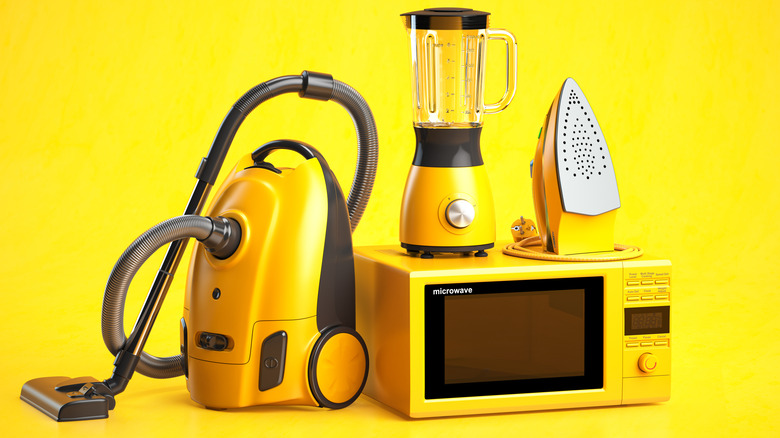
There were a number of appliances and other tech products manufactured in the '60s that lasted for decades: refrigerators, televisions, and various power tools, to name a few. This made each new innovation feel not only futuristic but also future-proof. That's why so many of them are now nostalgic gadgets every boomer will remember using — because they were able to use them for so much of their childhoods.
Compare that to today's tech, which is so easy to criticize for planned obsolescence. Profit-hungry companies are only too eager to design products that consumers will frequently replace with additional purchases. We see it every year when phones, smart home gadgets, and so many other tech items purposefully become obsolete due to planned failure, dropped support, or incompatibility with new features.
Of course, the concept of planned obsolescence didn't just come about in the 21st century. The term reportedly originates from a 1933 manifesto by real-estate agent Bernard London titled "Ending the Depression through Planned Obsolescence." However, the concept was met with harsh criticism up through the '60s and beyond. The 1960 book "The Waste Makers" by best-selling author Vance Packard highlighted the condemnable aspects of planned obsolescence and predicted a dark future for American consumerism; a prediction that eventually came true.
Aesthetic design was as important as function

When the young adults of today look back on '60s tech through the lens of retrofuturism, the first reason they might feel that those items seem futuristic is simply that they look futuristic. Take one look at this vintage 1960s space age television by Zarach to see what I mean. Even now, it looks like something from an alternate future.
This can be explained by a principle expressed by German companies such as Braun and Dieter Rams in the 1960s. Both followed the creed of "form follows function," which can be interpreted to mean that the aesthetic design of a product directly reflects its purpose. In the case of iconic '60s tech, manufacturers like Buick and Cadillac were optimistic about the future, and they had their eyes set on a brighter tomorrow. This translated to a futuristic aesthetic for products like their spaceship-inspired cars as a natural result. So why is modern tech so minimalistic and monolithic in appearance?
Consider that so much of our current tech is just a medium with which to interact with digital content. TVs stream shows from the cloud, our phones can play digital music, and many video game consoles don't even have disc drives anymore. The digital content is the primary product, so physical hardware design doesn't matter much anymore. This is starting to not sit well with today's youth, which is why Gen Z is ditching streaming for physical media.
Science fiction was in its golden age
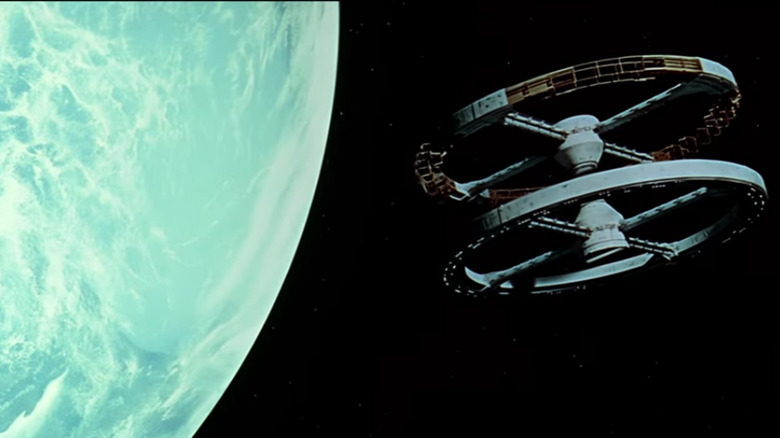
If you look back on certain pieces of the 1960s tech, like AT&T's 1964 Picturephone, as seen in Business Insider, you might think they look like something straight out of a classic sci-fi work. Well, the Picturephone may have been directly inspired by a similar video-calling gadget first seen in "The Jetsons" as early as 1962. Beyond "The Jetsons," the '60s represented a golden age featuring other science fiction classics like the original "Dune" novel or the film "2001: A Space Odyssey." These works inspired creative tech, some of which became '60s sci-fi gadgets that actually predicted the future.
The original "Star Trek" series ran in the latter half of the '60s as well. The renowned spacefaring serial can be credited for inspiring the name of the Altair 8800 Microcomputer — the device said to have kicked off the personal computer revolution in the 1970s. When the product was set to be featured in the January 1975 issue of "Popular Electronics" magazine, the daughter of the magazine's technical editor suggested naming it "Altair" because "That's where the Enterprise is heading tonight." When some of the biggest tech innovations tie directly to works that imagined a fantastical future, it's no wonder the real-life products turned out futuristic as well.
Space age optimism was at its apex

The 1960s were the height of the world's cultural "space age." In fact, the aforementioned sci-fi boom of the '60s can itself be attributed to that era's global fixation on the stars. It was a time when nations were embroiled in a technological race to see who could be the first to reach the moon and beyond. While there were certainly political agendas, the whole situation served to fuel society's optimism in what tech would soon be able to accomplish.
NASA was innovating at breakneck speed, and consumer-facing companies were happy to capitalize on consumer excitement. This gave rise to futuristic '60s tech like the cassette tape, which actually served to push society forward; the New Yorker went so far as to say that cassette tapes "provided a way of subverting those authoritarian gatekeepers" behind state-controlled radio and music distribution systems. It's a far cry from the current reality of capitalism, in which consumer interests are blatantly ignored to focus on the rise of AI despite the collapse of everything else. The authoritarian gatekeepers hold all the power once again.
The current retrofuturism movement can be taken as a sign that people want to feel more optimistic. I like to think that "the future" is synonymous with "hope" or "excitement," which is why the renewed popularity of things like vinyl records feels like a more futuristic development than where reality actually ended up. And it's not just them, either. There are a lot of retro gadgets making a comeback.