

10 Audio Brands You Might Not Realize Are Owned By Samsung
We may receive a commission on purchases made from links.
When you think of Samsung, what's the first thing that comes to mind? It's probably smartphones, or TVs, or even large appliances like refrigerators. It's natural to think of all the public-facing products Samsung makes, because that's what we encounter in our daily lives the most often.
But Samsung is massively, mind-bogglingly larger than just what we see on the surface. It's not an exaggeration to say that Samsung wields the sort of power and resources usually reserved for nation-states, and certainly in South Korea, it's practically part of the government in some ways. It's a "Chaebol", a mega company comparable to the powerful "Zaibatsu" in pre-war Japan. That means having fingers in diverse pies like shipbuilding, construction, and even military contracts.
So it should be no surprise that Samsung has wielded its economic might to acquire other smaller companies. There are brands that you see every day and probably have no idea that you're actually looking at a Samsung product, regardless of what the logo or branding says. This is especially true in the world of audio components. Despite making plenty of audio gear under its own name, Samsung completely owns no fewer than 21 other audio brands. Not all of them are that interesting or impactful, but a good number are iconic brands beloved over the decades by audiophiles, who might have mixed feelings about the new owners and how these brands will remain distinct and innovative in the future.
JBL
James Bullough Lansing lent his name to two legendary audio companies, one being Altec Lansing, and the other, of course, being JBL, which are his initials. The company was founded in 1946 as Lansing Sound. In 1969, JBL was purchased by Harman, and that's a name you're going to hear a lot in this article. That's because Harman was acquired by Samsung in 2017, and so the answer to "Who owns JBL?" is ultimately Samsung.
The thing is, Harman bought a lot of other audio brands prior to Samsung's multi-billion dollar acquisition of the company, and so it's largely through Harman that Samsung owns all of these brands. As for JBL, the company has always been known for excellent speakers, and that hasn't changed. It's a major player in the Bluetooth speaker market, where few other brands can compete with JBL.
JBL speakers are common customer favorites, and there's not a whiff of Samsung branding anywhere to be seen. Unless you're explicitly told that JBL is under the larger Samsung umbrella, you'd never know. That's likely because, as far as we can tell, Samsung has largely left JBL to its own devices. It's a strong flagship audio brand in its own right, so it's likely a case of if it ain't broke, don't fix it. As always in cases like this, though, there will be JBL fans who are convinced that Samsung is taking away the JBL magic quietly behind the scenes.
AKG
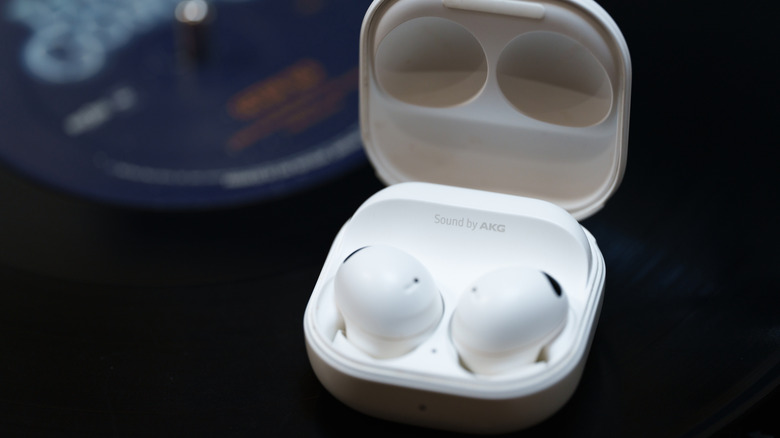
If you've used a Samsung Galaxy flagship phone or bought a high-end set of Samsung wireless buds in the past few years, you may have noticed that they bear the AKG logo, or have "tuned by AKG" or something similar written on them. That's a clue that AKG has some sort of relationship with Samsung, but rather than being a partnership, AKG is actually owned by Samsung via Harman.
AKG headphones often top lists of the best headphones and earbuds for audiophiles, and if you've ever had the pleasure of using those first "tuned by AKG" bundled wired Samsung buds, you'll know they punched way above their weight. In fact, even though I got rid of the actual phone they came with many years ago, I kept my wired Samsung AKG buds and still use them to this day.
However, apart from lending a hand to Samsung's consumer products or showing companies how to do Dolby Atmos audio in cars, the Austrian audio company is still largely a professional gear company making microphones, speakers, and headphones that are more likely found in recording studios or executive conference rooms than the shelves of your local Walmart. If anything, Samsung's smart use of AKG's expertise has done more for AKG's brand awareness than Samsung's.
Harman Kardon
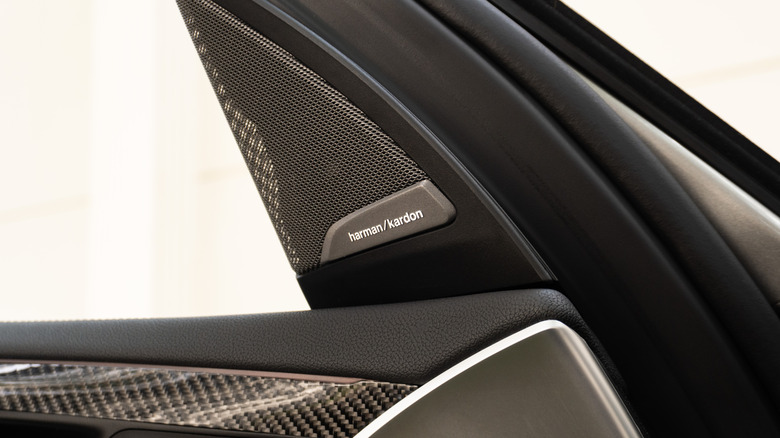
Harman Kardon is a premium car audio brand founded by Sidney Harman and Bernard Kardon in 1953. As you've probably already worked out, it's a sub-brand of Harman, and since Harman belongs to Samsung, that's how the chain of ownership works out here. That initial $8 billion purchase of Harman by Samsung was largely driven by its automotive audio sector. In its press release on the acquisition, Samsung said as much, and based the purchase on the prediction that the car audio business would grow significantly going forward.
Prior to Samsung's purchase of Harman, 65% of the sales reported by the parent company were from automotive products. Harman Kardon audio systems aren't typically the sort of thing you can buy as an aftermarket upgrade. Instead, the company works directly with vehicle OEMs (Original Equipment Manufacturers) such as BMW, VW, KIA, Maserati, and quite a few others. Harman Kardon systems are usually part of higher trim level packages, and then only for the most luxurious models.
But even if you aren't in the market for a Maserati right now, you can still own a little slice of Harmon Kardon luxury in the form of a $300 Bluetooth speaker or $1,000 soundbar. Jokes aside, by all accounts these more pedestrian (ha!) products from the brand are very good, if you can justify the price. In addition to automotive and consumer audio, just like AKG, Harman Kardon also makes professional audio gear.
Infinity Systems
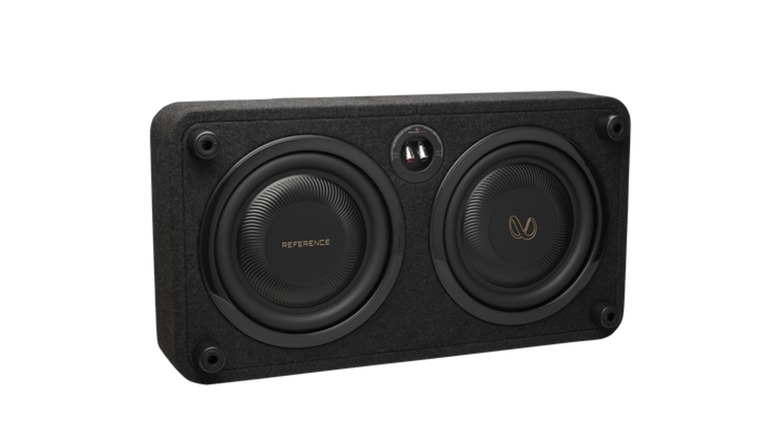
Unlike most of the brands on this list, Infinity System isn't a household name. The company was founded in 1968, and quickly developed a reputation for creating speakers using innovative materials and designs. One of their earliest speakers used technology originally intended for a bomb guidance system to improve a subwoofer. So yeah, quite a quirky company!
The company went on to create electromagnetic induction speaker technology, which allowed for ribbon-like speakers with fancy magnetic materials. Up to the point where Harman purchased Infinity in 1983, the company was producing the ultra-high-end Reference speaker systems, so it wasn't exactly a mass-market hi-fi brand by any means. These were speaker systems that would have sold for hundreds of thousands of dollars in today's money.
Today, you can still buy Infinity Systems speakers, and they still use the Reference naming scheme, but the pricing is almost reasonable compared to what came before. Visiting the Infinity store page reveals car and marine audio speakers and amps. These will cost you hundreds to thousands of dollars, but thankfully not hundreds of thousands. It's just nice to see a historically significant brand live on, even if it probably wasn't Samsung's main intention.
Mark Levinson Audio Systems
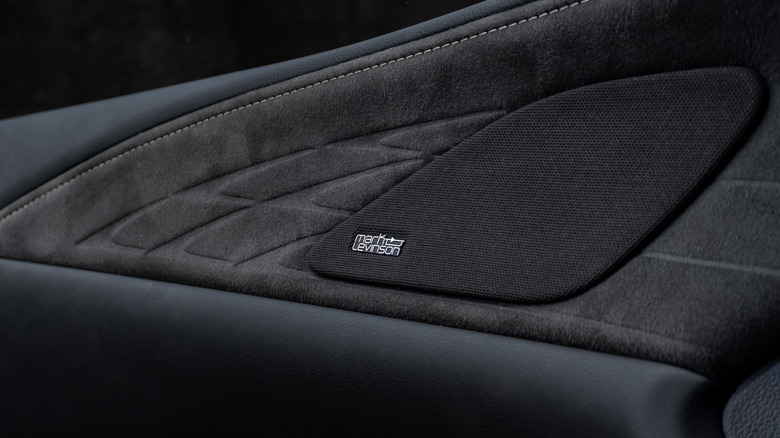
Like Infinity, you probably haven't heard of Mark Levinson Audio Systems, but also like Infinity, this is a brand that's known for ultra-high-end audio technology. Unlike Infinity systems today, though, Mark Levinson still sells audio gear that will make all but the most robust bank accounts quiver. Take the No 5909 Bluetooth headphones, which come in at $1,000. This is comfortably more expensive than any of the models on our best headphones for audiophiles list. They certainly make my $550 AirPods Max look silly and almost cheap by comparison!
But the entire history of the company, particularly while Mr. Levinson himself was involved, is a story of relentless audiophilic pursuit. We're talking overbuilt, money-is-no-object professional amplifiers and other gear meant to redefine what "fidelity" even means when it comes to recording and reproducing sound. Levinson was a musician with, by all accounts, an incredibly fine ear.
One could argue that having such refined taste in audio reproduction can be a bit of a curse, though, because if you have the same level of appreciation as Mr. Levinson did, it's going to cost you. In 2025, Mark Levinson showcased three new amplifier products in the form of the 600 series. The cheapest unit starts at $25,000, and the most expensive is $40,000, but it's monoaural, so you need two of them! Oh, and of course Samsung owns this brand through Harman, and you'll find Mark Levinson audio in cars too, but we still can't tear ourselves away from those amps.
Lexicon
Even if you've never heard of Lexicon (now Lexicon by Harman), you've almost certainly enjoyed the fruits of its labor. This is the company usually credited with standardizing and popularizing digital delay and reverb effects and is known for creating high-fidelity recording technology for use in studios. In 2014, the company won a Technical Grammy in recognition of its contributions to the recording industry. So even if you aren't listening to music on Lexicon equipment, there's a good chance it was produced using Lexicon's technology.
This company was also one of the early pioneers of home theater technology. In 1988, it introduced the CP family of audio processors, and by the late 1990s had Dolby audio units on the market, too. If you were a wealthy cinephile in the '90s, there was a good chance part of your professionally-installed setup bore the Lexicon brand.
Today, you won't find much in the way of direct-to-public products, since Lexicon serves a professional audio market, but there are some high-end multi-room audio amps available in case you feel like upgrading your mansion with better sound.
Arcam
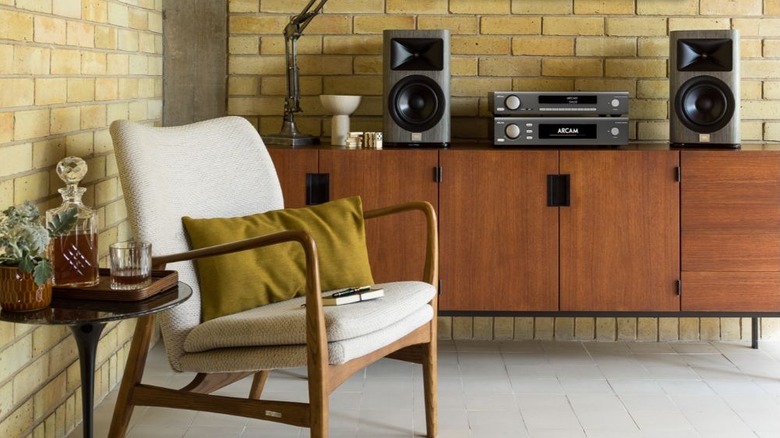
There are two interesting things about Arcam right out of the gate. First, the brand has no connection to Batman, which is sad. Second, while Samsung owns Arcam through Harman, the acquisition of Arcam happened after Samsung's buyout of the larger company. Arcam might not be a well-known name in the United States, but it's a very popular brand across the pond in the United Kingdom.
Arcam was originally called A&R Cambridge, and Cambridge is also where the company is still headquartered. It's known for making high-end home audio components that over the years have included early CD players, home cinema technology in the late '90s, and high-end dedicated amplifiers. According to the company, it made the first CD player designed and built in the U.K. Today, you'll still find an Arcam CD Player among the amps, processors, speakers, and other typical home hi-fi gear in the Arcam catalog, 40 years after the company introduced its first one. You have to respect the dedication.
Denon
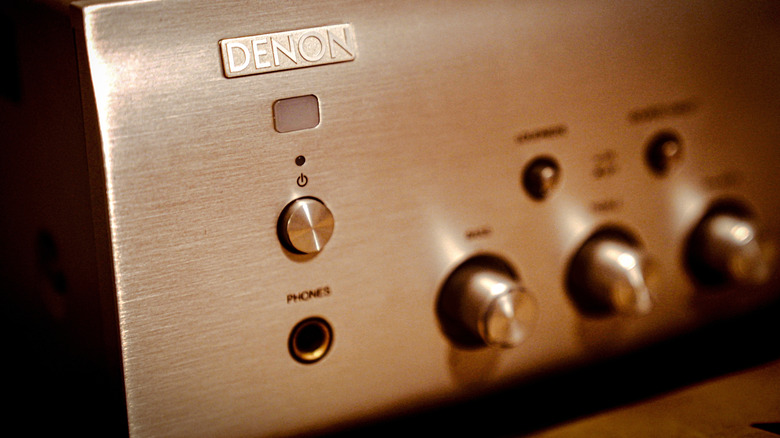
Many of the brands on this list are, frankly, obscure to all but the most nerdy of audio nerds, but that can't be said of Denon, a Japanese hi-fi brand with over a century of history. Systems like the Denon D-M41 are on the wishlists of many music lovers.
Samsung's Denon acquisition is one of the most recent, taking place in 2025, when Harman purchased Sound United, which owned Denon at the time. So far, it looks like things are business as usual for one of the oldest audio companies in the world, and with a dedicated global fan base of the brand, let's hope it stays that way.
While hi-fis and dedicated home theater systems might not be as aspirational today in a world of soundbars and spatial audio headphones as they were a few decades ago, it's nice to know that if you ever need them, brands like Denon are keeping the dream alive. Of course, Denon also makes soundbars and headphones, in addition to AV receivers, hi-fi components, and speakers, so you could say it's hedging its bets no matter which way audiophile tastes go over the coming years.
Marantz
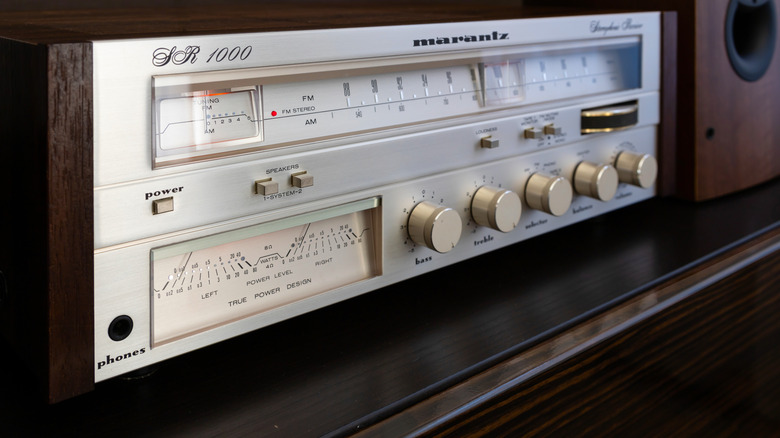
Samsung acquired Marantz through the same deal that nabbed it Denon, and there are few audio brands that carry more clout. The company got its start with an ingenious preamp that significantly improved recording consistency in studios. Saul Marantz hand-built the first unit, quickly sold 100 of them, and was inspired to start the Marantz company in 1953.
Marantz soon made commercial preamps for the public, and built a business on smoothing out audio for music lovers at home. The power-control technology the company developed was so smooth, in fact, that it was adapted and customized by NASA for use in the Apollo Space program.
If you walked into someone's home and they had a Marantz turntable (or later, CD player), you knew they were serious about audio. While the company is a few decades younger than Denon, it's nonetheless a major premium brand. Here's hoping Samsung helps preserve that legacy.
Bowers & Wilkins
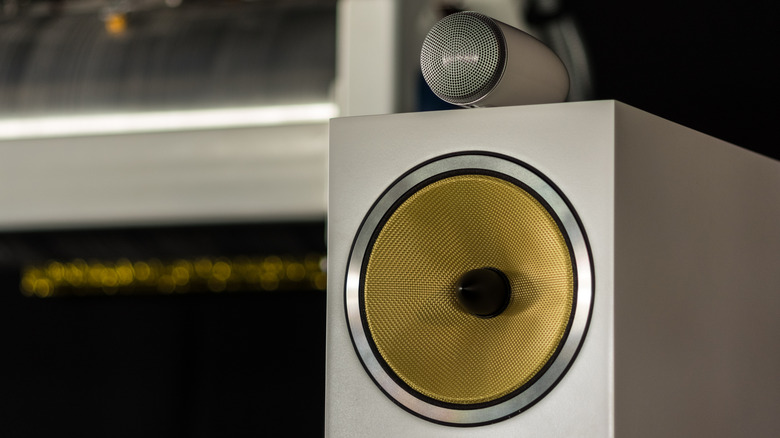
The final jewel worth mentioning added to the Samsung crown from the deal that included Denon and Marantz is Bowers & Wilkins. The brand is surely one of the best-known speaker brands in the world, and it got its start after World War II. It's all a bit of a spy drama actually, as the company's records tell it. John Bowers was a member of the Royal Corps of Signals — in other words, a radio specialist. From there, he was recruited into MI6 (the Secret Intelligence Service — so yes, very James Bond) and was commissioned along with Roy Wilkins (and others) to secretly keep in touch with British agents in occupied Europe.
This posting was the start of a friendship between the two, and after the war ended they opened a small radio shop together. It was a shop for ham radio operators, but it also handled repairs to keep the lights on, and this helped the small company branch out into PA (Public Address) systems. In other words, they started making loudspeaker systems for schools and churches, which made John Bowers aware that the existing large speaker systems were pretty terrible. He was a classical music enthusiast and felt that the technology of the day didn't do this music justice. The systems they modified to have better fidelity started a devoted customer base, and a very large endowment from a deceased fan allowed the company to invest seriously in the loudspeaker business.