

Why Do People Keep Buying These Cheap VA TVs?
We may receive a commission on purchases made from links.
Wherever you prefer shopping for electronics, you're almost guaranteed to find a wide array of inexpensive TVs. Brands like Hisense and TCL make some of the best cheap TVs on the market, and many use Vertical Alignment (VA) panels. VA screens are used on some of the most basic, entry-level LCD TVs, but you can also find them on premium models that advertise picture specs like Mini LED lighting. Unfortunately, VA displays are more susceptible to a number of picture maladies that aren't as prevalent on In-Plane Switching (IPS) screens, the other main type of LCD panel.
Washed-out colors, poor brightness, and ghosting/smearing are just a few of the complaints you'll hear about cheap TVs with VA screens. And "cheap" is the main reason folks keep buying these lackluster VA sets. For years, most TV manufacturers have operated in a "get what you pay for" manner, reserving the most advanced picture tech for mid-range and premium sets. But when you're shopping for a big-screen model, flagship features often translate to sky-high prices. The same can't be said for cheap VA screens, though.
Even on the lower end of things, though, VA panels have a few of their own benefits over IPS displays. It's also much harder to see these tradeoffs when you're staring down a massive wall of big TVs that are all cranked to maximum brightness and displaying pixel-perfect 4K demo loops. In the end, even a cheap VA TV is still a TV, and the downsides aren't enough to stop many buyers from enjoying the screen as it is.
The average consumer likely doesn't notice (or care about) the downsides
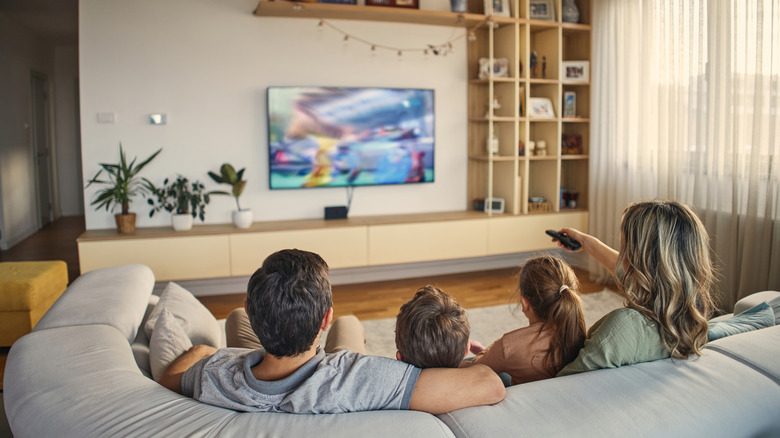
The reality is that picture quality isn't as important to some TV watchers as it is to others. If you just want the biggest screen your living room can accommodate, and you don't want to spend a ton of cash, a 75-inch VA model that only costs $500 is probably going to be more enticing than a $1,200 55-inch set with better brightness, color accuracy, and motion handling. Plus, you'll be hard-pressed to see smearing or other picture anomalies until you've got your brand-new TV set up at home.
Traditionally, VA panels are actually a bit better than IPS screens when it comes to black levels and overall contrast. If you're looking for a cheap gaming TV that's going in a basement or a sunlight-starved bedroom, an inexpensive VA screen may suffice. If you're a competitive gamer that constantly plays online, though, you'll definitely notice the slower pixel transitions of a VA screen — especially when quickly changing from bright to dark scenes. That's what causes smearing, and there isn't much you can do about it.
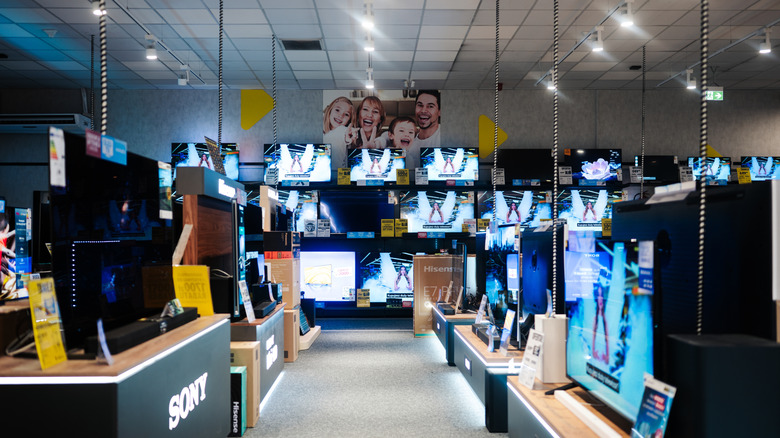
We should also mention that manufacturers and retailers are more likely to advertise a big-screen TV at a low price. Oftentimes, you'll find these sets stacked side by side on the sales floor, perhaps alongside cheap accessories like HDMI cables and surge protectors. You may not even have to make your way to the store's TV department, as many of these bargain displays are placed close to the entrance, especially during seasonal events (e.g., Black Friday, Father's Day, etc.).
How to make the most of a cheap TV with a not-so-great VA panel
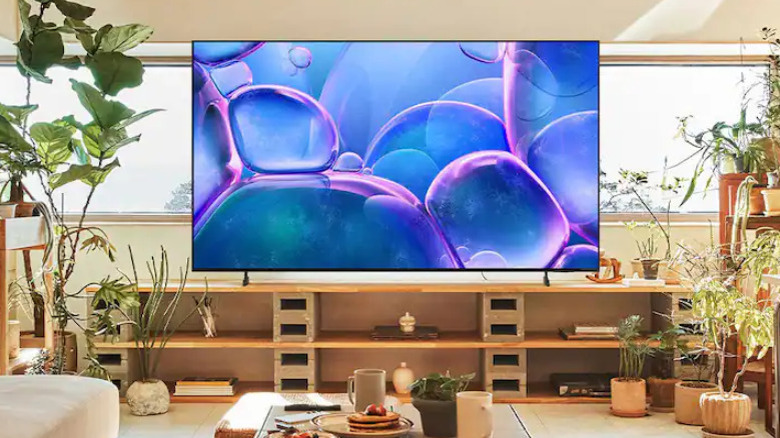
Let's make something abundantly clear: there's nothing wrong with buying a big TV primarily because it's cheap. It just pays to know about the kinds of drawbacks you can expect to encounter on an entry-level model with a VA screen. But it's not necessarily the fault of the VA panel if your picture doesn't look good; some of the best TVs money can buy use VA technology. It's more likely that subpar quality is coming from poor lighting, picture processing, or anti-reflection tech.
Fortunately, you're not completely left in the lurch if you happen to own a cheap VA TV or are thinking of buying one. If you're buying a TV for a bright room, you can try moving lamps and other lighting fixtures to reduce reflections while mitigating sunlight with blackout curtains. You can also try setting your TV to a brighter picture setting or raising the backlight level. You should do your best to sit centered with the screen, too, because cheap VA panels tend to lose fidelity when viewed at an angle.
Buying a cheap TV with an IPS screen may not be much better, especially if you like watching movies and playing video games in a dark room. IPS screens don't fare as well when it comes to overall contrast, which could result in blacks that appear closer to gray. In that case, VA panels can actually be preferred — thus providing another reason as to why people will buy those cheaper screens.