

5 Cheaper Android Phones You Should Try Instead Of The Google Pixel 10 Pro
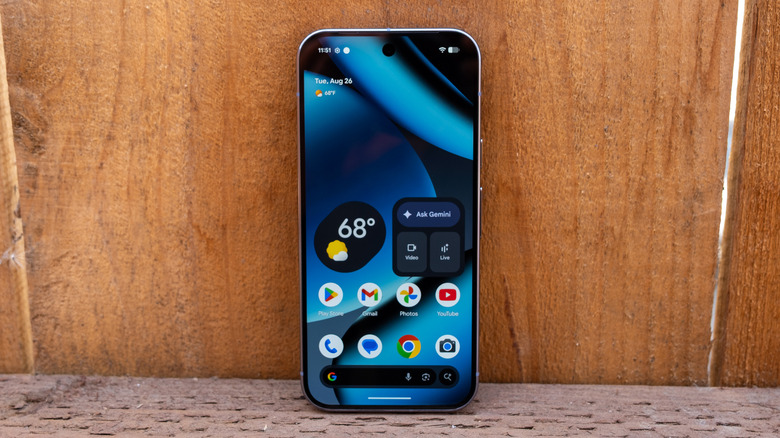
Android fans looking for a new smartphone would not go wrong choosing the 6.3-inch Pixel 10 Pro, Google's smaller professional-grade handset from the company's 2025 lineup. The Pixel 10 Pro offers good build quality, high-end hardware, a powerful camera system, and access to Google's latest Gemini AI innovations, including a few exclusive features. Also, the handset runs the latest Android release as soon as Google releases it. On top of that, Google guarantees the handset will receive seven years of Android OS and security updates beyond the Android 16 OS it comes preloaded with. However, the Pixel 10 Pro starts at $999 for the version that features 16 GB of RAM and 128 GB of storage. Buyers on a tighter budget can consider other premium and flagship Android handsets that may offer the same or better experience as the Pixel 10 Pro and save money in the process.
In fact, there is one key hardware detail that Android buyers may care about when looking for a high-end device, and that's the processor. The seven-year software guarantee sounds good on paper, but there's no telling how well a device will run an Android version of the future if it doesn't have a processor powerful enough to run future Android releases smoothly. The Pixel 10 Pro features Google's Tensor G5 chip, which scores 2,182 (single-core) and 5,643 (multi-core) points in Geekbench 6 benchmarks, significantly below the scores of other high-end Android phones that are more affordable than Google's Pro handset. Another aspect to consider is the amount of storage that comes with the $999 version: 128 GB of flash memory.
Google Pixel 10
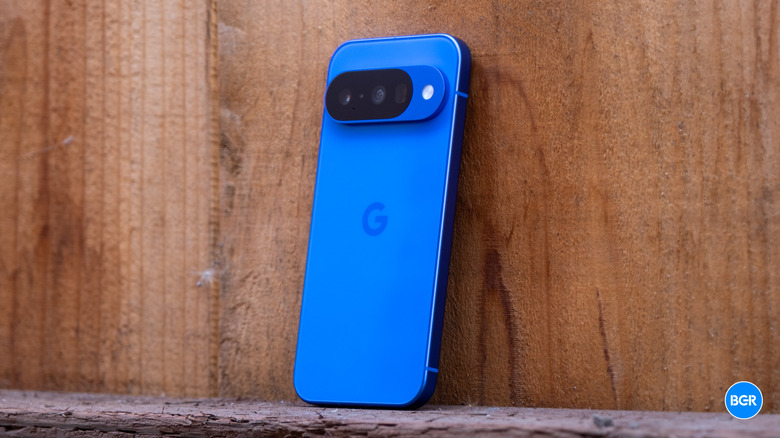
The Pixel 10 features almost the same hardware as the Pro model, as they're part of the same family of devices. The Pixel 10 recommendation may seem strange, given the chip and storage considerations mentioned above. The Pixel 10 features the same G5 chip and comes with the same amount of storage for the entry-level configuration: 128 GB. However, the Pixel 10 starts at $799, significantly cheaper than the Pixel 10 Pro. For an extra $100, you could buy the 256 GB option. That can be a better deal than the Pixel 10 Pro, considering you get almost the same Pro experience from the standard Pixel 10 model. That's why we said in our Pixel 10 review that Android users finally get their iPhone-like experience with this particular device.
The Pixel 10 features a similar display to the more expensive model, a 6.3-inch OLED screen with 2,424 by 1,080 resolution (compared to 2,856 by 1,280 for the Pro). The display supports up to 2,000 nits (HDR) and up to 3,000 nits (peak brightness), which is slightly lower than the 2,200 and 3,300 nits of brightness the Pro can offer. Other minor differences concern the memory (12 GB of RAM instead of 16 GB) and the battery capacity (4,970 mAh instead of 4,870 mAh).
The more significant compromise concerns the camera system on the back. While the Pixel 10 also features a triple-lens camera setup, buyers will not get the same cameras. The handset offers a 48-megapixel wide camera, 13-megapixel ultrawide camera, and 10.8-megapixel zoom camera on the back. The selfie camera has a 10.5-megapixel sensor. The Pixel 10 Pro has a 50-megapixel wide sensor and two 48-megapixel cameras (ultrawide and telephoto) on the back, and a 42-megapixel selfie camera.
Galaxy S25 FE
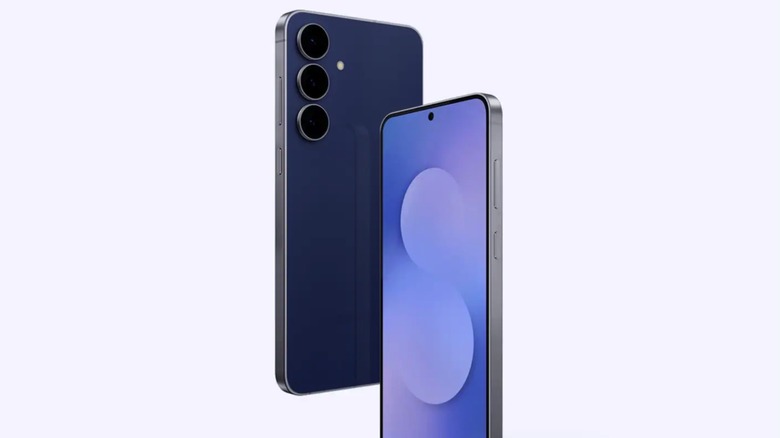
The next phone on our list is the Galaxy S25 FE, which Samsung announced in early September 2025, a few weeks after Google's Pixel 10 series launch. The Galaxy S25 FE is even cheaper than the standard Pixel 10, starting at $649.99 for the 128 GB variant, though the 256 GB model costs $749.99. Performance-wise, the Fan Edition model scores 2,165 and 6,693 points in Geekbench 6, with the phone featuring a Samsung Exynos 2400 chip paired with 8 GB of RAM. Like the Pixel 10 Pro, the Galaxy S25 FE launched with Android 16 on board, with Samsung guaranteeing seven years of software updates. Also, the cheaper Galaxy S25 variant comes with Samsung's suite of Galaxy AI features as well as Google AI features, including Gemini Live and Circle to Search.
The Galaxy S25 FE features a slightly larger 120 Hz OLED display at 6.7 inches, which supports 2,340 by 1,080 resolution and 1,900 nits of peak brightness. The camera system on the back includes a 50-megapixel wide camera lens, a 12-megapixel ultrawide lens, and an 8-megapixel telephoto lens. The selfie camera has a 12-megapixel sensor. The 4,900 mAh battery supports 45 W fast charging and 15 W wireless charging. That gives it slightly faster wired charging than the Pixel 10 Pro, which supports 30 W wired charging and 15 W wireless charging.
The Google phone has a magnetic ring on the back that offers users MagSafe-like wireless charging, which Google calls Pixelsnap. Galaxy phones do not have magnets, but the Galaxy S25 FE is slimmer (7.4 mm versus 8.5 mm) and lighter (190 grams versus 207 grams).
Nothing Phone 3
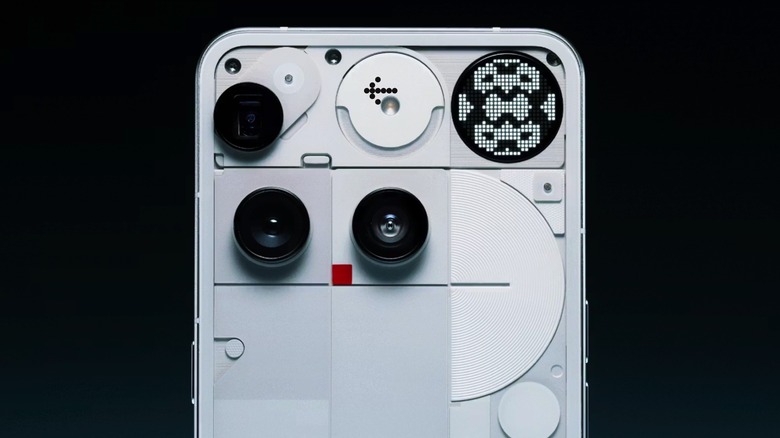
The Nothing Phone 3 is another good, affordable alternative to the Pixel 10 Pro. The handset, launched in July 2025, is slightly larger than the Pixel 10 Pro, featuring a 6.67-inch display with 2,800 by 1,260 resolution, 120 Hz refresh rate, and 4,500 nits of peak brightness. The handset has Corning Gorilla Glass 7i on the front and Gorilla Glass Victus on the back, compared to Gorilla Glass Victus 2 on the front and back for the Google handset. Both devices are IP68 certified for dust and water resistance.
The Nothing Phone 3 features the Snapdragon 8s Gen 4 flagship chip paired with 12 GB of RAM or 16 GB of RAM. Storage is either 256 GB or 512 GB. The cheaper model starts at $799, the same price as the standard Pixel 10. The phone reaches 2,076 and 6,577 points in Geekbench 6 tests, suggesting the handset will offer similar performance to the Pixel 10 Pro. Wired's review found the phone's performance to be "flawless." However, unlike the previous models on the list, the Nothing Phone 3 comes with Android 15 preloaded, and the company will guarantee only five years of OS updates.
The Nothing flagship does have a few other notable features buyers may appreciate, including four 50-megapixel cameras. Three of the lenses (wide, ultrawide, and zoom) are scattered on the transparent back in a unique camera arrangement that gives the Nothing Phone 3 a distinct personality. The Nothing Phone 3 also has much faster wired charging (65 W), and it supports 15 W wireless charging. The phone also uses a silicon-carbon battery, something Google phones do not have, with a capacity of 5,150 mAh. Other highlights include the Glyph Matrix on the back and Nothing's Essential suite of AI features.
OnePlus 15
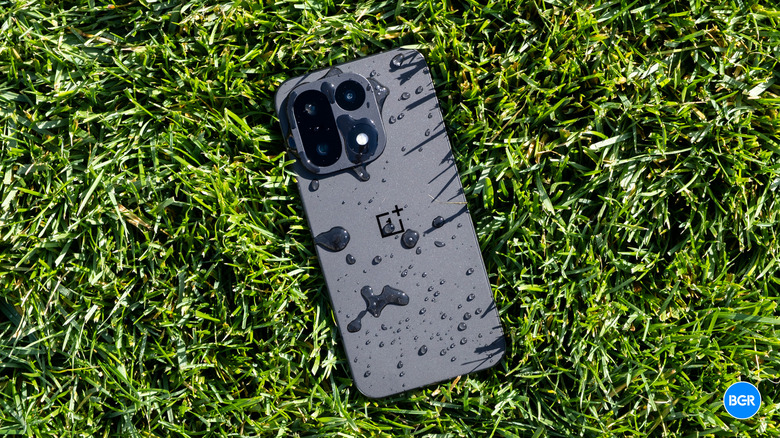
While the previous more affordable Pixel 10 Pro alternatives offer similar performance to Google's flagships, you can find Android phones in stores that are cheaper than the Pixel 10 Pro but significantly more powerful. The OnePlus 15, first released in late October 2025 (in China), is one such example. The handset features the Snapdragon 8 Elite Gen 5 flagship chip from Qualcomm, which is paired with 12 GB or 16 GB of memory. Storage starts at 256 GB for the flagship, going up to 1 TB just like the Pixel phone. The Geekbench 6 scores for the handset (3,450 and 10,179 points) indicate that the OnePlus 15 may deliver performance the Pixel 10 Pro cannot match.
Like the Nothing Phone 3, the OnePlus 15 features a silicon-carbon battery, but with a significantly increased capacity. The 7,300 mAh battery has been a highlight of our OnePlus 15 review, with the phone lasting more than two days on a charge. Battery charging speeds are even higher than the Nothing Phone 3, with the OnePlus 15 supporting up to 120 W (wired) and 50 W (wireless) speeds, depending on the market. The camera system on the back also has three 50-megapixel cameras like the Nothing handset, while a 32-megapixel selfie camera is available on the front. The 6.78-inch LTPO OLED display is also a highlight for the OnePlus 15. It offers 2,772 by 1,272 resolution, 1-120 Hz adaptive refresh rate, and 165 Hz peak refresh rate.
While the OnePlus 15 is a much stronger hardware value than the Pixel 10 Pro, there are two downsides to consider. First, OnePlus will offer four years of Android updates to the handset instead of seven. Second, OnePlus may wind down U.S. operations, which may affect general support in the future, including software.
Samsung Galaxy S26
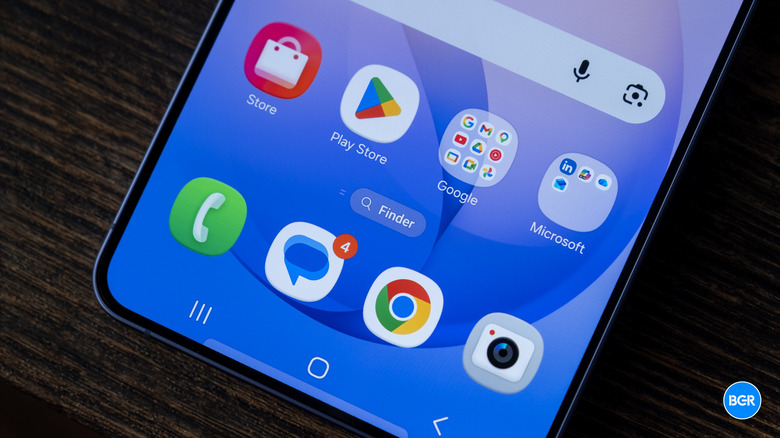
The last Pixel 10 Pro alternative on our list is also the most recently launched model: the standard Galaxy S26 that's part of Samsung's flagship S series launched in late February 2026. The Galaxy S26 features the powerful Snapdragon 8 Elite Gen 5 chip, indicating the device may offer significantly better performance than the Pixel 10 Pro. Geekbench 6 scores can reach 3,203 and 11,056 points for the base Galaxy S26 model.
The 256 GB Galaxy S26 starts at $899.99, $100 cheaper than the Pixel handset. For $999.99, you can double the storage to 512 GB. Other specs include a 6.3-inch LTPO OLED display that supports a 1–120 Hz refresh rate, 2,340 by 1,080 resolution, and 2,600 nits of peak brightness, as well as 12 GB of RAM. The phone features a triple lens camera on the back: 50-megapixel wide camera, 12-megapixel ultrawide, and 10-megapixel telephoto lens. On the front, the Galaxy S26 has a 12-megapixel sensor. The 4,300 mAh battery is smaller than the Pixel 10 Pro but supports similar charging speeds (25 W wired and 15 W wireless).
The Galaxy S26 comes with Android 16 on board and a familiar software update guarantee. The phone will be updated for seven years, which makes the Samsung flagship a better software value than the OnePlus 15. Also, the Galaxy S26 may age better than the Pixel 10 Pro, thanks to that Qualcomm flagship chip. The Galaxy S26 phone runs Samsung's full suite of Galaxy AI features, including Samsung's newest features, and Google's Gemini AI features. More importantly, the Galaxy S26 models will also support Google's recently announced Gemini Intelligence platform that requires at least 12 GB of memory. Gemini Intelligence will be available via the Android 17 update.
How we selected these Pixel 10 Pro alternatives
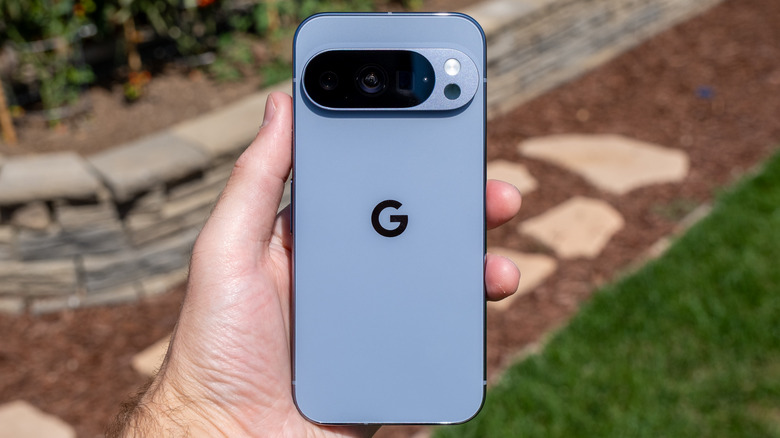
The Android ecosystem offers plenty of choice to smartphone users, which makes selecting more affordable Pixel 10 Pro alternatives that much harder. For this list, we focused on smartphone models that launched around the same time as the Pixel 10 Pro or later. We also looked at Android options available to U.S. customers with relative ease, which means we've ignored potentially cheaper Android handsets made by prominent Chinese vendors like Honor and Xiaomi, which may be more difficult to import. Also, we favored traditional smartphone form factors over foldable options, because traditional candy bar phones are more analogous to the Pixel 10 Pro and may offer improved durability. A buyer looking for a cheaper premium or flagship handset may want to use that device for several years, so a candy bar phone fits that scenario better.
Software support is also important, in a world where more vendors offer multiple years of Android updates to high-end devices. With only four years of support, the OnePlus 15 is the weakest handset on the list, but buyers may want to replace their device with something newer after that period.
We'll also note that the prices mentioned above are the launch prices for all these handsets. All vendors may run various promotions to lower the entry price. On that note, there's one more thing to keep in mind before buying a Pixel 10 Pro alternative in June 2026, the time of this writing. Google is expected to unveil the Pixel 11 series in August 2026. Once that happens, the base Pixel 11 may be a better alternative to the Pixel 10 Pro. Also, the 2025 Pixel Pro models will be available for lower prices from carriers and even Google itself.